
 By Lina Irawan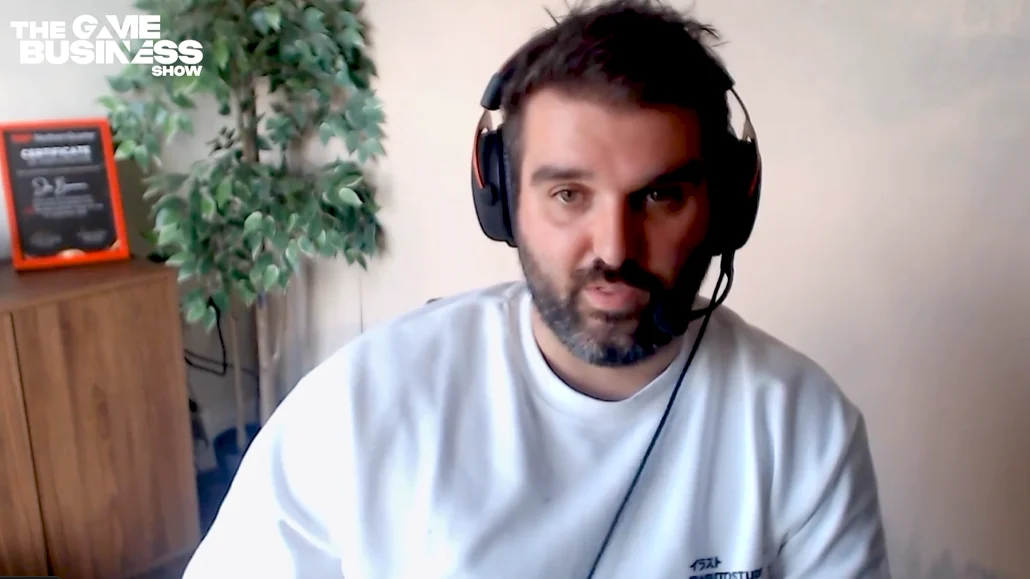
In the high-stakes world of video game development, the tension between creative ambition and labor sustainability is a perpetual fault line. Recently, that line cracked open as Joe Brammer, CEO of Bulkhead—the developer behind The Turing Test, Battalion 1944, and the recent breakout hit Wardogs—found himself at the center of an industry-wide firestorm. Following a candid interview on The Game Business podcast, Brammer’s frank admissions regarding "crunch" culture, staff recruitment, and his disdain for certain HR regulations have sparked a fierce debate about the ethics of modern game production.
The Catalyst: An Unfiltered Conversation
The controversy stems from an appearance on The Game Business with host Chris Dring, where Brammer discussed the operational philosophy of his UK-based studio. Known for his blunt, often unorthodox management style, Brammer did not shy away from the industry’s most sensitive topic: mandatory overtime, commonly known as "crunch."
Brammer framed the practice not as an organizational failure, but as a cultural hallmark of the studio. "A lot of people who may have an issue with crunch—rightly so, I understand that issue, we always try and avoid it, but we don’t hide that this is going to happen at some point," he stated. He further explained that his recruitment process acts as a filter for these values. "We will check people’s socials, and if you’re constantly tweeting anti-crunch messaging… we know that and go, ‘Look, you’re not going to be happy here, so we’re not going to go with you.’"
These comments ignited immediate backlash across social media platforms, with industry observers criticizing the practice of pre-employment social media screening for political or labor-related stances—a practice that occupies a precarious legal position under UK employment law.
A Chronology of the Backlash and Clarification
The fallout was swift. Within hours of the interview’s release, gaming news outlets began dissecting Brammer’s quotes. By the following day, the CEO took to X (formerly Twitter) to push back against the characterization of his words.
Brammer specifically challenged the use of the word "mandatory," arguing that it was an unfair label projected onto his policies by gaming press. He provided a list of counter-balancing initiatives that define his studio’s culture:
- A Four-Day Work Week: An experimental policy that spanned half of Wardogs’ development cycle.
- Equity Distribution: A notable claim that 80 percent of the studio’s shares are held by 50 percent of the staff.
- December Closure: A company-wide shutdown during the month of December.
Despite these efforts to provide context, the core of the criticism remained: when asked in the same interview about his stance on work-from-home and overtime, Brammer was unequivocal: "They know I don’t believe in work from home for making video games… They know I expect people to crunch. I own that."
The Economics and Ethics of "Crunch"
To understand the gravity of this discourse, one must view it through the lens of the video game industry’s fraught history. For over two decades, high-profile studios—from Naughty Dog to CD Projekt Red—have faced scrutiny for "crunch," a practice where developers work extended hours, often weeks or months at a time, to meet project milestones. While often described as "voluntary," critics argue that implicit pressure, peer influence, and the fear of professional stagnation make it functionally mandatory.
Brammer’s defense of the practice rests on the "balance" of the trade-off. In his view, the intensity of the work is compensated by the potential for life-changing financial rewards. He points to the recent success of Wardogs, which moved 2 million units in its first five days, as proof of the meritocracy he is building. "If we’re going to be a company who says, ‘We do crunch’, then we have to also say, ‘But you get something for it,’" he noted. He expressed excitement for junior staff members who, through the studio’s equity-sharing program, might finally afford home deposits or significant financial stability.
Defining the "Balance"
Brammer admits that crunch is often a byproduct of specific development bottlenecks. During the June 2026 development phase of Wardogs, he acknowledged that the studio was behind schedule for its beta release. His solution was a four-week period of two-hour daily extensions. While he maintains that four employees opted out without repercussion, he concedes that "social pressure" within a small, tight-knit team can create an environment where opting out feels stigmatized.
Regulatory Tensions and HR Friction
Beyond the ethics of labor, Brammer’s comments on UK employment law have raised eyebrows. He openly expressed frustration with what he views as "restrictive" HR regulations, specifically regarding his attempts to implement flexible work-life arrangements.
He cited his studio’s attempt to introduce a 10-week paternity leave policy, which he claimed failed due to the domestic dynamics of his employees. He subsequently moved to a more granular, three-week flexible structure. When confronted with the possibility that such policies could be viewed as discriminatory or violating standardized holiday entitlement, his response was dismissive: "We’re just like, ‘sue us’, at this point, this is ridiculous."
This attitude toward compliance mirrors his earlier comments on vetting potential employees. The Information Commissioner’s Office (ICO) in the UK provides clear guidelines: pre-employment vetting should only occur when there is a "legal obligation" or a "significant risk" to the employer. Screening for ideological stances on labor rights is a move that legal experts suggest could open a firm to discrimination claims, should a candidate prove they were rejected based on protected beliefs or union-adjacent activity.
Official Responses and Corporate Defense
In a formal statement provided to Eurogamer, Bulkhead sought to clarify that Brammer’s comments were conversational rather than policy-driven.
"I was speaking informally about our culture and the kind of environment we have at Bulkhead, rather than setting out our formal recruitment process," Brammer wrote. He further emphasized that the studio does not engage in "covert or intrusive checks" of private accounts, adhering to applicable UK data protection laws.
Regarding the "mandatory" nature of the crunch, the studio reiterated that the June 2026 incident was an outlier designed to solve specific technical hurdles, specifically the optimization of build times. By working two extra hours, the team was able to finalize code that would otherwise have been delayed by the length of the nightly build cycle.
Implications for the Industry
The Bulkhead situation serves as a microcosm for a broader, existential question in game development: Is the "rockstar" culture of extreme, mission-driven development compatible with modern, healthy labor standards?
- The Transparency Paradox: Brammer’s openness, while refreshing to some, has made him a target. By explicitly stating that he avoids hiring those with anti-crunch sentiments, he has provided a roadmap for what labor advocates consider "blacklisting."
- Equity as a Justification: The industry is currently divided on whether significant profit-sharing justifies intense working conditions. Proponents argue that developers should be stakeholders, not just salaried employees. Critics argue that no amount of bonus money can buy back the mental health and time lost during periods of intense burnout.
- The Regulatory Gap: As indie studios grow, they often find themselves caught between the agile, "hacker-culture" ethos they started with and the rigid, protective labor laws of the UK and Europe. Brammer’s frustration with these laws highlights a growing trend of founders who view traditional HR as an obstacle to innovation.
Conclusion: The Road Ahead
As Wardogs continues to perform well in the market, Bulkhead finds itself at a crossroads. The studio has successfully proven that its "different" approach—which includes equity sharing, a rejection of industry-standard marketing showcases, and a willingness to communicate with players—yields financial results. However, the cost of that success, measured in employee labor hours and the potential alienation of the global developer talent pool, remains a contentious issue.
Whether Brammer’s "all-in" management style is a blueprint for the future of independent development or a relic of an unsustainable past is yet to be determined. What is certain is that the conversation around how games are made, and who makes them, is no longer just happening behind closed doors. It is now a public dialogue, and for leaders like Brammer, the scrutiny is only beginning.
 Nana
Nana  Dwi Wanna
  Nila Kartika Wati