
 By rifanmuazin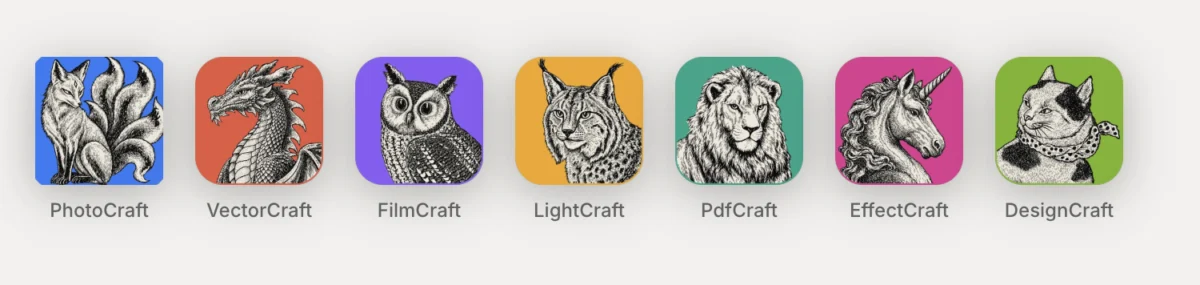
The landscape of creative software is undergoing a seismic shift. For decades, Adobe has stood as the uncontested titan of the industry, with its Creative Cloud ecosystem serving as the digital workbench for millions of designers, filmmakers, and photographers worldwide. However, a growing tide of user discontent—fueled by controversial AI terms of service, complex subscription models, and punitive cancellation fees—has opened the door for a wave of challengers.
In a move that has sparked intense debate across the developer community, a seasoned software engineer has taken a radical, provocative approach to this monopoly: he has utilized artificial intelligence to build "clean-room" recreations of seven major Adobe applications.
The Genesis of a Digital Mutiny
The project, spearheaded by software engineer Brandon Thomas, is not merely a hobbyist’s experiment. Thomas, a 15-year industry veteran with a background in high-stakes financial systems and advanced robotics, claims to have successfully leveraged AI tools—specifically Claude—to write the code for open-source, 100% Rust-based replacements for Photoshop, Illustrator, Premiere Pro, Lightroom, After Effects, InDesign, and Acrobat Pro.
The motivation behind this ambitious endeavor is rooted in personal frustration. Thomas, writing on Hacker News and Reddit, cited a "death by a thousand cuts" experience with Adobe’s business practices. Specifically, he pointed to the company’s notorious "dark pattern" cancellation fees—a mechanism that has historically made exiting a subscription contract a financially painful ordeal for users.
"I got bit by the dark pattern ‘cancellation fee’ one too many times," Thomas explained. His response was to leverage his deep expertise in the Rust programming language and the efficiency of LLM-assisted coding to build a suite of tools that are not only free and open-source but also free from the "bloat" and restrictive ecosystems of corporate software giants.
A Chronology of the Adobe Backlash
To understand the weight of this development, one must look at the timeline of the friction between Adobe and its user base.
- 2013: The Shift to Cloud: Adobe transitioned from perpetual licenses to the Creative Cloud subscription model. While it provided constant updates, it effectively ended the era of "owning" one’s tools, sparking early criticism regarding long-term cost.
- 2023-2024: The AI Terms Controversy: Adobe faced severe backlash after users discovered updated Terms of Use that appeared to grant the company broad rights to access and analyze user content for machine learning training purposes. While Adobe later clarified these policies, the trust gap remained wide.
- 2024: The $150 Million Settlement: Adobe agreed to a massive settlement with the U.S. Federal Trade Commission (FTC) regarding its subscription cancellation practices, which were deemed misleading and overly difficult for consumers to navigate.
- 2025: The "Clean-Room" Challenge: Brandon Thomas announces his project, claiming to have successfully replicated the core functionalities of the Adobe suite using AI-assisted development, bringing the conversation from corporate policy to technical defiance.
The Technical Argument: Is Rust the Future?
Thomas’s decision to build these applications in Rust is not arbitrary. As a systems language, Rust is renowned for its memory safety and performance—two areas where traditional creative software often struggles. By utilizing a "clean-room" design, Thomas aims to ensure that no proprietary Adobe code was utilized, mitigating the risk of copyright litigation.
However, the use of AI to generate the architecture of these applications has become the most contentious point. Critics argue that software built via LLM prompting often lacks the nuance, edge-case handling, and long-term architectural foresight required for professional-grade productivity tools.
Professional creative workflows are incredibly deep. A tool like Adobe Premiere, for instance, isn’t just a video player; it is an NLE (Non-Linear Editor) that handles complex codec decoding, GPU acceleration, multi-track synchronization, and hardware integration. Can an AI-generated codebase, even one overseen by an expert like Thomas, match the stability of thousands of man-years of iterative engineering?
Supporting Data: The Cost of Ownership
The financial barrier to entry for creative professionals is substantial. A full Adobe Creative Cloud subscription can cost hundreds of dollars annually per user. For freelancers and independent creators, this represents a significant overhead.
| Feature | Adobe Creative Cloud | Open-Source Alternatives |
|---|---|---|
| Pricing | Subscription (Monthly/Annual) | Free (Open Source) |
| Ownership | Rent-to-use | Full Source Code Access |
| Hardware | High System Requirements | Variable (Dependent on Implementation) |
| Support | Enterprise-grade | Community-driven |
While the "free" price tag is undoubtedly attractive, the data suggests that for most professional studios, the cost of a tool is defined not by the subscription fee, but by the reliability and time saved during production. If a "free" tool crashes or lacks a vital export plugin, the "hidden cost" in lost time far exceeds the cost of a monthly subscription.
The "Software is Over" Sentiment
Thomas’s provocative statement on Hacker News—"Software is over"—has ignited a philosophical firestorm. When he says this, he is arguably referring to the era of massive, monolithic software companies controlling the tools of creation through proprietary, closed-source silos.
By using AI to rapidly generate these complex systems, he is suggesting a future where software is commoditized, disposable, and easily replicated. This is a terrifying prospect for Adobe and its shareholders, but for the end-user, it represents a radical democratization of the tools of production.
However, the professional community remains skeptical. One prominent critique, echoed by users on Reddit, highlights the massive delta between "recreating the UI" and "building a dependable professional ecosystem." A piece of software is more than its interface; it is its library of plugins, its integration with external hardware, its color management profiles, and its long-term compatibility with file formats spanning decades.
Implications for the Future of Design
The implications of this experiment are twofold.
First, it signals a shift in the power dynamic between developers and corporations. When a single developer can use AI to build a credible alternative to a billion-dollar product suite, the "moat" around proprietary software begins to drain. Adobe, and companies like it, must now contend with a new reality where their primary competition isn’t just another company, but the ability of individuals to synthesize professional-grade tools on the fly.
Second, it raises critical questions about the future of professional trust. Can a creative agency, whose entire business relies on the reliability of their software, trust a tool built by a solo developer using AI? The answer is likely "no" for the foreseeable future. Professional software is sustained by SLAs (Service Level Agreements), enterprise support, and a commitment to backward compatibility—things that a solo, open-source project rarely provides.
Conclusion: A Wake-Up Call, Not a Replacement
Brandon Thomas’s project serves as a powerful, symbolic protest against the current state of software licensing and corporate overreach. Whether or not his tools ever see widespread adoption in a professional studio is almost beside the point.
The true impact of this movement is that it forces a conversation. Adobe is being reminded that its user base is not a captive audience, but a community that demands fair treatment and transparency. While these AI-generated clones may not yet be the "Photoshop killer" that some hope for, they represent a turning point.
As we move forward, the creative industry will likely see a bifurcation: enterprise users will continue to rely on the stability of corporate giants, while a growing legion of independent creators may turn toward these decentralized, community-maintained alternatives. The era of the "all-encompassing subscription" is facing its first real test, and the outcome will be decided by one metric above all others: trust.
 Nana Muazin
  Laily UPN
  Lina Irawan