
 By Evan Lee Salim
Have you ever scrutinized a high-resolution portrait or a macro shot, only to notice an distracting fringe of neon green or soft magenta clinging to high-contrast edges? To the untrained eye, it might look like a sensor glitch or a digital editing error. However, for optical engineers and seasoned photographers, this phenomenon is a well-known, formidable adversary: Longitudinal Chromatic Aberration (LoCA).
LoCA—also referred to as axial chromatic aberration—is the bane of fast-aperture lenses. It represents one of the most stubborn hurdles in the history of optical design. Unlike its cousin, lateral chromatic aberration, which can often be corrected with a single click in post-processing software, LoCA is a deep-seated physical misalignment that defies easy digital remedies. As modern photography pushes toward higher megapixels and wider apertures, understanding this "color fringing" is essential for anyone aiming for professional-grade image fidelity.
The Physics of the Fringe: What is LoCA?
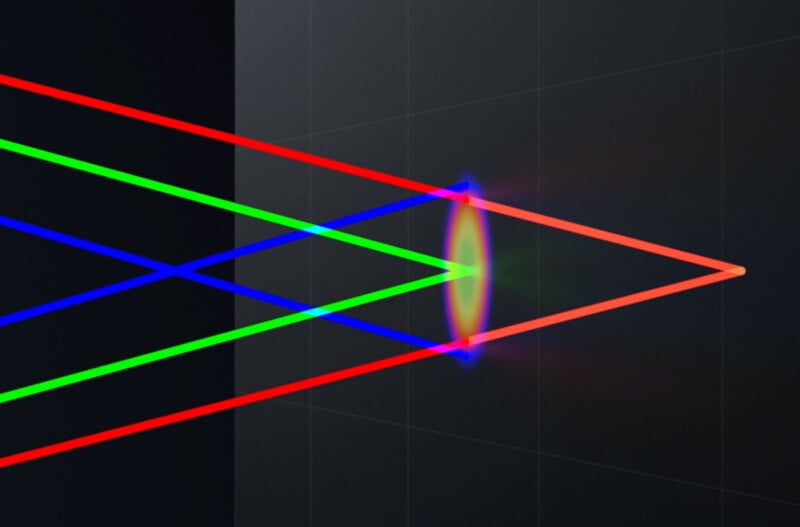
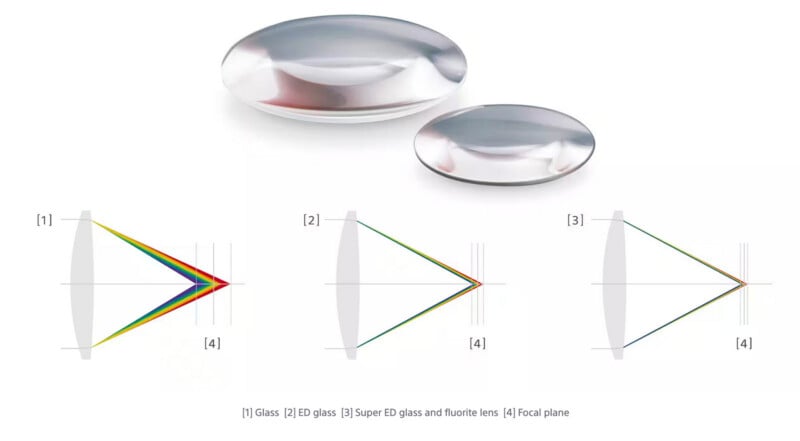
At its core, photography is the art of guiding light onto a flat plane—the sensor or film. In a perfect world, every wavelength of light within the visible spectrum (red, green, and blue) would travel through a lens and converge at the exact same point on the focal plane.
In the real world, physics intervenes. Because glass refracts different wavelengths of light at different angles, red, green, and blue light do not always land in the same spot. This is known as dispersion. When these wavelengths miss their intended mark along the optical axis, the resulting image displays a "smearing" of color.
While lateral chromatic aberration occurs when different colors focus at different positions across the frame (often appearing as blue or purple fringing toward the corners), LoCA occurs along the optical axis. Because these wavelengths focus at different depths, the result is color fringing in the out-of-focus areas of the image. Typically, a photographer will see magenta fringing in the foreground and green fringing in the background, creating a distracting "glow" around sharp subjects.
A Chronology of Optical Evolution
The battle against chromatic aberration is as old as the lens itself. Early glassmakers struggled with the simple refractive index of standard crown and flint glass. By the 18th century, the invention of the "achromatic doublet"—a pair of lenses designed to bring two wavelengths into focus—provided the first major breakthrough.
However, the rapid growth of the digital era, particularly the demand for "fast" prime lenses (f/1.2, f/1.4), reignited the problem. As lenses grew in complexity to handle larger apertures, the path for light became increasingly convoluted.
- The Early Days: Lenses were limited by basic glass chemistry, often resulting in heavy "purple fringing" that was accepted as a byproduct of photography.
- The ED Revolution: In the late 20th century, manufacturers began introducing Extra-low Dispersion (ED) glass. By using materials with specific refractive properties, engineers could drastically reduce the scattering of light.
- The Digital Correction Era: As we entered the 2010s, software correction—using camera profiles to identify and "subtract" color fringing—became a standard workflow step. Yet, because LoCA is tied to the depth-of-field, software often struggles to remove it without sacrificing sharpness or degrading the texture of the bokeh.
- The Current Frontier: Today, we see the rise of specialized synthetic materials, such as Canon’s Blue Spectrum Refractive (BR) elements and Nikon’s multi-focus systems, which represent the cutting edge of physical, rather than digital, correction.
Supporting Data: Why "Fast" Lenses Struggle
The difficulty of correcting LoCA is directly tied to the "geometry" of a lens. A lens with a large aperture (e.g., f/1.2) captures a massive volume of light. To keep that light sharp, it must pass through numerous curved glass elements. Each surface is an opportunity for light to deviate from its path.
According to data provided by manufacturers like Canon and Fujifilm, the struggle is a constant trade-off. To suppress LoCA, engineers often add more lens elements to "bend" the light back into alignment. However, every extra element adds weight, increases the cost, and can potentially introduce new types of optical distortions, such as flare or reduced contrast.
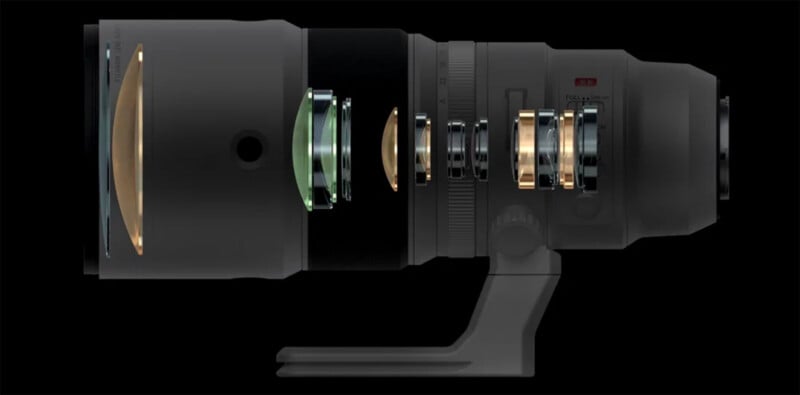
For instance, the Fujifilm XF500mm f/5.6 R LM OIS WR utilizes 21 elements, including five ED and two Super ED lenses. This specific configuration is a masterclass in balance: it manages to suppress LoCA while keeping the physical size of the lens manageable for handheld use. It is a constant tug-of-war between the "ideal" optical path and the physical reality of manufacturing costs and portability.

Official Perspectives from the Industry Leaders
Leading optical manufacturers have adopted distinct strategies to combat LoCA, reflecting their unique engineering philosophies.
Nikon’s "Multi-Focus" Strategy
Nikon has tackled the issue through advanced mechanical control. Mark Cruz, Senior Manager of Product DCIL at Nikon Inc., notes that the company’s "multi-focus" systems are a game-changer, particularly for macro photography. "This system achieves high focusing accuracy at close distances by simultaneously controlling two AF drive units," Cruz explains. By moving different groups of elements independently, the lens can compensate for aberrations in real-time, effectively "tuning" the optics to the subject distance.

Fujifilm’s Material Science
Fujifilm leans heavily into the properties of its glass materials. "We minimize longitudinal chromatic aberration by using ED and Super ED lenses that reduce light dispersion," the company stated. By combining these with a precise arrangement of concave and convex elements, they counteract the scattering of light before it ever reaches the sensor.
Canon’s BR Elements
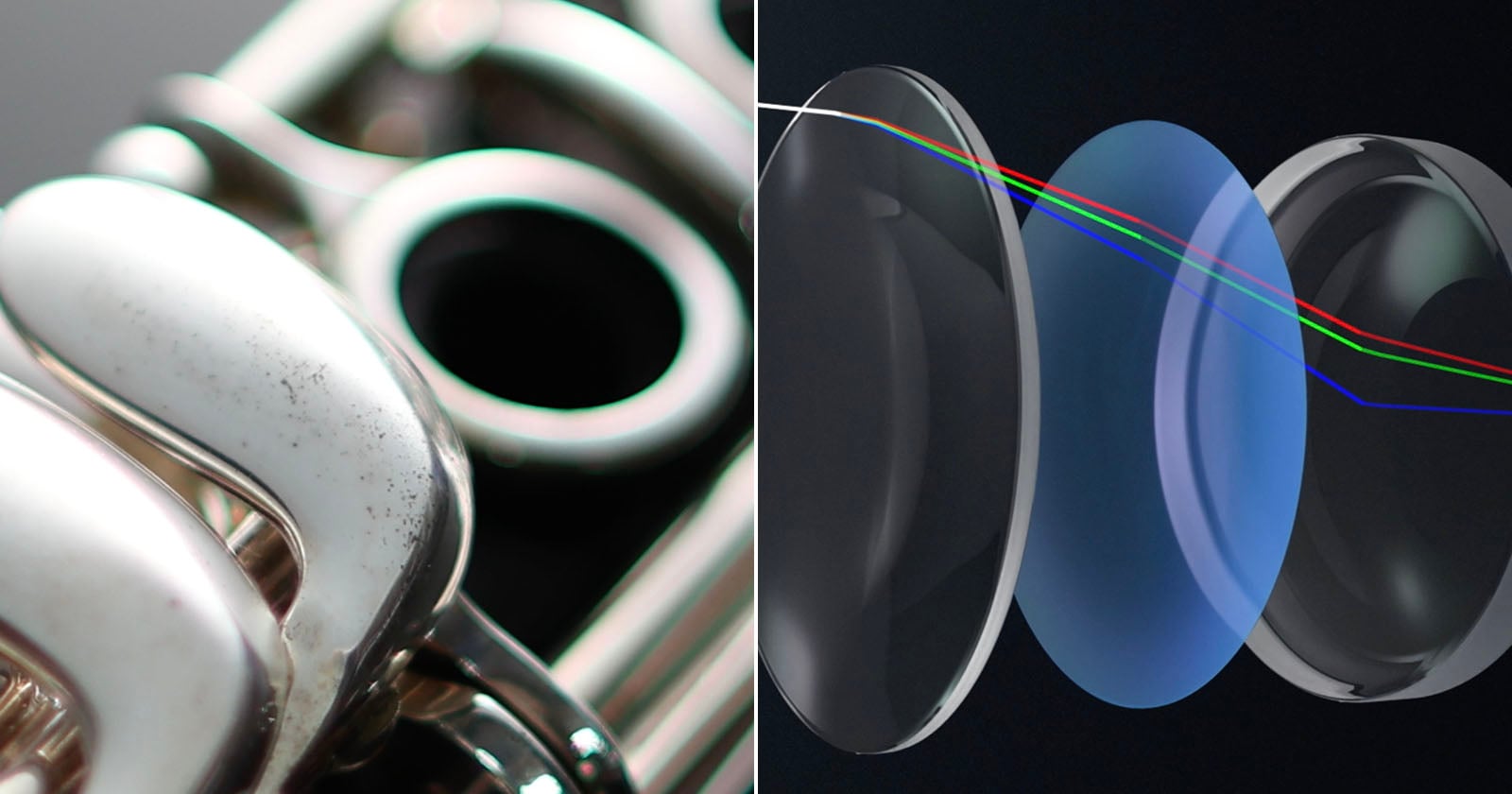
Canon has taken an unconventional route with its Blue Spectrum Refractive (BR) optics. Recognizing that blue light is the most difficult to bring into focus, Canon developed a unique organic material that bends blue light differently than standard glass. By sandwiching this thin element between traditional lenses, they can "pull" the stray blue wavelengths back into the focal plane, a technique that has been pivotal in their high-end RF-mount prime lenses.

Implications for the Modern Photographer
The existence of LoCA has significant implications for how we shoot and edit.
1. The "Pre-Capture" Mandate: Because LoCA affects the bokeh, it is fundamentally "baked" into the image’s structure. Software can desaturate the green or magenta, but it cannot fix the fact that the light did not focus properly. Therefore, the most critical "correction" happens at the moment of capture. Choosing high-quality glass, particularly prime lenses designed with modern refractive elements, remains the gold standard.
2. The Limits of Post-Processing: While tools like Adobe Lightroom or DxO PhotoLab offer "Defringe" sliders, they are often blunt instruments. They work by targeting specific color channels. If your subject has natural green or purple hues, software may accidentally strip the color out of the subject itself.
3. Workflow Adjustments: Professional photographers are increasingly learning to "shoot through" the aberration. If a lens is known to exhibit LoCA at f/1.4, stepping down to f/2.0 or f/2.8 often eliminates the issue entirely by narrowing the path the light must travel.
Conclusion: The Delicate Dance of Light
Longitudinal Chromatic Aberration serves as a humbling reminder that photography is, first and foremost, a science. Even in an era of AI-driven post-processing and computational photography, the laws of physics remain immutable.
The effort to eliminate LoCA is a testament to the dedication of optical engineers. It is a "delicate dance" where every gram of glass, every curve, and every coating is a calculated move to capture a more perfect reality. As technology advances, we may one day see the total eradication of color fringing, but for now, the presence of LoCA serves as a marker of the extreme capabilities—and the physical boundaries—of the gear we use to document our world.

Whether you are a pixel-peeper obsessed with clinical sharpness or a portrait artist who values the "character" of a lens, understanding LoCA is key to mastering the light that defines your craft.
 Azzam Bilal Chamdy
  Basiran