
In the digital age, a video clip of a spotted cat frolicking with a domestic tabby on Instagram often draws thousands of "likes" and hearts. Commenters frequently clamor for the location, expressing a desire to own a hybrid kitten—a "designer" pet that blends the exotic aesthetic of the wild with the temperament of a house cat.
However, beneath the veneer of social media cuteness lies a biological catastrophe. Conservationists warn that what appears to be an adorable interspecies encounter is, in reality, a "hybridization event." This process, if left unchecked, threatens to erase the unique genetic identity of wild species from the face of the earth, leaving behind a diluted lineage that can neither thrive in the wild nor fully adapt to domestic life.
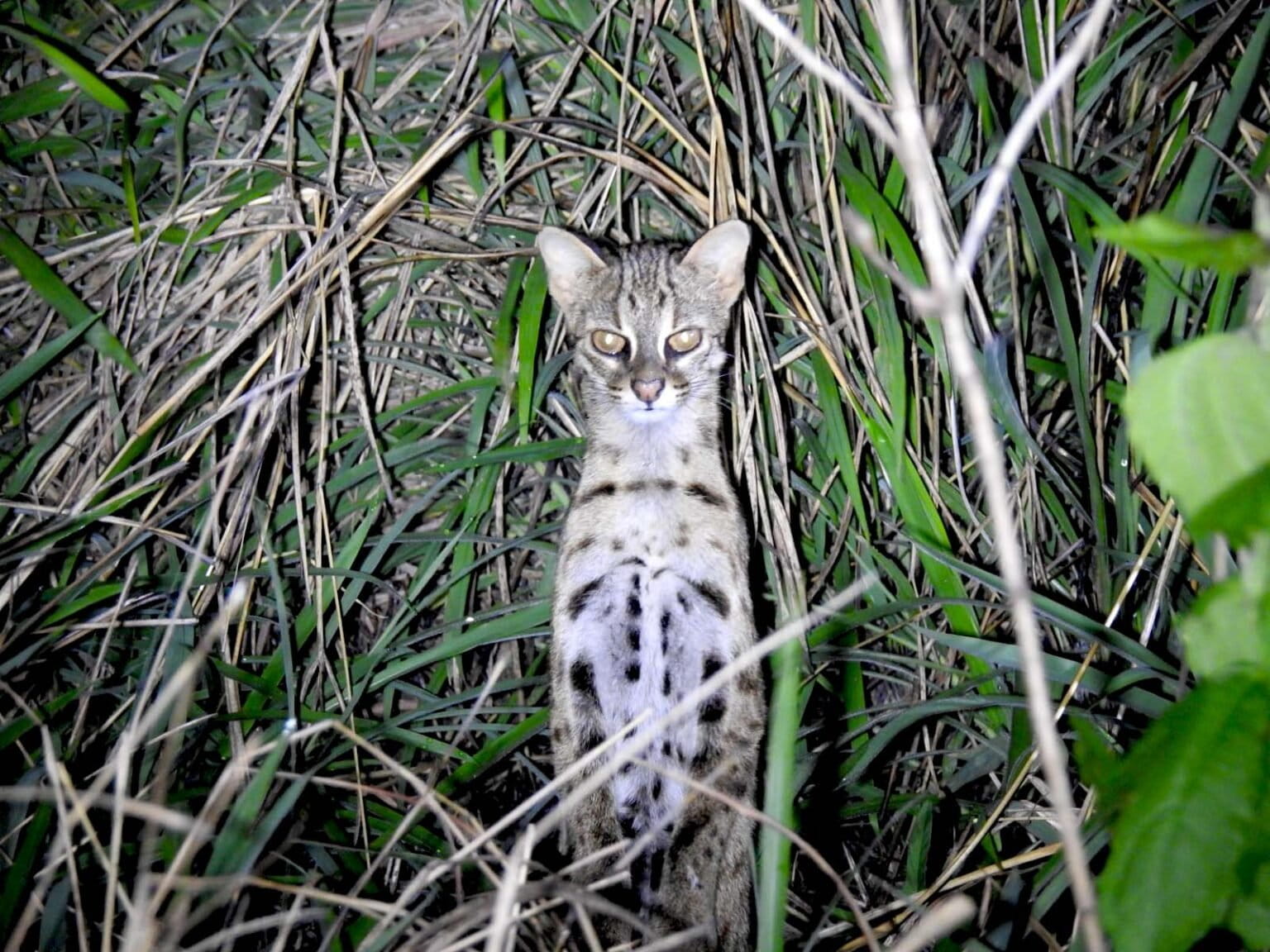
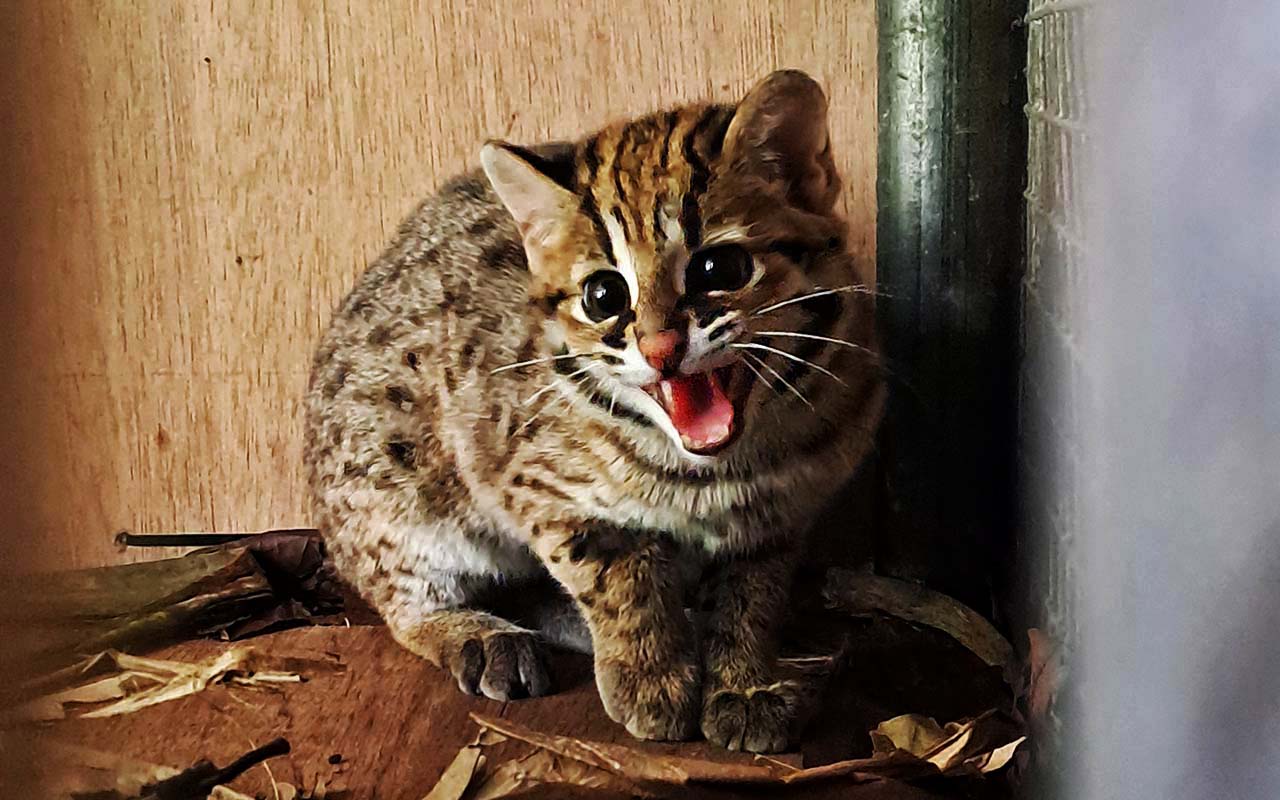
In Indonesia, the focal point of this crisis is the Sunda leopard cat (Prionailurus javanensis), commonly referred to as the kucing kuwuk. Once misclassified as a subspecies of the broader Prionailurus bengalensis, this small, elusive felid is the smallest wild cat in the archipelago. It inhabits diverse landscapes—from rice paddies and agroforestry plots to the edges of palm oil plantations—yet its future is increasingly precarious.
The Anatomy of a Conservation Crisis
The kucing kuwuk is roughly the size of a domestic cat, a physical similarity that acts as both a mask and a death sentence. With its distinct brown-spotted coat and piercing, sharp gaze, it is frequently mistaken by local residents for a common stray. This lack of public recognition facilitates the illegal pet trade and accidental crossbreeding.
Under Indonesian law, the kucing kuwuk is a strictly protected species, as stipulated by the Minister of Environment and Forestry Regulation No. P.106 of 2018. Despite this legal shield, the reality on the ground is stark. As human settlements expand into the fringes of forests and deforestation fragments their natural habitats, these cats are forced into closer proximity with human environments. This proximity is the primary catalyst for the hybridization crisis.
The trend of social media users sharing videos of these encounters is not a singular phenomenon. Over the past few years, dozens of videos documenting interactions, and in some cases, the mating of wild cats with domestic ones, have circulated widely. Many of these videos are uploaded with a sense of pride, as the owners celebrate their "discovery" of a wild animal near their property, blissfully unaware that they are documenting an act that contributes to the biological erosion of a protected species.
Expert Perspectives: The Irreversible Damage of Hybridization
Erwin Wilianto, founder of the Save Indonesian Nature & Threatened Species (SINTAS) Indonesia and a member of the IUCN-SSC Cat Specialist Group, offers a sobering assessment of the situation.
"The process of hybridization is illegal because it destroys the purity of the species, especially in protected wild animals," Wilianto explains. "Beyond the potential for reduced fertility in the offspring, these hybrids often suffer from immunological weaknesses or physical deformities. Genetically, they are simply not compatible."
Wilianto emphasizes that wild cats, by their nature, are programmed to avoid mating with different species. "Only individuals whose behaviors have been compromised—often by human interference—will engage in such acts. This indicates that the wild cat has been conditioned or forced into a behavior that is completely unnatural. Once a wild animal loses its instinctual avoidance of domestic animals, it is effectively lost to the wild. They are no longer candidates for rewilding."
The danger extends beyond genetics. Domestic cats are common carriers of diseases and pathogens that are entirely foreign to wild ecosystems. When a wild cat engages in close contact—or mating—with a domestic animal, it is exposed to viruses and bacteria for which it has no natural immunity.
"It is a tragedy driven by human ego," Wilianto adds. "People want a ‘cool’ pet, and they ignore the long-term ecological consequences. Unfortunately, our law enforcement regarding this issue remains critically weak."
Lessons from Abroad: The "Hybrid Swarm" Phenomenon
The crisis in Indonesia is not occurring in a vacuum. Researchers in other parts of the world have spent decades documenting the devastating effects of hybridization between wild and domestic felines.
A pivotal study led by Alves et al. (2023), published in the journal Transboundary and Emerging Diseases, provides a harrowing look at the situation in Northern Scotland. The team examined 120 wild cats across six priority conservation areas between 2015 and 2019. The findings were staggering: they identified at least 11 infectious agents circulating within the "hybrid swarm"—a population that has become so intermixed that the line between wild and domestic has all but vanished.
The list of pathogens discovered in these hybrids reads like a medical nightmare: Feline Immunodeficiency Virus (FIV), Feline Leukaemia Virus (FeLV), Feline calicivirus, Feline herpesvirus, and various pathogenic bacteria such as Chlamydia felis, Mycoplasma felis, and Bordetella bronchiseptica.
"Hybridization between wild and domestic species poses a serious challenge to conservation management and has the potential to lead to extinction," the researchers noted. "Alongside this, the transmission of disease is inevitable. Historically, the link between these two phenomena has been largely overlooked, but it is a primary driver of population decline."
The Scottish study acts as a warning for Indonesia. The conditions that created the "hybrid swarm" in Scotland—habitat fragmentation and the encroachment of domestic animals—are present and accelerating across the Indonesian archipelago.
Implications: A Looming Ecological Tipping Point
The pattern of hybridization in Indonesia is evolving at a pace that is difficult for authorities to track. The synergy of three primary factors creates a "perfect storm":
- Deforestation and Habitat Loss: As wild cats lose their forest homes, they are pushed into the "human-wildlife interface."
- Lack of Public Awareness: The confusion between kucing kuwuk and domestic strays prevents the public from treating sightings with the caution and distance required for wildlife management.
- Commercial Exploitation: The rise of online marketplaces that monetize "exotic" hybrid kittens creates a perverse incentive for people to capture, breed, or encourage the crossbreeding of these animals.
When these factors converge, the result is an ecological crisis. The loss of genetic purity is not just a theoretical concern; it is a fundamental loss of biodiversity. A wild cat that is half-domestic loses its ability to survive the rigors of the forest, its hunting instincts may be dulled, and it may be prone to illnesses that can be transmitted back to the remaining pure-bred wild populations.
Furthermore, as noted in the research, wild animals have evolved alongside specific pathogens as part of a functional, balanced ecosystem. Introducing domestic pathogens into this delicate balance via hybridization can lead to rapid outbreaks that may decimate local wild populations in a very short time.
Moving Toward Solutions
Addressing this issue requires a multi-pronged approach that goes beyond mere legal warnings.
1. Strengthening Legal Enforcement
While the kucing kuwuk is protected under Indonesian law, enforcement must be extended to include the illegal trade and "backyard breeding" of hybrids. Current penalties are often perceived as insufficient, and the lack of monitoring on digital platforms allows the trade to flourish underground.
2. Community-Based Conservation
Because many interactions happen at the village level, educating local communities is vital. Farmers and plantation owners need to understand that the kucing kuwuk is not a pest or a stray, but a crucial component of the ecosystem that helps control rodent populations. Establishing "safe zones" where wild cats can travel without encountering domestic animals is a strategy that requires local cooperation.
3. Veterinary Intervention and Surveillance
The veterinary community in Indonesia must become more involved in monitoring the health of domestic cat populations near forest borders. Vaccination programs for domestic cats in these areas could help reduce the "reservoir" of diseases that threaten to spill over into the wild cat population.
4. Digital Literacy and Responsibility
Social media platforms have a role to play in curbing this trend. Algorithms that promote "cute" videos of wild animals being handled as pets should be scrutinized. Platforms should implement reporting mechanisms for suspected illegal wildlife trade and provide educational pop-ups when users search for content involving protected species.
Conclusion: The Choice is Ours
The kucing kuwuk stands at a crossroads. As we continue to modify the landscape and blur the lines between our homes and their habitats, we are inadvertently engineering their decline. The allure of a unique, spotted hybrid kitten is a temporary satisfaction that costs us a permanent piece of our natural heritage.
"Conservation is not just about protecting land; it is about protecting the integrity of species," says Wilianto. "If we continue to allow this hybridization to proceed because we are too distracted by viral videos, we are essentially complicit in the extinction of these animals. Once the genetic line is broken, it cannot be fixed."
The evidence from Scotland and the warnings from local experts are clear: we are witnessing the formation of a hybrid swarm that threatens to swallow the wild cat species in Indonesia. Without immediate, concerted action to separate domestic and wild populations and a radical shift in public perception regarding the ownership of wild animals, the kucing kuwuk may soon exist only in our digital memories—and no longer in the forests where it belongs.