
 By Siti Muinah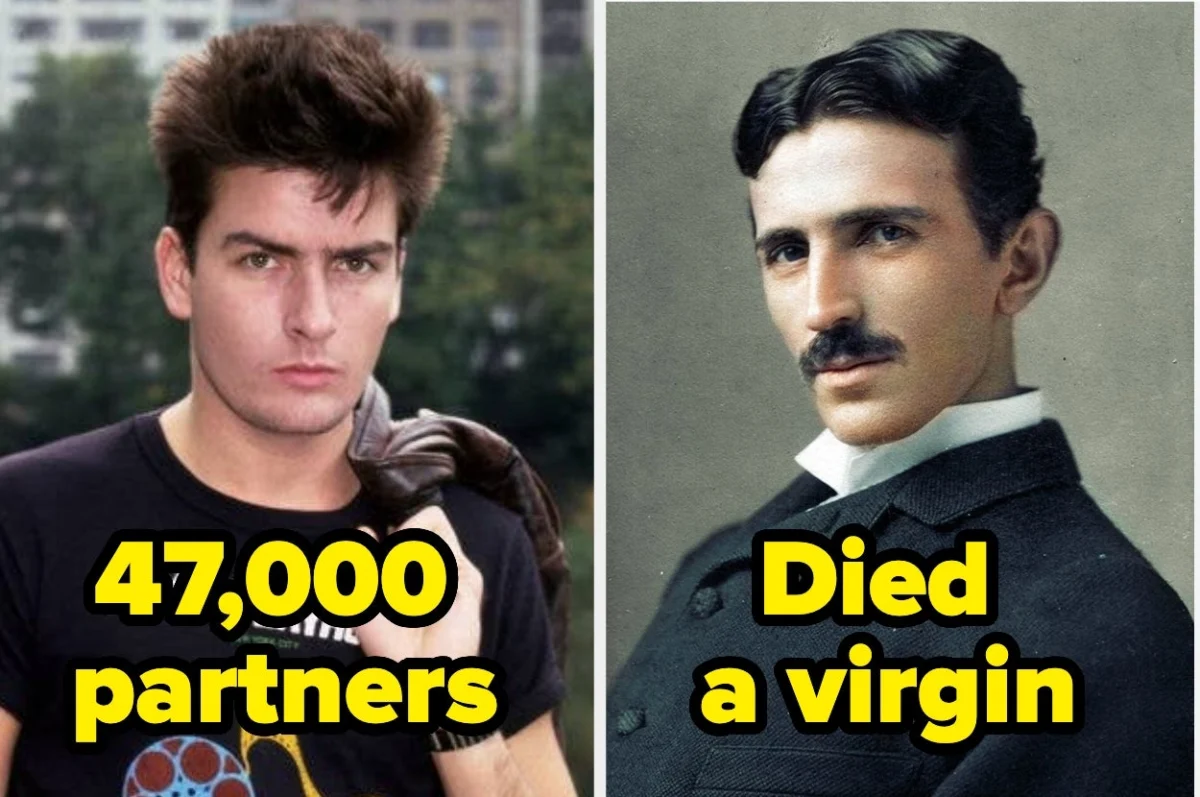
The public’s fascination with the private lives of celebrities is a cornerstone of modern culture. From the salacious tabloids of the 20th century to the unfiltered transparency of today’s social media era, the sexual habits—or lack thereof—of the famous have long served as a mirror for societal norms. When public figures disclose their "body counts," it often triggers a polarized reaction: fascination, skepticism, or moral judgment. Conversely, those who occupy the other end of the spectrum—the voluntarily celibate or the perpetually private—often face intense scrutiny, as their lack of conventional romantic activity challenges the assumption that sexual fulfillment is a requirement for a life well-lived.
The Myth of the "Body Count" and the Psychology of Boasting
In contemporary discourse, the act of tallying sexual partners—often referred to as a "body count"—is frequently framed as a badge of honor or a metric of virility. However, these figures are rarely verifiable and often appear to be hyperbolic projections of a persona rather than clinical data.
The High-Volume Claims: Ray J, Wilt Chamberlain, and Gene Simmons
The narrative of the hyper-sexualized celebrity is best exemplified by figures like Ray J, who claimed on the Funky Friday podcast that he had been with approximately 12,500 women. When challenged by host Cam Newton, Ray J attributed this feat to the nature of "tour life," suggesting a rate of five to ten partners per day. Similarly, basketball legend Wilt Chamberlain famously claimed in his 1991 memoir, A View from Above, to have slept with 20,000 women.
These figures are statistically improbable, as critics like Shaquille O’Neal have noted. O’Neal pointed out the logistical impossibility of such claims in an era before digital connectivity, noting that meeting and vetting such a high volume of partners would require a level of dedication that contradicts the demands of professional sports.
Other icons have used similar, albeit slightly more grounded, figures to build their brand. Gene Simmons of KISS has maintained for years that he slept with 5,000 women during his career. Unlike some, Simmons’ claims were substantiated by a collection of Polaroids, which his wife, Shannon Tweed, reportedly insisted he destroy as part of a marriage ritual in 2011. Similarly, pro wrestler Ric Flair boasted of 10,000 partners, though he later expressed public regret over the comment, citing the impact of his hyper-masculine public persona on his relationship with his grandchildren.
The Celibate Intellectuals: A History of Refusal
While some celebrities lean into hyper-sexuality, history provides a fascinating counter-narrative: the figures who, either by nature or by design, remained celibate. For these individuals, sexual abstinence was not a struggle, but rather a redirection of energy toward intellectual or spiritual pursuits.
Isaac Newton and the Physics of Solitude
Sir Isaac Newton, perhaps the most influential scientist in human history, stands as the archetype of the isolated genius. Throughout his life, there is no documented evidence of a romantic or sexual relationship. Biographers describe a man who was socially withdrawn, emotionally guarded, and deeply invested in theology, alchemy, and mathematics. Modern scholars often struggle to classify Newton’s orientation, but the consensus remains that he found intimacy unnecessary, if not entirely distracting, from his work.
Florence Nightingale and the "Calling"
Florence Nightingale, the founder of modern nursing, provides a distinct contrast. In Victorian England, where marriage was the expected trajectory for a woman of her social standing, Nightingale famously rejected multiple suitors. She viewed her life as a "calling" from God to serve the sick and vulnerable. For Nightingale, marriage represented a structural barrier to her life’s work. Whether her choice was driven by a genuine lack of sexual attraction, an asexual orientation, or a fierce devotion to her career, her legacy remains rooted in her ability to prioritize a global mission over traditional domesticity.
The Case of Nikola Tesla
Nikola Tesla, the visionary engineer who electrified the modern world, viewed his celibacy as an essential component of his inventive process. In interviews during the 1920s, Tesla suggested that he had "sacrificed" romantic love to focus on his work. Interestingly, his only deep emotional attachment in his later years was to a white pigeon, an obsession that has fueled endless speculation among historians. Tesla’s life serves as a case study in the trade-offs often made by those who achieve extreme intellectual focus.
The Intersection of Addiction and Intimacy
For others, the pursuit of sexual gratification was not a casual boast but a manifestation of deeper psychological distress.
Charlie Sheen and Lamar Odom
The life of Charlie Sheen offers a stark look at the intersection of sex addiction and public health. Having claimed to have been with 47,000 people, Sheen’s history is inextricably linked with the darker sides of Hollywood excess. His testimony during the trial of madam Heidi Fleiss revealed the massive financial resources he funneled into sexual services. His later announcement regarding his HIV-positive status and his subsequent journey into sobriety and celibacy highlight the destructive nature of unchecked compulsions.
Lamar Odom’s experience mirrors this, with his 2019 memoir, Darkness to Light, detailing a struggle with sex addiction that developed alongside a battle with substance abuse. Odom has been transparent about how early-life trauma—the loss of his mother and child—fueled his search for validation through sex and drugs. His recent recovery efforts underscore that for many, "high numbers" are often a symptom of underlying pain rather than personal achievement.
The Cultural Implications of Public Disclosure
Why do we continue to care about these numbers? The discrepancy between how men and women discuss their sexual history remains a potent indicator of lingering societal double standards.
The Double Standard: The "MILF" Archetype
Jennifer Coolidge’s 2022 comments regarding the "benefits" of her role in American Pie—where she jokingly implied she had slept with 200 people—highlight the gendered nature of sexual boasting. When a man boasts of thousands of partners, he is often viewed as a "legend." When a woman does so, she is historically subjected to moral policing. Coolidge’s ability to turn this into a comedic, subversive moment highlights a shifting tide in how public figures own their narratives.
The "Virginity" Narrative in Sports
Athletes like Lolo Jones, Tim Tebow, and A.C. Green have used their public commitment to pre-marital virginity to define their personal brands. These disclosures are often rooted in religious belief and are treated by the media as a counter-cultural act of discipline. Unlike the historical figures who were "private" about their celibacy, these modern athletes have made their abstinence a public component of their identity, signaling a shift in how personal values are marketed in the sports world.
Conclusion: The Search for Meaning
Whether it is the "hamburger pants on a safari" logic of Charlie Sheen or the quiet, dedicated solitude of Immanuel Kant, the sexual histories of the famous tell us more about our own societal obsessions than they do about the individuals themselves. We live in an era that demands total transparency, yet we are constantly confronted with the reality that human intimacy is, and always will be, a deeply private, complex, and often unknowable domain.
As we continue to analyze these stories, it is perhaps more productive to view these accounts not as definitive biological or historical truths, but as carefully constructed narratives. Some are masks, some are confessions, and others are simply the legends we create to fill the silence around the people we put on pedestals. Ultimately, the spectrum of human intimacy—from the hyper-sexualized to the completely celibate—remains one of the few areas where the truth is rarely as simple as the headlines suggest.
 Ammar Sabilarrohman
  rifanmuazin
  Suro Senen