
 By Ali Ikhwan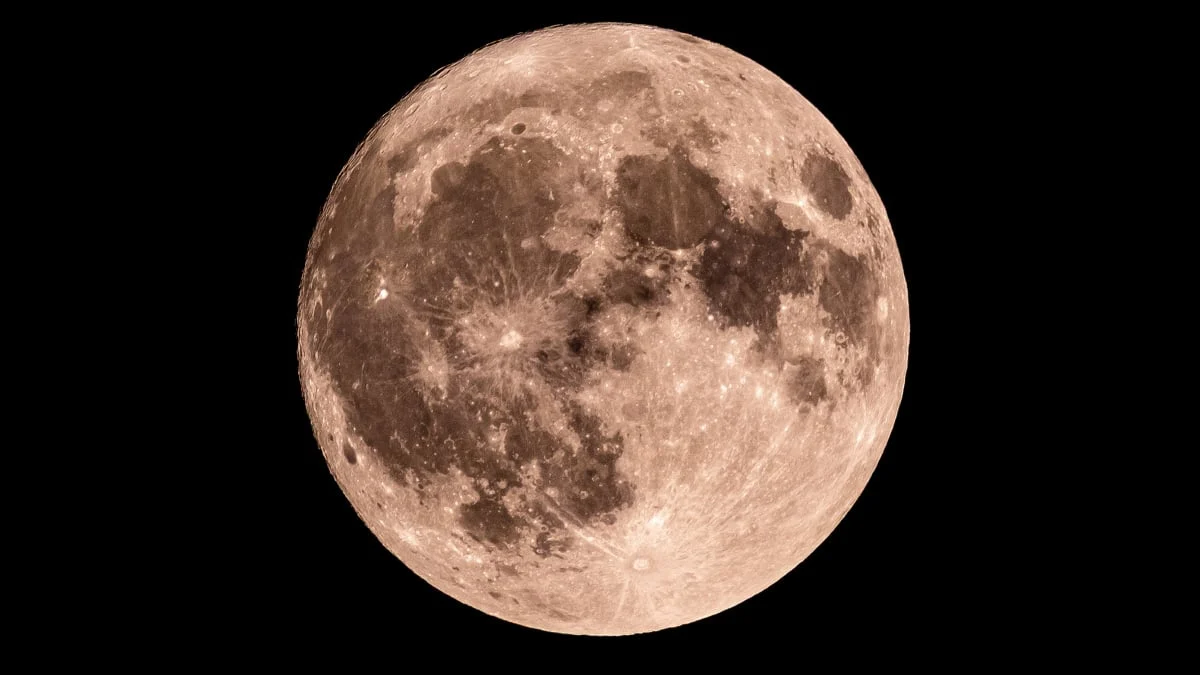
Main Facts: The Return of the Lunar Crescent
On Thursday, July 16, skywatchers around the globe began welcoming the return of the Moon to the evening sky, marking the official transition into the waxing crescent phase of the lunar cycle. According to data retrieved from NASA’s Daily Moon Guide tracker, the Moon’s disk is currently illuminated at a mere 5%. This slender sliver of light represents the very beginning of the Moon’s journey toward its next peak of illumination—the Full Moon—which is projected to occur on July 29.
       Waxing Crescent Phase (Northern Hemisphere)

                     . - ~ ~ ~ - .
                 . '               ' .
               /       . - ~ ~ - .
              /      /
             |      |               |    |  <-- 5% Illumination
             |      |               |    |      (Right side lit)
                                 /    /
                      ' - _ _ - '     /
                 ' .               . '
                     ' - _ _ _ - '
For observers in the Northern Hemisphere, this newly reclaimed light appears on the right side of the lunar disk. Conversely, for those viewing the sky from the Southern Hemisphere, the crescent appears on the left. This perspective shift is a result of the observer’s orientation on our spherical planet; looking "up" into space from opposite hemispheres tilts one’s frame of reference by 180 degrees.
At just 5% illumination, the Moon presents a notoriously difficult target for detailed geological observation. Even with the aid of high-powered binoculars or amateur telescopes, the illuminated surface area is too narrow, and its proximity to the horizon is too close, to easily resolve major surface features such as crater walls, mountain ranges, or the dark basaltic plains known as maria. During this phase, the Moon is positioned close to the Sun from our earthly vantage point, meaning it sets shortly after dusk, leaving only a brief window for observation through the thickest, most turbulent layers of the Earth’s atmosphere.
Chronology: The 29.5-Day Lunar Cycle and Its Eight Phases
To understand the current positioning of the Moon, one must examine the broader choreography of the Earth-Moon-Sun system. The Moon does not produce its own light; instead, it acts as a giant cosmic mirror, reflecting the light of the Sun. As the Moon orbits the Earth, the angle between the Earth, the Moon, and the Sun continuously shifts. This changing geometry alters the amount of the Moon’s illuminated hemisphere that is visible from our planet.
This cycle, known to astronomers as a synodic month or lunation, lasts approximately 29.53 days. It is slightly longer than the sidereal month (27.3 days)—the time it takes the Moon to complete one 360-degree orbit around the Earth relative to the distant stars—because as the Moon orbits the Earth, the Earth is also moving along its orbit around the Sun. The Moon must travel a little farther to realign in the same phase relative to the Sun and Earth.
Over the course of this 29.5-day cycle, the Moon progresses systematically through eight distinct phases:
  [Sunlight] --->   ( New Moon )  --->  ( Waxing Crescent ) ---> [ First Quarter ]
                           ^                                             |
                           |                                             v
                    ( Waning Crescent )                           ( Waxing Gibbous )
                           ^                                             |
                           |                                             v
                    [ Third Quarter ]  <---  ( Waning Gibbous )  <---  ( Full Moon )
1. New Moon (0% Illuminated)
The cycle begins when the Moon is positioned directly between the Earth and the Sun, a configuration known as conjunction. In this position, the illuminated half of the Moon faces entirely away from Earth, while the side facing us is shrouded in darkness. Consequently, the Moon remains virtually invisible to the naked eye, lost in the glare of the Sun.
2. Waxing Crescent (1% to 49% Illuminated)
As the Moon moves eastward in its orbit, away from the Sun-Earth line, a thin sliver of the illuminated side becomes visible from Earth. This is the phase observed on July 16. The term "waxing" refers to the growing amount of illuminated surface area. During this phase, observers can often witness "earthshine"—a faint, ghostly glow on the dark portion of the Moon caused by sunlight reflecting off Earth’s clouds and oceans onto the lunar surface.
3. First Quarter (50% Illuminated)
Approximately one week after the New Moon, the Moon reaches a position 90 degrees away from the Sun in the sky. From Earth, we see exactly half of the lunar disk illuminated. This phase is called the "First Quarter" because the Moon has completed one-quarter of its monthly orbit. The boundary between day and night on the Moon—the terminator—is highly defined during this phase, casting long shadows that make craters and mountains highly visible through telescopes.
4. Waxing Gibbous (51% to 99% Illuminated)
Following the First Quarter, the illuminated portion continues to expand. "Gibbous" comes from the Latin word for humpbacked, describing the bulging shape of the lit portion. During this phase, the Moon rises in the late afternoon and remains visible through most of the night.
5. Full Moon (100% Illuminated)
When the Moon is positioned 180 degrees opposite the Sun, with the Earth situated between them (though usually slightly above or below the orbital plane to prevent a lunar eclipse), the entire near side of the Moon is fully illuminated. This marks the midpoint of the synodic cycle. The upcoming Full Moon is scheduled to grace the night sky on July 29.
6. Waning Gibbous (99% to 51% Illuminated)
After reaching peak illumination, the visible light begins to shrink, or "wane." The darkness creeps in from the right side (in the Northern Hemisphere), and the Moon begins rising later and later each night, becoming a prominent feature of the early morning sky.
7. Third Quarter (50% Illuminated)
Also known as the Last Quarter, this phase is the mirror image of the First Quarter. Exactly half of the Moon is illuminated—specifically the left side for Northern Hemisphere observers. The Moon rises around midnight and sets around noon.
8. Waning Crescent (49% to 1% Illuminated)
The final phase of the cycle features a shrinking sliver of light on the left side of the disk. The Moon rises in the pre-dawn hours, drawing closer to the Sun once more, before disappearing entirely back into the New Moon phase to restart the cycle.
Supporting Data: The Physics of Illumination and Visual Observation
To appreciate why a 5% illuminated Moon is difficult to resolve, it is necessary to examine the physics of lunar reflectivity and atmospheric science.
+------------------------------------+----------------------------------+
| Astronomical Parameter             | Value / Description              |
+------------------------------------+----------------------------------+
| Synodic Month Duration             | 29.53059 days                    |
| Average Lunar Albedo               | 0.12 (reflects 12% of light)     |
| Current Phase Illumination (July 16)| ~5.0%                            |
| Target Date for Full Moon          | July 29                          |
| Sidereal Orbit Period              | 27.32166 days                    |
+------------------------------------+----------------------------------+
The Challenge of Lunar Albedo and Contrast
The Moon is actually a highly dark object. Its average albedo—the measure of how much light a surface reflects—is approximately 0.12, meaning it reflects only 12% of the sunlight that strikes it. This is roughly equivalent to the reflectivity of worn asphalt or coal.
When the Moon is at 5% illumination, the total amount of light reflected toward Earth is incredibly small. Compounding this issue is the optical phenomenon of contrast. Because the crescent is so thin and positioned close to the sunlit horizon during twilight, the background sky is still relatively bright. This lack of contrast makes it difficult for the human eye or camera sensors to resolve fine surface details.
Atmospheric Interference (The "Seeing" Factor)
When the Moon is in its waxing crescent phase, it is positioned low on the western horizon during evening twilight. Observing objects low on the horizon requires looking through a much thicker column of Earth’s atmosphere than observing objects directly overhead (at the zenith).
This atmospheric path, known as airmass, scatters light and introduces severe distortion caused by thermal turbulence. In astronomical terms, this is referred to as poor "seeing" conditions. The moving pockets of warm and cold air act as tiny, unstable lenses, blurring the fine details of craters like Crisium or Langrenus, which are located near the eastern limb where the crescent light first dawns.
Tidal Locking
A common misconception is that the changing phases mean we see different sides of the Moon. In reality, due to a gravitational phenomenon known as tidal locking, the Moon takes exactly the same time to rotate once on its axis as it does to complete one orbit around the Earth (27.3 days). Consequently, the same side—the near side—always faces our planet. The phases simply represent the shifting boundary of sunlight crossing this familiar face.
Official Responses: Insights from Space Agencies and Astronomers
Space agencies like NASA and the European Space Agency (ESA) continuously track lunar phases, not only to foster public interest in science but also to plan complex robotic and human spaceflight missions. NASA’s Daily Moon Guide is a key public outreach tool, translating complex orbital mechanics into accessible daily data for amateur astronomers and educators.
Astronomers emphasize that while a 5% crescent is difficult for high-resolution imaging, it serves as an excellent teaching tool. Dr. Sarah Noble, a planetary geologist at NASA, has frequently highlighted the value of public lunar observation:
"The Moon is our gateway to the universe. By encouraging people to look up and track even the smallest slivers of light, like the 5% waxing crescent, we connect humanity to the broader rhythms of our solar system. It reminds us that our nearest celestial neighbor is a dynamic, changing world."
Furthermore, tracking the lunar cycle is critical for operational mission planning. For example, NASA’s Artemis program, which aims to land the next generation of astronauts on the lunar South Pole, relies heavily on precise lighting models. The South Pole of the Moon features areas of permanent shadow alongside peaks of almost eternal light.
Engineers must calculate the exact angles of solar illumination to ensure that solar-powered landers and rovers have access to energy, while also ensuring that astronauts have enough contrast and visibility to navigate the rugged, cratered terrain safely. A mistake in calculating how light falls across these features could result in hardware failure or hazardous landing conditions.
Implications: From Dark Sky Astronomy to Ecological Rhythms
The transition of the Moon through its phases has profound implications that extend far beyond simple stargazing, affecting astronomical research, ecological systems, and human cultural practices.
                      LUNAR PHASE IMPLICATIONS

        +---------------------------------------------------+
        |  Low Illumination (1% - 10%)                      |
        |  - Ideal for deep-sky astrophotography            |
        |  - Darker skies; faint nebulae & galaxies visible |
        |  - Prey animals more active under cover of dark   |
        +---------------------------------------------------+
                                 |
                                 v
        +---------------------------------------------------+
        |  High Illumination (90% - 100%)                   |
        |  - Washout of faint celestial objects             |
        |  - High light pollution for astronomers           |
        |  - Mass coral spawning triggered by moonlight     |
        +---------------------------------------------------+
Astrophotography and Dark Sky Astronomy
For deep-sky astronomers and astrophotographers, a 5% illuminated Moon is highly advantageous. A bright Moon acts as a major source of natural light pollution, washing out faint deep-sky objects such as nebulae, distant galaxies, and star clusters.
When the Moon is a mere crescent, it sets early in the evening, leaving behind a pristine, dark sky. This provides astronomers with a dark canvas to capture long-exposure images of the cosmos without the interfering glare of reflected sunlight.
Ecological Impacts
Many nocturnal organisms have evolved behaviors directly tied to the illumination level of the Moon.
- Predator-Prey Dynamics: During darker phases, such as the New Moon and early Waxing Crescent, small rodents and other prey animals are more active. The cover of darkness protects them from visual predators like owls and coyotes. Conversely, during a Full Moon, these prey species often restrict their movements to avoid detection.
- Marine Life Rhythms: Marine biology is deeply connected to the lunar cycle. Many species of coral synchronize their spawning events with specific phases of the Moon, relying on both tidal variations and the intensity of moonlight to coordinate the release of eggs and sperm.
Cultural and Calendrical Systems
For millennia, human societies have used the lunar cycle to track time. While the Gregorian calendar used by most of the modern world is solar-based, many cultures still observe lunar or lunisolar calendars.
- The Islamic Calendar (Hijri): This is a purely lunar calendar where the start of each month is determined by the physical sighting of the first crescent moon (hilal) following a New Moon. The 5% crescent observed on July 16 marks a critical marker for communities worldwide to establish the beginning of a new Islamic month.
- The Hebrew and Chinese Calendars: These lunisolar systems use the lunar phases to determine months, but periodically insert leap months to keep the calendar aligned with the solar agricultural seasons.
As the Moon continues its silent journey toward the July 29 Full Moon, it remains a bridge between the precision of orbital mechanics and the daily lives of inhabitants on Earth. Whether viewed as a scientific subject, an operational factor in space exploration, or a cultural clock, the slender crescent of July 16 reminds us of our place in a highly synchronized solar system.
 Raul Delapena Setiawan