
 By Nana Wu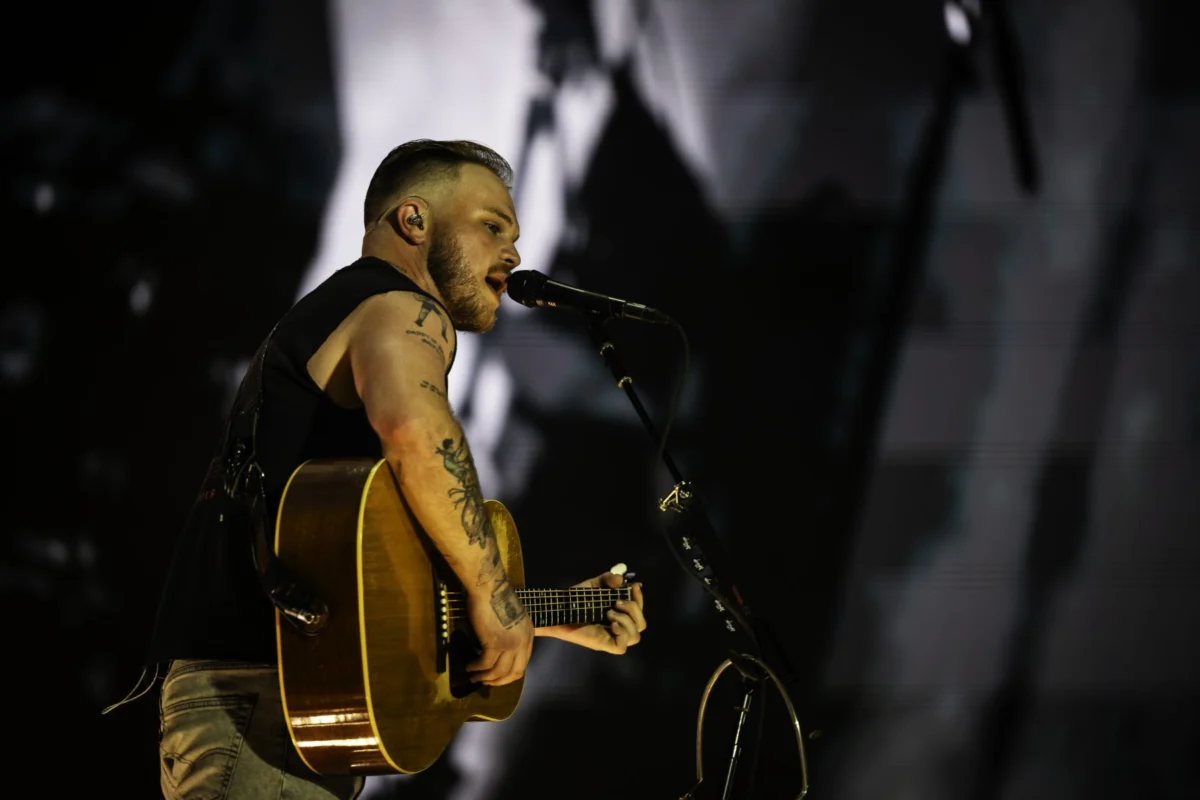
In a move that has reignited the intersection of music, politics, and the influence of powerful venue owners, Grammy-winning country star Zach Bryan made a bold, non-verbal statement during his "With Heaven On Tour" stop at Gillette Stadium in Foxborough, Massachusetts. On the evening of Friday, October 2, Bryan took the stage wearing a black T-shirt emblazoned with the words “Free Palestine.” Members of his touring band were seen in matching apparel, creating a unified visual protest that has since rippled across social media and ignited a fresh debate regarding the boundaries of free speech for touring artists.
The gesture, while silent, carried significant weight given the location. Gillette Stadium is the crown jewel of the Kraft Group’s real estate portfolio, chaired by Robert Kraft, the billionaire owner of the New England Patriots. Kraft, who has been a vocal opponent of rising antisemitism, was a central figure in the recent, high-profile controversy surrounding the removal of rapper Macklemore from the U.S. leg of Ed Sheeran’s "Loop Tour."
A Chronology of the Conflict
The tensions surrounding musical performances and political speech reached a boiling point in early September. The sequence of events leading to the current scrutiny began on September 4, when Macklemore, serving as a supporting act for Ed Sheeran, used his stage time at MetLife Stadium in New Jersey to express pro-Palestinian sentiments.
During his performance, Macklemore explicitly stated “Free Palestine” and performed his politically charged 2024 track, "Hind’s Hall." The song, which serves as a protest anthem, addresses the humanitarian crisis in Gaza and the student protests that swept across American university campuses. On the second night of the MetLife stand, Macklemore attempted to nuance his position, addressing the Jewish members of the audience and emphasizing that his criticism was directed at the Israeli government’s policies, not the Jewish community at large.
The response from advocacy groups and venue stakeholders was immediate. The Israeli-American Council (IAC) launched a formal petition demanding the rapper’s removal from the remaining tour dates. Reports soon emerged that several NFL stadium owners, including those with ties to the Jewish community and pro-Israel advocacy, threatened to cancel Sheeran’s performances if Macklemore remained on the bill. By September 14, the pressure culminated in the official announcement by tour promoter Messina Touring Group that Macklemore would be dropped from the tour.
The Role of Robert Kraft and Industry Fallout
Robert Kraft’s role in this saga was confirmed shortly after the announcement. In a public statement, Kraft acknowledged his involvement, citing a moral obligation to intervene when he perceived that discourse had crossed a line into antisemitism. While he acknowledged the reality of Palestinian suffering, he maintained that the rhetoric used by the artist was damaging and unacceptable within the spaces he controls.
The fallout was expansive and multifaceted. Ed Sheeran, caught in the middle of a public relations firestorm, issued a statement clarifying that the decision to remove Macklemore was made by the promoter rather than himself. Sheeran noted that he had engaged in direct, difficult conversations with Kraft in an attempt to find a middle ground, but to no avail.
The artistic community’s reaction was one of solidarity with the displaced artist. Several high-profile acts, including Finneas, Aaron Rowe, and the band Lukas Graham, exited the tour in protest. The Irish folk group Beoga, a long-time collaborator of Sheeran’s, also departed. Macklemore, meanwhile, took to Instagram to detail the financial toll his advocacy had taken, including the loss of brand deals, festival slots, and private performance opportunities. Despite the professional costs, the rapper pledged $1 million of his touring revenue to Palestinian aid organizations and pivoted to a successful, sold-out European tour titled the "Free Palestine Tour."
Ironically, despite the extreme measures taken to ensure the tour’s compliance with venue standards, Ed Sheeran’s scheduled shows at Gillette Stadium were ultimately cancelled due to severe weather, rendering the controversy surrounding the lineup moot for that specific venue.
Supporting Data and Historical Context: The Bryan Precedent
Zach Bryan’s choice to wear the shirt at the very venue where the Kraft Group exercises significant authority appears to be a calculated defiance of the industry’s current trend toward silencing political dissent. Bryan, known for his authentic, often gritty songwriting, is no stranger to public friction.

In October 2025, the artist faced heat from the highest levels of the U.S. government. A teaser for his song "Bad News," which featured lyrics referencing ICE (Immigration and Customs Enforcement) raids, prompted a sharp rebuke from the Department of Homeland Security and the White House. Homeland Security Secretary Kristi Noem publicly expressed her disappointment in the song’s themes. At the time, Bryan pushed back against the narrative, arguing that his music reflected the lived experiences of people on both sides of the political aisle and urged his fanbase to resist the polarization fueled by social media. The track was later included on his January 2026 album, With Heaven on Top.
Bryan’s latest action at Gillette Stadium fits a pattern of behavior where the artist prioritizes creative and ideological autonomy over the safety of corporate-sponsored touring circuits. By choosing the heart of the Kraft empire to display his message, Bryan has signaled that he is unwilling to abide by the unwritten rules that led to Macklemore’s exit.
Official Responses and Industry Silence
As of the time of writing, representatives for the Kraft Group have not responded to requests for comment regarding Bryan’s performance. The silence from the venue owners is telling; whereas the Macklemore situation involved a explicit, multi-day protest that included protest songs and direct addresses to the crowd, Bryan’s protest was visual and subtle.
By not addressing the shirt from the stage, Bryan avoided a direct "call-out" that would make it easier for venue owners to cite a breach of contract or "disruptive conduct." This strategic ambiguity places the onus on the venue owners: if they choose to act against Bryan, they risk being seen as heavy-handed censors, potentially fueling a massive backlash from the country music community, which prides itself on the perceived rugged independence of its artists.
Implications: The Future of Political Expression in Live Music
The incident at Gillette Stadium serves as a bellwether for the future of touring in an increasingly polarized political climate. The industry is currently facing a difficult question: to what extent can venue owners dictate the speech of the artists they host?
For decades, the "shut up and sing" mentality was the default expectation for mainstream performers. However, the rise of the creator economy and the direct connection between artists and fans via social media have dismantled that barrier. Artists today are often expected to take a stand on global issues, and those who remain silent are frequently criticized by their own fanbases.
Conversely, the power of venue owners—particularly those who hold stakes in the NFL and other major professional sports—cannot be overstated. These entities have the power to effectively "blackball" artists from the most lucrative touring venues in the country. The Macklemore incident demonstrated that this power is not just theoretical; it is a functioning mechanism of control in the modern touring landscape.
Zach Bryan’s actions suggest a third path: a "quiet protest" that avoids the explicit triggers that lead to contractual termination while still ensuring that his personal convictions are visible to his audience. Whether this will lead to a broader shift, where more artists use their platform to challenge the corporate constraints placed upon them, remains to be seen.
As Bryan prepares for his remaining tour dates, all eyes are on the potential for further statements. If the shirt reappears, or if other artists follow suit, the industry may be forced to confront a fundamental challenge to the way live entertainment is governed. The tension between the commercial interests of stadium owners and the expressive rights of the performers has never been more visible, and the resolution of this conflict will likely define the parameters of the touring industry for years to come. For now, the music continues, but the stage has become a battleground for the very nature of American free expression.
 Asro
Asro  Iffa Jayyana