
 By Azzam Bilal Chamdy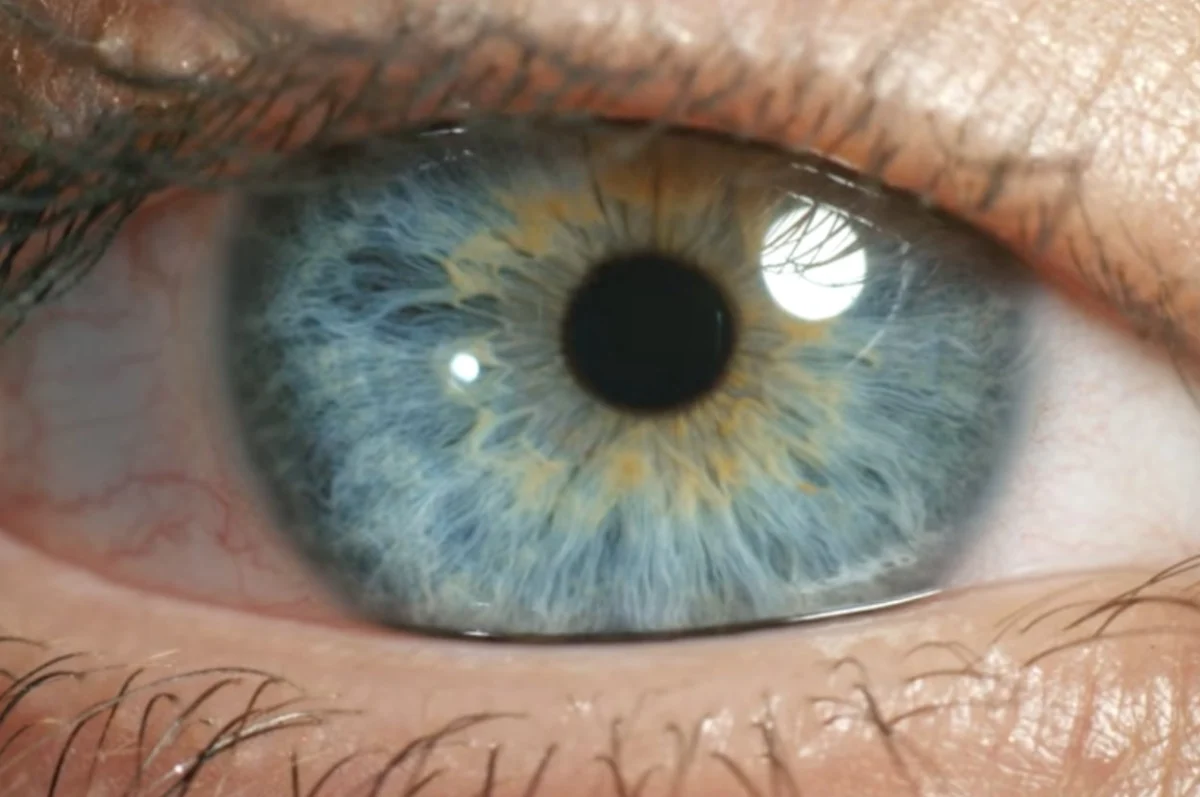
Main Facts
The fundamental nature of human sensory experience has long captivated philosophers, psychologists, and neuroscientists alike. At the heart of this inquiry lies a deceptively simple question: Do we all see color in the same way? While science has mapped the physiological mechanisms of the human eye—identifying the photoreceptor cells known as rods and cones that respond to specific wavelengths of light—the subjective internal experience of color remains notoriously difficult to quantify.
Recent neuroscientific research suggests that individual variations in our genetic makeup, neural wiring, language development, and even environmental exposure may lead to subtle, and sometimes profound, differences in how we perceive the world’s chromatic palette. What one individual perceives as a vibrant crimson may, in the private theater of another’s mind, register as a completely distinct internal sensation. Although both individuals will correctly label the hue "red" because they were taught to use that linguistic token for that specific wavelength of light, the actual neurological qualia—the subjective, qualitative feel of the experience—may differ entirely.
Beyond theoretical debates, empirical observations confirm that human visual capabilities are not uniform. While standard color-blindness tests identify notable deficiencies, finer variances exist within the general population. Some individuals possess exceptional chromatic sensitivity, capable of distinguishing between micro-shades of color that appear identical to the average observer. To explore these variations in a lighthearted yet engaging format, interactive visual assessments have been developed. These digital tools challenge participants to quickly identify and type out a series of displayed words, testing their real-time visual acuity and offering a personalized breakdown of which color spectrums they process most effectively.
Chronology
To understand how humanity arrived at our current scientific comprehension of color perception, it is helpful to trace the historical milestones that transformed color from a mystical property of objects into a quantifiable branch of physics and neuroscience.
- 1666 – The Physics of Light: Sir Isaac Newton shined a beam of white light through a glass prism, demonstrating that white light is not a singular entity, but rather a composite of all the colors of the visible spectrum. This landmark experiment proved that color is a property of light, not an intrinsic, permanent characteristic of physical objects.
- 1802 – The Trichromatic Theory: Polymath Thomas Young proposed that the human eye must contain three distinct types of receptors sensitive to different parts of the spectrum—specifically red, green, and blue. This theory was later expanded by Hermann von Helmholtz in the mid-19th century, laying the foundational framework for modern color vision science.
- 1878 – Opponent-Process Theory: Ewald Hering challenged the pure trichromatic model by introducing the opponent-process theory. Hering argued that color vision is controlled by opposing systems: red-green, yellow-blue, and white-black. This explained why certain color combinations, like reddish-green, are visually impossible to perceive.
- 1960s – Physiological Proof of Cone Cells: Microspectrophotometry finally confirmed the existence of three distinct types of cone photoreceptors in the human retina, validating Young and Helmholtz’s century-old hypothesis regarding short (blue), medium (green), and long (red) wavelength-sensitive cones.
- Late 20th Century – Linguistic Relativity and Color: Anthropological and linguistic studies, notably by Brent Berlin and Paul Kay, investigated how different cultures categorize color. Their research demonstrated that while biological hardware is largely universal, the boundaries drawn between colors are shaped significantly by language and culture.
- 21st Century – Neurological Imaging and Digital Testing: Modern functional MRI (fMRI) scans and adaptive optics technology allowed researchers to examine individual retinal mosaics and cortical processing. Concurrently, digital media platforms began deploying interactive, gamified visual assessments to explore everyday variations in color and word recognition among the general public.
Supporting Data
The exploration of human color perception is heavily supported by psychophysical data, genetic sequencing, and optometric studies. Quantitative research reveals several fascinating insights into the human visual system:
- Photoreceptor Distribution: The average human retina contains approximately 6 million cone cells and 120 million rod cells. However, the ratio of long-wavelength (red) to medium-wavelength (green) cones varies dramatically from person to person, sometimes by a factor of 10 or more, yet individuals rarely notice any difference in their daily color perception.
- The Tetrachromacy Phenomenon: Genetic studies indicate that a subset of the human population—predominantly women due to the location of cone-pigment genes on the X chromosome—may possess four distinct types of functional cone cells. Geneticist Dr. Natasha Miletic and other researchers have identified functional tetrachromats who can theoretically distinguish up to 100 million distinct colors, compared to the standard 1 million perceived by trichromats.
- Linguistic Categorization: Data from cross-cultural studies show that languages divide the color spectrum differently. For example, the Himba language of Namibia uses distinct terms for shades that English speakers group under "green" and "blue." When tested, Himba speakers can effortlessly distinguish between two subtly different green hues that look identical to a Western observer.
- Age-Related Yellowing: Optometric data confirms that the human lens yellows naturally with age, absorbing shorter wavelengths of light (blues and violets). Consequently, an older adult’s perception of a blue room or a violet flower differs physically and qualitatively from that of a child.
- Interactive Vision Test Metrics: Informal digital vision assessments that require participants to rapidly read and transcribe words flashed across various chromatic backgrounds demonstrate clear variations in processing speeds. Users consistently report differential ease depending on the background contrast, supporting the hypothesis that certain color wavelengths are processed more efficiently by individual optical pathways.
Official Responses
The intersection of subjective experience and objective science has drawn commentary from leading cognitive scientists, ophthalmologists, and visual artists. Their perspectives illuminate the ongoing debate regarding the standardization of human sight.
Dr. Anya Sharma, a cognitive neuroscientist specializing in visual perception at the Institute of Advanced Optic Studies, emphasizes the deeply subjective nature of qualia:
"We can measure the exact nanometer wavelength hitting the retina with absolute precision. We can map the electrical impulses traveling down the optic nerve. But where the data transforms into an internal mental image—what we call red—remains completely inaccessible to external instruments. It is the ultimate philosophical frontier of neuroscience. Two people can look at a ripe strawberry, agree unanimously that it is red, pass every clinical color-blindness test with flying colors, and yet experience an entirely distinct internal visualization."
Dr. Liam O’Connor, a clinical ophthalmologist and researcher in retinal genetics, points out the hidden diversity within the population:
"We tend to treat normal human vision as a monolith, but the clinical reality is far more diverse. From subtle anomalies in cone gene expression to natural structural variations in the macula, no two human eyes are built identically. When people participate in online visual tests or color-sorting games, they are often surprised to find they see things differently than their peers. These fun, interactive exercises highlight a profound biological truth: human color vision exists on a vast, nuanced spectrum."
Cultural anthropologist Dr. Elena Rostova highlights the interplay between biology and environment:
"Language does not merely describe what we see; it actively trains our brains to notice and categorize visual information. When we look at how different cultures parse the rainbow, we realize that perception is a collaborative product of evolutionary hardware and cultural software. Interactive assessments remind us that our visual world is uniquely constructed by our own minds."
Implications
The realization that humans may perceive color and process visual data differently carries significant implications across multiple disciplines, ranging from technology and design to philosophy and healthcare.
1. User Interface and Digital Design
In the realm of digital media, web development, and graphic design, the assumption of a universal visual experience can lead to usability barriers. Designers must account for the wide variance in chromatic sensitivity—not just clinical color blindness, but the broader spectrum of how individuals process contrast, saturation, and hue. Creating adaptable, accessible interfaces ensures that interactive content remains engaging and legible for all users, regardless of their unique perceptual baseline.
2. Healthcare and Diagnostic Tools
Understanding individual differences in visual processing aids in the early detection of ocular and neurological conditions. By utilizing granular, interactive visual screening tools alongside traditional clinical diagnostics, healthcare providers can better understand how patients process visual stimuli. This is particularly valuable in fields like neurology, where subtle changes in visual perception can serve as early indicators of cognitive shifts or neural pathway degradation.
3. Philosophical and Psychological Insights
On a philosophical level, the "inverted spectrum" thought experiment—asking whether my red is your green—moves closer to empirical inquiry through modern neuroscience and behavioral testing. It humbles our understanding of consensus reality, reminding us that we each inhabit a slightly customized version of the physical world. Recognizing these internal differences fosters greater empathy and curiosity about human diversity, proving that even something as fundamental as seeing the color of the sky is an intensely personal, individual masterpiece of the mind.
 Nana Muazin
  rifanmuazin