
 By Neng Nana
Main Facts
When it comes to kitchen design, few materials evoke the same level of classic luxury and architectural pedigree as marble. With its dramatic veining, cool touch, and smooth, polished surface, marble has served as a cornerstone of high-end interior aesthetics for centuries. However, beneath its breathtaking exterior lies a complex material that sparks intense debate among interior designers, real estate developers, and homeowners alike.
At the center of this debate is a fundamental question of durability: What is the actual lifespan of a marble countertop?
Industry data indicates that the average lifespan of a marble countertop ranges between 20 to 50 years. While this represents a respectable duration for a home installation, it places marble on the lower end of the longevity spectrum when compared to other natural and engineered stones. For instance, granite can endure for a century or longer with minimal wear and tear, while modern quartz countertops boast a life expectancy of 50 to 100 years.
Despite trailing behind its stone competitors, marble still outperforms temporary or budget-friendly surfacing options. Epoxy countertops typically last around seven years, while traditional laminate surfaces have a life expectancy of 10 to 20 years.
Nevertheless, the decision to install marble is rarely made on longevity metrics alone. It is a calculated compromise. Homeowners weigh the undeniable visual payoff of a natural metamorphic rock against its well-documented vulnerabilities: high porosity, susceptibility to acid etching, and a softer mineral composition that makes it prone to scratching and chipping. As a result, the market experiences a continuous push-and-pull between homeowners embracing its organic, lived-in patina and those who ultimately rip it out in favor of lower-maintenance alternatives.
Chronology: The Lifecycle of Marble from Quarry to Kitchen
To truly understand how marble performs over its 20-to-50-year lifespan, it is essential to examine its chronological journey—from its geological formation deep within the earth to its daily trials in a busy modern kitchen.
Phase 1: Geological Formation (Pre-History)
Marble does not start as a building material; it is a metamorphic rock formed over millions of years. When sedimentary carbonate rocks—primarily limestone or dolostone—are subjected to immense heat and pressure deep beneath the earth’s crust, their crystal structure recrystallizes. The impurities trapped within the original limestone transform into the striking, unpredictable veining that makes each slab of marble entirely unique.
Phase 2: Extraction and Fabrication (Years 0)
Once quarried from famous regions like Carrara, Italy, or Vermont, USA, giant blocks of marble are cut into slabs, polished, and shipped to fabricators. At installation, the countertop is in pristine condition. It features a mirror-like sheen or a soft, honed matte finish, completely sealed against moisture. During the first year, proper initial sealing ensures the stone repels most liquids effectively, provided homeowners adhere to careful maintenance habits.
Phase 3: The Early Years and "Patina" Development (Years 1–5)
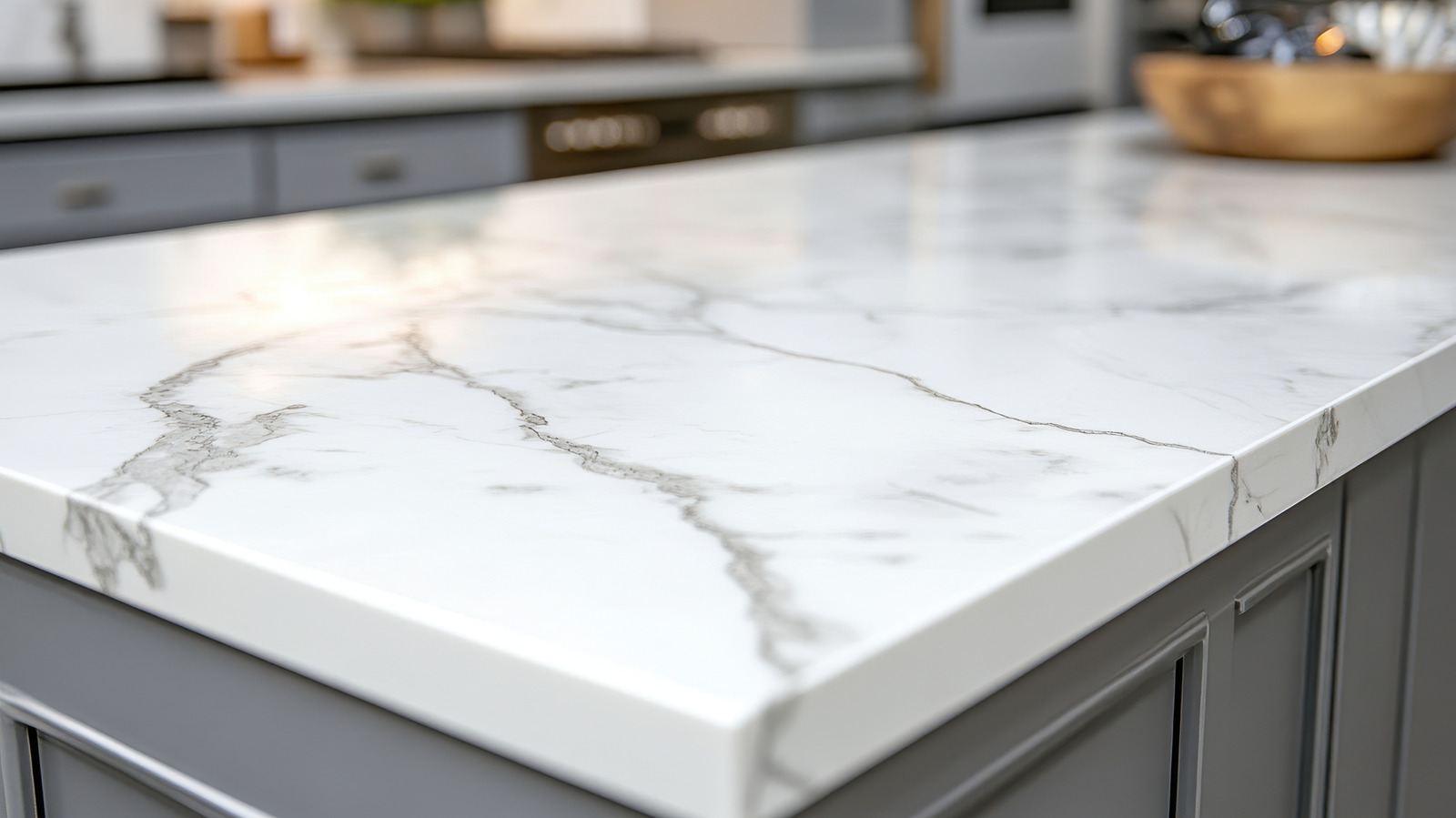
In a high-traffic kitchen, the honeymoon phase of a marble countertop rarely lasts forever. Within the first few years, cumulative use begins to leave its mark. Because marble is calcium carbonate-based, acidic substances like lemon juice, vinegar, wine, and tomato sauce react chemically with the stone, dissolving the calcium carbonate on contact. This creates dull spots known as "etches." Additionally, micro-scratches from utensils, ceramic dishware, and general movement begin to dull the factory-fresh polish. Many interior designers view this phase not as damage, but as the development of a "patina"—an organic record of meals cooked and memories made.
Phase 4: Mid-Life Maintenance and Restoration (Years 6–25)
As the countertop enters its second and third decades, regular intervention becomes mandatory to preserve its structural and aesthetic integrity. By this stage, the countertop has likely undergone dozens of resealing cycles. Deep stains that bypassed initial defenses may require professional poultice treatments to draw out discoloration. Minor chips along the sink edges or island corners may need epoxy patching by a stone restoration specialist.
Phase 5: Late-Stage Aging or Replacement (Years 26–50+)
In homes where marble has been meticulously maintained, sealed bi-annually, and treated with extreme care, the stone can gracefully cross the 50-year threshold, looking just as stunning as the day it was installed, albeit with a softer, heavily weathered character. However, in households where maintenance was neglected, structural integrity may begin to fail by year 30. Cracks caused by heavy impacts or shifting cabinetry can render the stone unsalvageable, forcing a complete replacement.
Supporting Data: Comparing Countertop Materials
When evaluating kitchen renovation budgets and long-term durability, homeowners must look closely at how marble stacks up against alternative materials on the market. The following comparative data illustrates where marble fits within the broader countertop ecosystem:
| Material | Average Lifespan | Porosity / Staining Risk | Heat Resistance | Maintenance Requirement |
|---|---|---|---|---|
| Epoxy | 5 to 10 Years | Low | Moderate | Low |
| Laminate | 10 to 20 Years | Low to Moderate | Low | Low |
| Marble | 20 to 50 Years | High (Porous) | High | High (Frequent Sealing) |
| Quartz (Engineered) | 50 to 100 Years | Low (Non-porous) | Moderate | Low |
| Granite | 100+ Years | Low to Moderate (Sealed) | Very High | Moderate (Annual Sealing) |
Key Takeaways from the Data:
- The Durability Gap: Granite and quartz outlast marble by a factor of two to three. Granite offers superior heat and scratch resistance, while quartz offers non-porous stain resistance due to its resin binders.
- The Maintenance Burden: Marble demands a proactive approach. Unlike laminate or epoxy, which can be wiped down and largely ignored, marble requires vigilant spill management and consistent chemical protection to reach the upper limits of its lifespan.
Expert Insights and Official Industry Responses
To gain a comprehensive understanding of why marble continues to hold market share despite its maintenance demands, industry professionals—ranging from high-end residential contractors to renowned interior design icons—offer crucial perspectives.
The Designer’s Perspective: Embracing Imperfection
Many high-end interior designers argue that measuring marble solely by its resistance to damage misses the point of the material. Kitchen designers frequently point out that European kitchens have utilized marble for centuries, accepting that the stone will etch, stain, and change over time.
"Marble tells a story," notes a prominent architectural designer specializing in historic home restorations. "If you are looking for a sterile, unchanging surface that looks identical on day 10,000 as it did on day one, marble is not for you. But if you appreciate organic textures and materials that age gracefully with your home, nothing else compares."
Maintenance Philosophies: The Martha Stewart Approach
Industry authorities and lifestyle icons have long provided frameworks for keeping marble viable in modern homes. Maintenance experts emphasize that protecting marble requires a shift in daily habits rather than impossible workloads.
For instance, lifestyle expert Martha Stewart has famously advocated for proactive stone care, emphasizing that minor etching and dullness do not signal the death of a countertop. Instead, specialized polishing powders, fine-grit diamond pads, and neutral pH cleansers can restore a worn marble surface to its former glory without requiring a full slab replacement.
Furthermore, stone fabrication institutes universally recommend a strict sealing regimen. Because marble is naturally porous, liquids easily infiltrate the micro-channels of the stone. Applying a penetrative impregnating sealer every six to 12 months creates a chemical barrier that buys the homeowner precious minutes to wipe away spills before they transform into permanent stains.
Practical Implications for Modern Homeowners
For those considering marble countertops—or for those who already live with them—translating these facts and data points into actionable daily habits is critical to maximizing the stone’s 20-to-50-year lifespan.
1. Master the Art of Immediate Spill Management
Because marble’s porosity is its greatest vulnerability, speed is your best defense. Acidic liquids (wine, citrus, coffee, vinegar) and dark pigments (berry juices, oils, soy sauce) are the primary culprits behind staining and etching.
- Actionable Step: Keep a microfiber cloth and a gentle, stone-safe dish soap within arm’s reach of prep stations. Never use abrasive scrubbers, bleach, or ammonia-based commercial window cleaners, as these will strip the sealant and instantly etch the polished surface.
2. Implement Strict Surface Protectors
Marble’s softer mineral composition (primarily calcite) means it scratches much easier than quartz or granite.
- Actionable Step: Never cut food directly on a marble countertop. Always use wooden or plastic cutting boards. Additionally, avoid slamming heavy cast-iron skillets, ceramic mixing bowls, or small kitchen appliances onto the stone surface, as high-impact forces can cause internal fracturing or chipping along the edges.
3. Establish a Routine Resealing Schedule
Relying on the factory seal indefinitely is a recipe for premature degradation.
- Actionable Step: Perform the simple "water droplet test" every six months. Place a few drops of water on your marble countertop. If the water beads up after 15 minutes, your seal is intact. If the water absorbs into the stone and leaves a dark patch, it is time to thoroughly clean the surface and apply a fresh coat of impregnating stone sealer.
Conclusion
Marble countertops represent a magnificent intersection of natural artistry and functional architecture. While they demand significantly more attention, patience, and maintenance than modern engineered alternatives, their 20-to-50-year lifespan proves they are far from fragile novelties. By understanding the stone’s geological nature, respecting its vulnerabilities, and committing to a proactive care routine, homeowners can ensure their marble investment remains the crown jewel of the kitchen for decades to come.
 Raul Delapena Setiawan
  Basiran
  Nana
Nana 