
 By Asep Darmawan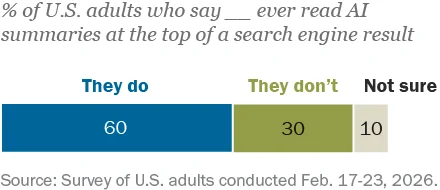
WASHINGTON — In an era where artificial intelligence increasingly dictates how humanity consumes information, the relationship between organizations and their audiences has undergone a foundational shift. No longer is the path from a research publication, advocacy report, or public health announcement to the end user a straight line of direct website traffic, RSS feeds, or organic social media discovery. Instead, a rapidly evolving layer of artificial intelligence intermediaries—chatbots, algorithmic search engines, and generative synthesis tools—now stands squarely between trusted institutions and the people who need their data most.
This seismic transformation took center stage during a pivotal session titled “From AI Insight to AI Impact” at ComNet 2026. Hosted by Claudia Deane, Executive Vice President, and Monica Anderson, Director of Internet and Technology Research at the Pew Research Center, the presentation delivered a stark wake-up call to communications professionals, particularly those working within the nonprofit and public-interest sectors. As AI systems rapidly morph into the primary arbiters of human knowledge, organizations can no longer afford to treat artificial intelligence as a peripheral trend. It is the new operating system of public discourse.
Main Facts: The Rise of the AI Intermediary
The core reality laid out by the Pew Research Center experts is simple yet disruptive: artificial intelligence has become the primary bridge between credible, fact-based information and the citizens seeking it.
For decades, the standard playbook for nonprofit communications relied heavily on SEO (Search Engine Optimization) tailored for human browsing behaviors, direct email newsletters, media pitching, and organic web traffic. Today, however, when a user asks a generative AI chatbot a complex question about public health, economic inequality, climate policy, or educational reform, the chatbot does not simply direct them to a list of links. It synthesizes, summarizes, and sometimes abstracts an organization’s painstaking research into a conversational snippet delivered directly to the user.
This paradigm shift creates both immense opportunities and unprecedented risks:
- The Disintermediation of Content: Direct traffic to organizational websites is declining as users increasingly find the answers they need directly inside conversational interfaces.
- The Attribution Crisis: When an AI summarizes a research report, the original institutional author does not always receive prominent credit, traffic, or financial support.
- The Shift in Audience Behavior: Audiences—particularly younger demographics—are bypassing traditional search engines altogether, relying instead on AI assistants to aggregate, weigh, and present information.
According to ongoing tracking data available on the Pew Research Center’s Artificial Intelligence topic page, public adoption of AI tools is not slowing down; it is accelerating, changing how everyday Americans perceive, trust, and utilize emerging technologies. For communications professionals dedicated to social impact, understanding this shift is no longer optional—it is a survival imperative.
Chronology: How AI Transformed the Communications Landscape
To understand how the nonprofit sector arrived at this critical juncture, it is helpful to trace the rapid evolution of artificial intelligence from a backroom computer science experiment to the front lines of public communication.
Phase 1: The Era of Algorithmic Search (Pre-2022)
For years, digital communications strategies were built around traditional search engines. Organizations optimized their websites with keywords, meta descriptions, and backlinks so that human users searching for specific topics would land directly on their domains. Algorithms ranked pages based on authority and relevance, but the human user was still required to click through, read, and interpret the primary source material.
Phase 2: The Generative AI Explosion (Late 2022 – 2024)
The public launch of advanced generative AI models in late 2022 fundamentally altered this dynamic. Suddenly, millions of people had access to tools capable of natural language processing and synthesis at scale. Rather than presenting a list of blue links, search engines and specialized chatbots began generating direct answers. Nonprofits initially viewed these tools as productivity boosters—helpful for drafting emails, brainstorming campaign slogans, or summarizing internal documents—while failing to recognize that these same engines were actively consuming, parsing, and re-serving their public-facing content.
Phase 3: The Intermediary Reality (2025 – Present)
By 2025 and into 2026, AI transitioned from a novelty to an entrenched infrastructure. As highlighted during ComNet 2026, AI systems are now deeply embedded as intermediaries. They sit between the producer of trusted information and the consumer. Organizations are no longer just writing for human eyes; they are navigating algorithmic gatekeepers that dictate whether an institution’s research is accurately represented, ignored, or hallucinated entirely.
Supporting Data: Pew Research Center Insights on Public Perception
The assertions made by Deane and Anderson at ComNet 2026 are backed by rigorous empirical data gathered by the Pew Research Center. Understanding how Americans view and utilize artificial intelligence provides crucial context for why nonprofit communicators must shift their strategies immediately.
Pew’s extensive polling on emerging technologies reveals a complex public sentiment characterized by a mixture of heavy everyday adoption and persistent, deep-seated anxieties. While a significant portion of the American workforce and general population utilizes AI tools for tasks ranging from writing and coding to general research, there remains widespread public concern regarding misinformation, the erosion of privacy, and the loss of human authenticity.
Key data points consistently highlighted in Pew’s research portfolio include:
- Generational Divides: Younger Americans (ages 18–29) exhibit the highest rates of regular AI adoption, frequently turning to conversational tools for daily inquiries, thereby bypassing traditional media and institutional websites.
- Trust Deficits: A notable segment of the public expresses skepticism regarding the accuracy and neutrality of AI-generated summaries, underscoring the critical need for authoritative organizations to ensure their verified facts are the ones training these models.
- The Visibility Gap: Most organizations have zero visibility into how their proprietary research, reports, and data sets are being interpreted, cited, or omitted by proprietary large language models (LLMs).
These insights make it clear: if trusted institutions do not actively manage their presence within the AI ecosystem, algorithms will define their public identity for them.
Official Responses and Strategic Framework: Accept, Adapt, Advance
In response to this shifting landscape, the Pew Research Center experts outlined a clear, three-part strategic framework during their ComNet 2026 presentation. Designed specifically for mission-driven organizations, the framework encourages communicators to move past hesitation and proactively engage with the technological reality of our time.
[ ACCEPT ]  --->  Acknowledge that AI is permanent, heavily used, and impacting web traffic.
    ↓
[ ADAPT  ]  --->  Audit your digital footprint, test AI engines, and optimize for machine-readability.
    ↓
[ ADVANCE]  --->  Integrate learnings into future content strategies (writing for humans and machines).
1. Accept
“AI is here to stay. Your audiences are using it. It impacts direct traffic to your site. Accept that this is the reality today.”
The first step is psychological and strategic alignment. Many nonprofit organizations have spent the past several years hoping that generative AI would prove to be a passing tech fad or waiting for regulatory frameworks to neutralize its impact. Deane and Anderson emphasized that denial is no longer a viable strategy. Audiences are firmly integrated into AI-driven workflows. Ignoring this reality means accepting diminished visibility, reduced influence, and a loss of public engagement.
2. Adapt
“Take a deeper look at your work. Test how your organization is appearing in AI engines. Experiment with making your current content more machine-readable.”
Adaptation requires moving from passive observation to active testing. Communications teams must regularly query major AI chatbots with the same questions their constituents are asking—such as "What are the leading causes of chronic homelessness in urban areas?" or "What does recent data say about clean energy transition timelines?"—to see how, or even if, their organization’s research is being cited. Furthermore, organizations must audit their digital assets to ensure they are structured in a way that web-crawling algorithms can easily parse, index, and accurately summarize.
3. Advance
“Incorporate what you learn into your future content. You’re now writing for humans and machines.”
The final phase is institutional transformation. Writing for a dual audience—human readers who demand empathy, nuance, and narrative, alongside machine crawlers that require clean metadata, structured data markup, clear definitions, and authoritative sourcing—will define the gold standard of modern communications. Organizations that successfully bridge this gap will amplify their reach and cement their status as indispensable knowledge providers in the digital age.
An Actionable Checklist for Nonprofit Professionals
To help communications teams operationalize this framework, the Pew Research Center provided a practical discussion checklist during their ComNet 2026 session. Nonprofit leaders are encouraged to bring these four critical questions to their next team meetings:
1. Do you want people using AI chatbots to find and learn from your organization’s work?
- Discussion Points: Evaluate your organization’s institutional philosophy on AI distribution. Are you comfortable with your reports being summarized by third-party chatbots? What are the intellectual property, copyright, and brand representation implications for your specific mission?
2. How is your work showing up today? Is that what you want?
- Discussion Points: Conduct a comprehensive audit. Test multiple AI platforms using industry-specific prompts. Are your latest findings accurately represented, or are chatbots hallucinating data, misattributing your conclusions, or omitting your institution entirely?
3. How do you make your work readable for machines?
- Discussion Points: Review your technical infrastructure. Are you utilizing structured data, clear schema markup, clean HTML hierarchies, and concise executive summaries? Are your PDFs and research papers formatted in ways that web scrapers can accurately ingest without losing critical context?
4. How do you know if you are succeeding?
- Discussion Points: Establish new key performance indicators (KPIs). Traditional metrics like organic web hits and unique page views are no longer enough. How will your team track brand mentions, AI citations, referral traffic shifts, and the downstream impact of conversational search on your audience engagement?
(For those seeking a portable resource to share across departments, a downloadable PDF guide is available directly via the Pew Research Center’s official ComNet 2026 tipsheet.)
Broader Implications for the Future of Public Communications
The transformation highlighted at ComNet 2026 extends far beyond search engine optimization or digital marketing tactics. It strikes at the heart of democratic discourse, public trust, and the survival of fact-based advocacy.
When artificial intelligence systems act as the primary filters for human knowledge, the stakes for truth and accuracy skyrocket. If reputable, peer-reviewed, and evidence-based research produced by nonprofits, think tanks, and academic institutions fails to successfully navigate the AI ecosystem, the vacuum will be filled by lower-quality content, biased algorithms, and unchecked misinformation.
Conversely, organizations that master the art of writing for both humans and machines will secure an unprecedented megaphone for their missions. By embracing the Accept, Adapt, Advance framework, nonprofit communicators can ensure that their institutional voice remains authoritative, visible, and impactful in an increasingly automated world.
To explore further data, reports, and ongoing sociological studies regarding how Americans view and interact with artificial intelligence, visit the Pew Research Center’s Artificial Intelligence topic page.
 Ali Ikhwan
  Muslim
  Nana Muazin