
 By Lina Hope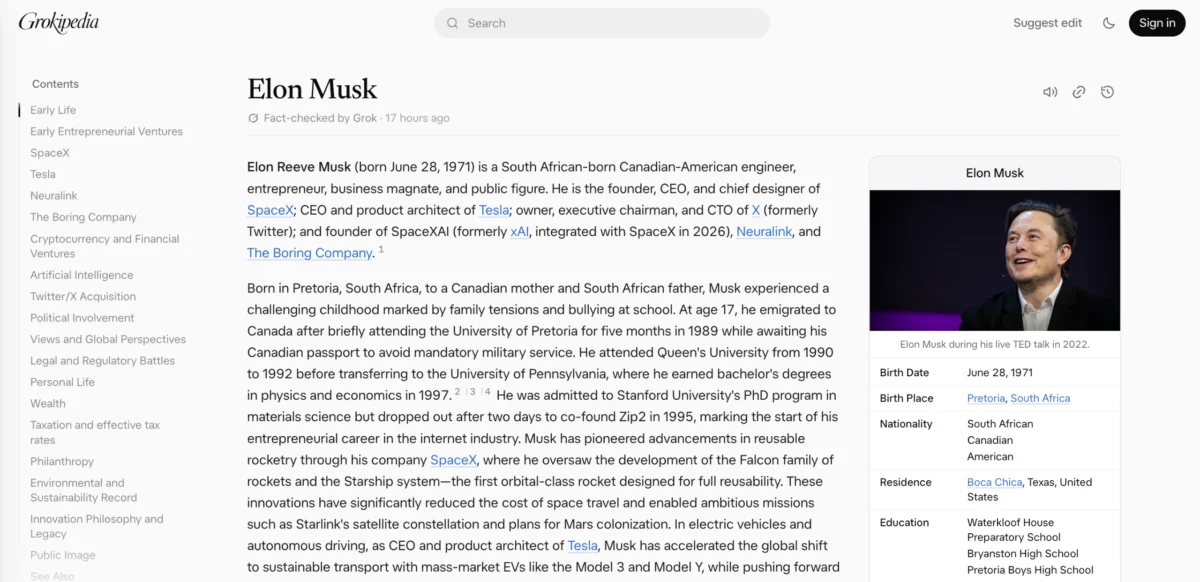
Earlier this year, the internet collectively assumed that "Grokipedia"—the controversial AI-powered challenger to the venerable Wikipedia—had been consigned to the digital graveyard. After a series of service interruptions and the suspension of its autonomous editing features, the platform seemed to have run its course. However, in a surprising turn of events, the site has resurfaced, shedding its experimental skin for a polished, design-forward interface that signals a renewed attempt to compete with the world’s most trusted open-source repository of knowledge.
While the aesthetic overhaul is undeniably slick, the underlying questions regarding its reliability, bias, and long-term utility remain as pertinent as ever. As we witness this "v0.3" iteration, the tech community is left to grapple with a central question: Can a platform built on the shaky foundations of generative AI truly displace the established "backbone" of the internet?
Main Facts: The New Look of AI Knowledge
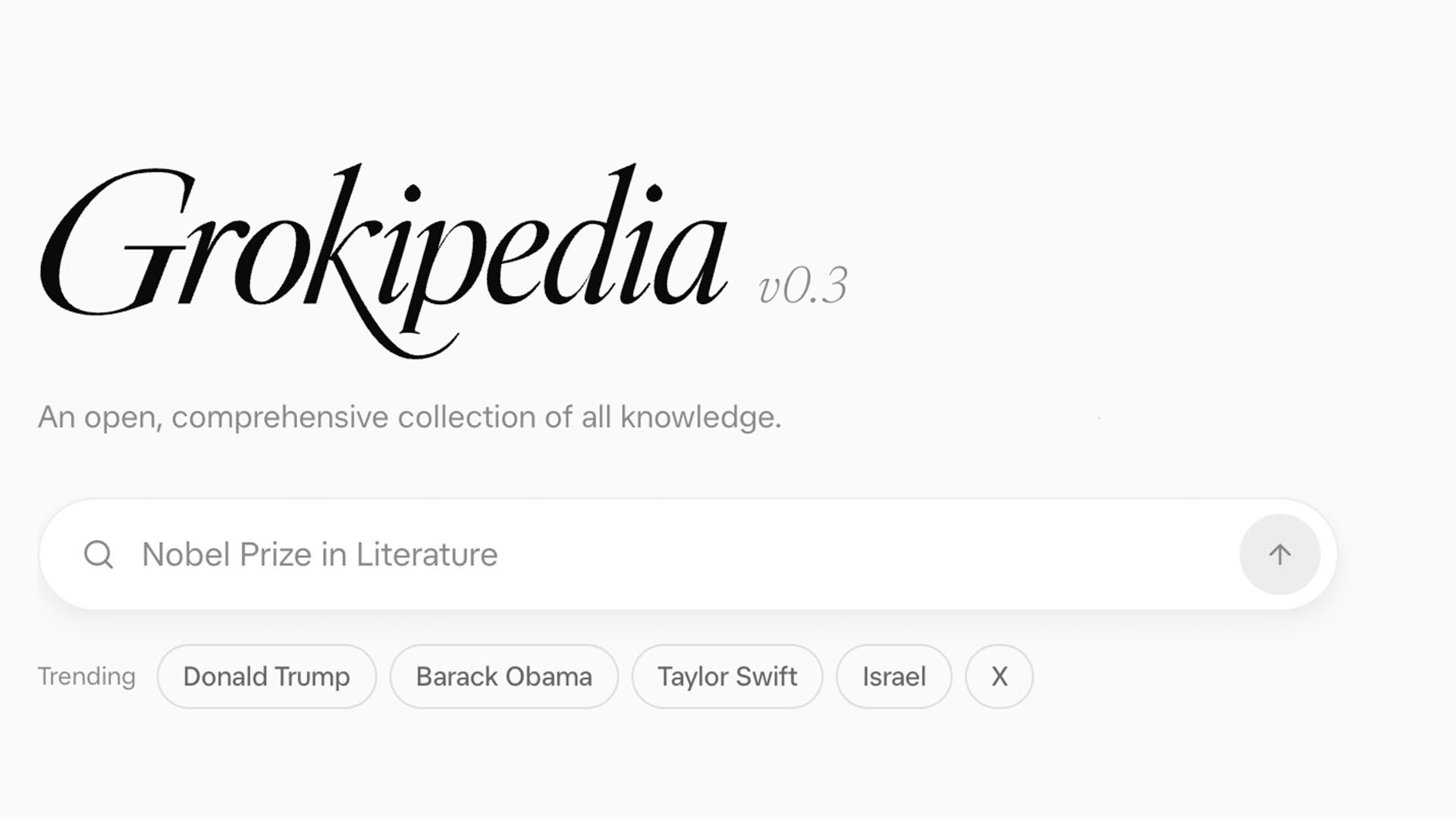
Grokipedia v0.3 is not merely a bug fix; it is a total redesign. The platform has introduced a swanky new script-font logo and a completely reimagined user experience (UX) that leans heavily into a "digital library" aesthetic.
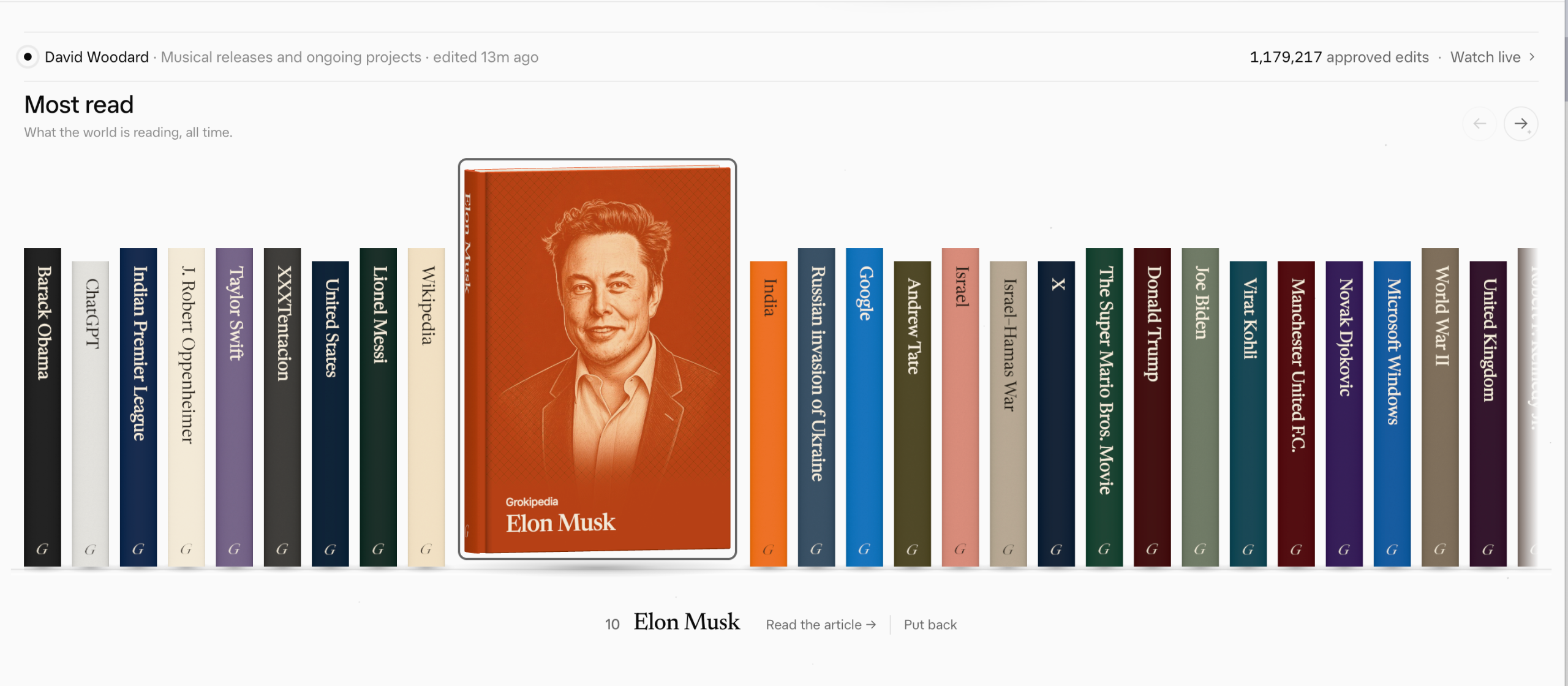
The homepage now features interactive, 3D-rendered book covers, a "Most Read" section presented as a virtual bookshelf, and a live feed of edits that are allegedly vetted by the underlying Grok AI model. Article pages have also undergone a transformation, adopting a minimalist layout for sidebars and data tables.
Yet, for all its visual flair, the platform suffers from a significant identity crisis. The layout remains strikingly derivative of Wikipedia itself. While the fluid animations and modernized typography provide a superior tactile experience, the structural DNA is an imitation. For users accustomed to the utilitarian, no-nonsense interface of Wikipedia, Grokipedia feels like a high-end shell covering a potentially unstable engine.
A Chronology of a Controversial Platform
To understand the current state of Grokipedia, one must examine its brief but tumultuous timeline.
- October 2025 (The Birth): Grokipedia emerged with the bold claim of being a dynamic, AI-cloned alternative to Wikipedia. Its initial goal was to synthesize vast amounts of information into concise, readable articles.
- November 2025 (The v0.2 Update): The platform rolled out its second iteration, attempting to integrate more user-submitted suggestions alongside its AI-generated content.
- Early 2026 (The Halt): The project hit a wall. Facing criticism regarding the thinness of its citations and the susceptibility of its AI to "hallucinate" or adopt skewed biases, the platform paused operations. The suspension of autonomous AI edits and the review of user-submitted content effectively rendered the site static.
- Mid-2026 (The Resurrection): Following months of silence, Grokipedia returned with its v0.3 update. The focus shifted from pure content generation to a hybrid of design-led UX and refined AI curation.
Supporting Data and the "Source" Problem
The core critique of Grokipedia has always been the "thinness" of its sourcing. Wikipedia relies on a decentralized army of human editors who adhere to strict verifiability policies. In contrast, Grokipedia’s reliance on Large Language Models (LLMs) to synthesize information introduces a "black box" element.
When a user reads a page on Grokipedia, they are not necessarily reading a verified account of historical or scientific fact; they are reading a probabilistic prediction of what that information should look like based on the model’s training data. Even with the introduction of "vetted" edits in v0.3, the platform lacks the transparent citation trail that makes Wikipedia a reliable research tool.
Furthermore, the "Most Read" and "Latest Edits" features, while visually engaging, do not necessarily represent a high-quality information ecosystem. Without a robust community of human moderators to catch the nuances of tone, cultural context, and factual inaccuracies, the platform remains prone to the same issues that plague other generative AI tools: a tendency to prioritize confidence over correctness.
Official Responses and Corporate Silence
Thus far, the official discourse surrounding Grokipedia has been characterized by a lack of transparency. While the platform updates its UI with great fanfare, the technical white papers or methodology documents that would satisfy academic or journalistic scrutiny are absent.
Critics have noted that the branding efforts—including the new logo and the library-inspired theme—seem designed to distract from the platform’s lack of original content generation. In the broader ecosystem of "Elon-adjacent" projects, there is a recurring theme of prioritizing speed and aesthetics over the painstaking work of governance and verification. By mimicking the structure of Wikipedia, the platform attempts to "borrow" the legitimacy of the incumbent, hoping that the user interface will provide enough trust to mask the deficiencies in the underlying content.
Implications: The Battle for the Internet’s Backbone
The existence of Grokipedia is a symptom of a larger shift in how we consume information. We are moving away from the "search and index" model of the early web toward a "synthesize and present" model. However, the implications of this shift are profound.
The Erosion of Truth?
If a platform uses AI to curate knowledge, the platform owner effectively becomes the arbiter of truth. Unlike Wikipedia, which is governed by a non-profit foundation and a global community, Grokipedia is a product of a corporate entity. This centralization of knowledge synthesis is inherently dangerous. If the AI is trained with specific biases—whether political, social, or commercial—those biases are baked into the very definitions of the topics it presents.
Design vs. Substance
The "facelift" of v0.3 highlights a dangerous trend in modern software development: the prioritization of "slickness" over "integrity." A beautiful interface makes information more consumable, but it also makes misinformation more persuasive. If a user sees a well-designed, interactive 3D book cover, they are subconsciously more likely to trust the content contained within. This "design-washing" of AI content is a powerful tool for disinformation.
Can Wikipedia Be Replaced?
Wikipedia is not just a website; it is a social contract. It is the result of millions of hours of human cooperation, debate, and consensus. It is messy, often slow, and occasionally biased, but it is accountable.
Grokipedia, regardless of its fancy new script-font logo or its fluid homepage animations, has yet to offer a solution to the fundamental problem of accountability. Until it can prove that its information is not just "generated" but "verified," it will remain a novelty—a glossy, high-tech monument to the limitations of current generative AI.
Conclusion: A Lesson in Aesthetics
As we look at the current state of the internet, it is clear that we are in a period of transition. Projects like Grokipedia serve as an interesting case study in the intersection of design and technology. The new look of Grokipedia is undeniably impressive from a UX standpoint, but as a source of truth, it remains a shadow of its inspiration.
For now, the internet’s backbone remains secure. Wikipedia’s strength lies not in its UI, but in its community. If Grokipedia wishes to truly compete, it will need to invest less in the "swanky" fonts and 3D book covers, and more in the hard, unglamorous work of verification, neutrality, and human consensus. Until then, it will likely continue to be a site that people visit to see "what the AI thinks," rather than a site they rely on to learn "what is true."
As the digital landscape continues to evolve, we must remain critical of the tools we use to navigate it. Whether it is an ad campaign poking fun at tech moguls or a new logo for a SpaceX-linked project, the visual language of the web is changing. It is our responsibility to ensure that, in our quest for better design, we do not sacrifice the accuracy and reliability that allow the internet to function as a tool for the collective good.
 Evan Lee Salim
  Reynand Wu
  Siti Muinah