
 By rifanmuazin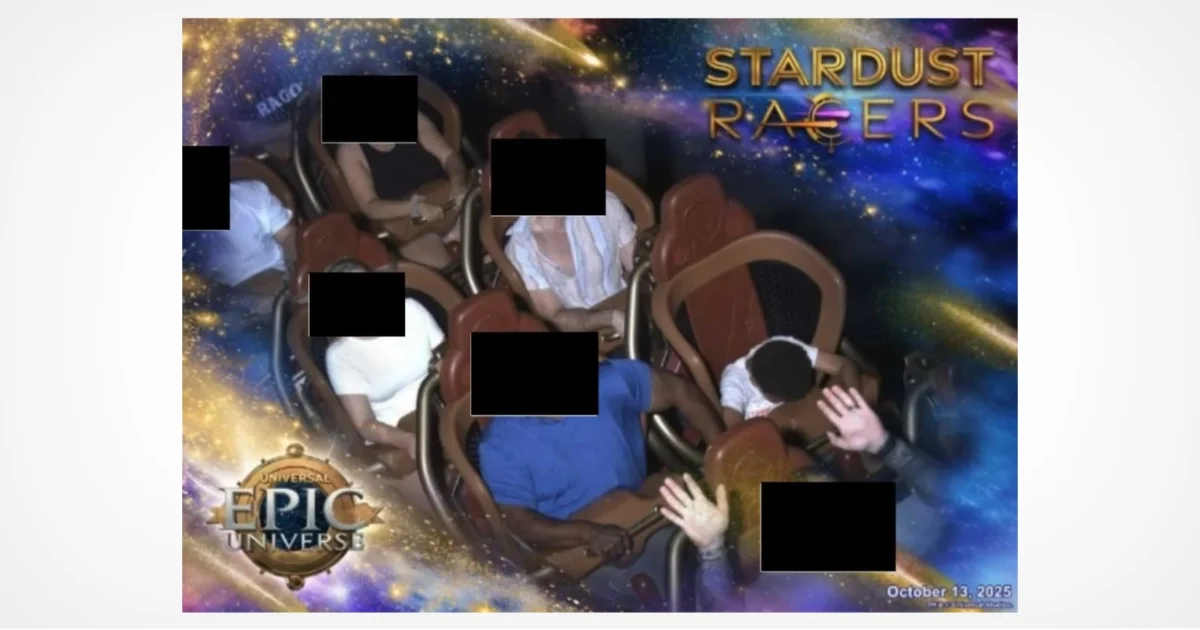
ORLANDO, Fla. — A Florida mother has launched legal action against Universal Orlando Resort, alleging that her nine-year-old son suffered severe, permanent injuries after passing out on the high-speed Stardust Racers rollercoaster. According to court documents, the theme park’s own automated on-ride camera system inadvertently captured chilling photographic evidence of the young boy slumped over, unresponsive, and enduring violent physical impacts while the ride was still in motion.
The lawsuit, filed by Jennifer Lundy in Orlando, places the spotlight back on safety protocols, high-G-force thrill rides, and corporate liability at one of the world’s most prominent entertainment destinations. The legal challenge also revives uncomfortable questions regarding the safety record of the newly minted Universal Epic Universe theme park, following a tragic fatal incident on the very same attraction just months prior.
The Core Allegations: High Speeds, G-Forces, and a Disturbing Ride Photo
According to the complaint filed in Orange County, the incident took place on October 13, 2025. Jennifer Lundy’s son, identified in court records by the initials L.L., was visiting Universal Epic Universe—the resort’s newest gate—and decided to board the Stardust Racers rollercoaster.
Standing at least 48 inches tall, L.L. met all published height and physical requirements mandated by Universal for the attraction. However, the lawsuit asserts that the extreme physics of the ride proved too much for the young boy’s body. Stardust Racers is a state-of-the-art dual-launch racing coaster capable of hurtling passengers at speeds reaching up to 62 miles per hour, lifting them to heights of 133 feet, and subjecting them to sudden, intense acceleration, deceleration, and lateral G-forces.
The legal complaint states that these rapid and aggressive forces caused L.L. to lose consciousness mid-ride. Without adequate upper body, neck, or head restraints to lock his posture in place, his incapacitated body was allegedly thrown violently against the hard, unyielding surfaces of the ride vehicle.
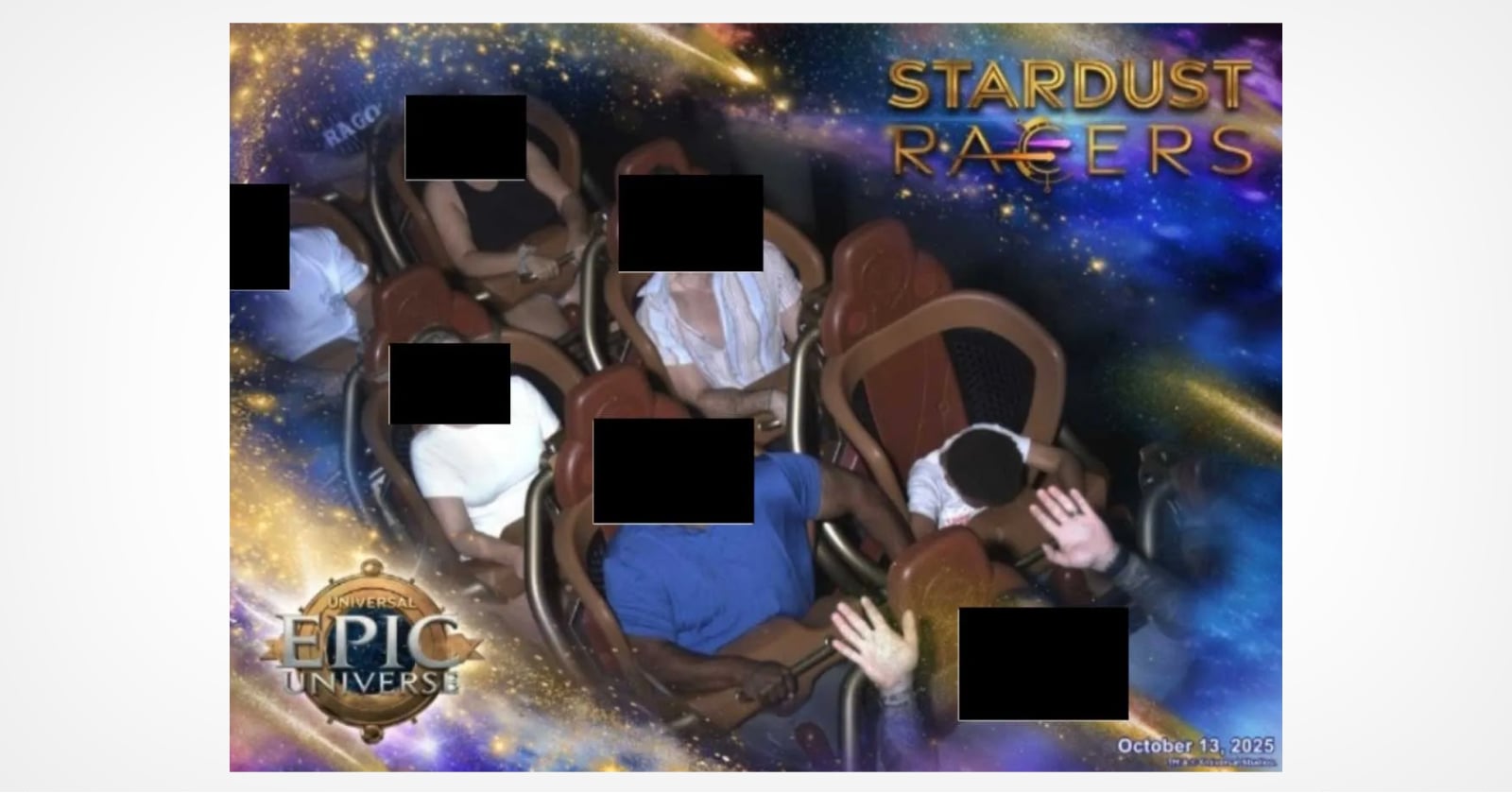
Perhaps the most damning piece of evidence introduced in the litigation is the automated on-ride souvenir photograph. Theme parks routinely capture snapshots of riders at peak moments of terror or excitement to sell to guests as they exit. In L.L.’s case, the automated lens captured a horrifying tableau: the nine-year-old boy completely slumped over, his head listing to the side, entirely unresponsive while the coaster barreled down the track. This photograph has been submitted directly to the court as primary evidence of both the child’s distress during the ride and the severity of the forces at play.
Following the termination of the ride, L.L. required immediate medical intervention. The lawsuit details that the child suffered significant blunt-impact trauma to his head and face, alongside complex orthopedic and spinal injuries. Lundy is seeking in excess of $50,000 in damages to cover extensive past and future medical treatments, arguing that the injuries have left her son with severe and enduring physical complications.
A Timeline of Events and Legal Escalation
To understand the gravity of the litigation, legal experts and observers have mapped out the precise timeline connecting the incident, the legal maneuvers, and prior safety warnings surrounding the Stardust Racers attraction:
- October 13, 2025: Nine-year-old L.L. boards the Stardust Racers rollercoaster at Universal Epic Universe. During the journey, he allegedly loses consciousness due to extreme ride forces, striking his head and body repeatedly against the ride vehicle while captured on the automated ride camera.
- August 17, 2026: Jennifer Lundy formally files a lawsuit against Universal City Development Partners, Ltd., and associated corporate entities in Florida court, citing negligence, product liability, and failure to provide adequate safety restraints.
- September 18, 2026: Legal counsel representing Universal Orlando Resort files a formal response to the complaint. In their defense, Universal’s lawyers shift the blame back onto the parents, arguing contributory negligence and asserting that the family voluntarily assumed the inherent risks of a high-speed thrill ride.
- Ongoing (Late 2026): The case moves through the pre-trial discovery phase in Florida, with attorneys for both sides analyzing the ride’s telemetry data, maintenance records, and the controversial on-ride photograph.
A Troubling Pattern: Prior Incidents and the Shadow of Fatalities
While theme park lawsuits regarding minor bumps, bruises, and motion sickness are relatively common in the competitive Orlando tourism market, Lundy’s legal team argues that Stardust Racers represents a systemic danger rather than an isolated accident. The complaint explicitly draws parallels to a much graver tragedy that unfolded on the same attraction less than a year prior.
In September 2025, 32-year-old Kevin Rodriguez Zavala tragically died after losing consciousness while riding Stardust Racers. According to investigative reports, Zavala also suffered multiple blunt-impact injuries after passing out from the ride’s intense physiological forces. That case ultimately concluded when Zavala’s grieving family reached an undisclosed financial settlement with Universal following an independent safety and engineering investigation.
The inclusion of the Zavala precedent in Lundy’s lawsuit changes the legal calculus. Plaintiffs’ attorneys are attempting to establish a pattern of hazardous G-force profiles or inadequate restraint integration on Stardust Racers. They argue that if Universal was aware—or reasonably should have been aware—that the ride’s G-forces could cause sudden loss of consciousness in patrons, the resort had a heightened duty to modify the ride’s profile, enhance passenger restraints, or implement stricter medical screening criteria.
Universal Orlando’s Defense: Assumption of Risk and Parental Negligence
Faced with mounting scrutiny over the safety of its flagship Epic Universe attraction, Universal Orlando Resort’s legal team has mounted a robust defense. In court documents submitted in mid-September 2026, the theme park firmly rejected any notion of corporate liability or negligence in the Lundy case.
Universal’s attorneys counter that modern amusement park operations inherently rely on the informed consent of patrons. Their response argues that Jennifer Lundy and her family were fully aware—or should have been aware—of the physical toll exacted by modern rollercoasters. By permitting a nine-year-old child who met the minimum height requirement to board the ride, the parents allegedly "knowingly and voluntarily assumed the risks associated with L.L. riding a thrill ride, including the potential for significant acceleration, deceleration, lateral forces, and head and body movement."
Furthermore, the park’s legal strategy places direct responsibility on the parents, claiming they were "negligent in failing to use reasonable care for L.L.’s safety." Universal maintains that its rides comply with all applicable state and federal engineering standards, that safety signage is adequately displayed throughout the queue lines, and that height restrictions are carefully calibrated to ensure guest safety.
Broader Implications for the Theme Park Industry
The lawsuit filed by Jennifer Lundy touches off a series of complex questions that extend far beyond the gates of Universal Epic Universe, resonating throughout the global amusement and theme park industry:
1. The Evolution of On-Ride Monitoring and Safety Interventions
Historically, automated on-ride cameras were installed purely as a commercial enterprise—a way to market souvenirs to captive consumers. However, as demonstrated in the Lundy case, these high-resolution, timestamped photographs are increasingly functioning as forensic evidence. Legal analysts suggest that theme parks may face a double-edged sword: while cameras can prove a guest was properly seated at the start of a ride, they can also capture catastrophic mid-ride failures, medical emergencies, or structural negligence in real-time. This reality may force parks to rethink how ride footage is managed, reviewed, and preserved following guest incidents.
2. Balancing Thrill Innovation with Human Physiology
As engineers push the boundaries of coaster design—incorporating faster launches, tighter turns, and more aggressive airtime moments—the threshold of human physical endurance is frequently tested. Rides like Stardust Racers generate rapid shifts in blood pressure and centrifugal forces that can induce "g-force-induced loss of consciousness" (G-LOC), a phenomenon more commonly associated with fighter pilots and astronauts than family vacationers. The recurring reports of passengers blacking out on high-intensity coasters suggest that the industry may need to re-evaluate whether current height-only restriction models are sufficient to protect vulnerable riders, particularly children whose circulatory and musculoskeletal systems are still developing.
3. Corporate Accountability Versus Waiver Culture
Theme parks have long relied on comprehensive liability waivers, clear warning signs, and the legal doctrine of "assumption of risk" to shield themselves from litigation when guests are injured on thrill rides. However, when fatalities and severe injuries accumulate on a single marquee attraction within its first year of operation, courts may look past standard liability defenses. A successful legal challenge or high-value settlement in the Lundy case could compel Universal—and its competitors like Disney and SeaWorld—to invest heavily in proactive engineering safety overhauls, such as retrofitting more comprehensive harness systems or reducing maximum operational velocities on high-G attractions.
As the legal proceedings continue to unfold in the Florida court system, the focus remains fixed on the recovery of young L.L. and the ultimate accountability of one of the world’s premier entertainment corporations. For millions of tourists visiting Orlando each year, the case serves as a sobering reminder that the line between magical entertainment and extreme physical risk is razor-thin.
 Raul Delapena Setiawan
  Ammar Sabilarrohman
  Lina Irawan