
 By Asro
In an era of digital saturation, where the average consumer is bombarded by thousands of marketing messages daily, the traditional markers of brand identity—logos, color palettes, and typography—are no longer sufficient to secure long-term loyalty. Modern market dynamics have shifted the battlefield from the visual to the verbal. According to recent industry analyses, the "brand voice"—the consistent, purposeful personality expressed through language—has emerged as a primary driver of consumer trust and revenue growth.
Research indicates that brands maintaining a consistent presentation across all platforms can see a revenue increase of up to 33%. As social media becomes the primary touchpoint for customer service and community building, the ability to articulate a distinct persona is no longer a luxury for creative boutiques; it is a fundamental requirement for enterprise stability.

Main Facts: Defining the Verbal Identity
Brand voice is defined as the consistent, distinct personality a brand portrays through its choice of words, tone, and style. While visual identity tells a customer what a brand looks like, the brand voice tells them who the brand is.
Industry experts distinguish between "voice" and "tone" to help organizations manage their communications. While a brand’s voice remains static—rooted in its core values and mission—its tone is contextual. For example, a brand with a "friendly and witty" voice will maintain that personality whether it is celebrating a product launch or addressing a service outage. However, the tone will shift from "upbeat and celebratory" in the former to "calm and reassuring" in the latter.

This distinction is critical for maintaining "brand safety." Without a clearly defined voice, companies risk "off-brand" moments where social media managers or AI-automated systems produce content that alienates the target audience or contradicts the company’s values.
Chronology: The Lifecycle of Voice Development
Building a robust brand voice is not an overnight creative exercise but a strategic process that follows a specific chronological framework.
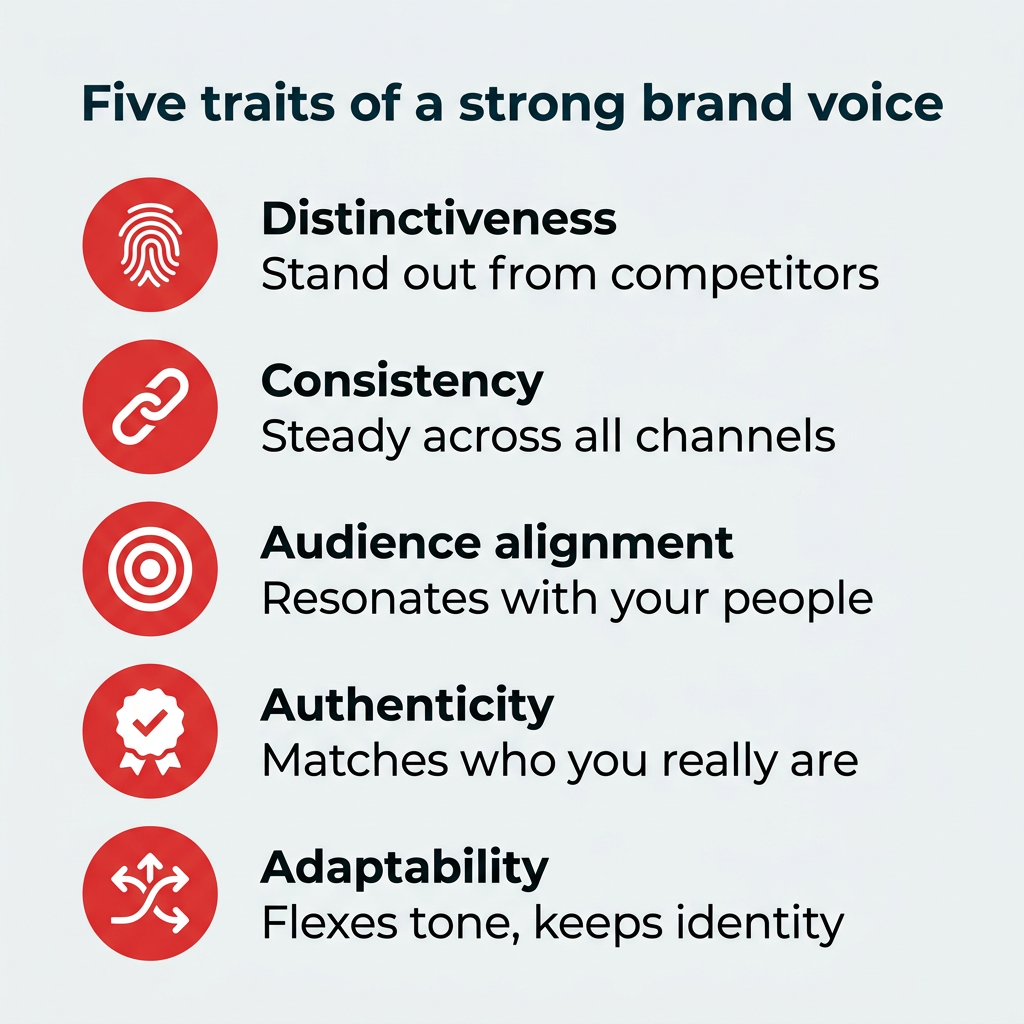
Phase 1: Investigative Research and Auditing
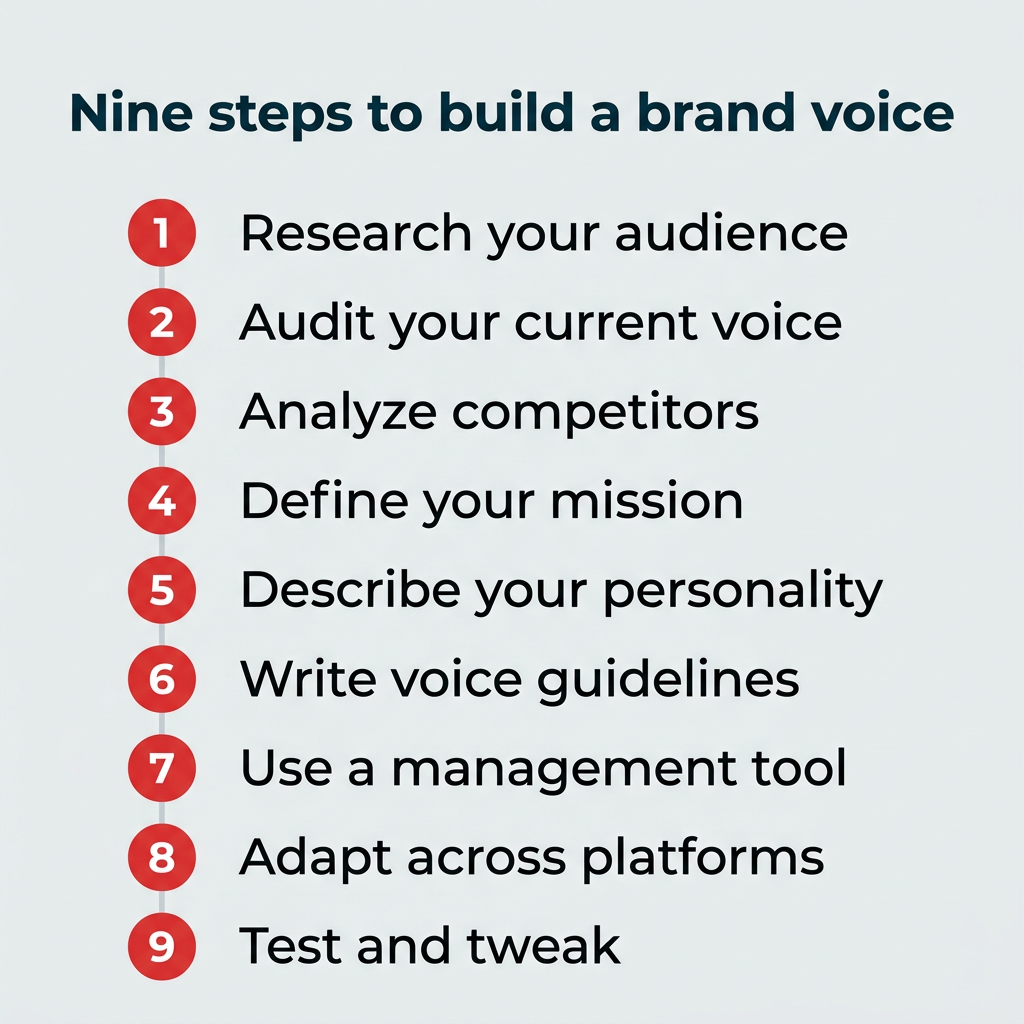
The process begins with an analytical look at the current landscape. Organizations must first conduct a Brand Voice Audit, reviewing existing content across all channels to identify inconsistencies. This is followed by Audience Research, where companies move beyond simple demographics to understand the specific language, slang, and communication styles of their target market. Finally, a Competitor Analysis is performed to identify "white space"—vocal styles that are currently underrepresented in the industry.
Phase 2: Definition and Persona Mapping
Once the data is gathered, the brand must define its mission. This involves answering two core questions: What is the brand’s ultimate goal on social media, and what value does it provide to the follower?
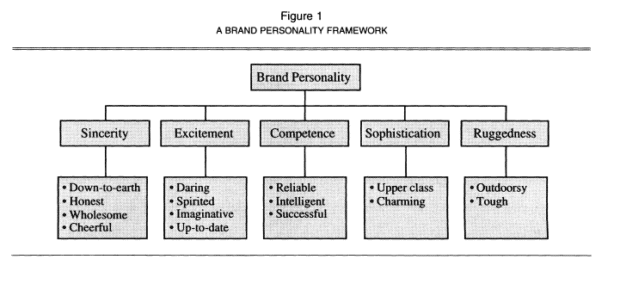
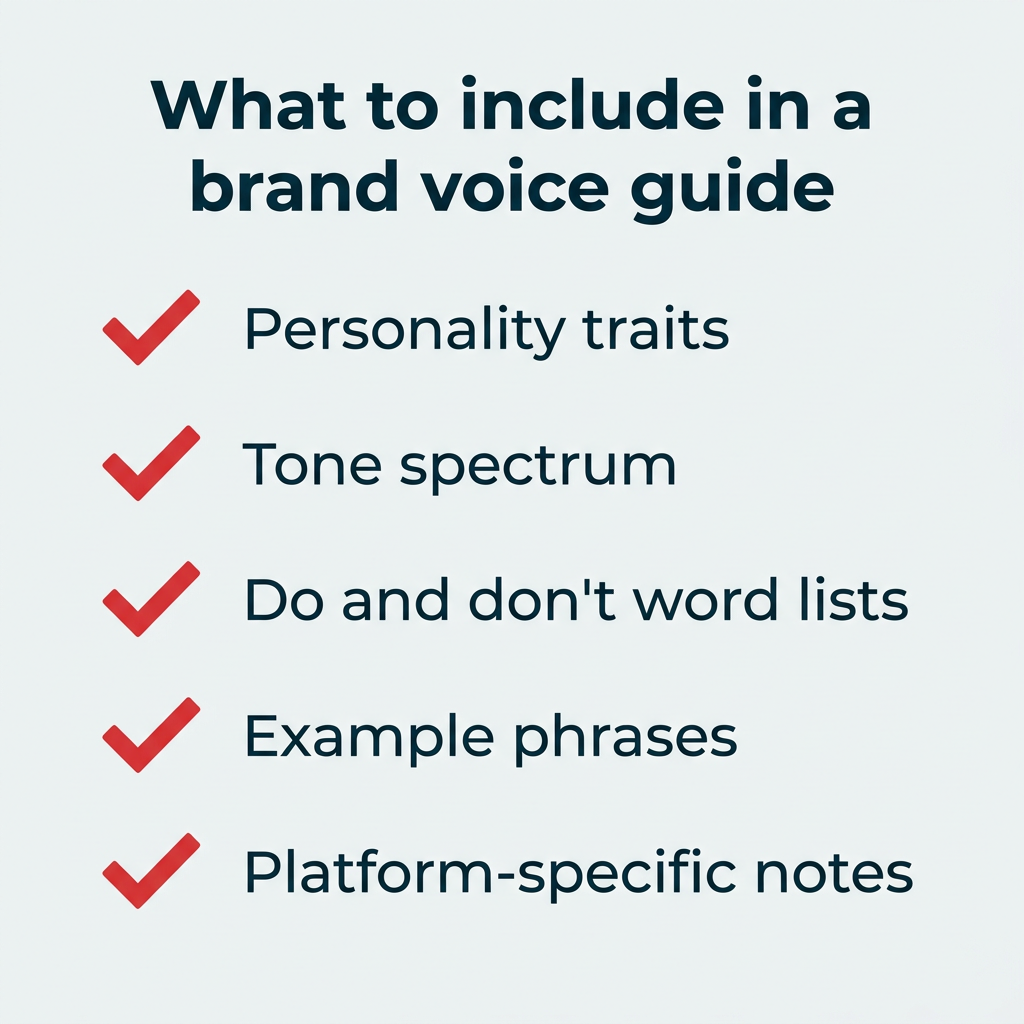
Using frameworks such as Jennifer L. Aaker’s "Dimensions of Brand Personality," companies then map their identity across five core traits: Sincerity, Excitement, Competence, Sophistication, and Ruggedness. This stage culminates in the creation of a Brand Voice Chart, a living document that lists specific voice traits alongside "Do" and "Don’t" examples to provide concrete guidance for content creators.
Phase 3: Implementation and Adaptation
The final stage involves deploying this voice across various platforms. This is where the strategy meets the technical reality of social media. A brand voice must be flexible enough to adapt to the "vibes" of different platforms—brief and punchy for X (formerly Twitter), visual and aesthetic for Instagram, or professional and authoritative for LinkedIn—without losing its core essence.
Supporting Data: The Economic and Psychological Impact of Consistency
The drive toward a unified brand voice is supported by compelling data regarding consumer behavior and organizational efficiency.
- The Trust Premium: According to Edelman’s 2025 Trust Barometer, 73% of consumers report that they trust brands more when those brands authentically reflect contemporary culture. An authentic voice acts as a "humanizing" agent, transforming a corporate entity into a relatable character.
- The AI Paradox: As more companies turn to Generative AI to scale their content, the risk of "uncanny valley" messaging increases. A survey by Klaviyo and Datalily found that consumers who identify content as AI-generated are four times more likely to trust the brand less. Having a documented brand voice provides the necessary "benchmark" for human editors to refine AI drafts, ensuring they maintain the brand’s unique linguistic DNA.
- Internal Efficiency: For large organizations, a brand voice serves as a communications blueprint. By providing clear guidelines to marketing, sales, customer support, and external agencies, companies reduce the time spent on revisions and approvals, streamlining the content supply chain.
Official Responses and Case Studies: How Leaders Execute Identity
The effectiveness of a strong brand voice is best illustrated through the divergent strategies of market leaders.

The Disrupter: Liquid Death
Andy Pearson, Vice President of Creative at Liquid Death, has noted that the company treats its brand as "a character we’re writing for." By adopting a bold, irreverent, and rugged persona, Liquid Death has successfully commodified water—a basic utility—by selling a lifestyle and a voice that stands in stark contrast to the "polished" tone of competitors like Evian or Smartwater.
The Community Builder: La Croix
In contrast, La Croix utilizes a "cheerful and charming" voice. By frequently using terms like "BFF" and "Bestie," and leaning heavily on emojis and puns, the brand has cultivated a bubbly, approachable persona that resonates with a younger, trend-focused demographic.
The Wellness Divergence: Calm vs. Headspace
Even within the same niche, brand voice serves as a primary differentiator. Calm utilizes a voice that is grounded, supportive, and gentle, mirrored by a visual palette of muted blues. Headspace, while also encouraging, opts for a more casual, lighthearted, and playful tone, supported by bright colors and whimsical illustrations. Both brands seek to reduce anxiety, but they speak to different "parts" of the consumer’s personality.
The B2B Humanizer: Slack
Slack has redefined enterprise communication by proving that B2B brands do not need to be "stuffy." Their voice is friendly, clear, and slightly witty, translating complex technical features into plain, conversational language. This approach has helped the brand integrate itself into the daily workplace culture rather than remaining a distant software tool.

Implications: The Future of the "Verbal Brand"
The rise of brand voice as a strategic pillar has several long-term implications for the marketing industry.
1. The Professionalization of "Voice"
Brand voice development is evolving from a subjective creative task into a technical discipline. We are seeing the emergence of "Verbal Identity" specialists who combine linguistics, psychology, and data science to craft brand personas. Organizations are increasingly incorporating these guidelines into their "Social Media Governance" plans, treating language with the same legal and strategic weight as financial reporting.

2. AI as a Mirror, Not a Replacement
The future of brand voice lies in the synergy between human strategy and AI execution. Tools like Hootsuite’s OwlyWriter AI are being designed not to replace the creative process, but to operate within the "guardrails" of established brand guidelines. The implication is clear: the brands that win will be those that use technology to amplify their unique human voice, not those that use it to automate a generic one.
3. The End of the "Corporate Monolith"
The success of brands like Trader Joe’s—which uses long, storytelling-style captions to mimic a conversation with a "friendly crew member"—suggests that consumers are rejecting the anonymous corporate voice. The implication for the next decade of digital marketing is that transparency, personality, and "flaws" may be more valuable than a perfectly polished, but sterile, corporate image.

4. Cross-Platform Fluidity
As new platforms emerge (such as the rapid rise of Threads or TikTok), the challenge for brands will be maintaining a "thread of identity." The brands that survive platform shifts are those whose voices are so well-defined that they remain recognizable even when the medium changes from a 280-character text post to a 15-second vertical video.
In conclusion, the development of a brand voice is an investment in the most valuable currency in the digital economy: attention. By moving beyond what they sell and focusing on how they speak, companies can build a presence that is not only consistent and memorable but fundamentally human. As the data suggests, in the crowded marketplace of the 21st century, the brand that speaks most clearly is the one that will be heard.
 Raul Delapena Setiawan
  Basiran