
 By Asro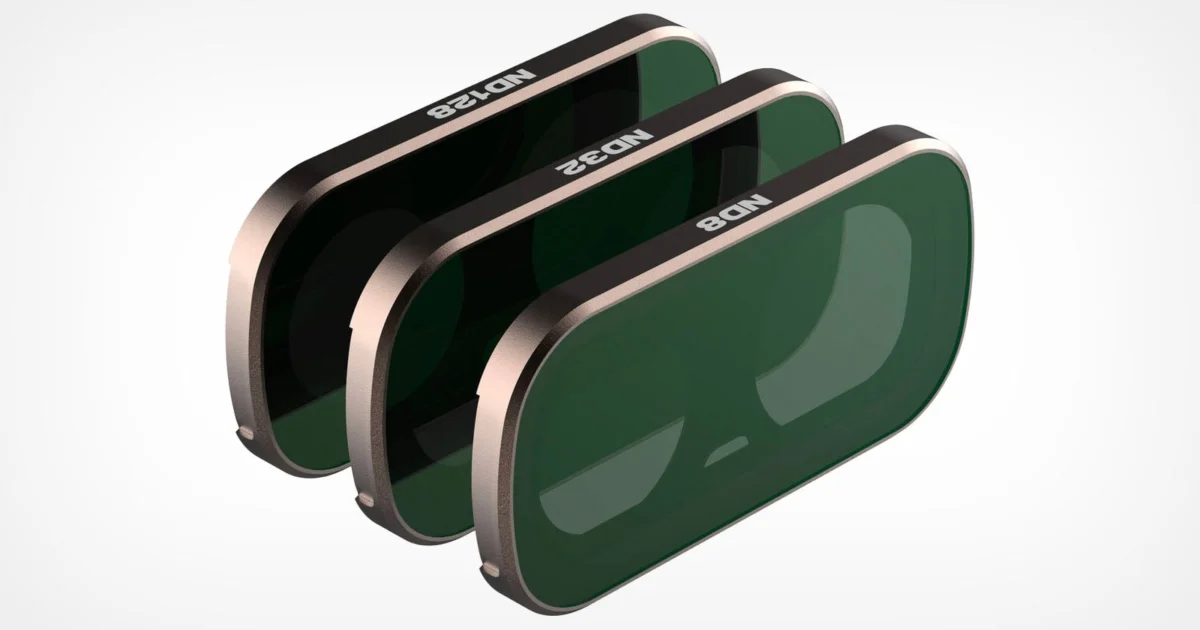
The launch of the Insta360 Luna Ultra last month was met with significant enthusiasm from the creator community. The camera itself, a technical marvel, saw a smooth, successful rollout with ample supply to meet initial demand. However, beneath the surface of this successful hardware launch lies a growing logistical frustration for power users: the near-total unavailability of essential accessories, specifically the neutral density (ND) filter sets.
While the camera is readily available, the ecosystem designed to support it has struggled to gain footing. As professional videographers and hobbyists alike look to control their exposure in varying lighting conditions, they are finding themselves staring at "out of stock" notifications on the official Insta360 storefront and empty shelves at major retailers like B&H Photo. This supply chain stumble has created a vacuum, and accessory giant Polar Pro is stepping in to fill it with a robust, albeit premium-priced, alternative lineup.
A Chronology of the Supply Stumble
The timeline of this accessory shortage reveals a disconnect between the camera’s release and the availability of its supporting gear.
- The Launch Window (Last Month): When the Luna Ultra was first introduced to the market, reviewers and early adopters noted a strange omission: the official ND filter sets were nowhere to be found. Even those with early access to the camera units were left without the necessary tools to manage shutter speed in bright daylight, a fundamental requirement for the "cinematic" look the marketing materials promised.
- The First Month Post-Launch: As the weeks ticked by, anticipation for a restock turned into frustration. While some regions—most notably in parts of Asia—reported sporadic inventory, the North American market remained largely starved of first-party filters.
- Current State of Play: As of late July, the situation remains largely unchanged. Major retail partners have yet to list the filters for pre-order, let alone shipment, and there is no official communication regarding when the supply chain will catch up to the demand.
This delay has left a sour taste for many professionals who rely on ND filters not as an optional luxury, but as an essential component of their workflow. Without them, the Luna Ultra is effectively crippled in bright, outdoor environments.
Supporting Data: Polar Pro’s Aggressive Counter-Strategy
Recognizing the frustration in the marketplace, Polar Pro has announced a comprehensive range of filter solutions for the Luna Ultra, slated for a late-August release. While these will arrive roughly two months after the camera’s debut, their feature-rich lineup may prove that "better late than never" holds true.
Technical Differences in ND Optics
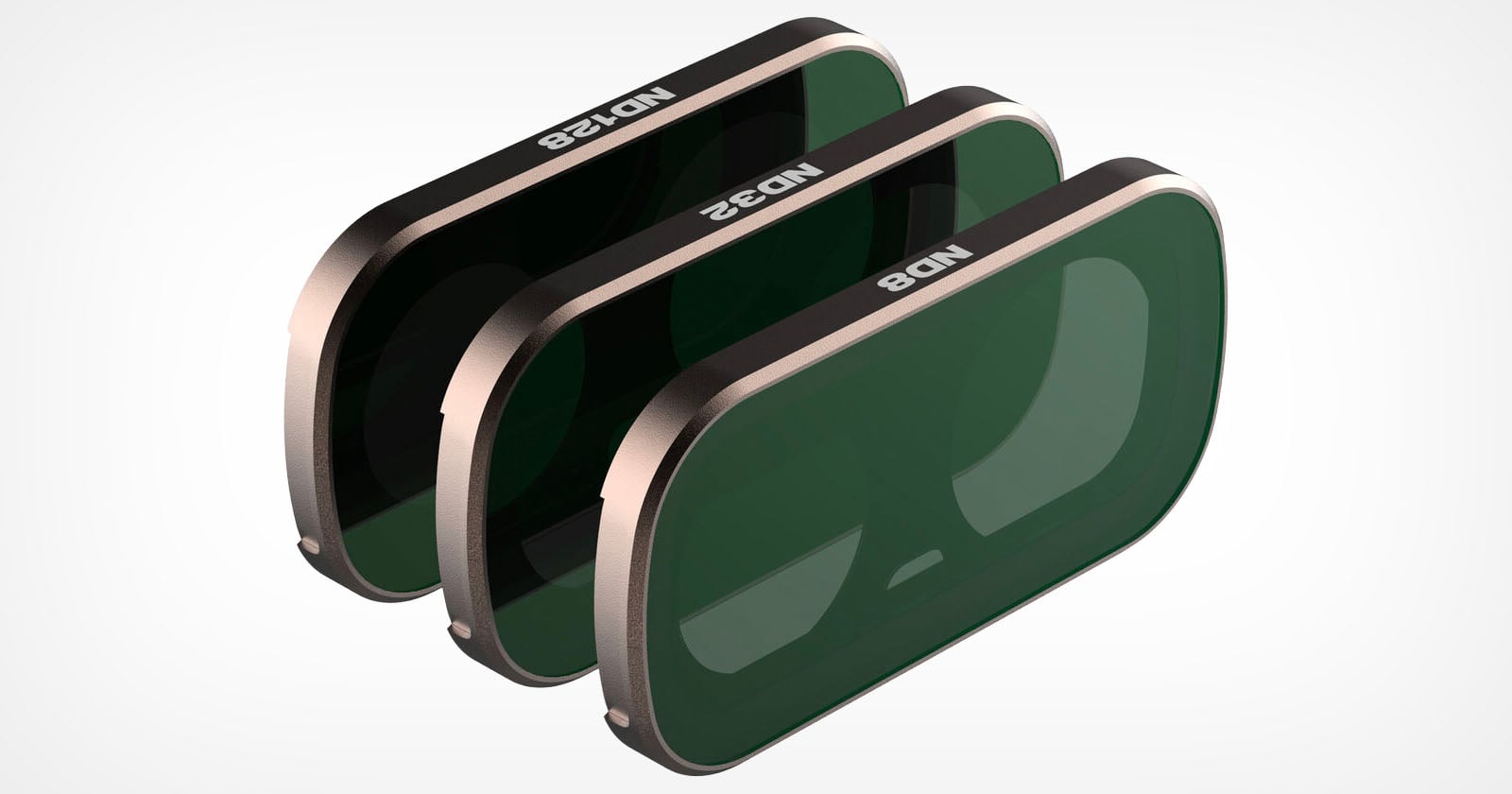
Insta360’s first-party solution focuses on a standard range: ND4, ND16, and ND32. These are suitable for moderate adjustments but may leave users wanting in extreme lighting conditions. Polar Pro is taking a more aggressive, professional-grade approach with their Shutter Collection. By opting for ND8, ND32, and ND128, they are providing a broader range of light reduction that caters more effectively to high-noon shooting scenarios where a ND32 might still be insufficient.
Expanding the Creative Toolkit
Polar Pro is not merely mimicking the official offering; they are expanding the creative possibilities for the Luna Ultra significantly:
- The Vivid Collection: Beyond simple light reduction, this set integrates circular polarizers (CPL) to reduce glare and improve color saturation, a staple for landscape and travel cinematography.
- The Cine Collection: This set introduces full-spectrum infrared (FSIR) capabilities, targeting high-end productions that require precise color management and unique aesthetic control.
- The Vybe Collection: This is perhaps the most ambitious offering. It includes three distinct "look" filters:
- CineBlack 1/4: Engineered for smoother highlight rolloff.
- CineGold 1/4: Designed to introduce a warm, soft transition in highlights.
- The Portra Filter: An attempt to mimic the legendary aesthetic of Kodak Portra film.
The "Portra" Controversy: A Lesson in Brand Credibility
The inclusion of a "Portra" filter is a bold, if controversial, move. When Polar Pro introduced a similar filter for full-frame camera lenses earlier this year, it was met with significant skepticism. Many photographers argued that the filter failed to capture the nuanced color science and grain structure of real Portra 400 film. The ensuing online backlash serves as a reminder that while the company is innovative, their attempts at "film emulation" are often viewed through a critical lens by purists. Whether this new iteration for the Luna Ultra will fare better remains to be seen.
Official Responses and Market Silence
To date, Insta360 has remained relatively quiet regarding the specific reasons behind the filter shortage. While the company has confirmed they are working to address the issue, the lack of transparency has led to speculation about production bottlenecks or potential quality control issues during the manufacturing phase.
Industry analysts suggest that in the rush to meet the global launch demand for the main camera body, accessory production may have been deprioritized. This is a common, though often criticized, strategy in the consumer electronics sector, where the margin on the core device is often higher, and the logistics of shipping small, fragile optics are more complex than those of the camera unit itself.
The Implications for the Future of the Luna Ultra
The implications of this supply chain failure are twofold. First, it damages consumer trust. When a user buys a flagship device, they expect a complete ecosystem to be available. When that ecosystem fails to materialize, the brand equity of the manufacturer suffers.
Second, it opens the door for third-party manufacturers to define the "professional" standard for the camera. By offering more robust, varied, and specialized filter sets, Polar Pro is effectively positioning itself as the "pro-tier" accessory maker for the Luna Ultra. If a user has to choose between a $60 first-party set that is perpetually out of stock and a $70 third-party set that offers superior optical range and creative versatility, the choice becomes clear.
The Pricing Premium
At $70, the Polar Pro sets carry a $10 premium over the official Insta360 offerings. In the context of a high-end camera, this is a negligible difference. Most professionals would gladly pay an additional $10 for better specs and, crucially, guaranteed availability.
Final Analysis: The Battle for the Bag
As we head toward the end of August, the clock is ticking for both companies. If Insta360 can manage a sudden, massive influx of inventory, they may reclaim the market. However, if they remain in their current state of scarcity, they risk losing the "accessory war" to Polar Pro.
For the end user, the path is clear: if you are a professional or a serious enthusiast who requires specific ND density to achieve your creative vision, the wait for the official accessories may no longer be the best strategy. The Polar Pro ecosystem, while slightly more expensive, offers a level of technical depth that the first-party options currently lack.
Ultimately, the winner of this saga will be decided by the consumers who vote with their wallets. The Luna Ultra is a fantastic tool, but it is only as good as the glass in front of its sensor. Until both companies can ensure a steady stream of filters, the "great shortage" will remain a central part of the camera’s narrative—a cautionary tale about the importance of a holistic product launch. As creators, we are constantly told that the "best camera is the one you have with you," but it is equally true that the best camera is the one you can actually outfit to perform the job at hand.
 Raul Delapena Setiawan
  rifanmuazin
  Ammar Sabilarrohman