
 By Muslim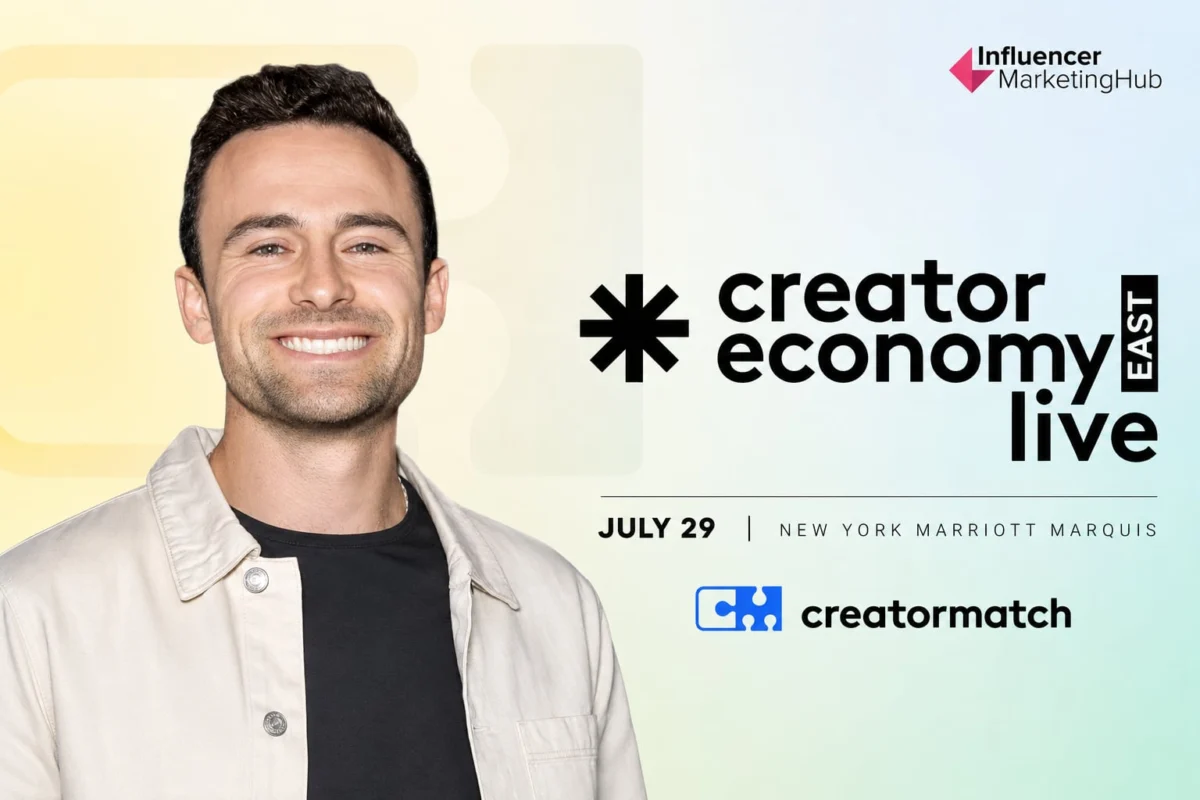
Just one year ago, AJ Eckstein stood in the audience at Creator Economy Live West in Las Vegas, watching the stage with a blend of professional curiosity and long-term ambition. Like many innovators at the forefront of a nascent industry, he spent those sessions analyzing the speakers and wondering when the right moment would arrive to take the podium himself.
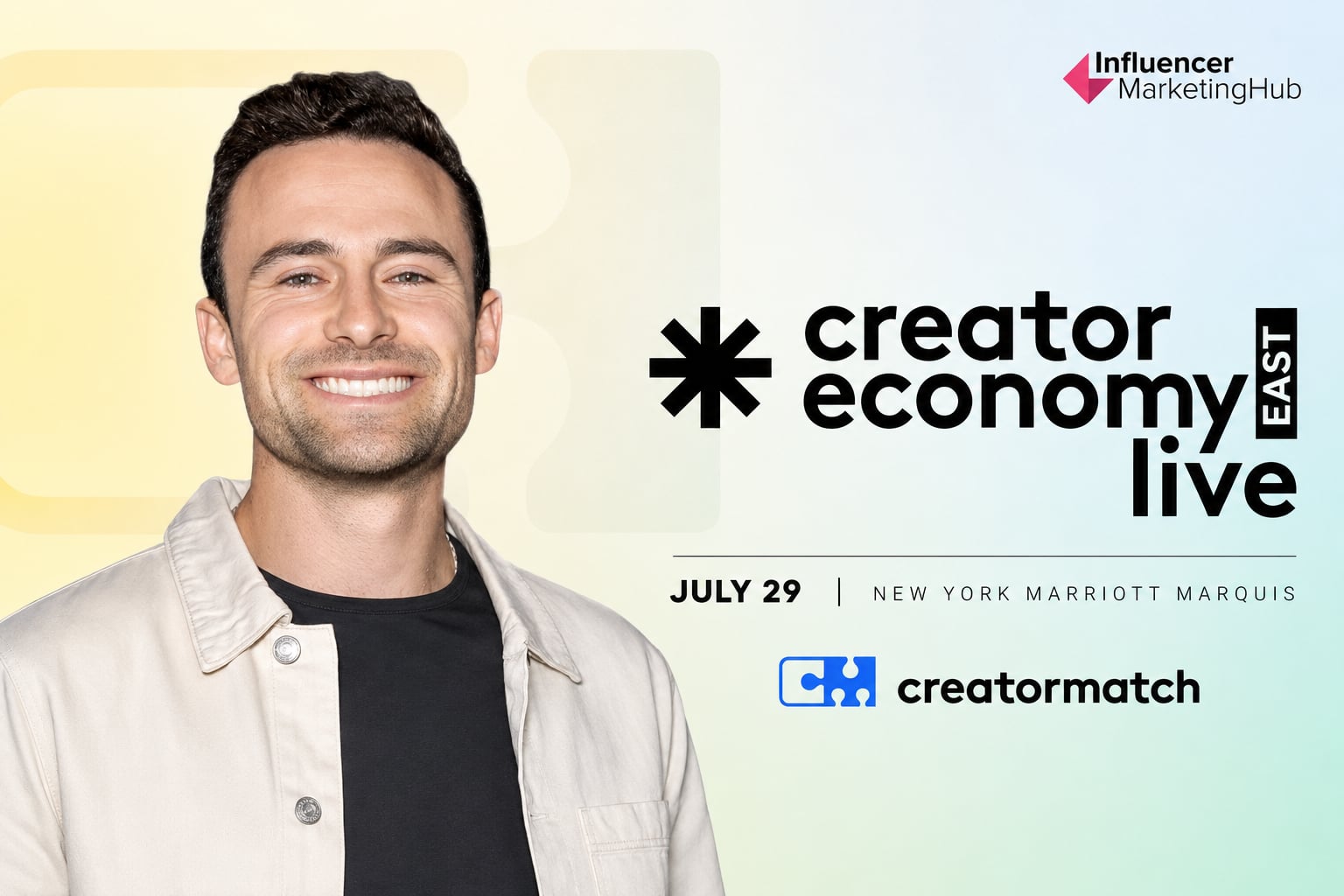
That moment has arrived, and it is happening on a grander scale than he initially imagined. On July 29, Eckstein—the founder and CEO of Creator Match—will serve as the official emcee for Creator Economy Live East at the New York Marriott Marquis. This transition from spectator to industry leader is more than just a career milestone; it is a direct reflection of the rapid professionalization and explosive growth of B2B creator marketing.
As over 50 speakers and 500 brand representatives gather in New York to discuss the future of partnerships, campaign scaling, and return on investment (ROI), Eckstein’s presence serves as a focal point for an industry that has moved beyond its experimental phase into a robust, high-stakes marketing discipline.
A Milestone of Momentum: The $1 Million Benchmark
The invitation to lead one of the industry’s most prestigious events comes on the heels of a monumental business achievement. Two years after launching Creator Match with the modest goal of helping startups run small-scale LinkedIn creator campaigns, the company has officially crossed a major threshold: $1 million in approved creator offers within a single week.
Eckstein shared the news on LinkedIn, framing the achievement through a progression that highlights the company’s trajectory: “$1M in one year. $1M in one month. $1M in one week.”
This shorthand encapsulates the exponential growth of the firm. In its infancy, the company celebrated the milestone of paying B2B creators a cumulative $1 million over the course of its first full year. As the ecosystem matured and the demand for professional, expert-led content surged, that figure became a monthly occurrence. Now, hitting $1 million in approved offers in just seven days signals a massive shift in how brands view the B2B creator landscape.
It is important to note the distinction in the metric: these are offers approved for creators, rather than finalized payouts or revenue. However, this is perhaps the more vital indicator of health, as it reflects the sheer volume of campaign activity, deal flow, and contractual movement currently pulsating through the Creator Match ecosystem.
Scaling the Human Element: The Team Behind the Growth
Despite his high profile as the face of the brand, Eckstein is quick to deflect the credit, emphasizing the collective effort required to facilitate this level of activity. Creator Match has scaled its internal operations significantly, now boasting a team of nearly 40 professionals.
“I get too much credit as the founder,” Eckstein wrote in his announcement. “There is an entire team of close to 40 people behind the scenes that’s making this new world a reality.”
This team is currently tasked with managing an increasingly complex infrastructure that includes creator discovery, relationship management, legal contracting, payment processing, and rigorous campaign measurement. As the company continues to hire, it reflects the broader trend in the B2B sector: the transition from "influencer marketing" as a side project to a core, resource-heavy pillar of the modern marketing department.
The Evolution: From $2,000 Tests to Strategic Programs
To understand the magnitude of the current success, one must look back at the company’s origins. When Creator Match first entered the market, the primary challenge was not just competition, but education.
In the early days, brands were hesitant to allocate budgets toward LinkedIn creators. The "influencer" label was heavily associated with the visual-heavy, lifestyle-oriented worlds of Instagram, TikTok, and YouTube. Brands were skeptical about whether a professional, B2B-focused platform like LinkedIn could yield similar results, and creators were equally unsure if their professional insights carried any market value.
“We were essentially trying to prove that professional influence was a real asset,” Eckstein noted in a recent podcast appearance. “Brands didn’t know if influencers existed on LinkedIn, and creators didn’t know that their reach and engagement could be monetized.”
Early campaigns were modest, fully managed tests priced at approximately $2,000, covering the agency fee and participation from a handful of creators. The goal was simple: prove that a human voice—rather than a faceless corporate logo—could drive meaningful engagement and lead generation in a professional context.
Today, those $2,000 experiments have evolved into robust, enterprise-level programs. Brands are no longer "testing" to see if creator marketing works; they are integrating it into their broader go-to-market strategies.
The "Surround Sound" Framework: A New Definition of B2B Marketing
As the scale of campaigns has increased, so has the sophistication of the strategy. Eckstein has moved beyond the idea of the "sponsored post," instead championing a holistic, five-element framework designed to humanize technology brands.
This multi-pronged approach involves:
- Live Events: Utilizing events to foster authentic, in-person relationships that transcend the digital divide.
- Physical Gifting: Providing creators with tangible brand experiences that offer a unique, "unboxing-style" story for their professional networks.
- Internal Company Voices: Leveraging the expertise of founders, executives, and employees to add credibility and human authority to the brand narrative.
- Creator "Surround Sound": Deploying a cohort of creators to discuss a brand from various perspectives, ensuring the messaging reaches diverse professional communities simultaneously.
- Paid Media Amplification: Using paid distribution to ensure that high-performing organic content reaches a wider, targeted audience.
Eckstein summarizes this methodology with a simple, punchy mantra: “The event builds the relationship. The gift keeps it alive. The founder voice gives permission. The surround sound makes it inevitable. Paid media makes sure nobody misses it.”
This framework demonstrates that B2B creator programs are no longer isolated marketing tactics. They are becoming sophisticated systems that combine relationship-building, content creation, and distribution to achieve specific, measurable business outcomes.
Implications for the Future of Creator Economy Live East
The upcoming event in New York is set to be a microcosm of this industry-wide shift. With over 15 sessions and 100 scheduled meetings between brands, agencies, and creators, the agenda is focused on moving past the "what is this?" stage and into the "how do we scale this?" phase of maturity.
For attendees at the Marriott Marquis, the presence of an emcee like Eckstein—who has personally navigated the transition from observer to architect—is significant. It validates the professionalization of the career path for B2B creators and provides a blueprint for agencies looking to bridge the gap between corporate brands and individual voices.
As the industry converges in New York, the conversation is expected to revolve around the technical aspects of program design: how to select the right creators, how to measure the long-term impact of creator partnerships on pipeline growth, and how to effectively integrate creator voices into the fabric of a global enterprise.
Conclusion: A New Era for B2B Creators
The trajectory of Creator Match and AJ Eckstein is emblematic of the wider creator economy. The movement from $2,000 tests to weekly $1 million approvals is not just a growth story; it is a bellwether for a fundamental shift in how business is conducted.
In the digital-first professional world, the most effective marketing is no longer purely transactional or corporate. It is relational. By prioritizing human connection and professional authority, brands are finding that they can achieve levels of trust and reach that were previously unattainable through traditional advertising.
As Eckstein takes the stage on July 29, he does so as a leader in a field that has finally found its footing. The era of wondering if B2B creator marketing has a place in the boardroom is over. The era of scaling, optimizing, and professionalizing that influence has begun, and if current trends are any indication, the industry is only just getting started.
 Iffa Jayyana
  Siti Muinah
  Asro
Asro 