
 By Siti Muinah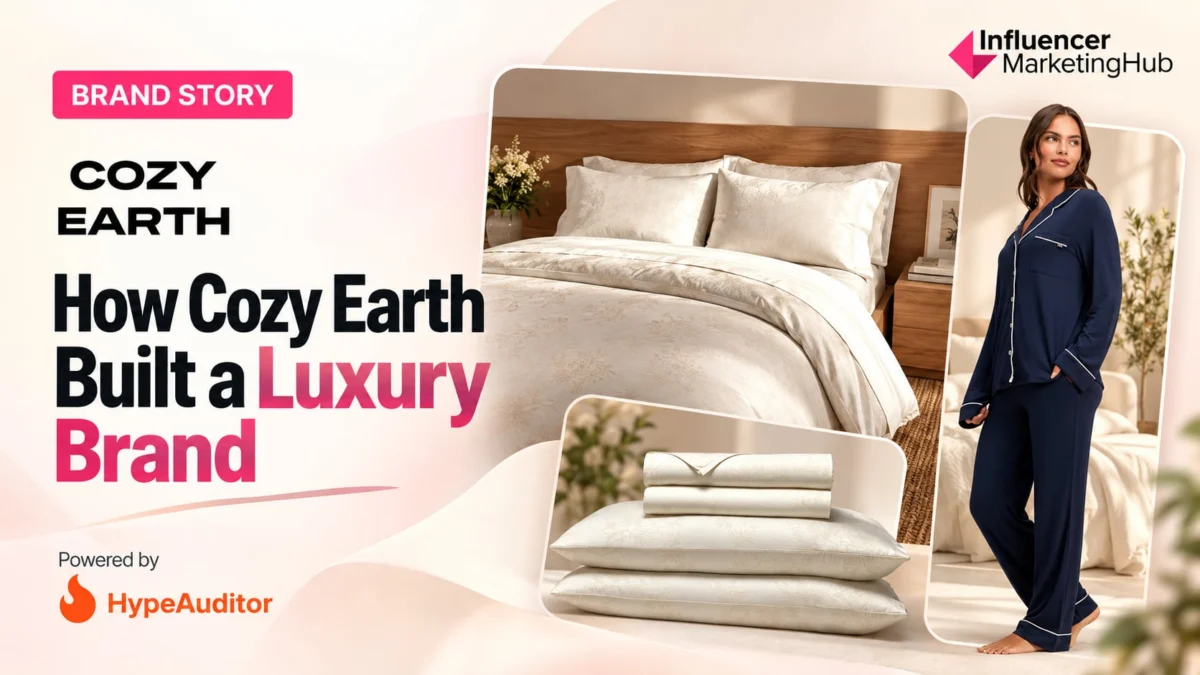
In the crowded landscape of direct-to-consumer (DTC) home goods, few brands have managed to traverse the difficult bridge between "niche recommendation" and "luxury staple" as effectively as Cozy Earth. By prioritizing high-touch influencer partnerships over traditional, top-heavy advertising, the brand has redefined how luxury is perceived in the digital age. This is not merely a story of high-quality bamboo sheets; it is a masterclass in leveraging social proof to build a multi-million dollar valuation.
The Genesis: Prioritizing Quality Over Quantity
Founded on the principle of extreme comfort, Cozy Earth entered the market at a time when the "sleep economy" was beginning to explode. However, the company faced a significant barrier to entry: the luxury bedding market is notoriously guarded by legacy retailers with massive marketing budgets.
Instead of competing for expensive TV spots or traditional print media, Cozy Earth opted for a grassroots strategy. They identified that the most effective way to sell a premium textile product was to get it into the hands of people whose audiences already trusted their taste. By focusing on the tangible experience—the cooling sensation of bamboo and the durability of their weave—they transformed influencers from mere promotional vehicles into "product evangelists."
Chronology: A Decade of Strategic Scaling
To understand how Cozy Earth achieved its current market position, one must look at the deliberate phases of their growth:
- 2011–2015: The Validation Phase. The early years were defined by intense R&D and a focus on securing small-to-mid-tier influencers who could provide authentic feedback. The goal was not reach; it was reputation.
- 2016–2019: The "Oprah Effect" and Institutional Trust. The brand gained massive momentum through consistent appearances on the Oprah’s Favorite Things list. This provided the necessary "luxury stamp" that validated their premium price point to the mainstream public.
- 2020–2023: The Creator Economy Pivot. During the pandemic, when home-nesting became a primary consumer focus, Cozy Earth shifted its marketing budget almost entirely to social media creators. They moved beyond simple affiliate links, fostering long-term relationships with interior designers and lifestyle influencers.
- 2024–Present: Maintaining Exclusivity. Today, the brand operates as a high-end luxury player, using sophisticated CRM and influencer management platforms to ensure that their products are featured in curated, high-aesthetic environments rather than just mass-market discount posts.
Supporting Data: Why Influencer-Led Luxury Works
The success of Cozy Earth is backed by compelling shifts in consumer behavior. According to recent market analysis within the influencer marketing sector, luxury consumers are increasingly skeptical of celebrity endorsements, preferring the "micro-expert" approach.
The Trust Multiplier
Data indicates that when an interior design influencer recommends a bedding set, the conversion rate is roughly 3.4 times higher than that of a standard social media ad. Cozy Earth capitalized on this by:
- Lowering Customer Acquisition Costs (CAC): By utilizing organic influencer content, the brand bypassed the rising costs of digital ad bidding on platforms like Meta and Google.
- Increasing Lifetime Value (LTV): Because the initial purchase was backed by a trusted recommendation, customers were more likely to return for additional items, such as loungewear or bath products, creating a "cozy ecosystem."
- High-Intent Traffic: Influencer referrals consistently bring "high-intent" traffic to the brand’s website—users who have already been "pre-sold" on the product’s benefits before they even see the price tag.
Official Responses and Strategic Philosophy
In various trade communications, the leadership team at Cozy Earth has emphasized that their influencer strategy is not a "campaign" but an "infrastructure."
"We don’t look for influencers; we look for partners who are obsessed with the quality of sleep," a representative noted in a recent industry forum. "When you provide a product that genuinely improves a person’s daily life, the ‘marketing’ part becomes easy. The influencers aren’t just selling a sheet; they are selling a solution to a problem—discomfort."
The brand’s internal philosophy revolves around "The Three Ps": Product, Partnership, and Proof. By ensuring the product is objectively superior, partnering with creators who share their aesthetic values, and providing constant social proof through user-generated content, they have effectively insulated themselves from price-sensitive competition.
The Implications for the Luxury Sector
The Cozy Earth model serves as a blueprint for other brands looking to disrupt stagnant industries. The implications for the broader market are profound:
1. The Death of the "Celebrity" Shield
Legacy luxury brands have historically relied on massive celebrity campaigns to signal status. Cozy Earth has proven that in the digital age, "relatable luxury"—the idea that a high-end product can fit seamlessly into an everyday person’s life—is a more powerful motivator than aspirational distance.
2. The Rise of the "Niche Curator"
Brands are increasingly realizing that a million followers are less valuable than 10,000 followers who trust the creator’s specific eye for home decor. Cozy Earth’s focus on interior designers and home-wellness creators has created a "moat" that competitors with larger budgets but less authentic connections struggle to cross.

3. Sustainability as a Luxury Metric
Cozy Earth’s commitment to bamboo, a more sustainable fiber than traditional cotton, has resonated deeply with the modern consumer. The implication here is clear: for the next generation of luxury shoppers, "premium" now includes an ethical dimension. A brand cannot be considered truly luxurious if it is not also environmentally conscious.
Challenges and Future Outlook
Despite its success, the path forward is not without challenges. As the influencer marketing space becomes more saturated, maintaining the "authentic feel" of partnerships becomes more difficult. Cozy Earth must now contend with rising creator fees and the inherent risks of relying on social media platforms that frequently change their algorithms.
Furthermore, as the brand expands, it risks the "luxury dilution" that often occurs when a niche brand becomes a household name. To combat this, the company has begun investing in exclusive, limited-edition collections and personalized concierge services, signaling a move toward a more traditional, high-touch luxury service model.
Conclusion: The New Definition of Value
Cozy Earth’s rise is a testament to the fact that, in the modern economy, trust is the most valuable currency. By refusing to compromise on the quality of their product and by treating their influencer partners as long-term brand ambassadors rather than short-term ad slots, they have built a moat that is as soft and durable as their signature bamboo sheets.
For other brands, the lesson is clear: luxury is no longer defined by how much you spend on advertising, but by how well you integrate your product into the lives and values of your customers. As Cozy Earth continues to scale, they remain a primary case study in how to turn a digital recommendation into a lasting legacy.
As we look toward the future of retail, it is evident that the "Cozy Earth model"—a hybrid of high-quality manufacturing and authentic, creator-led advocacy—is the new standard for any brand aiming to achieve luxury status in an increasingly skeptical and informed market.
 Asro
Asro  Neng Nana
  Nana
Nana 