
 By Ali Ikhwan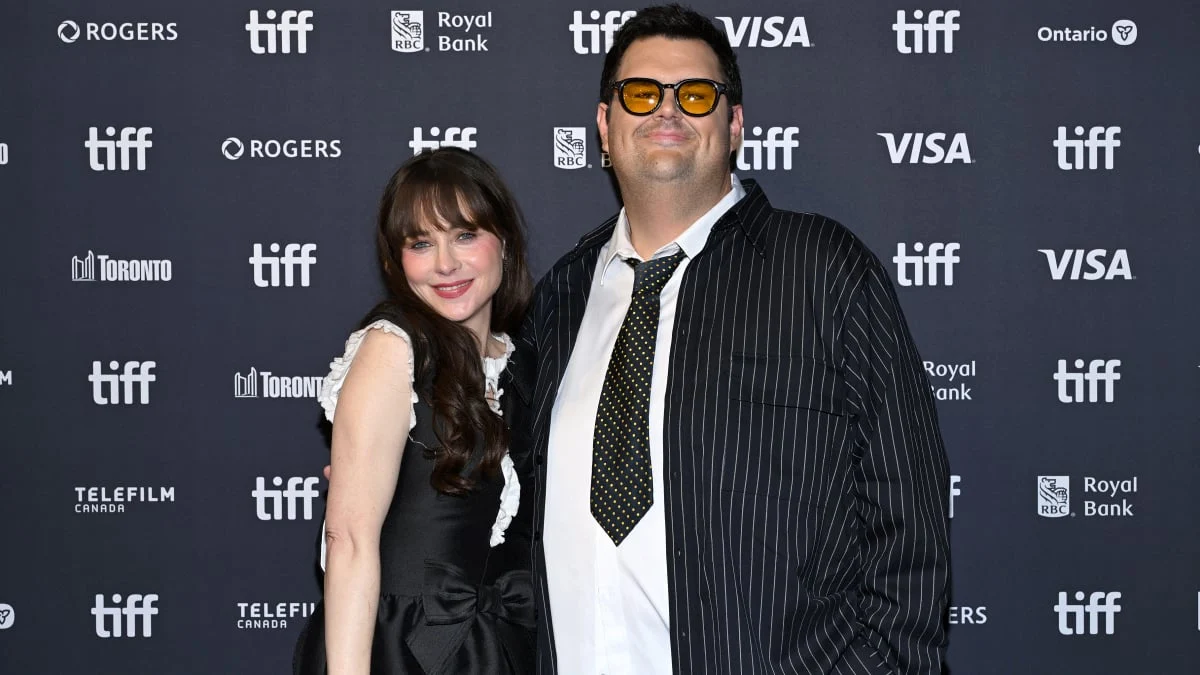
The Toronto International Film Festival (TIFF) has long been a barometer for the shifting tides of the entertainment industry. This year, the festival’s pulse beat loudest not just in the darkened auditoriums of the Lightbox, but in the discourse surrounding the democratization of storytelling. During the "For You Feed to Feature Film" panel—moderated with sharp precision by TikTok’s Global Entertainment Partnerships Lead, Jenny Kim—industry veterans and digital-native stars Caleb Hearon and Zooey Deschanel offered a masterclass in navigating the volatile transition from social media content creation to the rigorous demands of feature filmmaking.
The panel served as a bridge between two worlds that were, until recently, viewed as mutually exclusive: the algorithmic immediacy of the "For You" page and the deliberate, slow-burn prestige of the festival circuit. As the stars of the upcoming film Trash Mountain—which Hearon co-wrote alongside Ruby Caster—the pair represented a new archetype of talent: the multi-hyphenate creator who refuses to wait for the traditional gatekeepers to open the door.
The Genesis: From Digital Clips to Cinematic Journeys
The trajectory of the modern creator is often characterized by a "trial by fire" in the court of public opinion. For Caleb Hearon, his ascent began in the ephemeral spaces of Twitter and TikTok, where his biting wit and observational humor garnered a dedicated following. However, the move from writing a sixty-second sketch to anchoring a feature-length narrative is a tectonic shift.
Trash Mountain, the project at the center of this dialogue, represents the culmination of this evolution. It is not merely a "creator film"; it is a narrative work that leverages the unique, intimate rapport Hearon established with his audience, expanded into the structural requirements of a feature.
The panel discussion focused heavily on the mechanics of this transition. For creators, the "For You Feed" is a laboratory of constant iteration. You learn what lands, what fails, and how to pace a joke or an emotional beat in real-time. Yet, as the panel highlighted, the discipline required for a feature film requires a recalibration of that energy. It is about moving from the "hook" to the "arc."
Chronology of a Paradigm Shift
To understand the weight of this conversation, one must look at the recent timeline of the industry.
- The Digital Boom (2015–2020): Social media platforms became the primary scouting grounds for talent agencies. Traditional Hollywood began to pivot, moving from "talent discovery" at film schools to "audience discovery" on social media.
- The Creator-Led Wave (2021–2023): Platforms like TikTok solidified their role as cultural engines. Creators began to bypass traditional gatekeepers, crowdfunding or self-funding projects that showcased their voice without the dilution of studio interference.
- The Institutional Integration (2024–Present): TIFF’s inclusion of the "For You Feed to Feature Film" panel signals a formal acknowledgment of this new reality. The festival is no longer just a home for established directors; it is the new home for the "digital-first" auteur.
Voices from the Stage: Breaking the Permission Barrier
The most resonant moments of the panel arrived when the conversation turned to the psychological hurdles of professional creative work.
Zooey Deschanel: The Autonomy of the Artist
Zooey Deschanel, whose career spans two decades of music, television, and film, provided a necessary historical anchor. She recounted the early days of her career, specifically the pushback she received when attempting to bridge the gap between acting and music.
"I was told, ‘You’re an actor, stay in your lane,’" Deschanel shared, reflecting on the institutional skepticism that once governed the industry. Her advice to the modern creator was simple, if radical: Stop waiting for permission.
Deschanel emphasized that the modern creator already possesses the tools that industry veterans had to fight for decades to acquire. "How about you just be the person that does it first?" she challenged. Her thesis is that the act of creation is, in itself, the validation. If you have a story to tell and the means to share it, the permission is inherent in the work.
Caleb Hearon: The Power of the "No"
Caleb Hearon brought a more pragmatic, grit-to-the-grindstone perspective. His commentary on the "creator economy" was both candid and sobering. Hearon argued that while creators have more leverage today than ever before, that leverage is frequently undermined by the industry’s desire to commodify the creator’s brand rather than invest in their artistic vision.
"Get comfortable saying no very early," Hearon advised. He spoke extensively about the pressure to monetize one’s identity to satisfy institutional demands. He noted that despite the prestige of acting in four movies last year, his financial reality remained tied to his podcast and brand partnerships—a "gay little podcast," as he jokingly termed it—rather than his cinematic output.
This insight underscores a critical implication for the future of film: institutions are increasingly offloading the financial risk of production onto creators. Because creators have already built an audience and a brand, studios see them as "safe bets" with built-in marketing. Hearon’s warning is clear: do not let this leverage be used to dilute your voice.
Supporting Data and Industry Implications
The "DIY nature" of content creation has fundamentally altered the economics of film production. Traditionally, a film project required a studio’s capital, a distributor’s network, and a publicist’s reach. Today, a creator with a million followers on TikTok already possesses the distribution network and the publicist.
The Financial Reality
Hearon’s admission that he is still paying bills via podcasting ads while starring in festival-bound films provides a sobering look at the "middle-class" of Hollywood. The transition from internet celebrity to feature film actor is not an automatic ticket to financial stability. The "creator economy" is often a gig economy.
The Risk/Reward Calculus
From an industry standpoint, the "For You Feed to Feature Film" pipeline is a response to the fragmentation of audiences. Traditional marketing has become prohibitively expensive, and the return on investment for standard studio films has become increasingly volatile. By betting on creators, studios are betting on established, loyal fanbases. However, as Hearon noted, this puts the onus of sustainability on the creator.
Professional Synthesis: The Future of the Feature
The panel at TIFF was more than a promotional event for Trash Mountain; it was a manifesto for a new era of filmmaking. The key takeaways for aspiring creators are clear:
- Identity vs. Commodity: Do not allow institutions to squeeze your creativity into a pre-defined box. If your "brand" is what got you noticed, ensure that your "voice" is what gets you paid.
- The Power of Agency: The "DIY" label is no longer a pejorative; it is a strategic advantage. By maintaining control over the creative process, creators ensure that the jump to the big screen remains an artistic evolution rather than a commercial dilution.
- Financial Pragmatism: Understand that professional success does not always equate to immediate financial independence. The hybrid model—maintaining digital presence while pursuing film—is the current standard for survival.
As the industry continues to evolve, the distinction between "online content" and "cinema" will continue to blur. The lessons shared by Deschanel and Hearon suggest that the winners of this new era will be those who balance the radical autonomy of the internet with the discipline and long-term vision of the film industry.
For those currently navigating the "For You Feed," the path forward is clear: continue to make your "fucking thing," ignore the gatekeepers who demand you wait for their blessing, and remember that in the modern creative economy, the only permission that truly matters is the one you grant yourself.
As the Toronto International Film Festival continues, we await the official release of "Trash Mountain," a project that serves as a definitive case study in the power of the independent, internet-forged creative. Our entertainment editor, Kristy Puchko, will provide a comprehensive review and deep-dive into the film’s narrative structure in the coming days.
 Dwi Wanna
  Lina Irawan
  Asro
Asro 