
 By Nila Kartika Wati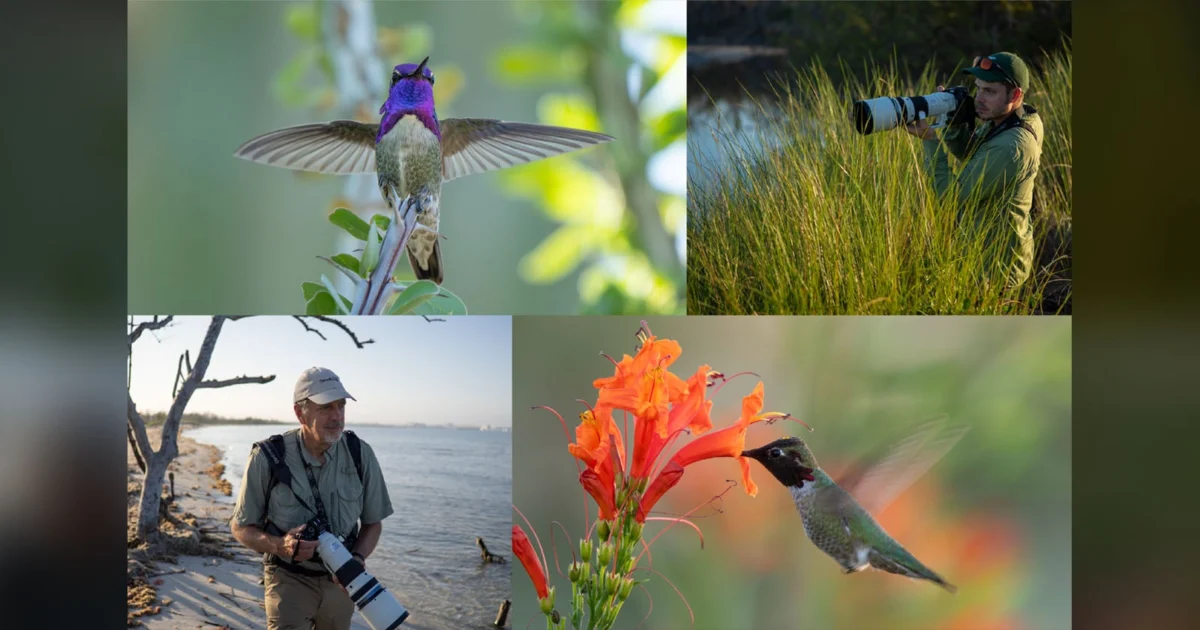
By the Wildlife Photography Desk
Published | Photography & Conservation
Main Facts
Following the resounding success of its inaugural run, the acclaimed digital series Wild Birds Revealed has officially returned for a highly anticipated second season. The project is once again made possible through the generous sponsorship of OM System and is produced in partnership with the prestigious Cornell Lab of Ornithology.
At the heart of this visual journey is the celebrated father-and-son wildlife photography duo, Tim and Russell Laman. Armed with cutting-edge OM System camera gear and telephoto lenses, the Lamans traverse diverse North American landscapes—starting in the sun-drenched environments of Florida and Southern California—to document the intricate, often unseen behaviors of local bird populations.
The premier episode of Season 2 is already live, casting a brilliant spotlight on two avian jewels of Southern California:
- The iridescent pink Anna’s Hummingbird (Calypte anna)
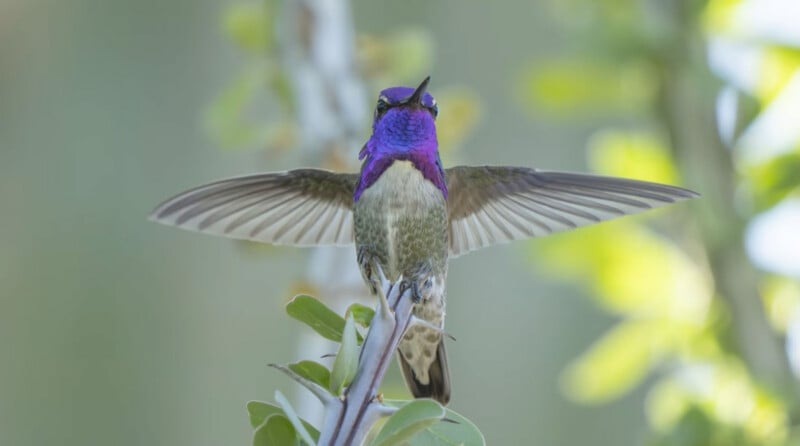
- The striking purple Costa’s Hummingbird (Calypte costae)
Through high-resolution still photography and mesmerizing slow-motion video work, the series breaks down the physics of hummingbird flight. It demonstrates how these tiny creatures achieve their signature mid-air suspension through hyper-rapid, figure-eight wingbeats.
While subsequent episodes promise to unveil more unexpected avian behaviors across three upcoming segments, Tim Laman has kept precise details under wraps, ensuring that viewers remain on the edge of their seats for what comes next.
Chronology: The Evolution of Wild Birds Revealed
To understand the impact and trajectory of the Wild Birds Revealed series, it is helpful to look at its developmental timeline and how it has expanded its reach into the public consciousness:
- Pre-Launch & Season 1 Development: Recognizing a shared mission to connect humanity with the natural world, the Cornell Lab of Ornithology and OM System joined forces to conceptualize a series that would merge elite scientific storytelling with master-class wildlife imagery.
- Season 1 Premiere and Reception: The inaugural season debuted to widespread critical acclaim, educating viewers on the ecological habits of distinct regional species. The first three episodes focused heavily on the migratory marvels and nesting habits of Tree Swallows, the dramatic fish-hunting prowess of Ospreys, and the charming, cliff-dwelling lives of Atlantic Puffins. All three foundational episodes remain accessible online for new and returning audiences.
- Season 2 Announcement and Production: Building upon the technical successes of the first season, Tim and Russell Laman took to the field once again. Traveling across contrasting American habitats—from coastal wetlands to arid scrublands—they utilized advanced micro-four-thirds camera setups to push the boundaries of high-speed macro and telephoto wildlife capture.
- September 2026 — Season 2 Launch: The second season officially drops its opening episode, focusing squarely on the micro-mechanics of Anna’s and Costa’s hummingbirds, setting a high benchmark for the remaining three unreleased episodes.
Supporting Data & Technical Insights
Capturing sharp, evocative imagery of animals whose wings beat at rates exceeding 50 to 80 times per second is no small feat. It requires an intersection of artistic patience, deep biological understanding, and state-of-the-art camera engineering.
The Subjects: Anna’s and Costa’s Hummingbirds
- Anna’s Hummingbird: Historically native to the chaparral and oak woodlands of Baja California and southern/coastal California, this species has expanded its range northward due to urban landscaping and backyard feeders. Its crown and throat display a brilliant, iridescent rose-pink that shifts dramatically depending on the angle of the light.
- Costa’s Hummingbird: Known primarily for its preference for arid desert environments, scrub, and sagebrush, the male Costa’s hummingbird is immediately identifiable by its striking, flared violet-purple gorget (throat feathers) that sweep back like a majestic mustache.
The Gear and Fieldcraft
While Tim and Russell Laman keep specific camera settings customized to rapidly changing field conditions, the partnership with OM System highlights the specific advantages of modern mirrorless systems for wildlife documentation:
- High-Speed Sequential Burst Shooting: Essential for capturing the precise apex of a hummingbird’s wing stroke or a sudden territorial aerial dive.
- Advanced Stabilization: Allowing photographers to shoot crisp telephoto video footage from unconventional angles without relying on bulky, restrictive tripod setups in tight brush.
- Weather Sealing: Crucial for field naturalists operating in humid southern swamps, salt-spray coastal environments, and dusty desert basins.
For aspiring creators inspired by the series, foundational education remains widely accessible. OM System has continuously supported educational resources, such as PetaPixel’s Ultimate Beginner’s Guide to Bird Photography featuring insights from 20-year field veteran and OM System Ambassador Ben Knoot. These resources underscore a universal truth in modern photography: while elite gear simplifies the capture of fast-moving wildlife, foundational fieldcraft, patience, and ethical distance remain the universal tools of every successful wildlife artist.
Official Responses
Industry leaders and conservation advocates have expressed immense enthusiasm for the launch of Season 2, emphasizing the unique synthesis of art, technology, and environmental stewardship that the project represents.
Eiji Shirota, Head of the OM System Business Unit at OM Digital Solutions Corporation, shared:
"We are truly honored to continue our collaboration with the Cornell Lab of Ornithology for a second year. We are delighted that, through this series, we can share the hidden lives of wild birds, the wonders of nature, and the joy of birdwatching with an even wider audience. It is also a great source of pride for us that OM System camera systems were used to capture some of the remarkable moments in the lives of wild birds featured in the series. We hope the series will deepen people’s understanding and appreciation of nature and inspire new encounters with the natural world and moments of wonder."
Tim Laman, co-star and wildlife photographer, reflected on the creative direction of the new episodes:
"We are very excited to share our new episodes of Wild Birds Revealed. This year, we are featuring some diverse and spectacular North American birds that most everyone is probably familiar with — but be prepared to be amazed. From hummingbirds and more, we have filmed some bird behaviors that may surprise you. You don’t want to miss Season 2 of Wild Birds Revealed!"
Christian Camerota, Senior Director of Integrated Marketing and Communications at the Cornell Lab of Ornithology, emphasized the educational and emotional core of the project:
"The best storytelling can help people see even familiar birds in a completely new way. By combining singular imagery with the wonder of discovery, Wild Birds Revealed has been designed to help deepen people’s love and understanding of birds and inspire them to help protect our natural world."
Implications: Conservation, Education, and the Future of Birdwatching
Beyond its aesthetic and technical merits, Wild Birds Revealed serves a much larger, urgent ecological purpose. In an era where many North American bird populations face severe pressures from habitat loss, climate change, and urbanization, fostering a deep cultural connection to local wildlife is more vital than ever.
Bridging Science and Public Engagement
The Cornell Lab of Ornithology has long championed citizen science—encouraging everyday people to monitor bird populations, report sightings, and participate in conservation initiatives like eBird. Series like Wild Birds Revealed act as a bridge between rigorous ornithological science and public affection. When viewers witness the microscopic details of an Anna’s Hummingbird navigating an aloe blossom in hyper-definition, abstract conservation statistics transform into tangible, living creatures worthy of active protection.
Inspiring the Next Generation of Ethical Photographers
With the barrier to entry for digital photography lowering through accessible mirrorless technology and mobile education guides, millions of people now venture outdoors with cameras in hand. Projects led by credible professionals like Tim and Russell Laman model ethical wildlife photography:
- Maintaining respectful distances to avoid stressing nesting pairs.
- Understanding territorial behaviors to prevent disrupting foraging cycles.
- Utilizing specialized telephoto lenses rather than chasing or baiting animals.
As Season 2 continues to roll out its remaining episodes over the coming weeks, audiences are reminded that the natural world—often hidden in plain sight within suburban backyards and local parks—holds boundless complexity and beauty. Through the lenses of dedicated conservationists and the support of forward-thinking optical engineers, Wild Birds Revealed invites everyone to step outside, look up, and fall in love with the winged wonders of North America all over again.
 Pevita Pearce
  Raul Delapena Setiawan
  Lina Hope