
 By Reynand Wu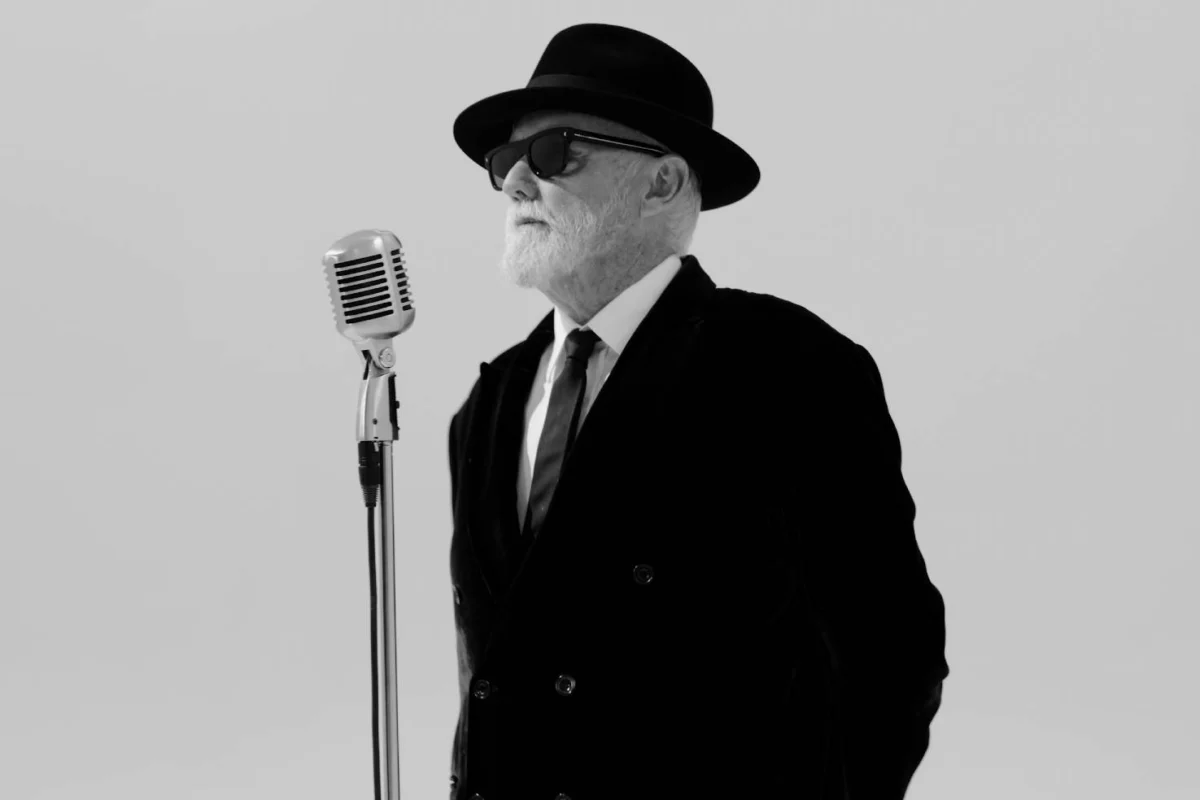
At 77, Queen’s legendary drummer and multi-instrumentalist Roger Taylor is far from slowing down. With the release of his seventh solo studio album, Violence Insane In a Beautiful World, the rock icon has pivoted from the stadium-filling spectacle of his primary band to a deeply personal, introspective exploration of the modern human condition. Released on September 18, the 10-track collection serves as both a plea for global sanity and a testament to an artist who refuses to let the fires of creativity burn out.
Main Facts: A New Chapter in a Storied Career
Violence Insane In a Beautiful World arrives as a significant milestone, marking 45 years since Taylor’s debut solo effort, 1981’s Fun in Space. Recorded at his private home studio in the United Kingdom and co-produced alongside long-time collaborator Joshua J. Macrae, the album is a mosaic of styles that reflects Taylor’s eclectic musical sensibilities.
The album’s thematic anchor is the opening track, "A Beautiful World," a song that simultaneously celebrates the majesty of the planet and issues a stern, expletive-laden warning to humanity: "Don’t f—k it up." This sentiment permeates the entire record, which oscillates between poignant observations on global instability and lighter, more whimsical moments. Taylor, who performed every instrument on the album himself, has created a work that feels both intimate and expansive, bridging the gap between the stadium-rock grandeur he helped define and the quiet, thoughtful solitude of an artist contemplating his legacy.
Chronology: From ‘Fun in Space’ to the Present
Roger Taylor’s solo trajectory has always existed in a fascinating parallel to his work with Queen. While the band occupied the center of the rock music universe, Taylor’s solo work allowed him to experiment with sounds that didn’t necessarily fit the Queen mold.
- 1981: The debut of Fun in Space established Taylor as a formidable solo force, capable of blending synth-heavy production with his signature rock sensibilities.
- 1986: A seminal year for Queen, highlighted by the historic Budapest concert, which is now receiving a modern, IMAX-ready restoration.
- 2021: Taylor released Outsider, his previous solo endeavor, which garnered critical acclaim for its mature, reflective lyrics.
- 2024: Violence Insane In a Beautiful World drops, arriving at a time when Taylor admits to feeling a sense of "despair" regarding the state of the world, yet maintaining a hope that current trends are reversible.
The timeline of Taylor’s life is a testament to the longevity of the rock era. From the underground clubs of the early 70s to the digital age, his ability to adapt—not just in his music, but in his approach to the industry—remains a defining trait.
Supporting Data: The Eclectic Sonic Landscape
The composition of Violence Insane In a Beautiful World is a study in variety. Taylor deliberately avoided a singular sonic palette, fearing that monotony would be the death of his artistic spirit.
"If I just did one style of music all the time, I think I would be deathly bored," Taylor explains. This philosophy manifests in tracks ranging from the heartfelt ballad "I See You Now" to his rendition of John Lennon’s "Jealous Guy," and the intentionally "silly" track "Don’t Photograph Food."
A major highlight of the record is the collaboration with the Ndlovu Youth Choir from Limpopo, South Africa. After witnessing the choir’s powerful Zulu-language cover of Queen’s "Bohemian Rhapsody" online, Taylor reached out to incorporate their energy into three tracks: "A Beautiful World," "A Great Big Beautiful World" (reprise), and the dance-inflected "Come on Summer (It’s Party Time)." The collaboration was seamless, with Taylor noting that the choirmaster possessed a near-telepathic understanding of his creative vision.
The album’s visual aesthetic is equally deliberate. The cover features an image of the Earth and the Moon captured during the recent Artemis II space mission, grounding the record in a cosmic perspective that mirrors the themes of existential fragility found in the lyrics.
Official Responses: The Artist’s View on Politics and Performance
In an exclusive interview with Billboard, Taylor did not shy away from the sociopolitical underpinnings of his work. Specifically, he addressed the track "Chump," a transparent critique of American politics. While expressing a hesitation to interfere in foreign affairs, Taylor did not mask his frustration with the state of the United States.

"It’s such a wonderful country, but it’s changing for the worse at the moment," Taylor remarked. He expressed a deep-seated hope that the damage being done to the country’s image and democratic ideals might be reversible. His commentary highlights the role of the aging rock star as a global citizen—someone who has traveled the world and witnessed both its triumphs and its decline.
Regarding his role as a frontman, Taylor remains characteristically humble. Despite decades of experience, he admits he still feels the shadow of the late Freddie Mercury. "In Queen, I never really wanted to be the frontman—obviously with Freddie, I was never going to be better than him, right? I don’t really have a hankering to be out front at all. But I guess if you’re writing the songs and singing them… you’re kind of the frontman."
Implications: The Future of Queen and Technological Innovation
Perhaps the most compelling aspect of the current discourse surrounding Taylor is his candid assessment of the future of Queen. With the band having been quiet since early 2024, and guitarist Brian May dealing with health concerns, the question of "what next" looms large.
Taylor and May, who remain close friends and neighbors, are actively exploring ways to present the Queen legacy that move beyond the traditional "touring" model. Drawing inspiration from the revolutionary ABBA Voyage virtual residency and the immersive technology of the Las Vegas Sphere, the duo is conceptualizing a new, high-tech way to bring their music to audiences.
"We’ve been thinking about using some kind of technology to present some kind of show, fairly [it would be] revolutionary," Taylor teased. This shift represents a broader trend in the music industry: the transition from aging rock legends performing grueling physical tours to the creation of permanent, immersive, digital experiences that preserve the "Queen sound" for future generations.
Furthermore, the upcoming release of Queen Budapest on October 7 serves as a bridge to this future. The film, which documents the band’s 1986 performance in Hungary, has undergone extensive restoration by Peter Jackson’s Park Road Post Production team. For Taylor, the process of seeing the 35mm footage restored to such high fidelity was a transformative experience, reminding him of the power of the band at its absolute peak.
A Legacy in Motion
As the tour for Violence Insane In a Beautiful World kicks off—a concentrated six-concert run across the U.K.—Taylor remains a man driven by a singular, persistent urge: to create.
"I think if you’re in a creative industry, work is precious, and I think it keeps you going," he says. "The idea of retiring and doing nothing is anathema to me."
Whether he is playing the drums for 80,000 people in a stadium or crafting a quiet, introspective song in his home studio, Roger Taylor’s contribution to music remains vital. He is not merely a custodian of the past; he is an active participant in the present, still searching for melodies that make sense of a world that is, by his own admission, increasingly difficult to understand. As he looks toward the future, the message is clear: the beat goes on, even when the world feels like it might be spiraling out of control.
Tracklist: Violence Insane In a Beautiful World
- A Beautiful World (feat. The Ndlovu Youth Choir)
- Violence Insane
- What Really Matters
- Don’t Photograph Food
- I See You Now
- Chump
- Spit In His Eye
- Jealous Guy
- Come On Summer (It’s Party Time) (feat. The Ndlovu Youth Choir)
- A Great Big Beautiful World (reprise) (feat. The Ndlovu Youth Choir)
Roger Taylor U.K. Tour Dates
- Sept. 21: Newcastle, O2 City Hall
- Sept. 22: Edinburgh, Usher Hall
- Sept. 24: Birmingham, The Alexandra
- Sept. 25: Manchester Opera House
- Sept. 28: London, Roundhouse
- Sept. 29: Swansea Building Society Arena
 Azzam Bilal Chamdy
  Lina Irawan
  Laily UPN