
 By Suro Senen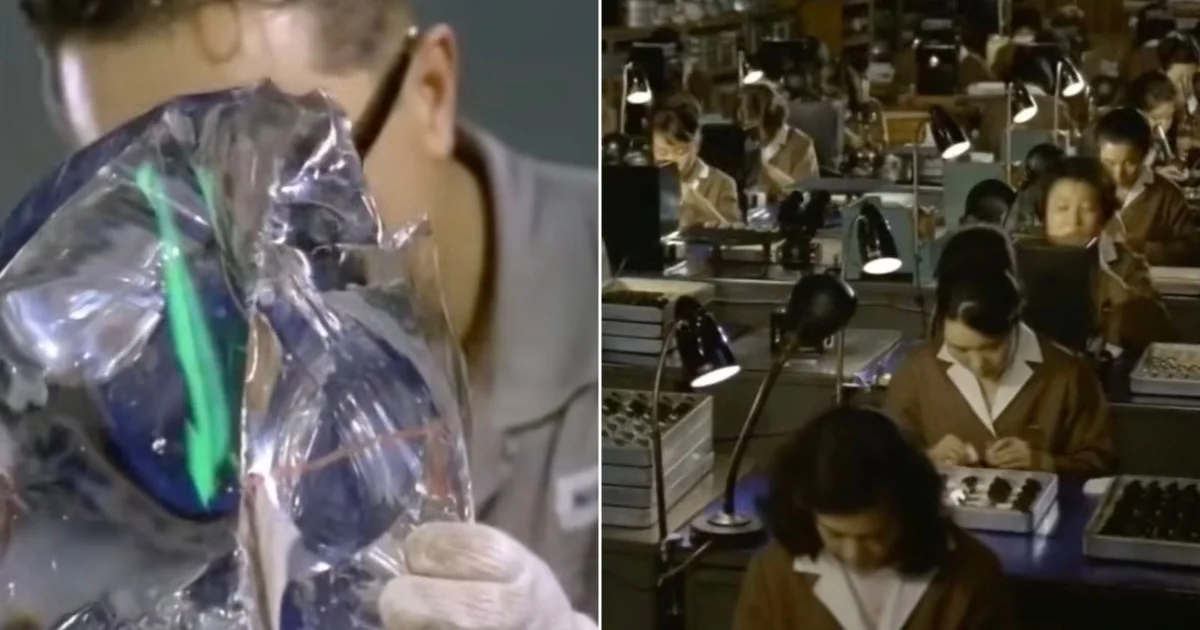
In an era dominated by automated manufacturing lines, artificial intelligence-driven design simulations, and pristine aspherical glass elements, modern photographic lenses are technological marvels. They offer clinical sharpness, staggering levels of contrast, and distortion-free performance that would have seemed like science fiction half a century ago. Yet, as the digital landscape pushes ever forward into hyper-precision, a counter-movement among photographers and cinematographers has turned its gaze backward. There is a growing, palpable hunger for the organic imperfections, unique character, and emotional resonance of vintage glass.
To understand why classic lenses retain such a powerful grip on the modern creative imagination, one must look back at how they were actually made. A newly resurfaced, award-winning 1966 promotional documentary—produced collaboratively by Nikon (then known as Nippon Kogaku Kogyo) and Tokyo Cinema—offers a fascinating window into a bygone era of optical engineering. Entitled The Eye of Science, the film won the Encouragement Award at the 1967 Japan Industrial Film Contest. It captures a time when camera and lens manufacturing was as much an exercise in raw industrial alchemy and painstaking artisan handwork as it was a science.
Main Facts
The rediscovery of The Eye of Science via reports from Digital Camera Life highlights the stark contrast between mid-century manufacturing methods and today’s high-tech cleanrooms.
- The Historical Context: Filmed in 1966, the documentary chronicles the rigorous, hands-on production processes used by Nippon Kogaku Kogyo to manufacture its iconic photographic lenses and camera bodies, most notably the legendary Nikon F and Nikon F Photomic T systems.
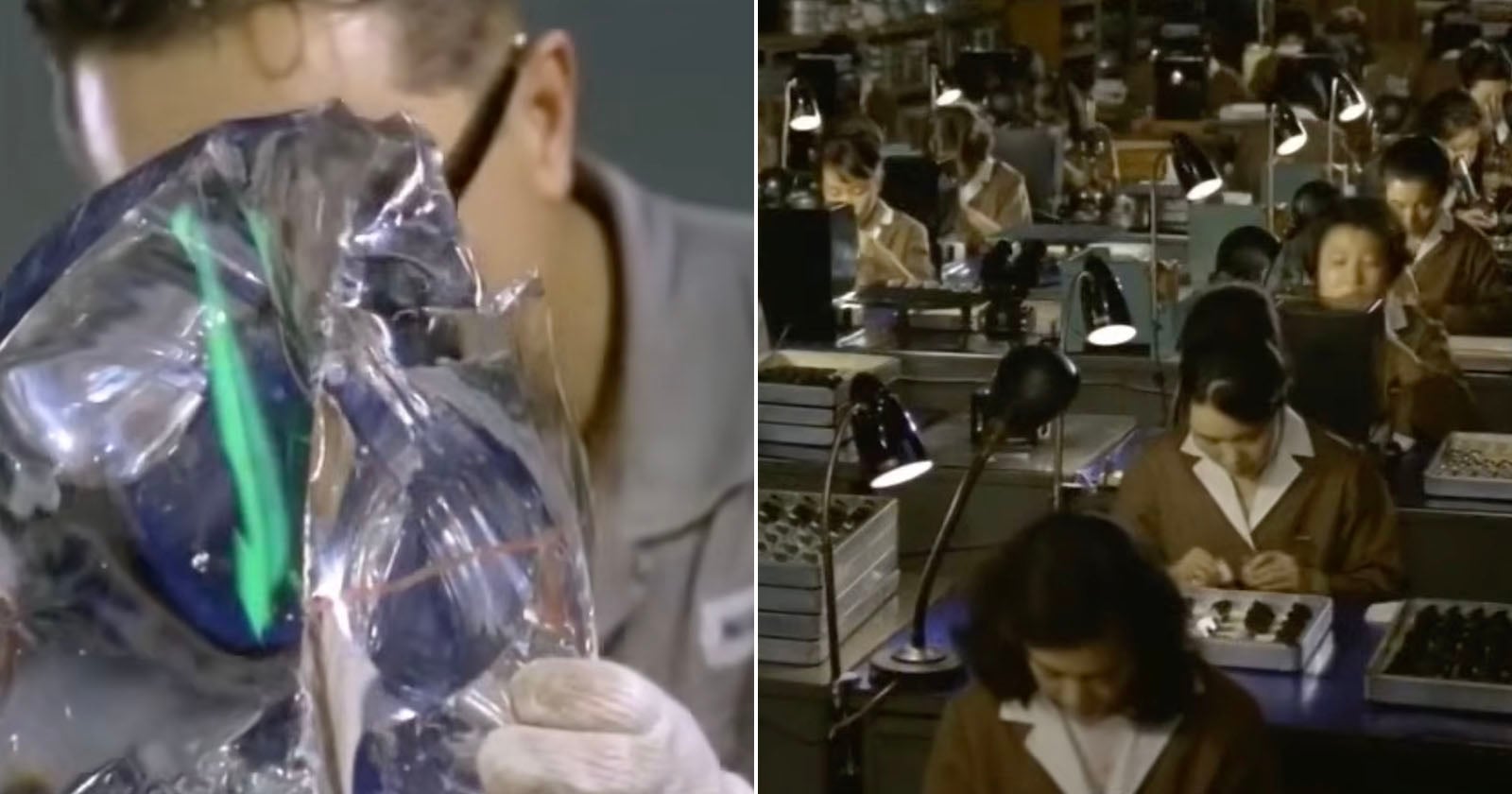
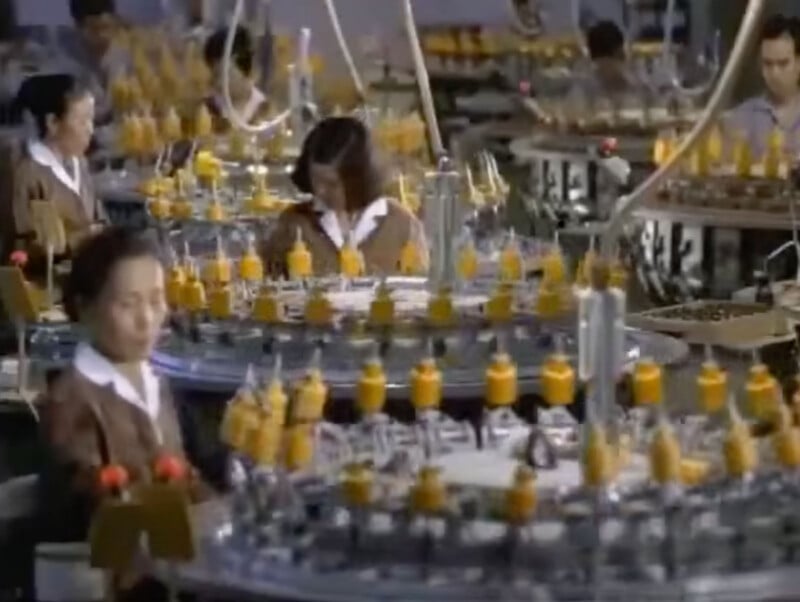
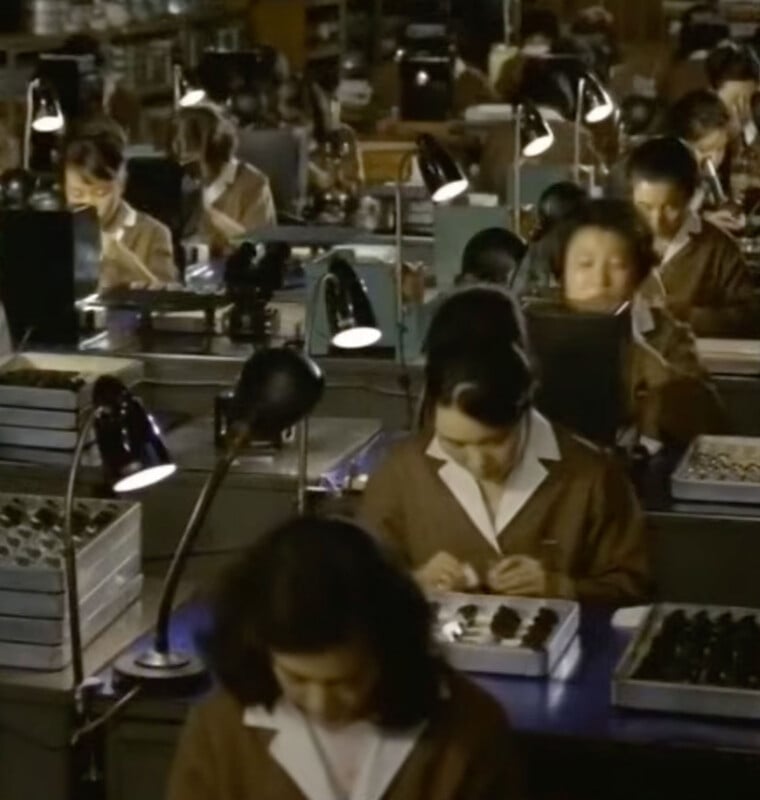
- The Materials and Labor: Unlike modern computer-automated labs, lens production in the 1960s relied heavily on heavy industrial machinery, extreme heat, and an army of skilled human workers—often working long hours at individual desks with personal lamps to shape, polish, and assemble delicate parts.
- The Modern Relevance: While manufacturing has fundamentally shifted toward digital automation, the demand for lenses crafted during this era has surged. Modern filmmakers and photographers actively seek out 60-year-old vintage Nikon glass for its distinct optical "flaws," such as dynamic lens flare and softer rendering, which inject life and personality into digital sensor captures.
- Longevity of Analog Tech: The documentary also showcases the assembly of mechanical camera bodies featuring upwards of 1,000 intricate moving parts. Many of these 1960s mechanical cameras remain fully operational today, raising philosophical questions about the long-term viability and durability of modern, software-reliant digital cameras.
Chronology of Craft: The 1960s Lens-Making Process
To truly appreciate the vintage Nikon lenses that contemporary creators covet, it is vital to trace the grueling, multi-step chronology of how optical glass was brought to life in the 1960s factory environment.
Phase 1: The Alchemical Birth of Optical Glass
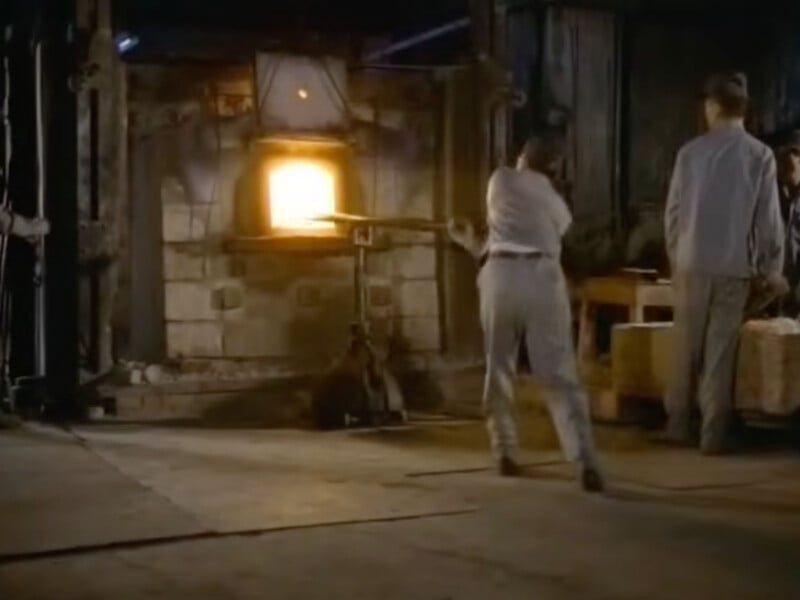
The creation of a classic Nikon lens did not begin on a computer screen; it began with high-grade silica sand mixed meticulously with over a dozen other raw chemical compounds. Workers loaded these precise formulas into massive, super-heated industrial crucibles. Inside these furnaces, temperatures reached extremes capable of melting raw minerals into glowing, homogeneous pools of liquid glass.
Once melted and cooled into massive, raw blocks, workers had to shatter these huge chunks of optical glass by hand. As captured in the 1966 footage, technicians relied on heavy-duty metal tools to extract workable pieces from roaring furnaces—a hazardous, intensely physical job requiring immense experience to spot internal bubbles, impurities, or stresses within the raw material.
Phase 2: Pressing and Micro-Precision Polishing
Once separated into manageable chunks, the raw optical glass was subjected to secondary super-heating stages and loaded into mechanical presses to roughly form the initial curvature of the lens elements.
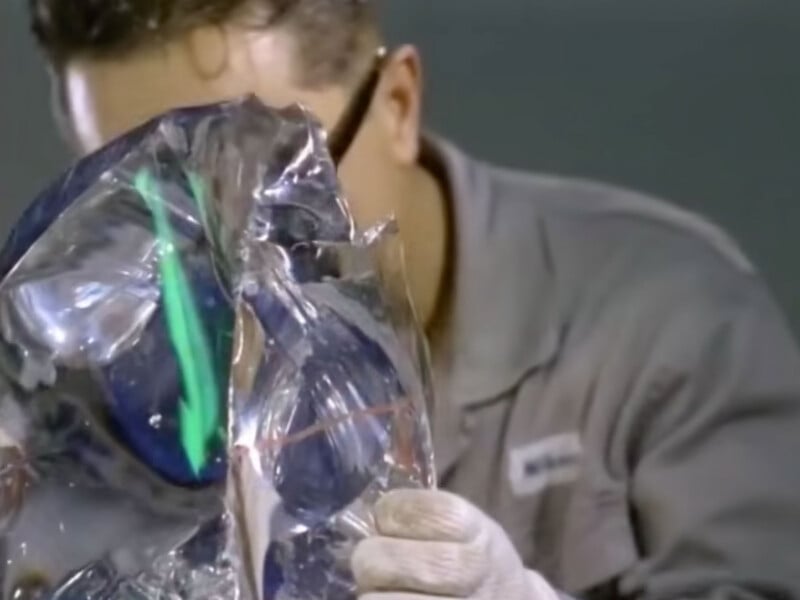
However, pressing was only the beginning. Achieving the exact refractive index required painstaking, hands-on grinding and polishing. In 1960s workshops, technicians polished individual glass elements by hand, holding tolerances down to a couple of micrometers—a mere fraction of a millimeter. A single misplaced stroke could ruin an element, meaning that every successfully finished piece of glass represented hours of concentrated human labor.
Phase 3: Mechanical Integration and Barrel Assembly
With individual glass elements polished to perfection, the next bottleneck was assembly. The elements had to be aligned and seated meticulously inside metal lens barrels. This phase required supreme dexterity and spatial precision; even a microscopic misalignment of a fraction of a millimeter would catastrophically degrade the lens’s optical performance, destroying sharpness and inducing severe astigmatism or decentering.
Parallel to lens assembly, the documentary reveals the intricate construction of camera bodies like the Nikon F. Technicians—frequently women working in specialized uniform rows illuminated by individual desk lamps—fitted together more than 1,000 tiny gears, springs, levers, and screws to build mechanical camera bodies designed to withstand decades of heavy professional abuse.
Supporting Data & Technical Insights
| Manufacturing Era | Primary Technology | Tolerance Levels | Human Labor Involvement | Main Aesthetic Result |
|---|---|---|---|---|
| 1960s (Nippon Kogaku) | Industrial furnaces, mechanical presses, hand-polishing | Micrometer-level (approx. 0.001mm) | Extensive: Manual glass breaking, hand-grinding, bench assembly | Organic character, unique flares, lower contrast, smooth bokeh |
| Modern Era (Present Day) | Computer-Aided Design (CAD), robotic molding, AI simulations | Nanometer-level | Minimal: Heavily automated cleanrooms and machine vision checks | Clinical sharpness, flat fields, high contrast, flare suppression |
The fundamental shift outlined in the table above explains why vintage glass behaves so differently from contemporary optics. Modern computer-designed lenses are engineered to eliminate aberrations entirely. Aspherical elements, specialized nano-coatings, and exotic low-dispersion glass are optimized to yield maximum MTF (Modulation Transfer Function) scores, ensuring edge-to-edge sharpness and zero color fringing.
In contrast, 1960s optical formulas were bound by the physical limitations of grinding technology and glass chemistry of the time. Simple doublets and triplets, fewer coated elements, and simpler mechanical configurations meant that light bounced around inside the lens barrel in ways that modern engineers would consider "flawed." Yet, these very optical compromises are what modern creators celebrate today.
Official Perspectives and Industry Reflections
While Nikon has long since modernized its production lines—utilizing advanced glass-molding technologies, proprietary AR coatings like Nano Crystal Coat and Arneo Coat, and ultra-precise automated quality control—the corporate heritage captured in The Eye of Science remains a point of immense pride for the brand.
Historical retrospectives from Japanese camera culture publications, such as Digital Camera Life, emphasize that the 1960s marked a golden age for Japanese industrial manufacturing. During this post-war boom, companies like Nippon Kogaku Kogyo aggressively pursued global standards of excellence, proving that Japanese optical engineering could match—and frequently surpass—long-established European legacy brands from Germany.
Industry veterans note that the human element in 1960s manufacturing imbued every single lens with a subtle, individual personality. Because hand-polishing and hand-assembly varied slightly from artisan to artisan, no two vintage lenses were entirely identical. This "sample variation," once viewed as a manufacturing hurdle to be minimized, is now cherished by collectors and filmmakers who view their vintage lenses as bespoke artistic tools rather than mass-produced consumer electronics.
Implications: The Quest for Character in a Digital Age
The resurfacing of The Eye of Science triggers a deeper philosophical question about the trajectory of modern image-making: Have we traded soul for perfection?
The Vintage Renaissance in Cinematography
In the realm of modern cinema, the look of pristine digital sensors—shot on ultra-sharp, clinical contemporary lenses—can often feel sterile, digital, and overly digital-clean (often colloquially referred to as the "video look"). To combat this, cinematographers routinely spend thousands of dollars adapting 1960s and 1970s photographic lenses for high-end cinema cameras.
Vintage Nikon glass, in particular, is prized for:

- Organic Lens Flares: Unlike modern multicoated lenses that suppress stray light, vintage glass blooms when hit with direct light sources, washing frames in characteristic ghosting, rainbows, and warm veiling glare.
- Fall-off and Bokeh: Older optical designs often feature pleasing, swirling, or painterly out-of-focus background rendering (bokeh) alongside a natural fall-off in sharpness toward the edges of the frame, naturally drawing the viewer’s eye toward the center of the composition.
- Skin Tones: Many directors and colorists report that older glass renders human skin with a smoother, more forgiving, and warmer tonality than hyper-detailed modern glass, which can mercilessly expose every pore and blemish.
The Durability Paradox: 1966 vs. 2026
Perhaps the most sobering takeaway from the 1966 documentary is the stark realization regarding product lifespans. The cameras and lenses built by Nikon workers in those damp, lamp-lit Japanese workshops six decades ago are still actively collected, maintained, and shot with today. Purely mechanical cameras require no firmware updates, contain no proprietary lithium-ion battery architectures, and rely on springs and gears that can be serviced by a skilled watchmaker or repair technician.
In contrast, the complex digital mirrorless cameras and autofocus-driven electronic lenses manufactured today are deeply intertwined with software ecosystems. It is difficult for industry analysts to imagine a scenario where a high-end digital camera body manufactured in 2026 will still be fully functional, repairable, and actively used by hobbyists in the year 2086.
Conclusion
The Eye of Science is far more than a dusty corporate promotional film from a bygone era; it is a monument to human dedication. It reminds us that behind every iconic photograph captured on a classic Nikon F lies a grueling chain of human effort—from the miner hauling silica sand to the technician meticulously polishing glass under a solitary lamp. As modern creators continue to raid the past for tools that inject humanity into their digital work, the legacy of the 1960s optical artisan endures, proving that perfection is rarely as compelling as character.
 Lina Irawan
  Ali Ikhwan