
 By Asro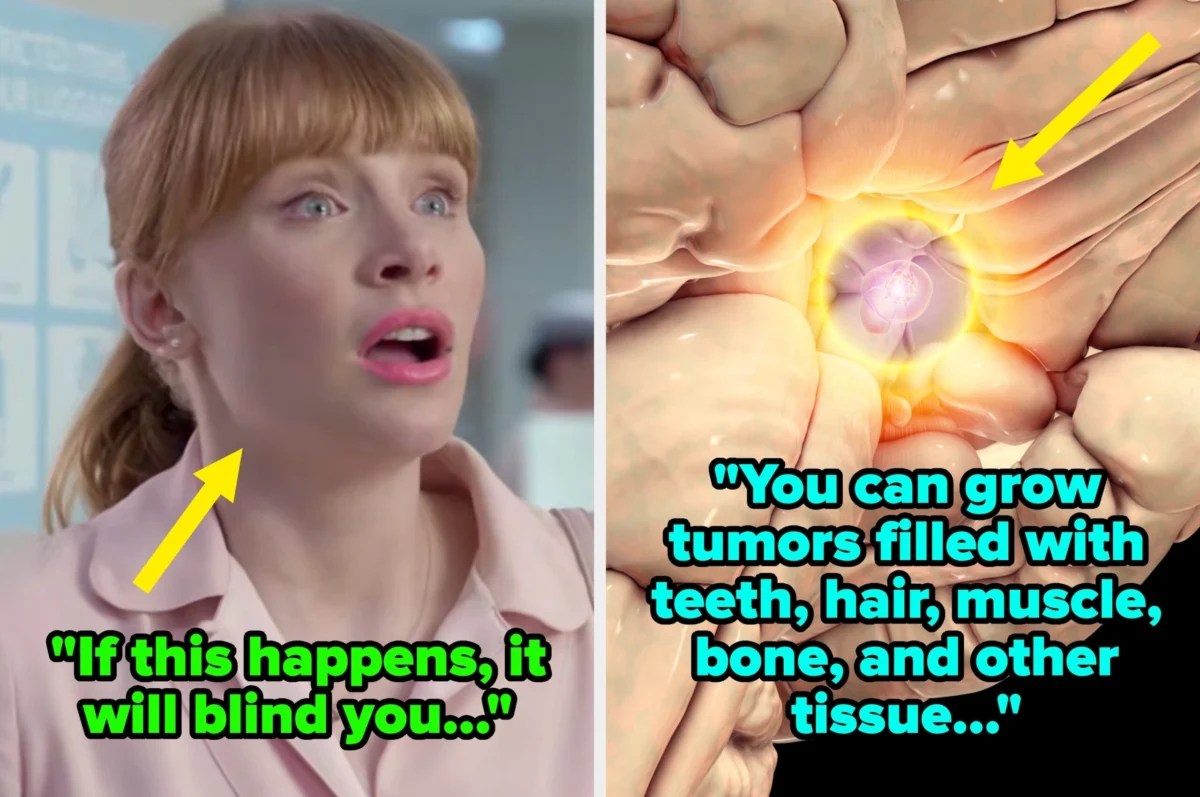
Warning: This article contains graphic descriptions of biological processes and medical conditions that some readers may find disturbing.
The human body is an awe-inspiring biological machine. Capable of running marathons, creating complex art, and healing from catastrophic injuries, it is a marvel of evolution. However, beneath the polished exterior of skin, hair, and muscle lies a landscape that can be genuinely weird, gross, and sometimes downright unsettling.
Recently, the internet’s curious minds gathered on the popular online forum Reddit—specifically within the r/biology community, sparked by a prompt from user u/Mr-Bones-6150—to share the strangest and most disturbing biological facts they have encountered. From organs that fail to connect properly to microscopic residents living rent-free on our faces, the responses proved that truth is far stranger than fiction.
Here is a comprehensive look at 19 of the most shocking, scientifically backed facts about the human body, exploring the timeline of our anatomical oddities, supporting medical data, and the profound implications these phenomena hold for modern medicine and human health.
Part I: The Main Biological Anomalies
1. The Divided Brain (Corpus Callosotomy)
The corpus callosum is the massive neural bridge that connects the left and right hemispheres of the human brain, allowing them to communicate. Historically, this bridge was surgically severed as a radical treatment for severe, drug-resistant epilepsy. Despite the two halves of the brain being completely isolated from direct communication, patients who underwent this procedure could still function remarkably well in their day-to-day lives, demonstrating the brain’s astonishing plasticity.
2. Remnants of the Umbilical Cord: The Urachus
Some internal ligaments attach directly from the belly button to the bladder—a literal anatomical fossil from our time in the womb as the umbilical cord. Occasionally, in rare developmental anomalies known as urachal abnormalities, these fibrous tracks fail to close completely. The result? A person could potentially leak urine or blood directly out of their navel.
3. Immune Privilege and Sympathetic Ophthalmia
Our eyes possess what immunologists call "immune privilege." This means they are structurally and biologically separated from the body’s general immune system so that inflammation does not damage vision. However, if severe trauma damages an eye and exposes its internal tissues to the bloodstream for the first time, the immune system will recognize those tissues as foreign invaders and launch a devastating attack—sometimes even targeting the healthy remaining eye.
4. Reversed Body Plans (Situs Inversus)
While standard human anatomy dictates that the heart sits slightly to the left and the liver to the right, a rare congenital condition called situs inversus completely mirrors the internal organs. People with this condition have a reversed body plan, often living entirely normal, healthy lives without ever realizing it until they undergo a routine X-ray or emergency surgery.
5. The En Bloc Extraction of the Tongue
In forensic pathology, the human tongue is not merely excised in pieces. When removed during a complete autopsy, the tongue can actually be pulled out entirely in one single piece (en bloc), bringing the complex pharyngeal structures and organs of the throat out with it in a surprisingly unified anatomical assembly.
6. Teratomas: Tumors That Grow Hair and Teeth
Among the most cinematic and disturbing medical phenomena are teratomas—a type of germ cell tumor. These bizarre growths can contain fully formed, differentiated tissues derived from multiple embryonic germ layers. It is not uncommon for surgeons removing teratomas to find real human hair, teeth, bone, muscle, and even rudimentary neural tissue encapsulated within the mass.
7. Crush Syndrome and Lethal Toxins
Getting pinned under a heavy object is terrifying, but the danger does not stop when the weight is lifted. When a limb is crushed and trapped, local toxins and metabolic byproducts accumulate in the trapped tissue without entering general circulation. If the pressure is suddenly released without proper medical intervention, these toxins rush into the bloodstream, triggering massive cardiac arrest and kidney failure—a phenomenon known as crush syndrome.
8. The Disconnected Ovaries
Despite their vital role in reproduction, a woman’s fallopian tubes are not actually physically fused to her ovaries. Instead, during ovulation every month, microscopic, finger-like projections called fimbriae must literally "catch" the released egg as it floats across the pelvic cavity. It is an evolutionary design that feels surprisingly improvised for a process as critical as human propagation.
9. Pregnancy-Induced Brain Remodeling
Recent neurological studies have revealed that pregnancy permanently alters a mother’s brain, shrinking certain volumes of grey matter—particularly regions associated with "theory of mind" (the ability to understand other people’s mental states). Far from being a form of damage, neuroscientists emphasize that this is an aggressive optimization process, rewiring the maternal brain to heighten social vigilance and bonding with the newborn.
10. Self-Arranging Intestines
During major abdominal surgery, surgeons do not need to meticulously measure and place every loop of the small and large intestines back into a rigid, precise spatial order. Because of the mesentery—a continuous set of tissues that suspends the small intestine from the posterior abdominal wall—the intestines naturally shift and resettle into their proper physiological positions once the patient is stitched up.
11. The Olfactory Signature of Alcohol Addiction
Working in coroners’ offices often exposes professionals to grim realities, but one of the most unexpected is the preservation of lifestyle within tissue. According to experienced forensic pathologists, the brains of individuals suffering from severe, chronic alcohol addiction can retain a distinct, overpowering aroma of alcohol—resembling a strong vodka scent—upon autopsy.
12. Microscopic Face Mites (Demodex)
Almost every adult human hosts millions of microscopic, eight-legged arachnids known as Demodex mites living rent-free in their hair follicles. While they heavily populate the eyebrows and eyelashes, these tiny creatures can inhabit any hair-bearing follicle across the human body, dining on dead skin cells while we sleep.
13. The Enteric Nervous System: Our Second Brain
Humans possess a massive, complex network of over 100 million neurons lining the gastrointestinal tract, known as the Enteric Nervous System (ENS). Often dubbed our "second brain," the ENS can operate independently of the central nervous system and plays a profound, scientifically proven role in modulating our emotions, stress levels, and overall mental health.
14. Mitochondrial Sabotage
Cellular respiration relies heavily on healthy mitochondria to generate ATP (energy). However, specific substances—including cyanide, high doses of aspirin, and chemical weight-loss agents like DNP (2,4-Dinitrophenol)—can directly sabotage this machinery. By decoupling mitochondrial processes, they force the body to furiously burn through fuel stores while failing to produce usable energy, resulting in rapid, fatal hyperthermia.
15. The Self-Cannibalizing Will to Survive
In extreme states of prolonged starvation, the human body initiates a grim process of self-preservation. Lacking external nutrients, it begins systematically breaking down its own muscle mass and non-essential tissues for energy. In the final stages, it even draws sustenance from cardiac muscle, showcasing a terrifying biological imperative to keep the organism alive at all costs.
16. Pigmented Brains
Skin pigmentation is not strictly confined to the epidermis. Melanin-producing cells called melanocytes are also scattered throughout the arachnoid mater—one of the protective membranes (meninges) cushioning the brain. Research shows that individuals with darker complexions tend to possess higher concentrations of melanocytes around the brainstem, while others may harbor pigmented patches directly on the cerebral hemispheres.
17. The Stomach That Digests Itself
The hydrochloric acid and digestive enzymes produced in the human stomach are powerful enough to dissolve metal coins or razor blades. Theoretically, they are entirely capable of digesting the stomach wall itself. A thick, constantly regenerating mucosal lining prevents this, but when that barrier is compromised by stress, bacteria (H. pylori), or medication, painful ulcers form as the stomach begins eating its own tissue.
18. Systemic Asphyxiation and Dangerous Gases
Asphyxiation is not restricted to drowning or physical choking. Inhaling certain non-water molecules, such as carbon monoxide, can systematically block oxygen from binding to hemoglobin in the bloodstream. Similarly, recreational gases like sulfur hexafluoride—frequently used to artificially deepen the voice—are significantly heavier than air and can linger destructively at the bottom of the lungs, posing severe suffocation risks.
19. The Existential Hot Dog Paradox
To close out the biological inquiry with a touch of surreal internet humor: certain traditional hot dogs consist of seasoned meat stuffed inside cleaned animal intestines. Biologically speaking, consuming one means you are wrapping processed muscle tissue inside another animal’s digestive tract—prompting Reddit users to ponder the philosophical implications of who is consuming whom.
Part II: Chronology of Human Biological Discoveries
To understand how we came to know these bizarre facts, it helps to look at the timeline of human anatomical and physiological discovery:
- Ancient to Renaissance Eras: Early anatomists like Galen and later Andreas Vesalius mapped the visible gross anatomy of the body (muscles, bones, major organs), though misconceptions about bodily fluids and the nervous system persisted.
- 19th Century: The development of the microscope allowed scientists to discover microscopic structures, cell biology, and pathogens, shifting the understanding of disease from "humoral imbalances" to cellular realities.
- Mid-to-Late 20th Century: Neurological breakthroughs mapped the corpus callosum and its split-brain effects (pioneered by Roger Sperry), while modern pathology classified complex tumor types like teratomas and identified the exact mechanisms of immune privilege.
- 21st Century: Advanced neuroimaging and genetic sequencing unveiled the gut-brain axis (Enteric Nervous System), the micro-anatomy of face mites, and the subtle, permanent neurological rewiring that occurs during human pregnancy.
Part III: Supporting Data and Medical Metrics
- Microbial Density: A single square centimeter of human facial skin can host anywhere from 1 to 20 Demodex mites, with populations increasing with age.
- Neural Count: The Enteric Nervous System contains roughly 500 million neurons—more than the entire spinal cord.
- Stomach Acid pH: Human gastric acid typically maintains a highly corrosive pH level between 1.5 and 3.5.
- Brain Mass Shift: Functional MRI studies indicate that gray matter reductions during pregnancy can persist for at least two years post-partum, marking a permanent neurological shift.
Part IV: Official Responses and Medical Perspectives
Medical professionals often grapple with the fine line between clinical fascination and patient horror when discussing these facts. Dermatologists routinely reassure patients that Demodex mites are a normal, harmless part of the human microbiome and do not require aggressive eradication unless overpopulation leads to conditions like demodicosis or rosacea.
Meanwhile, emergency physicians and toxicologists emphasize the critical danger of crush syndrome, noting that first responders are heavily trained never to lift heavy debris off a trapped victim without immediate medical backup and intravenous fluid protocols ready to manage the sudden surge of metabolic toxins.
Part V: Implications for the Future of Medicine
Understanding these weird, gross, and disturbing biological facts is not merely an exercise in internet morbid curiosity; it drives real-world medical advancement.
- Neurological Insights: Research into how the brain adapts during pregnancy (neuroplasticity) sheds light on general neural repair mechanisms after injury or stroke.
- Gut-Brain Therapeutics: As the medical community uncovers more about the Enteric Nervous System, treatments for anxiety, depression, and autoimmune disorders are increasingly targeting the microbiome and gut health.
- Transplant and Immunology: Studying "immune privilege" in the eyes and testes helps researchers develop better immunosuppressive drugs to prevent organ rejection in transplant patients.
Ultimately, the human body is a complex, chaotic, and beautifully resilient ecosystem. While it may occasionally gross us out, it remains the ultimate engineering marvel—one that we are still only beginning to understand.
Did any of these facts shock you? What are the weirdest or most unsettling biological facts you have ever encountered? Share your thoughts in the comments below!
 Pevita Pearce
  Raul Delapena Setiawan
  Muslim