
 By Nana Wu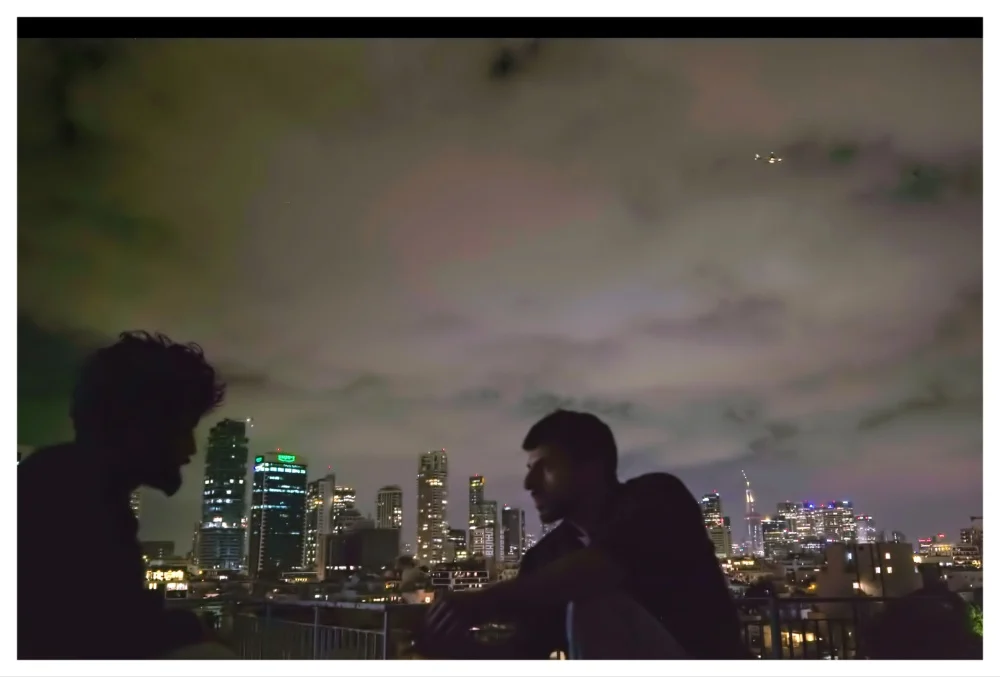
The documentary film landscape is witnessing a paradigm shift in how high-stakes, investigative nonfiction is brought to the public eye. "NAZA," the harrowing and deeply controversial documentary exploring the mechanics of civilian fatalities in Gaza, has officially set its U.S. theatrical rollout. Beginning September 30, the film will bypass the traditional studio distribution model—a decision that mirrors the uncompromising nature of its subject matter.
Directed by Yuval Abraham and Rachel Szor, the duo behind the Academy Award-winning documentary No Other Land, "NAZA" arrives in North America following a high-profile reception at the Venice Film Festival, where it was honored with a Special Jury Prize. As the film prepares for its North American premiere at the New York Film Festival on September 26, it stands as a focal point in a heated international conversation regarding the ethics of military surveillance, the dehumanization of populations, and the role of journalism in conflict zones.
An Innovative Distribution Strategy
In an era where independent cinema often struggles to find theatrical shelf space amidst the dominance of major streaming platforms and tentpole franchises, "NAZA" is employing a decentralized, collaborative distribution model. By forgoing a traditional sale to a major studio or independent distributor, the filmmakers have retained creative and strategic control.
The rollout is spearheaded by The Guardian—which has been instrumental in the film’s investigative reporting—and the production house mk2. This partnership has assembled a specialized coalition of U.S. and international consultants tasked with navigating the complex logistical landscape of theatrical exhibition.
The strategy begins with an exclusive, limited run at the IFC Center in New York City on September 30. This will be followed by an expansion into Los Angeles and other major markets on October 9, eventually building toward a national rollout. This “event-based” release strategy is increasingly common for documentaries that aim to generate cultural discourse, prioritizing a slow, deliberate build-up of momentum over a wide-release saturation that can sometimes dilute a film’s impact.
The Chronology of a Conflict Documentary
The genesis of "NAZA" is inseparable from the investigative reporting that followed the October 7th attacks. For three years, Abraham and Szor captured footage on the rooftops of Tel Aviv, peering into the operational reality of the Israel Defense Forces (IDF).
The documentary’s title refers to a specific military acronym used by Israeli intelligence to quantify the "allowable" number of civilian casualties anticipated in any given airstrike. By examining these cold, mathematical calculations, the film transforms the abstract rhetoric of "collateral damage" into a visceral, systemic critique of modern warfare.
Much of the film’s primary research was published in real-time by The Guardian, in collaboration with +972 Magazine and Local Call. By the time the cameras were finished rolling, the filmmakers had compiled a body of evidence that they felt required a deeper, more cinematic exploration than investigative articles could provide. According to the directors, the film serves as a companion to their journalism, filling the gaps where words and data points fail—specifically, the “silence” that surrounds the dehumanization of a target population.
Supporting Data: The Mechanics of "NAZA"
At its core, the documentary functions as a study in systemic dehumanization. The filmmakers argue that "NAZA" exposes the "calculated mass killing of Palestinian civilians" not as an incidental byproduct of war, but as a byproduct of a codified system of expectation.
The production, which is executive produced by Jonathan Glazer—whose own work, The Zone of Interest, famously examined the banality of evil—brings a stark aesthetic to its findings. By filming from the vantage point of Tel Aviv rooftops, the directors juxtapose the normalcy of urban life with the unseen, calculated destruction occurring miles away. This juxtaposition is designed to force the audience to confront the disconnect between the society authorizing violence and the reality of its implementation.
The film is produced by The Guardian and James Wilson (JW Films), cementing a partnership that bridges the gap between investigative journalism and high-end documentary filmmaking. The involvement of such high-profile institutions suggests that "NAZA" is not merely an independent endeavor, but a cornerstone of a larger, global media project to document the humanitarian crisis in Gaza.
Official Responses and Filmmaker Intent
The directors, Yuval Abraham and Rachel Szor, have been vocal about the ethical weight of their project. In a formal statement regarding the film’s release, they positioned the work as a moral obligation.
"We made this film out of a sense of obligation to use our position as Israeli filmmakers and journalists to examine the systems behind the mass killing of Palestinian civilians for which our country is responsible," the duo stated. "While filming members of Israel’s military on rooftops at night in Tel Aviv over the past three years, we found ourselves asking the very questions that were asked by our grandparents’ generation and throughout the 20th century: how does one group of people allow the total dehumanization of another?"
The filmmakers have emphasized that their goal is to break a silence they believe has been carefully cultivated by political and military structures. By exposing the inner workings of the "NAZA" acronym and the logic of the targeting systems, they hope to transition the public discourse from general outrage to an informed understanding of how modern military intelligence systems operate on a granular, bureaucratic level.
Implications: A Busy Autumn for Hard-Hitting Nonfiction
"NAZA" enters a theatrical landscape that is currently seeing a resurgence in provocative, high-profile documentary releases. October 2024 is shaping up to be one of the most significant months for the genre in recent memory.
The release of "NAZA" will coincide with other buzzy, politically and culturally resonant titles. Alex Gibney’s Musk is slated for an October 9 opening, while the Nathan Fielder and Lance Oppenheim-directed documentary on the Elizabeth Holmes scandal, You Can See Everything, is scheduled for October 16.
The proximity of these films suggests a growing appetite among audiences for documentaries that challenge institutional narratives. However, "NAZA" remains unique in its proximity to an active, ongoing conflict. Unlike documentaries that retrospectively examine financial fraud or historical figures, "NAZA" is a document of the present. Its release strategy—bypassing traditional studios to maintain total control—reflects a recognition that this film is not just entertainment, but a political instrument.
The Broader Impact on Global Discourse
The release of "NAZA" will inevitably stir intense debate. Critics of the film are likely to challenge its framing of military intelligence, while proponents will point to the rigorous reporting provided by The Guardian and its partners as validation of the film’s claims.
The film’s focus on the "silence" of the population is perhaps its most provocative element. It asks a fundamental question: When the systems of war become so ingrained in the bureaucratic structure of a state that they are no longer questioned, how does a society regain its moral compass?
As the film moves from the IFC Center in New York to a wider national release, it will serve as a litmus test for the capacity of American audiences to engage with uncomfortable, firsthand investigations into the reality of modern war. The success of its unconventional distribution model will also serve as a potential blueprint for other filmmakers who find their work too controversial or "non-commercial" for the traditional studio system.
Ultimately, "NAZA" is not merely a film about a specific military acronym or a specific conflict; it is an examination of the distance between the button-pusher and the impact, and the ease with which that distance is bridged by technology and ideology. By bringing these systems into the light, Abraham and Szor are attempting to do exactly what they claimed: to break the silence, regardless of the discomfort it causes. Whether this leads to a shift in policy or a change in public perception remains to be seen, but the documentary’s arrival in theaters ensures that the conversation will be impossible to ignore.
 Evan Lee Salim
  Siti Muinah
  Pevita Pearce