
 By Asep Darmawan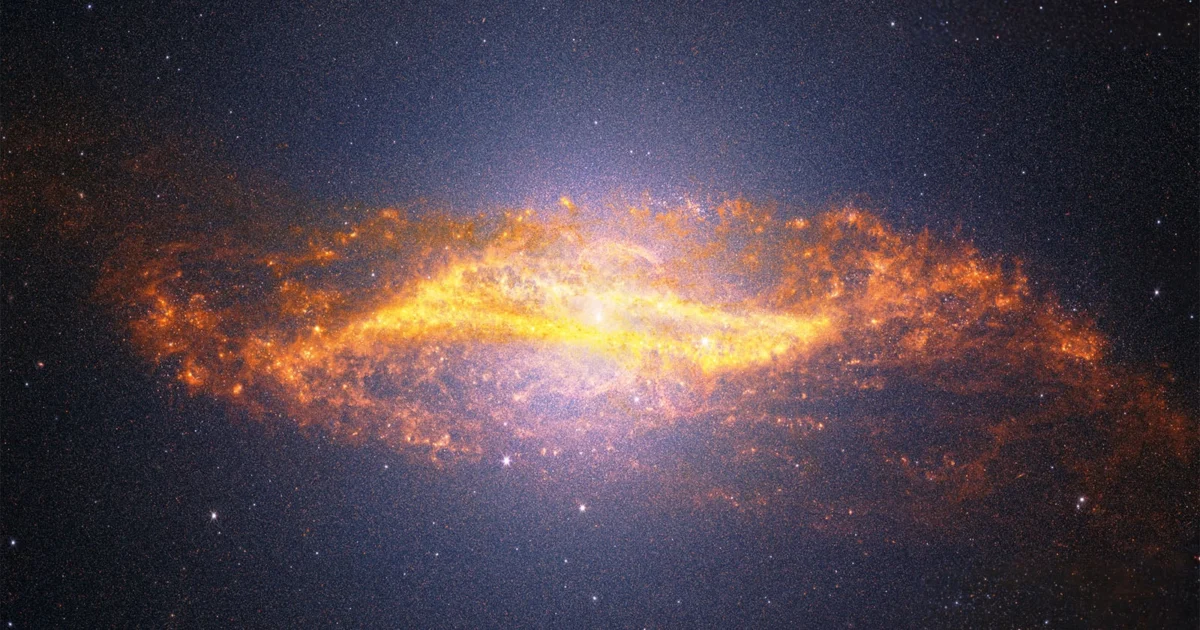
To mark the fourth anniversary of the James Webb Space Telescope’s (JWST) scientific operations, NASA, the European Space Agency (ESA), and the Canadian Space Agency (CSA) have gifted the world with a stunning, high-definition look at one of the most enigmatic neighbors in our local universe: Centaurus A. Known formally as NGC 5128, this massive, star-bursting galaxy has long served as a cosmic battlefield for scientific debate. By utilizing the unparalleled clarity of Webb’s near-infrared (NIRCam) and mid-infrared (MIRI) instruments, astronomers are now beginning to peel back the layers of dust that have obscured the truth about this galaxy’s violent history and complex structure.
The Enigma of NGC 5128: Main Facts and Observations
Located approximately 11 million light-years from Earth, Centaurus A stands as one of the closest large starburst galaxies to our own. Its proximity, combined with its high rate of star formation, makes it a premier target for astrophysical study. However, its classification has remained a point of contention within the scientific community for decades.
NASA officially categorizes Centaurus A as a "peculiar elliptical galaxy," a designation that acknowledges its atypical features—specifically, its massive, dusty disk that contradicts the standard, smooth appearance of a typical elliptical galaxy. Some researchers, however, argue that the evidence points toward a lenticular classification. This disagreement extends even to the galaxy’s precise distance from Earth, a variable that is fundamental to calculating its total luminosity and mass.
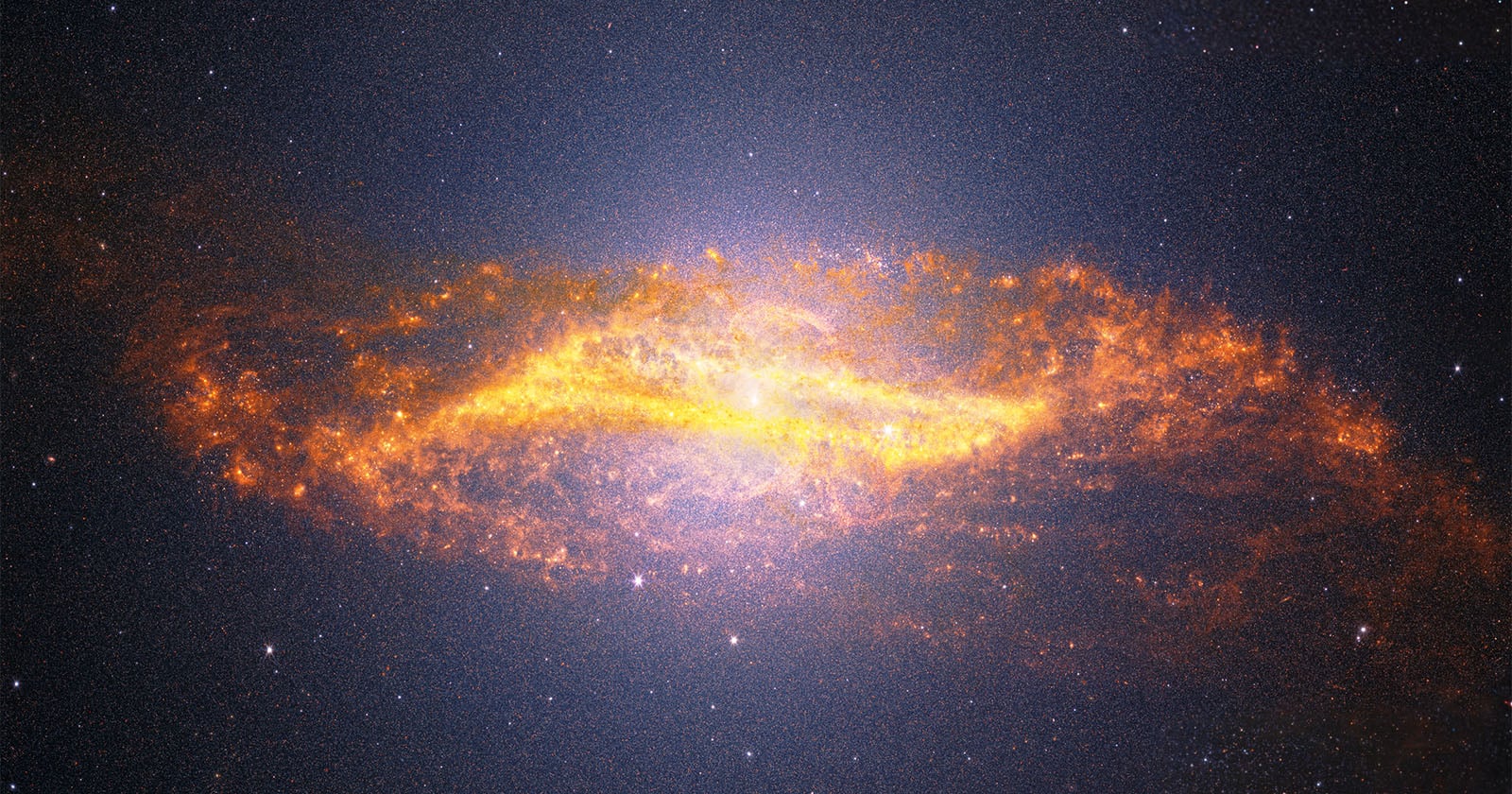
What is undisputed, however, is the galaxy’s status as a "cosmic laboratory." Centaurus A is home to an active galactic nucleus powered by a supermassive black hole. This central engine is not merely a passive observer; it is actively consuming matter and ejecting colossal jets of high-energy particles. These jets sculpt the surrounding interstellar medium, influencing the birth and death of stars in a delicate feedback loop that dictates the galaxy’s long-term evolution.
A Chronology of Cosmic Investigation
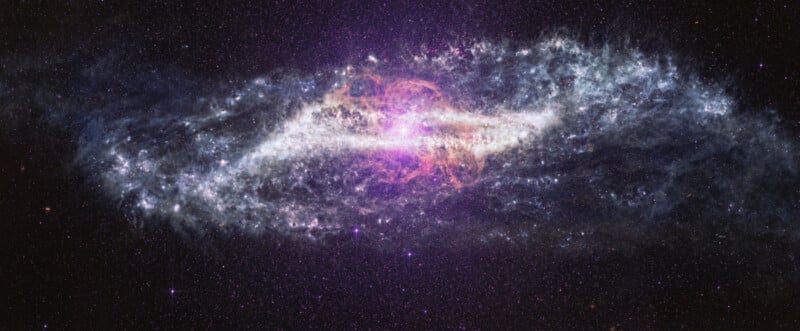
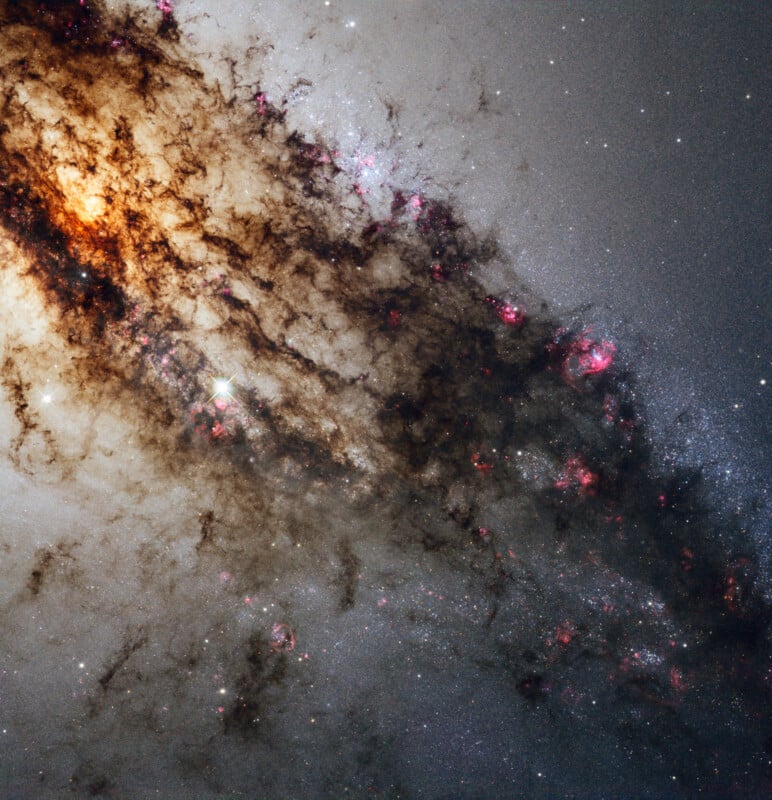
The study of Centaurus A is a testament to the evolution of human technology. For years, the Hubble Space Telescope provided the gold standard for imagery. However, because Hubble operates primarily in visible light, it hit a physical wall when attempting to peer through the thick, opaque dust lanes that bisect the center of NGC 5128. These lanes, which represent the remnants of a galactic collision that occurred roughly two billion years ago, effectively hid the core of the galaxy from Hubble’s sight.
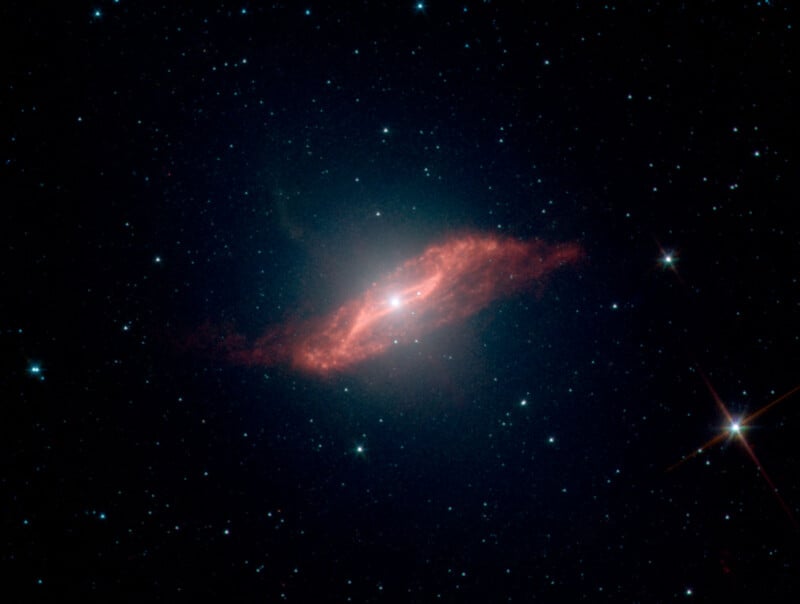
Following Hubble, the Spitzer Space Telescope offered a breakthrough. As an infrared observatory, Spitzer could pierce through the veil of dust to reveal the inner structure of the galaxy. Yet, while Spitzer succeeded where Hubble failed, it lacked the resolution required to distinguish individual stars. It could see the "forest" of the galaxy, but not the "trees."
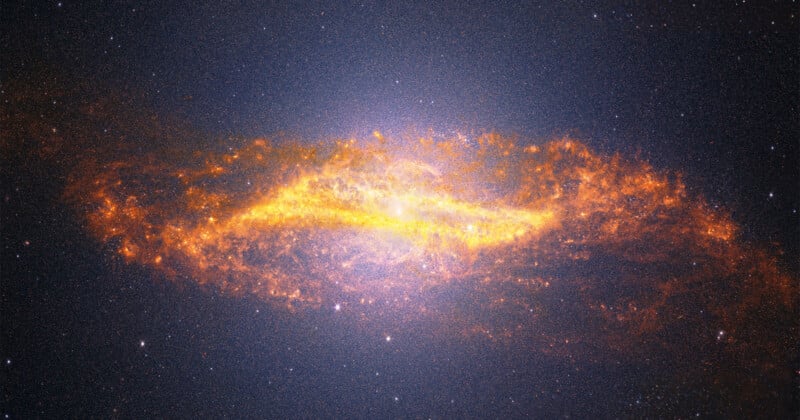
The release of the new JWST images marks the third act in this technological progression. By combining the sensitivity of the Mid-Infrared Instrument (MIRI) with the sharp focus of the Near-Infrared Camera (NIRCam), Webb has finally bridged the gap between spatial resolution and spectral depth. It is not just capturing a picture; it is performing a high-resolution biopsy of a galaxy’s soul.
Supporting Data: The Power of Infrared Archaeology
The "graininess" observed in the high-resolution NIRCam images is perhaps the most significant discovery of this anniversary release. To the untrained eye, the background might look like digital noise, but to an astrophysicist, it is a goldmine of data. Each distinct point of light is an individual star. By resolving millions of these stars, researchers can engage in what the ESA describes as "galactic archaeology."
Reconstructing the Timeline
By analyzing the properties of individual stars, astronomers can reconstruct the history of Centaurus A:
- Early Formation: Identifying the oldest stellar populations reveals when the galaxy first began to assemble its mass.
- The Great Collision: The distinctive S-shaped dust feature, clearly visible in the new MIRI imagery, provides a roadmap of the violent merger that occurred two billion years ago.
- The Aftermath: The distribution of younger stars suggests a massive, localized "starburst" triggered by the compression of gas during the collision, followed by a period of relative stabilization.
This data allows scientists to create a chronological map, showing exactly when star formation accelerated, when it slowed, and how the massive black hole’s activity modulated these cycles.
Official Responses and Expert Commentary
The international teams behind the JWST mission view this data as a vindication of the telescope’s design. "Webb brings both clarity and depth," the ESA stated in their official release. The agency emphasized that the telescope is doing exactly what it was designed to do: challenging long-held assumptions by revealing features that were previously invisible.
Dr. M. Garcia Marin, one of the leads on the image processing team at the Space Telescope Science Institute (STScI), noted that the ability to see the motion of gas near the central supermassive black hole is a "game-changer." By tracing this gas, researchers can observe the direct impact of the black hole’s energy output on the galaxy’s star-forming regions. This is essential for understanding how the most massive objects in the universe regulate the growth of their host galaxies.
Implications for Modern Astrophysics
The significance of these images goes beyond the visual appeal of a glowing, orange-and-yellow spiral. The implications for modern astrophysics are profound:
1. Understanding Galactic Evolution
Centaurus A provides a "living" example of a galaxy undergoing a transformation. By studying it, scientists can draw parallels to the early universe, where galactic collisions were far more common. If we can understand the mechanics of the collision in NGC 5128, we can better model how the galaxies we see today were formed in the aftermath of the Big Bang.
2. The Role of Black Holes
The relationship between a galaxy’s central black hole and its host is one of the most significant open questions in cosmology. Does the black hole drive the evolution of the galaxy, or does the galaxy drive the growth of the black hole? With Webb’s data, we are seeing the "smoking gun"—the direct, visual evidence of jets and radiation interacting with gas, proving that the black hole is a major architect of the galaxy’s structure.
3. Refining Distance and Classification
The resolution of individual stars allows for a more accurate calculation of the distance to Centaurus A, using standard candles like Cepheid variables. A more precise distance will allow astronomers to finally settle the debate over whether the galaxy is a peculiar elliptical or a lenticular system. This is not merely a matter of semantics; the classification dictates our understanding of the galaxy’s gravitational profile and dark matter distribution.
Conclusion: A Fourth Year of Discovery
As the James Webb Space Telescope enters its fifth year of operations, the observations of Centaurus A stand as a hallmark of its capabilities. In just four years, the $10 billion observatory has shifted the paradigm of space science, turning distant, fuzzy objects into well-defined, complex systems that can be analyzed like a textbook.
Centaurus A remains a violent, beautiful, and mysterious place—a record of cosmic history written in gas and light. Thanks to the unprecedented precision of the JWST, that record is now being read with a level of detail that would have been unimaginable just a decade ago. As researchers continue to pour over these new files, the scientific community anticipates that the "peculiar" nature of NGC 5128 will eventually be solved, proving once again that in the darkness of space, there is always more to be seen if we only have the right eyes to look.
 Raul Delapena Setiawan
  rifanmuazin
  Ammar Sabilarrohman