
 By Ali Ikhwan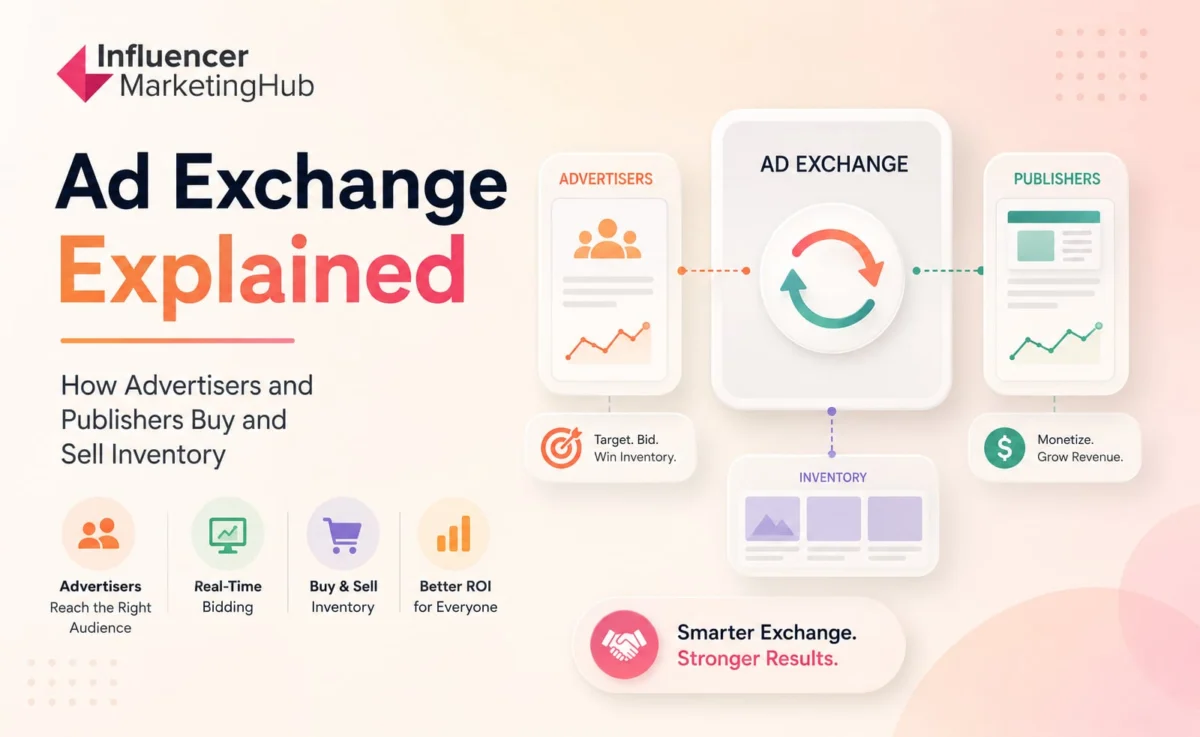
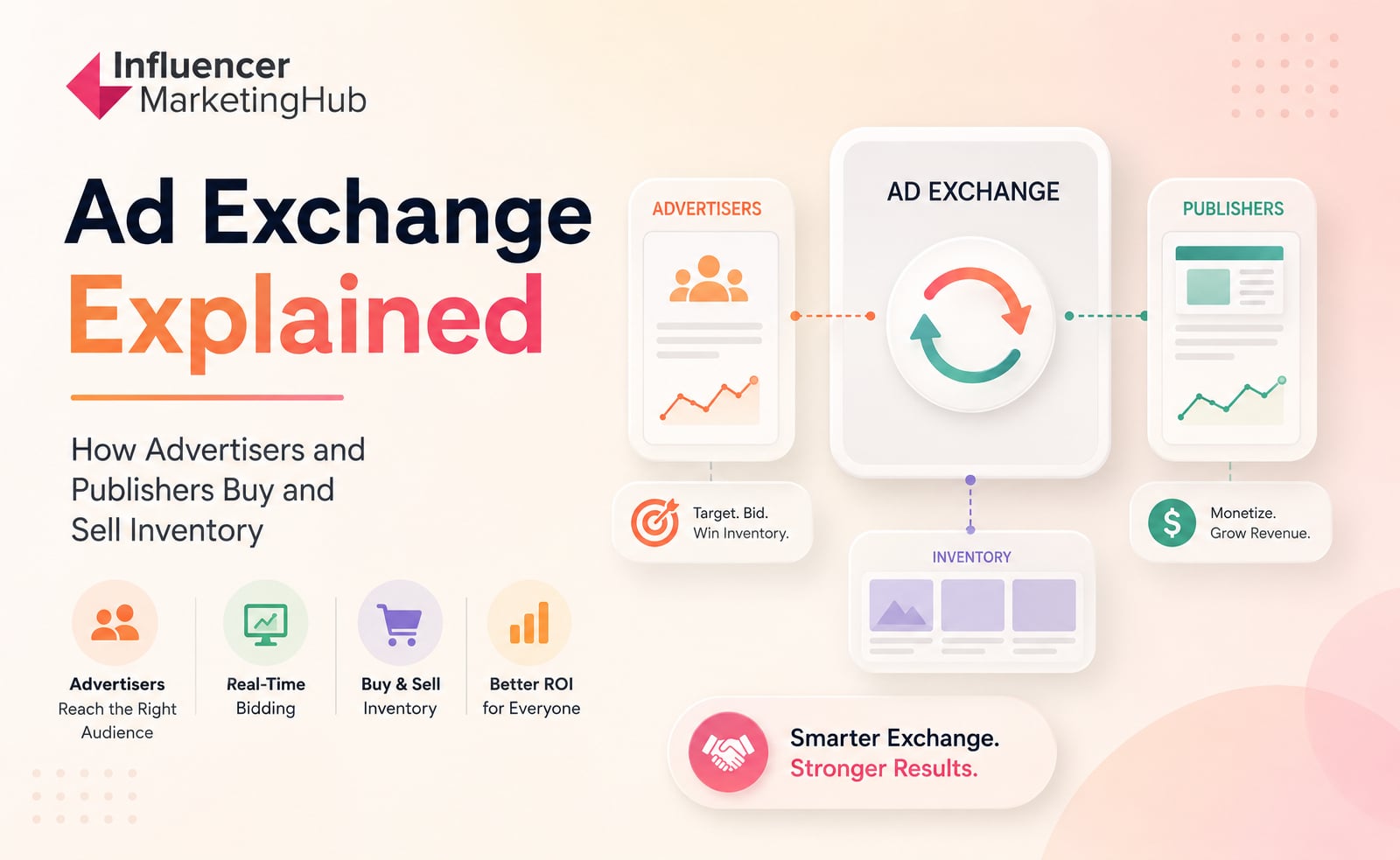
In the hyper-accelerated landscape of digital advertising, the process of buying and selling ad space has evolved from manual, relationship-based negotiations to a sophisticated, high-speed automated ecosystem. At the heart of this transformation lies the Ad Exchange—a digital marketplace that facilitates the real-time buying and selling of advertising inventory between publishers and advertisers.
As we look toward the second half of the 2020s, understanding the mechanics of these exchanges is no longer optional for brands; it is a fundamental requirement for operational success. This article explores the architecture of the modern ad exchange, the historical shift toward programmatic dominance, and the implications for stakeholders in an increasingly privacy-centric digital economy.
1. The Core Mechanics: What is an Ad Exchange?
An ad exchange is a technology platform that functions as an open marketplace. Unlike an Ad Network—which aggregates inventory from various publishers to sell as a bundled package—an ad exchange acts as a neutral auction house. It connects the Supply-Side Platforms (SSPs) used by publishers with the Demand-Side Platforms (DSPs) used by advertisers.
The Real-Time Bidding (RTB) Process
The primary mechanism powering these exchanges is Real-Time Bidding. When a user visits a website, the following sequence occurs in milliseconds:
- The Trigger: A user loads a webpage.
- The Request: The publisher’s website sends a request to an SSP, signaling that an ad slot is available.
- The Auction: The SSP pushes this request to an ad exchange, which broadcasts the opportunity to multiple DSPs.
- The Bid: Advertisers, through their DSPs, evaluate the user’s profile data (if available and compliant) and bid on the slot based on their pre-set budget and targeting parameters.
- The Delivery: The exchange selects the highest bidder and instantly renders the ad on the publisher’s page.
2. A Chronology of Automated Advertising
The transition to automated exchanges did not happen overnight. It was a decade-long migration from human-brokered deals to algorithmic precision.
- The Early 2000s (The Direct Sales Era): Advertising was manual. Advertisers contacted publishers directly to reserve "guaranteed" inventory. It was labor-intensive, opaque, and difficult to scale.
- The Mid-2000s (The Rise of Ad Networks): Aggregators emerged to help publishers sell their "remnant" (unsold) inventory, effectively acting as middle-men who bought bulk space and resold it to advertisers.
- 2009–2012 (The Birth of the Exchange): Companies like DoubleClick (later acquired by Google) and Right Media (Yahoo) pioneered the exchange model. This allowed for transparent, auction-based bidding rather than fixed-rate networks.
- 2014–2018 (Programmatic Dominance): The introduction of Header Bidding changed the game. Header bidding allowed publishers to offer their inventory to multiple exchanges simultaneously before calling their ad server, effectively eliminating the "waterfall" bias where one exchange had a first-look advantage.
- 2020–Present (The Privacy Revolution): With the deprecation of third-party cookies and the rise of privacy-first regulations like GDPR and CCPA, ad exchanges have pivoted toward first-party data strategies, contextual targeting, and "clean room" environments.
3. Supporting Data: The Scale of the Marketplace
To understand the necessity of ad exchanges, one must look at the sheer volume of the digital economy. According to recent industry benchmarks, programmatic advertising spending accounts for over 80% of all digital display ad spend in the United States.
- Efficiency Gains: Research indicates that programmatic buying reduces the "ad tech tax"—the percentage of budget lost to intermediaries—by providing a clearer view of the supply chain.
- Latency Requirements: Modern ad exchanges must process over 10 million queries per second (QPS) during peak hours. The speed of the "handshake" between the DSP and SSP is the primary determinant of ad performance.
- Market Concentration: While hundreds of exchanges exist, the market is dominated by a few major players (Google Ad Exchange, Magnite, PubMatic, and Index Exchange), which control the vast majority of premium publisher traffic.
4. Official Perspectives and Industry Stance
The industry remains divided on the future of ad exchanges. Publishers argue that exchanges have commoditized their inventory, leading to a "race to the bottom" in pricing. Advertisers, conversely, view exchanges as the only viable way to reach fragmented audiences at scale.
The Publisher Perspective
Publishers, particularly premium news outlets, have increasingly voiced concerns regarding "inventory quality." In an open exchange, premium content often sits alongside lower-quality sites. Many publishers have responded by moving toward Private Marketplaces (PMPs)—an invitation-only version of an ad exchange where publishers offer premium inventory to a selected group of advertisers at a pre-negotiated floor price.
The Advertiser Perspective
Advertisers are increasingly demanding "Supply Path Optimization" (SPO). SPO is the process by which advertisers and their DSPs shorten the path between themselves and the publisher. By cutting out unnecessary intermediaries, advertisers ensure that more of their budget goes toward the actual ad placement rather than fees, while also reducing the risk of fraud.
5. Strategic Implications for Stakeholders
As we navigate the current fiscal landscape, the implications of ad exchange usage are profound.
For Advertisers: The Shift to First-Party Data
Advertisers can no longer rely on third-party data tracking across exchanges. The most successful brands are now integrating their own CRM data into their DSPs. By using hashed email addresses and secure data matching, they can engage in "Identity-Based Marketing" that respects user privacy while maintaining ad relevance.
For Publishers: Yield Management
Publishers are moving away from relying solely on open exchange auctions. Instead, they are implementing hybrid strategies. They use open exchanges for lower-priority inventory while reserving their "prime" slots for direct deals or PMPs. This creates a balanced revenue stream that protects the brand value of the publication.
The Transparency Imperative
The "Black Box" nature of early ad exchanges is rapidly fading. Regulators in the EU and North America are putting pressure on tech giants to disclose auction dynamics. Advertisers now demand "log-level data," which allows them to trace exactly where their money went and which domains their ads appeared on, effectively curbing the prevalence of "made-for-advertising" (MFA) websites.
Conclusion: The Path Forward
The ad exchange of 2026 is a vastly different beast than its 2015 predecessor. It is no longer just a conduit for cheap clicks; it is a sophisticated data-exchange engine that requires high-level technical oversight.
For marketers, the key to winning in this environment lies in selectivity. Instead of casting a wide net across every available exchange, the modern strategy involves identifying the most efficient "supply paths," prioritizing PMPs, and leveraging first-party data to maintain performance in a cookieless world. As the industry continues to evolve, those who treat the ad exchange as a strategic partner rather than a simple utility will be the ones to capture the most value in an increasingly complex digital ecosystem.
Disclaimer: This article provides an overview of digital advertising technologies as of June 2026. For specific implementation strategies, advertisers are encouraged to consult with their agency partners or internal programmatic operations teams.
 Siti Muinah
  Dwi Wanna
  Lina Irawan