
 By Layla Zulfa
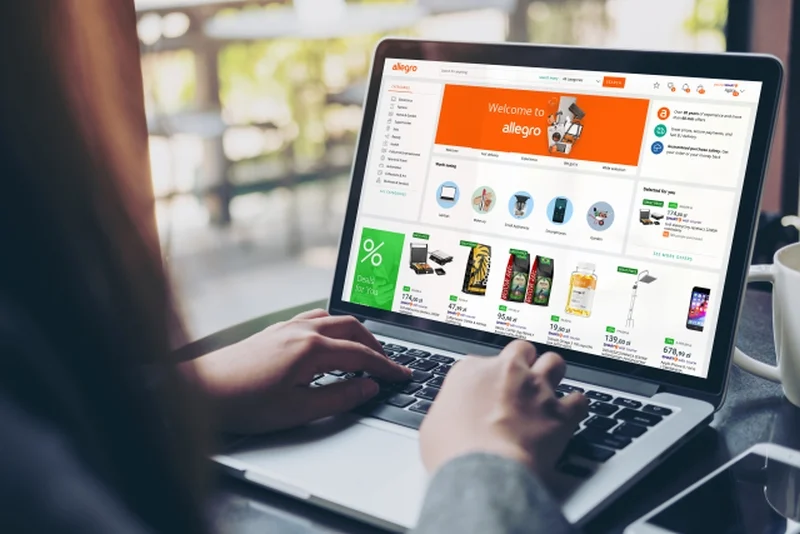
In a strategic move that bridges the gap between the Polish e-commerce ecosystem and the Ukrainian consumer market, Allegro—the undisputed leader of online retail in Poland—has officially announced the expansion of its delivery services to Ukraine. While the company has stopped short of launching a dedicated, localized Ukrainian platform, it is now enabling customers to purchase products directly from its primary Polish domain, Allegro.pl, with seamless shipping options to Ukrainian addresses.
This development marks a significant shift in Allegro’s international strategy. As the company navigates a period of rapid growth and corporate restructuring, the decision to integrate Ukraine into its logistics network highlights the strengthening economic ties between the two nations and the growing demand for diversified e-commerce access in the region.
The Core Facts: How the New Service Operates
The mechanism for this expansion is straightforward yet robust. Customers accessing Allegro.pl can now select Ukraine as a delivery destination during the checkout process. This integration, officially confirmed via a Help Center update last week, allows for the purchase of a wide array of goods, ranging from electronics and home appliances to fashion and daily necessities.
Crucially, the expansion comes with a set of stringent regulatory and safety protocols. Recognizing the geopolitical sensitivity of the region, Allegro has updated its terms and conditions to include specific "no-resale" clauses. Under these new provisions, buyers utilizing the service are explicitly prohibited from re-exporting or reselling products purchased on the platform to Russia, Belarus, or any territories currently occupied by the Russian Federation. Furthermore, the company has extended its flagship "Allegro Buyer Protection" program to cover shipments to Ukraine, ensuring that consumers in the country benefit from the same dispute resolution and refund mechanisms that have made the platform a household name in Poland.
Chronology of Expansion and Retraction
To understand the weight of this move, one must look at Allegro’s recent trajectory across Central and Eastern Europe (CEE).
- 2021-2022: The Regional Ambition. Following its successful IPO and consolidation in Poland, Allegro embarked on an aggressive internationalization strategy. The company sought to replicate its Polish dominance across the CEE region, targeting Czechia, Slovakia, Hungary, Slovenia, and Croatia.
- Early 2024: Strategic Streamlining. In a pivot aimed at optimizing its financial results and focusing on core markets, Allegro made the difficult decision to divest its operations in Slovenia and Croatia. This was a move to trim the fat and focus resources on markets where the company could achieve critical mass more effectively.
- Mid-2024: Sustained Growth. Despite the divestments, Allegro’s financial health remained robust. In the first half of 2024, the Allegro Group reported a staggering 14 percent increase in Gross Merchandise Value (GMV). Even more impressive was the performance of its international segment, which saw its GMV surge by nearly 65 percent compared to the same period in 2023.
- Late 2024: The Ukraine Pivot. Capitalizing on the momentum of its international growth, the company chose not to launch a standalone "Allegro.ua," but rather to leverage the established, high-traffic infrastructure of Allegro.pl to serve the Ukrainian market. This "cross-border-lite" approach minimizes operational risk while maximizing potential customer reach.
Supporting Data: Why Allegro is Betting on Growth
The financial data behind Allegro’s decision provides a clear rationale. As of the most recent quarterly reports, the company is not merely surviving; it is thriving in a volatile macroeconomic climate.
The 14 percent year-on-year increase in overall GMV demonstrates that Allegro remains the primary choice for Polish shoppers, even as global competitors like Amazon and Temu attempt to gain a foothold in the region. However, the 65 percent growth in international GMV is the real story. It indicates that the company’s localized marketplaces in Czechia, Slovakia, and Hungary are gaining traction, providing the confidence needed to expand into more complex, non-EU logistics environments like Ukraine.
For context, the CEE e-commerce market is projected to continue its upward trajectory through 2027. By integrating Ukraine, Allegro is positioning itself as a central logistics hub for a nation currently facing significant supply chain disruptions due to the ongoing conflict. The ability to deliver goods from a neighboring EU member state provides a reliable alternative to traditional supply lines that may have been severed or complicated by the war.
Official Responses and Regulatory Adjustments
Allegro’s communication regarding this expansion has been deliberate and precise. In their official statement, the company emphasized that this is a service enhancement rather than a full market entry.
"We are committed to making our vast inventory accessible to those who need it most," a spokesperson noted in the Help Center update. The accompanying documentation is legally dense, focusing heavily on compliance. By updating the terms of service, Allegro is insulating itself from potential legal complications involving international sanctions.
The update to the Buyer Protection program is particularly significant. By ensuring that a customer in Kyiv or Lviv has the same recourse for a faulty or non-delivered item as a customer in Warsaw, Allegro is effectively "de-risking" the shopping experience. This move is designed to build trust—the most valuable currency in e-commerce—in a region where logistical unpredictability has become the norm.
Implications: A New Era for Regional E-commerce
The implications of this move are multi-faceted, affecting logistics, local retailers, and the broader geopolitical landscape of the region.
1. Logistical Integration
By utilizing its existing Polish fulfillment network to reach Ukraine, Allegro is bypassing the need for heavy local infrastructure investment. However, this places a significant burden on cross-border logistics. Partnerships with local Ukrainian courier services and customs brokerage firms will likely be the next phase of this evolution. If successful, this could set a blueprint for how major European marketplaces handle cross-border commerce into countries with non-standard customs protocols.
2. Impact on the Ukrainian Retail Landscape
For Ukrainian consumers, the arrival of Allegro provides access to a wider variety of goods, often at more competitive price points than local retailers who are currently struggling with inflation and inventory shortages. While some local retailers may view this as an unwelcome disruption, others may see it as an opportunity to integrate their own products onto the Allegro platform, using the Polish giant as a bridge to reach the broader European market.
3. Geopolitical Stability
The strict prohibition on reselling to Russia and Belarus is not merely a corporate policy; it is a compliance necessity. Allegro is clearly signaling its alignment with European Union sanctions. By actively monitoring these shipments, the company is positioning itself as a responsible international actor, ensuring that its logistics network cannot be manipulated to circumvent trade restrictions.
4. A Future Template for Expansion?
If the "Allegro.pl to Ukraine" model proves profitable and operationally sustainable, it could serve as a template for other regions. Instead of the costly, time-consuming process of building localized marketplaces from scratch (hiring local staff, building local warehouses, establishing local legal entities), Allegro might opt to "export" its platform functionality to surrounding markets. This "platform-as-a-service" approach would allow for rapid expansion with minimal capital expenditure.
Conclusion: Balancing Ambition and Caution
Allegro’s expansion into Ukraine is a masterclass in calculated risk. By choosing to ship from its existing Polish hub rather than setting up a fully-fledged Ukrainian subsidiary, the company has managed to satisfy the high demand for its products while maintaining a lean operational structure.
The growth figures from the first half of 2024 prove that Allegro has the momentum to handle such an expansion. The 65 percent increase in international GMV serves as a loud signal that the company’s regional ambitions are far from over. However, the road ahead is complex. Success will depend on the platform’s ability to navigate the intricacies of cross-border logistics, maintain stringent compliance with international sanctions, and earn the loyalty of a new, highly discerning consumer base.
As Allegro continues to evolve from a "Polish marketplace" to a "regional powerhouse," this move into Ukraine serves as the latest chapter in a broader story of resilience and strategic agility. Whether this leads to a permanent, localized presence in the future remains to be seen, but for now, the digital bridges between Poland and Ukraine have never been more robust. Consumers, analysts, and competitors alike will be watching closely to see if this model becomes the gold standard for e-commerce expansion in the years to come.
 Neng Nana
 Lina Hope
 Laily UPN
