
 By Asro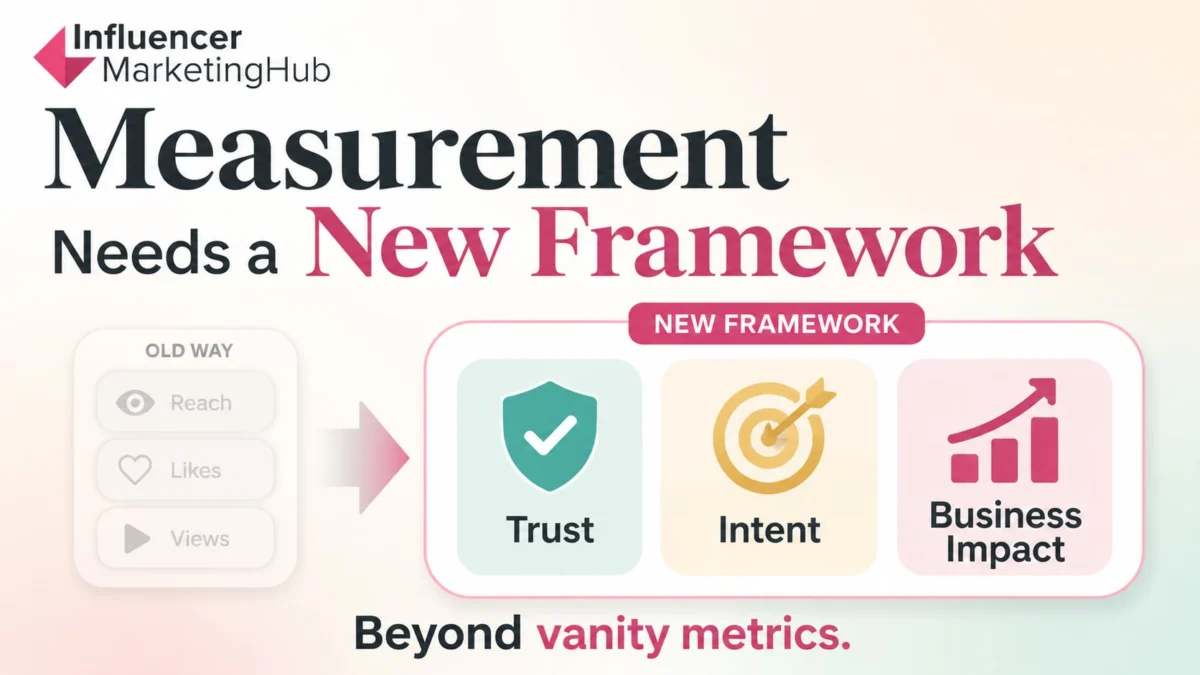
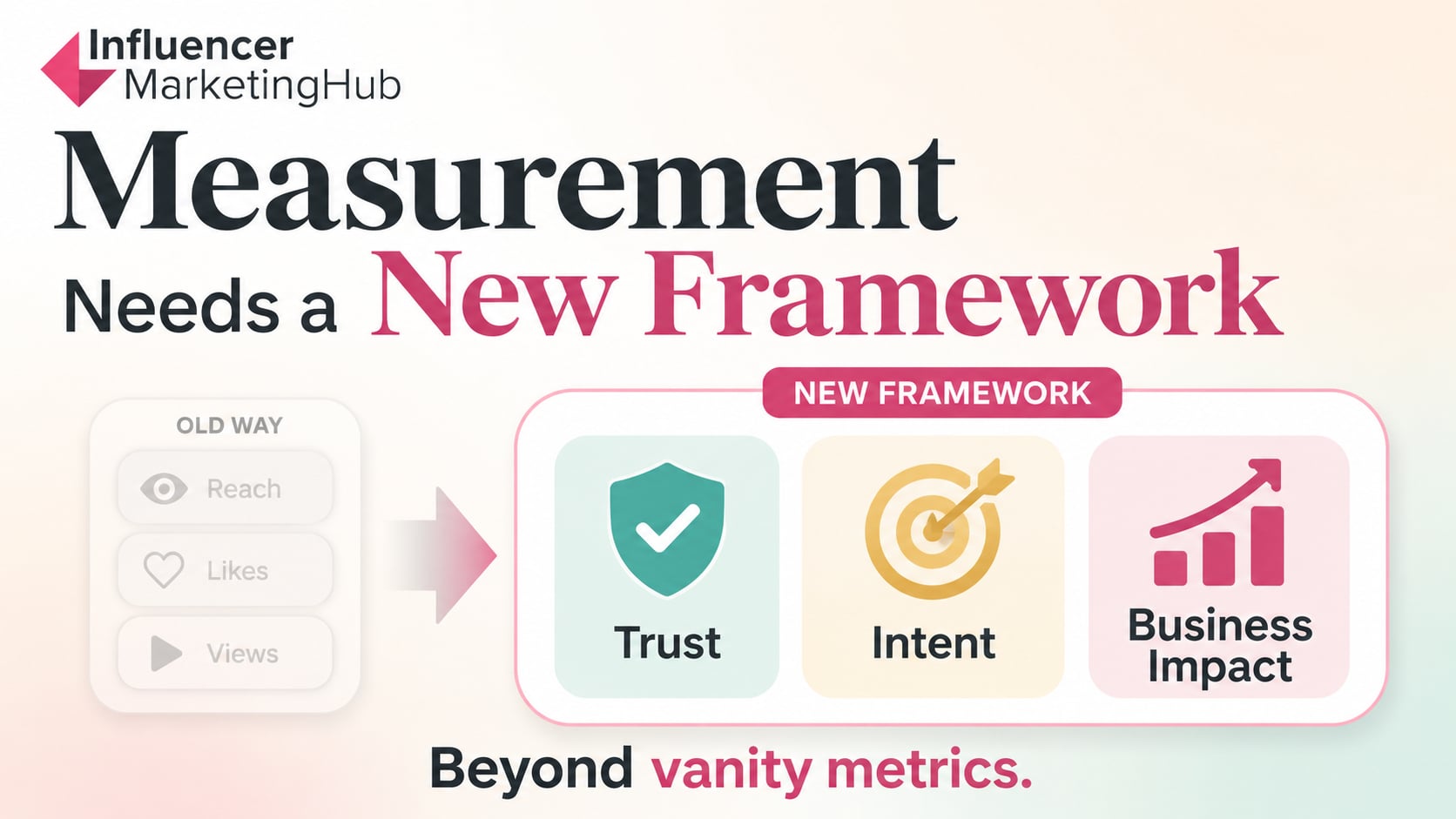
As the creator economy matures into 2026, a persistent friction point remains: the widening gap between the metrics provided by social platforms and the actual business outcomes brands demand. For years, marketing teams have relied on a "vanity metric" triad—views, completion rates, and engagement rates—to justify influencer spend. However, as budgets swell and influencer programs integrate deeper into core business operations, these surface-level KPIs are increasingly proving insufficient.
Industry experts, including Paula Bruno, founder of Intuition Media Group, argue that we are currently witnessing a critical inflection point. The consensus is clear: platform metrics are not obsolete, but they are being used in a vacuum. To survive and thrive in the current landscape, brands must move toward a layered measurement stack that aligns specific content intent with measurable business impact.
The Measurement Crisis: Why Old Frameworks Fail
The fundamental flaw in modern influencer marketing evaluation lies in the "one-size-fits-all" scorecard. Often, a top-of-funnel awareness video—designed to spark brand discovery—is scrutinized using the same rigid KPIs as a bottom-of-funnel shoppable post.
When a brand treats a narrative-heavy, inspirational influencer endorsement with the same skepticism as a 15-second product demo, they inevitably walk away with flawed data. This context-blind analysis leads to the misallocation of budgets, the premature termination of high-potential creator partnerships, and a distorted view of what constitutes "success."
In 2026, the industry is recognizing that measurement is not a singular destination, but a spectrum. If a piece of content is designed to educate, the metric of success should be "saves" or "long-form dwell time." If it is designed to drive immediate transaction, then the metric should be attribution-linked sales. Using the wrong yardstick for the wrong job is the primary reason why many firms believe their creator programs are underperforming, when in reality, their measurement framework is simply broken.
The Layered Measurement Stack: A New Anatomy of Impact
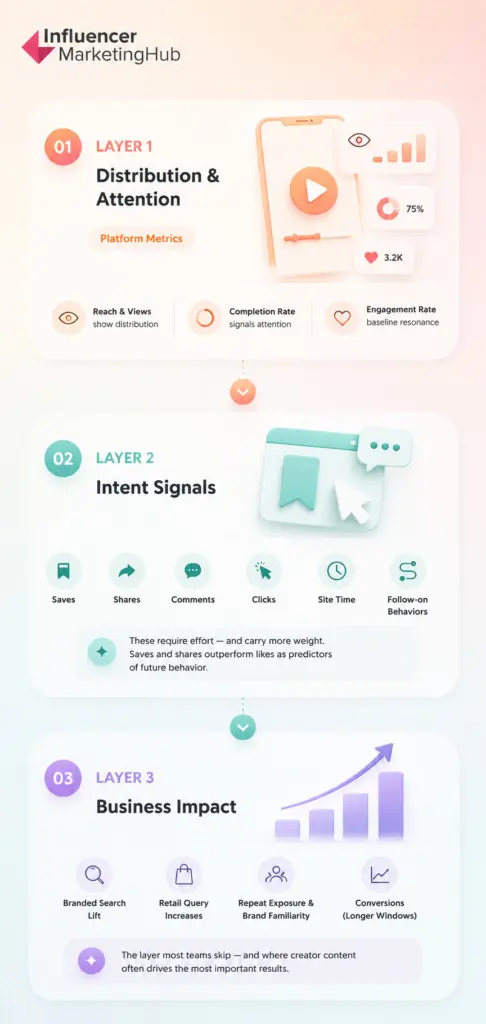
To bridge this gap, forward-thinking agencies are adopting a "Layered Measurement Stack." This model forces teams to categorize content by its strategic purpose, ensuring that the KPIs reflect the goal rather than just the platform’s default reporting.
Layer 1: Distribution & Attention (The Baseline)
This layer captures the "reach" and "stickiness" of content. While these are the most commoditized metrics, they remain essential. Did the content clear the initial hurdle of the algorithm? How many users were captured by the hook? These metrics are the heartbeat of top-of-funnel awareness, confirming that the content has successfully entered the cultural conversation.
Layer 2: Intent Signals (The Engagement Deep-Dive)
This is where the audience moves from passive consumers to active participants. In 2026, we see a clear hierarchy of engagement:
- Likes: The weakest signal, often driven by habit or passive scrolling.
- Comments: A moderate signal indicating a desire to express an opinion.
- Saves & Shares: The "Gold Standard" of intent. When a user saves a post, they are bookmarking a future action. When they share it, they are staking their personal brand on the value of that content.
Data consistently shows that high-intent actions like saves and shares are significantly better predictors of future customer behavior than likes. For brands, this layer is the bridge between awareness and consideration.
Layer 3: Business Impact (The ROI Engine)
This is the layer most teams neglect, yet it is where the highest return on investment resides. Business impact measures the "off-platform" reality of the campaign. This includes:
- Direct attribution via affiliate links and promo codes.
- "Branded Search Lift"—the measurable increase in search volume for the brand or product following a creator’s post.
- Retailer-specific sales velocity increases.
- The influence on long-term brand equity and customer lifetime value (CLV).
The AI Shift: A New Variable in the Funnel
The transition to a more sophisticated measurement framework is being accelerated by the rapid adoption of AI-driven discovery. In 2026, the consumer journey is no longer a linear path from "Influencer Post" to "Checkout."
Recent research indicates that over 50% of U.S. consumers now utilize Large Language Models (LLMs) and AI-powered search tools to conduct product research before making a purchase. In this new paradigm, consumers ask AI to solve problems: "What is the best moisturizer for dry skin in winter?" or "What budget-friendly gaming laptop can handle video editing?"
The AI does not generate opinions in a vacuum; it synthesizes existing content across the web. This creates a seismic shift for brands:
- The "Invisible" Influence: Creator content is now powering the knowledge base of AI. If an influencer has high-quality, long-form content about a product, that content is indexed, synthesized, and recommended by AI, even if the user never clicked on the original social media post.
- Decoupled Attribution: Because the influence happens in a private AI chat and the conversion happens on a retail site, the platform dashboard will show zero activity. Brands that rely solely on in-platform tracking will miss the most valuable conversions occurring in this "dark funnel."
Implications for Modern Strategy
This shift toward AI-integrated discovery necessitates a change in how brands view "value." Content is no longer just a billboard for an audience; it is an asset in the digital ecosystem that informs the decision-making engines of the future.
Custom Success Criteria
Custom success criteria are no longer optional. Marketing leads must establish "Intent-Based Benchmarking." If a creator is hired for a high-level storytelling campaign, they should be judged on qualitative sentiment analysis and long-term brand recall metrics, not immediate sales. Conversely, performance-driven creators should be judged on granular conversion data.
The Role of Intuition and Human Strategy
Despite the rise of AI, the human element remains the anchor of the creator economy. Intuition Media Group and other top-tier agencies are moving toward a model where global brands build "creator ecosystems"—groups of influencers whose content compounds over time, building cultural relevance that remains visible to both human consumers and AI scrapers.
Moving Toward an Honest Framework
The most successful brands in 2026 will be those that embrace a more "honest" approach to measurement. This means:
- Accepting the "Dark Funnel": Acknowledging that not all attribution can be captured in a dashboard and using econometric modeling (such as Marketing Mix Modeling) to estimate the impact of influencer programs on overall brand growth.
- Prioritizing Content Quality: Since high-quality content is more likely to be indexed by AI and shared by users, the focus is shifting from "how many influencers can we hire" to "how much high-utility content can we seed."
- Integrating Business Data: Connecting social performance data directly with CRM and POS (Point of Sale) systems to track the customer journey from the first influencer mention to the final transaction.
The goal of this new framework is not to create more complexity, but to eliminate the noise. By aligning measurement with the specific intent of the content and acknowledging the role of AI in the modern customer journey, brands can stop guessing and start measuring the true power of their creator programs.
As we look toward the remainder of 2026, the message is clear: the brands that survive will be those that look beyond the platform’s own analytics to see the wider, more complex, and ultimately more profitable reality of their creator-led initiatives.
 Iffa Jayyana
  Siti Muinah