
 By Reynand Wu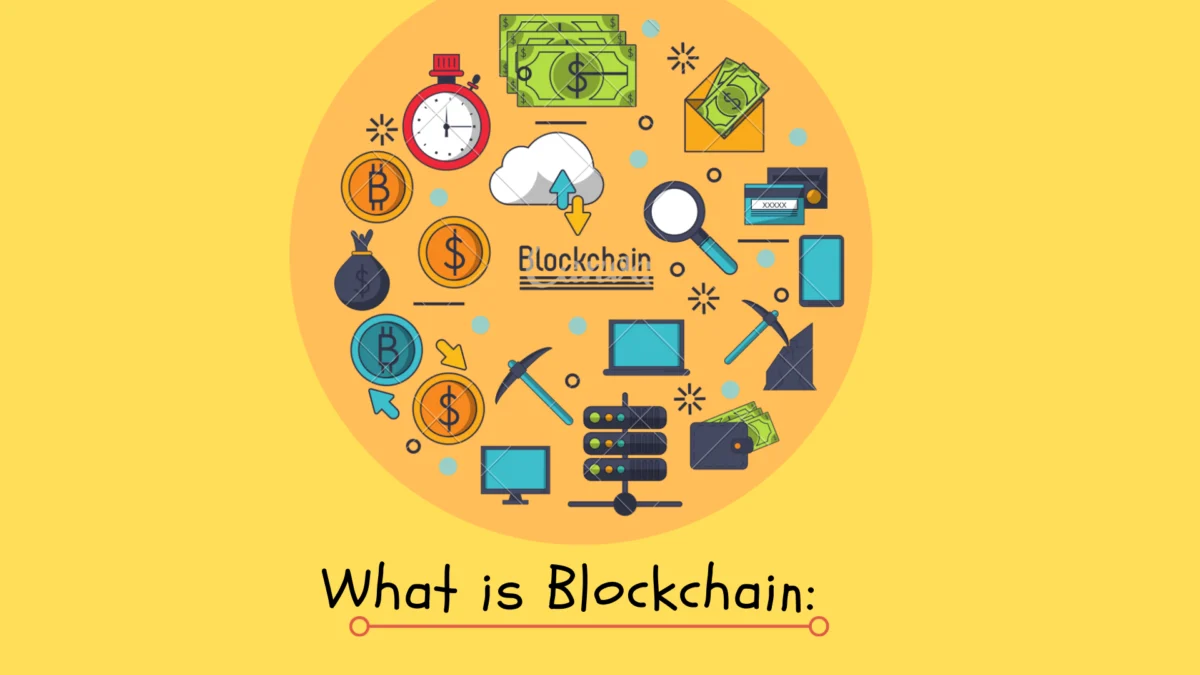
GLOBAL — For decades, the architecture of modern commerce has relied on a fundamental act of faith: the middleman. Whether sending money across borders, purchasing real estate, or verifying the journey of a pharmaceutical shipment from factory floor to hospital pharmacy, society has depended on centralized institutions—banks, governments, and clearinghouses—to act as the ultimate arbiters of truth.
Yet, as the digital economy accelerates, these traditional gatekeepers are increasingly showing signs of friction. Transactions take days to clear, administrative overheads mount, and centralized databases remain sitting ducks for sophisticated cyberattacks.
Enter blockchain: a technology that promises to strip away the intermediaries and replace them with mathematical certainty. While widely popularized by the volatile rise and fall of cryptocurrencies like Bitcoin, blockchain’s true paradigm-shifting potential lies far beyond speculative digital assets. It is rapidly transforming into the foundational operating system for global supply chains, secure legal contracts, and decentralized data management.
Main Facts: Deconstructing the Distributed Ledger
At its core, a blockchain is a distributed, decentralized digital database that securely stores data across a peer-to-peer network of computers, commonly referred to as "nodes." Unlike a conventional corporate database managed by a single administrator, a blockchain distributes identical copies of its ledger across hundreds or thousands of independent machines.
The architecture derives its name from its structure. Information is gathered and bundled into digital "blocks." Once a block reaches its storage capacity, it is permanently chained to the preceding block using complex cryptographic hashes. This creates a chronological, immutable chain of data.
Key Characteristics of Blockchain Technology:
- Decentralization: No single entity, government, or corporation owns or controls the network. Authority is distributed across all participating nodes.
- Immutability: Once data is recorded and verified on the blockchain, it cannot be altered, retroactively modified, or deleted without the consensus of the entire network.
- Transparency and Cryptographic Security: Transactions are cryptographically signed and publicly visible within the network framework, ensuring complete traceability while maintaining user privacy through pseudonymous addresses.
By eliminating the need for third-party validation, blockchain fundamentally changes how trust is established in digital interactions. It allows two parties to execute a secure transaction directly, without knowing or trusting one another, relying instead on the unyielding rules of code and consensus.
Chronology: The Evolution of a Digital Revolution
The journey of blockchain technology is a classic tale of academic theory preceding practical revolution by decades. Its development can be traced through several critical milestones:
- 1991: The Academic Genesis. Mathematicians Stuart Haber and W. Scot Stornetta published a foundational paper outlining a cryptographically secured chain of blocks where timestamps could not be tampered with. Their goal was purely academic: preventing the backdating or manipulation of digital documents.
- 1998: The Bridge to Payments. Software developer and legal scholar Nick Szabo proposed using a similar decentralized chain-of-blocks mechanism to secure a digital asset system he named "Bit Gold." Although the project was never fully realized, it laid the direct conceptual groundwork for modern digital currencies.
- 2008–2009: The Birth of Bitcoin. Operating under the pseudonym Satoshi Nakamoto, an anonymous developer (or group of developers) released the Bitcoin whitepaper and launched the network’s genesis block. This marked the first real-world implementation of a functioning blockchain, solving the notoriously difficult "double-spending" problem in digital cash without central banking authorities.
- 2010s and Beyond: Expansion Beyond Currency. Recognizing that the underlying ledger technology had vast utility beyond currency, developers and major global enterprises began building second-generation networks—most notably Ethereum in 2015—introducing "smart contracts" that execute code automatically when predefined conditions are met.
Supporting Data: Enterprise Adoption and Real-World Applications
While cryptocurrency remains the most visible application, enterprise adoption of Distributed Ledger Technology (DLT) has surged across sectors that demand rigorous data integrity. Global giants including Walmart, AIG, Siemens, Pfizer, and Unilever have integrated blockchain frameworks into their operational pipelines.
Transforming Global Supply Chains
Consider the complex logistical nightmare of global food distribution. Foodborne pathogens like E. coli and Salmonella, alongside accidental allergen contamination, routinely prompt massive, costly recalls. Traditionally, tracing the origin of a contaminated batch of produce could take weeks or months of painstakingly sorting through paper invoices, disparate digital logs, and siloed corporate databases.
IBM’s Food Trust network has leveraged blockchain to dramatically shorten this timeline. By digitizing the supply chain on an immutable ledger, participants can track a food product’s exact journey from farm to grocery store shelf in seconds. If a contaminant is detected, retailers and public health officials can pinpoint the exact farm or processing plant responsible almost instantaneously, preventing widespread outbreaks and saving millions of dollars in waste.
Financial Infrastructure and Beyond
In the financial sector, infrastructure giants like Coinbase Global have built robust ecosystems supporting the digital currency economy. However, traditional financial institutions are increasingly deploying private, permissioned blockchains to streamline cross-border settlements, reduce clearing times, and lower the friction of institutional asset transfers.
Beyond finance and logistics, blockchain is being adapted for:
- Digital Identity Management: Giving individuals sovereign control over their personal data, academic credentials, and state identification documents without relying on vulnerable centralized servers.
- Intellectual Property and Rights Management: Tracking digital media ownership and automating royalty distributions to artists and creators via smart contracts.
- Real Estate Transactions: Reducing the administrative complexity, fraud risks, and settlement times associated with land registries and property title transfers.
Official Responses and Industry Perspectives
Despite its rapid expansion, the integration of blockchain into mainstream business operations has been met with a mixture of enthusiastic endorsement and measured caution.
Enterprise leaders and Chief Executive Officers point to blockchain as an essential tool for future-proofing operational security. Proponents argue that the initial friction of adopting decentralized systems is vastly outweighed by long-term gains in efficiency, data transparency, and auditability.
Conversely, cybersecurity experts and regulators remain vigilant about the technology’s theoretical vulnerabilities and regulatory gray areas. While the underlying cryptography of a major blockchain network is notoriously difficult to compromise, the software interfaces, exchanges, and "bridges" connecting these networks to the traditional web remain lucrative targets for malicious actors.
Furthermore, regulators worldwide continue to grapple with how to apply existing financial laws and data privacy regulations—such as Europe’s GDPR, which guarantees a "right to be forgotten"—to an immutable ledger where data, once written, can never be erased.
Implications: The Road Ahead for Decentralized Systems
The implications of widespread blockchain adoption extend far beyond corporate efficiency metrics; they strike at the heart of how modern societies organize trust, commerce, and governance.
Security Through Decentralization
Traditional data architectures rely on centralized honeypots of information. When a server housing millions of user records is compromised, the breach is absolute. Blockchain flips this script through decentralization. Because information is validated and stored across thousands of independent nodes, a bad actor attempting to alter transaction records must simultaneously compromise a majority of the network—a computational feat that is economically and practically unfeasible for established networks.
The Database vs. Blockchain Paradigm
A common point of confusion for enterprise adopters is distinguishing between a standard database and a blockchain. While both store information, their architectures serve fundamentally different purposes:
- Traditional Databases utilize client-server architectures where a designated administrator has unilateral authority to view, edit, or delete data. They are optimized for high-speed, high-volume localized data processing.
- Blockchains prioritize trustlessness, permanent auditability, and decentralized control. They sacrifice raw transaction speed in exchange for absolute data integrity and the elimination of single points of failure.
Looking to the Horizon
As hardware capabilities advance and software user interfaces become more intuitive, the technical complexities that currently deter mainstream users will likely fade into the background. Industry analysts project that over the next five to ten years, blockchain technology will transition from an emerging asset class into an invisible, ubiquitous utility embedded deeply within healthcare, finance, logistics, and legal systems.
For entrepreneurs, corporate executives, and policymakers alike, the question is no longer whether blockchain will disrupt traditional industries, but how quickly organizations can adapt to a world where trust is no longer brokered by institutions, but guaranteed by code.
 Nana Wu
  Muslim
  Laily UPN