In the hyper-competitive landscape of digital commerce, the standard metrics of email marketing—open rates, click-through percentages, and conversion figures—have long reigned supreme. For decades, traditional marketing playbooks have treated the inbox as a direct-response billboard: a one-way communication channel optimized solely to usher a subscriber down a rigid marketing funnel from browser to buyer.
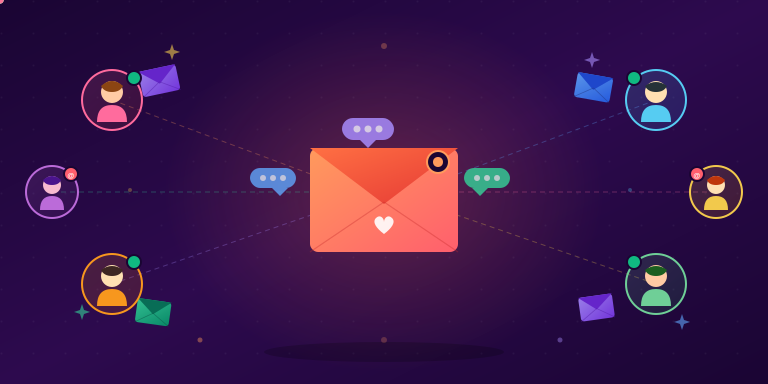
However, industry experts and growth strategists are increasingly signaling a vital paradigm shift. The brands achieving durable, recession-resilient growth are no longer relying on transactional blasts alone. Instead, they are leveraging the intimate, algorithm-free sanctuary of the email inbox to cultivate true brand communities.
Main Facts: The Evolution of the Inbox
The core thesis of modern digital relationship-building is straightforward: while a subscriber list represents a collection of acquired email addresses, a community represents a group of people bound by shared identity, values, and a sense of belonging.
The Algorithm-Free Advantage: Unlike social media feeds governed by opaque and volatile algorithms, email provides a direct, uninterrupted line of sight to a consumer’s undivided attention.
Transaction vs. Connection: Standard ecommerce email frameworks—welcome series, browse abandonments, cart recoveries, and win-back sequences—are necessary for immediate revenue, but they leave the emotional equity of the brand completely untapped.
The Economics of Loyalty: Consumers who feel a genuine affinity toward a brand exhibit higher customer lifetime value (LTV), offer organic word-of-mouth recommendations, and remain loyal even when cheaper market alternatives emerge.
Chronology: From Direct-Response Spam to Relationship Marketing
To understand where email marketing stands today, it is helpful to trace its evolution over the past twenty years.
Phase 1: The Wild West of Mass Blasts (Late 1990s – Early 2010s)
In the early days of commercial internet adoption, email marketing was dominated by high-volume, generalized promotions. Success was measured by sheer volume. Inboxes were flooded with generic discount codes, leading to the eventual implementation of stringent spam filters and regulatory frameworks like CAN-SPAM.
Phase 2: The Age of Automation and Funnels (2010s – 2020)
As marketing technology matured, platforms introduced sophisticated behavioral triggers. Brands shifted away from manual blasts toward automated funnels. While highly effective at recovering abandoned carts and driving immediate conversions, this era heavily mechanized the inbox, turning human relationships into automated data points.
Phase 3: The Community-Centric Era (Present Day)
With ad acquisition costs (CAC) soaring across major social platforms and privacy updates dismantling third-party tracking, brands have returned to owned media. Forward-thinking companies are recognizing that automation alone cannot protect against customer churn. The modern era prioritizes humanization, vulnerability, founder-led storytelling, and two-way dialogue.
Supporting Data: Why Community-Led Email Wins
While community-building can occasionally feel intangible, its impact is mirrored in critical engagement metrics. Traditional performance indicators tell part of the story, but community-driven metrics provide a clearer picture of long-term health:
Reply Rates: A rising rate of direct replies indicates that subscribers view the brand as a living person rather than an automated corporate entity.
Forward Rates: When a subscriber forwards an email to a friend or colleague, it represents the highest form of digital endorsement.
Organic Referral Growth: Brands that foster strong communities routinely see a compounding percentage of new subscribers arriving via word-of-mouth rather than paid acquisition.
Resilient Retention: Content-led emails consistently exhibit lower unsubscribe spikes compared to purely promotional or discount-driven campaigns.
Strategic Implementation: How Brands Are Making the Shift
Transforming an email list from a transactional database into an active community does not require massive budgets or complex loyalty frameworks. Instead, it relies on intentional tactical adjustments.
1. Granting "Insider Access"
Consumers are increasingly fatigued by polished, highly manufactured corporate marketing. Brands breaking through the noise are opening up their operational playbooks.
Instead of merely announcing a new product launch, successful brands share the developmental journey—including the failures, the supplier hurdles, and the prototypes that didn’t work.
Sharing the thinking behind a blog post, a design iteration, or an upcoming sale before it goes public gives subscribers a sense of ownership and exclusivity.
2. Shifting to Two-Way Dialogue
Traditional email marketing is fundamentally monological: the brand speaks, and the consumer listens. Community-building requires opening the floor.
Modern marketers are embedding simple, open-ended questions at the end of their newsletters (e.g., "What is the single biggest challenge you are trying to solve this week?").
Brands that take the time to personally respond to even a handful of these replies cultivate hyper-loyal advocates who go on to leave glowing reviews and defend the brand in public forums.
3. Cultivating a Recognizable Brand Voice
Identity is the glue of any community. If an email could theoretically be sent by any competitor in the same market sector without altering a single sentence, it lacks a distinct point of view.
Establishing a strong brand voice requires clarity on core beliefs: What does the brand push back against? What industry practices does it refuse to engage in?
Consistency in tone across both informational newsletters and high-conversion promotional emails reassures subscribers that there is an authentic human presence behind the screen.
Industry Perspectives and Official Responses
Marketing technology leaders have taken note of this consumer shift, adapting their tools to support relationship-first strategies over aggressive, volume-based sales tactics.
"The most successful ecommerce programs aren’t built by the founders with the most sophisticated automation or the highest send frequency," notes industry growth literature. "They are built by the ones who made their subscribers feel like something more than a name on a list."
Platforms like Omnisend have increasingly emphasized the importance of advanced customer segmentation combined with robust analytics. By letting automation handle the repetitive, transactional lifting—such as shipping notifications and cart reminders—brands free up vital creative bandwidth to focus on storytelling and human connection.
Digital strategists emphasize that software should act as an enabler for relationships, not a replacement for them. When segmentation tools ensure that the right messages reach the right segments, it prevents message fatigue and keeps the door open for meaningful engagement.
Broader Implications for the Future of Ecommerce
The transition from list management to community cultivation carries profound implications for the broader digital economy.
As paid advertising channels become increasingly saturated and expensive, customer acquisition costs will likely continue to challenge direct-to-consumer (DTC) brands. Companies that rely entirely on transactional discounting to drive revenue will find themselves trapped in a race to the bottom, vulnerable to cheaper competitors and fickle consumer bases.
Conversely, brands that invest early in email-based community building insulate themselves against platform volatility. By treating the inbox as a space for shared values, education, and two-way conversation, these businesses turn casual shoppers into lifelong stakeholders.
Ultimately, the future of digital marketing belongs to those who recognize a fundamental truth: people do not form emotional attachments to products; they form attachments to people, stories, and communities. The email inbox remains the most powerful, direct vehicle to deliver on that promise.

 By Nana Wu

 Suro Senen
 Evan Lee Salim
 Ammar Sabilarrohman
