
 By Evan Lee Salim
By The Editorial Desk
Published by Foundr Insights
You have done the hard part.
You spent hours refining a subject line that sparks curiosity and earns the open. You carefully crafted body copy that reads like it was written by an empathetic human being rather than an algorithm. You engineered a seamless automation flow, scheduled the send, and hit the publish button with the quiet confidence of an operator who knows their craft.
And then, your meticulously written message vanishes directly into the digital abyss: the spam folder.
It did not happen because your email was poorly written. It did not happen because your latest product drop lacked a compelling offer. It happened because an invisible gatekeeper in the background—a series of rigid algorithms operated by major mailbox providers—decided your message was not worthy of delivery.
This is the brutal, often devastating reality of email deliverability. Founders can possess the greatest email marketing strategy in the world, complete with advanced behavioral psychology and hyper-targeted segmentation, but if those messages never reach the primary inbox, none of it matters. Conversion rates, click-through rates, and brand affinity all plummet to zero.
Yet, there is a silver lining: email deliverability is entirely fixable. Once entrepreneurs understand the structural forces governing inbox placement, safeguarding revenue becomes a straightforward, systematic process.
Main Facts: Deconstructing the Deliverability Crisis
To understand email deliverability, one must first dismantle a common misconception: delivery is not the same thing as deliverability.
When an email marketing platform reports that a campaign was “delivered,” it merely means the message avoided a hard bounce. It successfully reached the recipient’s incoming mail server. However, what happens after that moment—whether the message lands proudly in the primary inbox, gets sequestered into the promotions tab, or is summarily dumped into the spam folder—is an entirely different metrics category. This final destination determines whether your marketing campaign generates revenue.
Email deliverability is the measurable probability that your emails will successfully land in a subscriber’s main inbox. It is governed by a complex matrix of technical configurations, sender behaviors, list hygiene protocols, and content quality scores. These variables are continuously evaluated in real time by the automated gatekeepers of major inbox service providers (ISPs) like Gmail, Microsoft Outlook, and Yahoo.
For e-commerce founders and digital entrepreneurs, a dip in deliverability is not a marginal inconvenience; it is an existential threat to bottom-line profitability. If a brand discovers that even 20% of its promotional and transactional emails are being misrouted to spam, they have effectively lost one-fifth of their active audience overnight.
Because this damage occurs quietly in the background, most founders remain entirely oblivious until overall open rates begin a slow, agonizing slide and revenue unexpectedly stalls.
Chronology: The Anatomy of an Email’s Journey to the Inbox
To appreciate how modern spam filters operate, it helps to trace the chronological lifecycle of a single marketing email from the moment a founder clicks "Send" to the second it appears on a customer’s smartphone screen.
1. The Pre-Flight Authentication Check (Milliseconds 0–100)
Before an email server even looks at the subject line or images, it checks your digital passport. Utilizing protocols known as SPF, DKIM, and DMARC, the receiving server instantly verifies whether the sending domain is authorized to send mail on behalf of the brand. If this verification fails, the email is often rejected before it can even be categorized.
2. Reputation Evaluation (Milliseconds 100–300)
Once authenticity is established, the ISP queries its global database regarding your sender reputation. It asks a series of automated questions: What is this domain’s history? Are they prone to high bounce rates? Do users frequently mark their mail as spam? If the sender has a clean track record, the email moves to the next phase. If the reputation is bruised, the email is automatically demoted.
3. Content and Context Analysis (Milliseconds 300–500)
Next, advanced machine learning models scan the content of the email. Modern filters do much more than scan for forbidden words like "free" or "guarantee." They analyze the HTML structure, evaluate image-to-text ratios, check the legitimacy of underlying links, and assess whether the sender address matches recognized branding patterns.
4. User Engagement Feedback Loop (Post-Delivery)
The evaluation does not end when the email hits the inbox. ISPs continuously monitor how the recipient interacts with the message. If the user opens the email, scrolls through it, clicks a link, or replies, the ISP records a positive engagement signal.
Conversely, if the email is immediately deleted without being opened, ignored entirely, or flagged as spam, the ISP logs a negative signal. These real-time user actions dynamically adjust the sender’s reputation score for all future campaigns.
Supporting Data: Why Sender Reputation Is Your Digital Credit Score
In the modern digital economy, your sender reputation functions almost identically to a credit score. It precedes every campaign you send, dictating the level of trust ISPs place in your brand.
Every time you hit send, millions of automated data points are aggregated into a score associated with your specific sending domain and IP address. A strong reputation translates to instant, frictionless entry into primary inboxes. A weak reputation results in heavy scrutiny, filtering into secondary folders, or complete rejection.
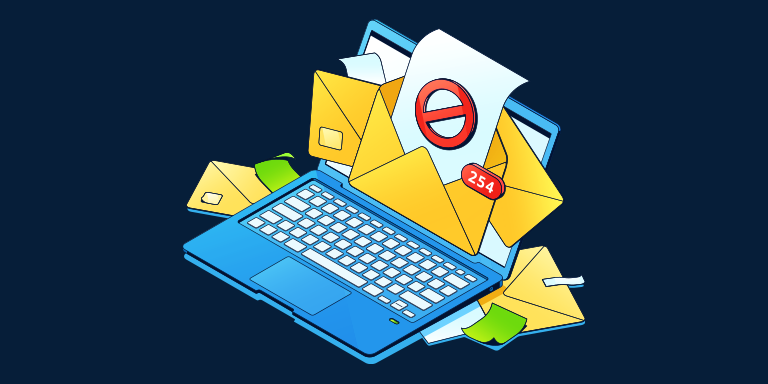
Data from email infrastructure providers consistently highlights two primary metrics that degrade sender reputation faster than anything else: high bounce rates and spam complaints.
- Hard Bounces: These occur when you send an email to an address that no longer exists or is completely invalid. A high bounce rate signals to an ISP that your mailing list is unmaintained, scraped, or acquired rather than organically built.
- Spam Complaints: When a user clicks the "Report Spam" button, it serves as a direct indictment of your sending practices. It tells the ISP that your audience did not want, or did not expect, to receive your message.
When bounce rates exceed industry-standard safety thresholds (typically kept below 0.5%) or spam complaints creep above 0.1%, ISPs react swiftly by restricting your delivery capacity. This is why maintaining a warm, engaged list through thoughtful automation is not merely a revenue driver—it is a critical defensive shield for your brand’s reputation.
Official Technical Standards: Authentication Is Not Optional
If sender reputation is your credit score, technical authentication is your government-issued ID. Operating an email marketing program without proper authentication in the modern landscape is the digital equivalent of driving without a license.
Three primary technical standards form the bedrock of email authentication:
1. SPF (Sender Policy Framework)
SPF is a published DNS record that specifies which mail servers are authorized to send email on behalf of your domain. When an ISP receives an email claiming to be from yourbrand.com, it checks your domain’s SPF record to verify whether the originating server matches your authorized list.
2. DKIM (DomainKeys Identified Mail)
DKIM adds a cryptographic digital signature to every outgoing email. This signature proves to the receiving server that the email was genuinely sent by the domain owner and, crucially, that the message content was not altered or intercepted in transit.
3. DMARC (Domain-based Message Authentication, Reporting, and Conformance)
DMARC builds upon SPF and DKIM. It tells receiving servers what to do if an email fails authentication checks (e.g., whether to quarantine the message or reject it outright). Furthermore, DMARC provides detailed reporting feedback, giving founders visibility into who is trying to spoof their domain.
For brands utilizing modern marketing automation platforms like Omnisend, these technical standards are frequently automated or streamlined during onboarding. However, founders must audit their DNS settings periodically. A single misconfigured DKIM record can instantly divert perfectly legitimate marketing campaigns straight into the spam folder, a crisis that can often be resolved in less than 15 minutes once identified.
List Hygiene: The Unglamorous Work That Protects Your Margins
No one gathers around the boardroom table to celebrate list hygiene. It lacks the creative appeal of writing clever copy or designing striking visual assets. Yet, maintaining clean data is arguably the most quietly powerful operational safeguard a business can implement.
Over time, every email list inevitably accumulates dead weight. Old subscriber addresses become inactive, contacts who joined years ago lose interest, and typos made at point-of-capture sit indefinitely in your database. Each dormant address acts as dead weight, dragging down engagement percentages and artificially inflating bounce rates.
The remedy requires discipline: regular list purging.
Founders should execute re-engagement campaigns targeting subscribers who have remained completely inactive—neither opening nor clicking—for a period of 90 to 180 days. Give these contacts one final opportunity to reaffirm their interest. Those who fail to engage must be systematically suppressed or removed.
While shrinking your active list can feel counterintuitive to growth-obsessed entrepreneurs, a smaller, highly engaged list consistently outperforms a bloated, inactive database in both inbox placement and overall revenue generation.
Additionally, e-commerce brands should implement double opt-in processes at signup. While single opt-in yields faster list growth, double opt-in guarantees that every subscriber has actively confirmed their desire to receive communications, drastically improving baseline engagement metrics.
Content Habits That Trigger Modern Spam Filters
Spam filters have evolved far beyond simple keyword scanners looking for words like “free,” “cheap,” or “guaranteed.” Modern AI-driven filters evaluate hundreds of concurrent signals, including sending history, domain age, HTML architecture, and structural content patterns.
Entrepreneurs should audit their routine email drafting habits for the following common pitfalls:
- Over-Reliance on Images: Sending campaigns composed entirely of a single, massive image with zero accompanying text is a classic spam trigger. ISPs cannot read images, forcing filters to view the email with immediate suspicion. Maintain a healthy balance of text and visuals.
- Broken or Misleading HTML: Sloppy code, broken tables, or hidden text designed to manipulate search algorithms will quickly flag your campaign as malicious or low-quality.
- Deceptive Header Practices: Using deceptive subject lines (such as falsely prefixing messages with "Re:" or "Fwd:" to imply an ongoing personal conversation) destroys subscriber trust and generates immediate spam complaints.
- Inconsistent Sending Frequency: Blasting your list with five emails in one day followed by three months of absolute silence throws off engagement predictability and alarms ISP algorithms.
Implications for E-Commerce Founders
Email deliverability is not a set-it-and-forget-it administrative task. It is an ongoing operational discipline.
The e-commerce brands that successfully and consistently land in the primary inbox are those that treat list health, technical compliance, and subscriber engagement as core pillars of their growth strategy rather than an afterthought. Because deliverability issues remain invisible until open rates collapse, proactive monitoring is mandatory.
Platforms like Omnisend have been engineered specifically to solve this operational bottleneck. By offering built-in deliverability monitoring, streamlined authentication setup support, automated list health diagnostics, and smart-sending features designed to protect sender reputation, Omnisend provides founders with the infrastructure required to ensure their messages reach their intended audience.
To support scaling businesses, Foundr readers can unlock 50% off their first three months on Omnisend by using the promo code FOUNDR50 upon signup.
 Suro Senen
 Ammar Sabilarrohman
 Nana Wu
