
 By Suro Senen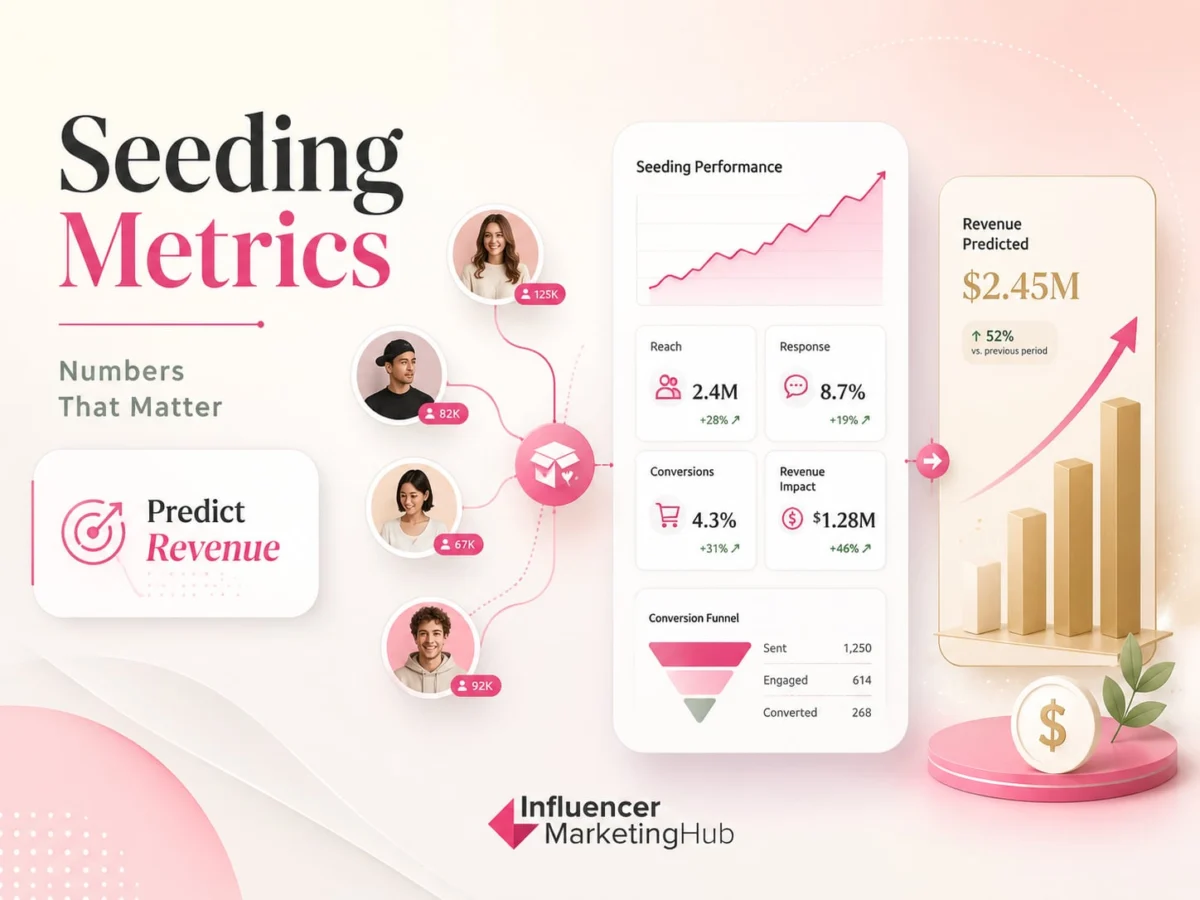
In the modern direct-to-consumer (DTC) landscape, the quarterly planning meeting often follows a predictable, high-pressure script. The Chief Marketing Officer (CMO) surveys the dashboard, points to the influencer marketing line item, and poses the inevitable question: "Is our influencer seeding actually working?"
For many marketing managers, this is the moment where the confidence wavers. You have the spreadsheets. You have the tallies of accepted requests, the count of packages shipped, and the list of URLs where posts went live. Yet, there is a fundamental disconnect between the activity being tracked and the value being generated. You are drowning in vanity metrics—post counts and engagement rates—while the executive suite is looking for a clear, linear progression from product cost to business return.
The fundamental flaw in many influencer programs is the obsession with "post-count optimization." This creates a "treadmill effect," where teams must run faster and ship more products every quarter just to maintain the same visibility, never actually building a scalable foundation. To break this cycle, brands must stop viewing seeding as a simple content-generation play and start treating it as a sophisticated, multi-layered sales pipeline.
The Three Pillars of Purpose: Why You Seed
Most brands fall into the trap of viewing product seeding exclusively as a means to secure social media content. While repurposing user-generated content (UGC) is a valuable byproduct, it represents only one-third of the seeding mandate. If a program is managed solely for content, it inevitably hits a ceiling.
Job 1: The Filtering Mechanism
Every influencer who receives your product acts as a data point. If a creator ignores the package, provides no engagement, and fails to post, that is not a failure—it is a signal. It provides low-cost validation that your targeting, product-market fit, or outreach messaging is misaligned. Conversely, a creator who tags your brand unprompted or sends a thoughtful direct message (DM) serves as a signal of high intent. A systematic seeding program uses these interactions to filter out dead ends and identify the partners worth long-term investment.
Job 2: The Affiliate Pipeline
The most successful influencer programs are not built on one-off transactional posts; they are built on affiliate relationships. In high-performing brands, almost every long-term, revenue-driving creator relationship begins with a free product. If your seeding program lacks a clear, automated path from "received product" to "affiliate offer," you are effectively resetting your program every month. You are essentially running a series of disjointed, one-time campaigns rather than a cumulative pipeline.
The Predictable Influence Pyramid
To conceptualize the transition from seeding to revenue, consider the "Predictable Influence Pyramid." The structure is divided into three distinct layers, each feeding the one above it:
- The Seeding Layer: Products go out. You monitor responses to gauge brand affinity.
- The Affiliate Layer: Creators who showed genuine enthusiasm in the first layer are invited into a commission-based partnership.
- The Collaboration Layer: Your highest-performing affiliates are elevated to retainers, deeper collaborations, or custom product launches.
If the seeding layer is weak, the entire structure stalls. You cannot recruit high-performance affiliates from a pool of creators who were never truly engaged with the product in the first place.
Decoding the Data: Signals, Benchmarks, and Metrics
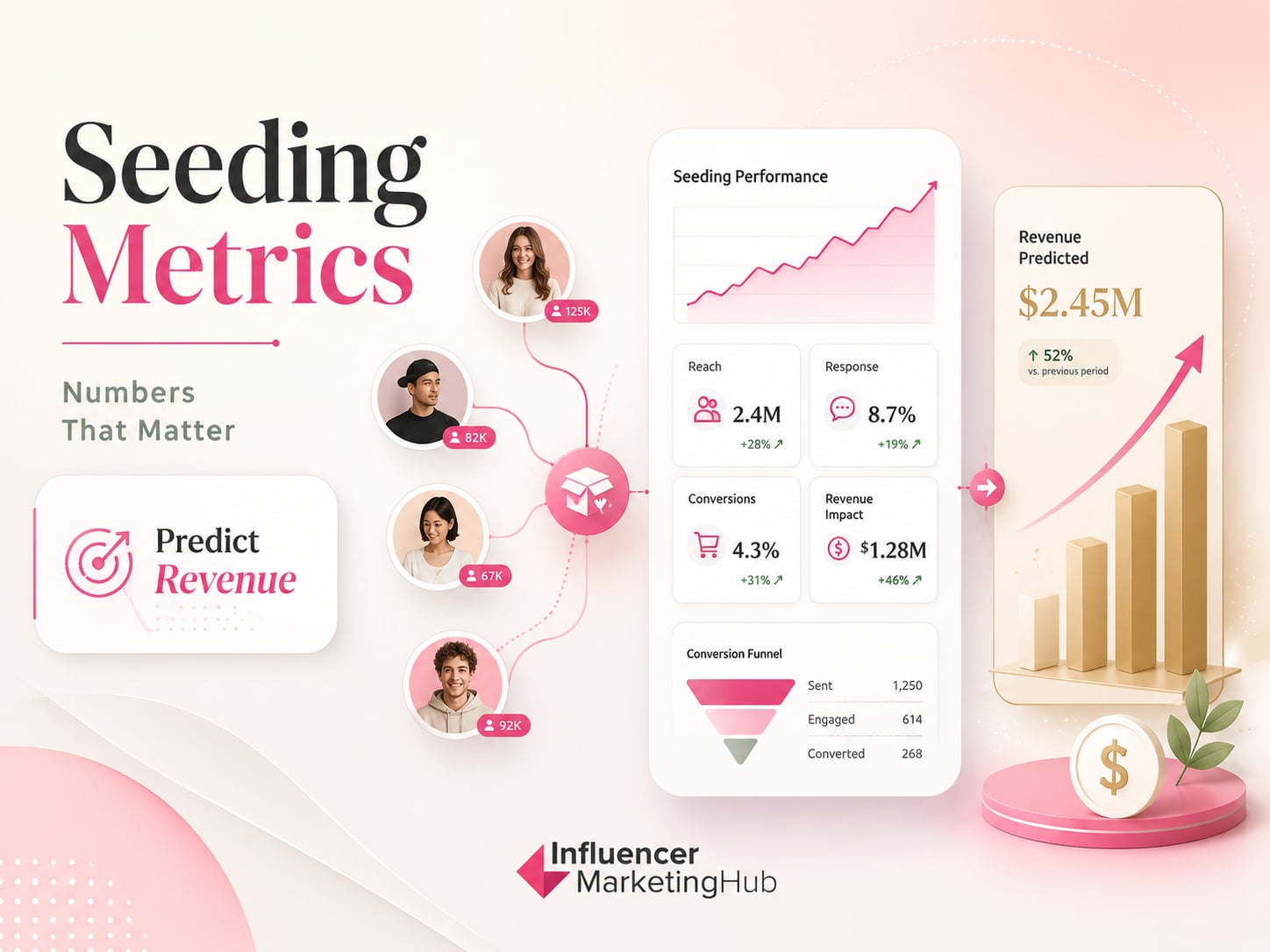
To provide the kind of clarity that CMOs demand, marketers must categorize their data into three specific lenses: Signals (qualitative insights), Benchmarks (operational health), and Metrics (financial impact).
Understanding Signals: The "What to Do"
After a seeding batch, your inbox will be a mix of noise and signal. Many marketers make the mistake of aggregating all responses equally. However, a dedicated, unpaid reel from a creator who loves the product is qualitatively different from a "haul" post where your brand is mentioned for three seconds alongside ten competitors.
Before calculating any ROI, sort your responses into these three buckets:
- Strong Signals: Unprompted posts, enthusiastic replies, or DMs asking for more product. These creators should receive an affiliate invite within 48 hours.
- Lukewarm Signals: Polite acknowledgments or saved product, but no active content creation. Schedule a low-pressure follow-up in two to three weeks.
- Cold Signals: No response or engagement. Update your targeting parameters and remove these individuals from your immediate outreach list.
Benchmarks: Measuring Operational Health
Benchmarks provide the necessary context to determine if your machine is running efficiently. A drop in these numbers acts as an early warning system:
- Outreach Response Rate (15–25%): A decline here usually indicates a mismatch in targeting or an uncompelling initial message.
- Product Acceptance Rate (40–60% of responses): If this is low, your offer may not be attractive enough, or you are reaching out to the wrong tier of creators.
- Post Rate (30–50% of shipped products): If this dips, you likely failed to set clear expectations or provide a creative brief.
- 48-Hour Follow-up Rate (80%+): This is the most critical operational metric. If you wait more than 48 hours to follow up after a package arrives, you have lost the "top-of-mind" window. In an industry where creators receive dozens of packages weekly, speed is your primary competitive advantage.
Implications for the Leadership Report
When it comes time to report to the CMO, the focus must shift from process to outcomes. The monthly report should track activity—cost per seeded creator, post rates, and the cost per usable content asset. However, the quarterly report must pivot to the pipeline.
The single most impactful metric to present is the Seeding-to-Affiliate Conversion Rate.
When you can tell leadership, "We seeded 100 creators; 15 converted into active affiliates who generated $X in trackable revenue," you are no longer talking about "influencer marketing costs." You are talking about a sales pipeline. This framing transforms the influencer program from a discretionary cost center into a predictable, scalable revenue driver.
Strategic Execution and Scalability
Managing this pipeline manually via spreadsheets is possible at low volumes, but it inevitably breaks as the program scales. Once a brand exceeds 50–100 seeds per month, manual tracking of affiliate conversion paths becomes labor-intensive and prone to error.
This is where the transition to "InfluencerOS" models becomes necessary. Tools like SARAL enable brands to automate the outreach, tracking, and performance reporting that bridge the gap between initial seed and final purchase. As evidenced by rapidly scaling brands like Spacegoods, high-volume partnerships can be managed by small, efficient teams if the underlying systems are designed to prioritize the conversion rather than just the shipment.
Conclusion: A New Standard for Seeding
The variance in influencer marketing is a reality—not every product send will result in a viral post. However, the unpredictability of the results is often a symptom of an unrefined process.
By mapping the full journey from the initial product seed to the eventual affiliate relationship, marketers can finally answer the CMO’s question with confidence. When you stop chasing the treadmill of post-counts and start building a deliberate, data-backed pipeline, you stop guessing whether your program is working. Instead, you can point to a clear, measurable trail of revenue that traces back to the very first box you shipped six months prior. That is the difference between a program that simply exists and one that actively builds the future of your brand.
 Siti Muinah
  Dwi Wanna
  Lina Irawan