
 By Laily UPN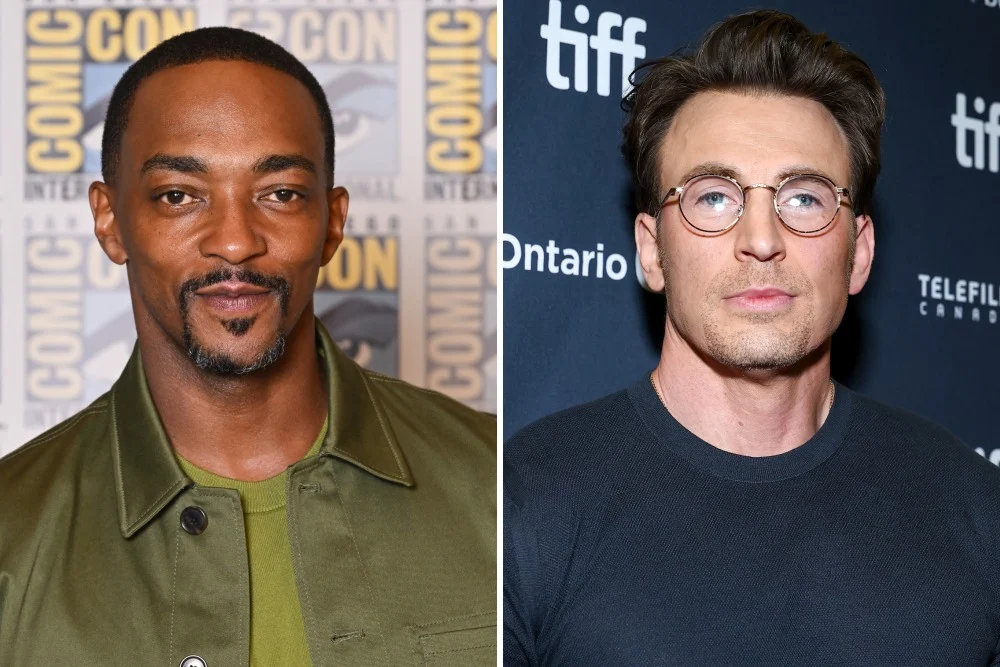
In the high-stakes, hyper-secretive world of the Marvel Cinematic Universe (MCU), where spoilers are guarded with the intensity of national security secrets, the transition of the Captain America mantle was handled with surprising intimacy. While audiences watched Steve Rogers pass the iconic vibranium shield to Sam Wilson in the closing moments of 2019’s Avengers: Endgame, the real-world handover was defined by a private moment of friendship between Chris Evans and Anthony Mackie.
New details revealed in a recent interview with Cigar Aficionado have pulled back the curtain on this transition, showcasing a professional camaraderie that defies the competitive nature of Hollywood. For Evans and Mackie, the passing of the torch was not merely a contractual obligation or a narrative plot point; it was a personal milestone shared between two friends who found themselves at the center of the world’s most successful film franchise.
The Secret Handover: A Moment of Brotherhood
The transition of the Captain America title is one of the most significant character arcs in cinematic history. However, for Anthony Mackie, learning about his character’s promotion wasn’t a sterile studio briefing. It happened in the comfort of Chris Evans’ home.
“Chris Evans is somebody who I hold near and dear,” Mackie shared in his Cigar Aficionado profile. Reflecting on the period leading up to the production of Endgame, Mackie recounted a casual afternoon that turned into a life-changing revelation. Because Evans held the status of the franchise’s primary lead, he was granted early access to the confidential script pages that outlined the film’s climactic ending.
“We’re at Chris’ house, and because he’s Captain America, he gets the pages first,” Mackie explained. “So he’s like, ‘Yo, did you read the new scene?’ I’m like, ‘Nah, what’s up?’ So, he takes me down… and he gave me the script and let me read it.”
What followed was a deeply emotional moment. Mackie noted the rarity of such a gesture in an industry often characterized by professional jealousy. “I don’t know a lot of actors who would have appreciated or celebrated that moment with a fellow actor in that way because I was taking his job for all intents and purposes,” Mackie admitted. By allowing Mackie to discover his future as the new Captain America alongside him, Evans effectively validated his successor, ensuring that the transition was rooted in mutual respect rather than institutional mandate.
Chronology of the Captain: From Steve Rogers to Sam Wilson
To understand the weight of this passing of the shield, one must look at the trajectory of the Captain America legacy within the MCU.
The Era of Steve Rogers (2011–2019)
Chris Evans first donned the star-spangled suit in 2011’s Captain America: The First Avenger. Over the course of nearly a decade, Evans transformed the character from a period-piece war hero into a modern symbol of morality and internal conflict. His performance anchored the Avengers series, providing the moral compass for a team of disparate gods, soldiers, and geniuses.
The Ascension of Sam Wilson
Anthony Mackie made his debut as Sam Wilson, a former paratrooper known as the Falcon, in 2014’s Captain America: The Winter Soldier. Over the subsequent years, Mackie’s character became an indispensable ally to Steve Rogers. The narrative progression culminated in Avengers: Endgame, where an elderly Steve Rogers, having lived a full life in an alternate timeline, presents Wilson with the shield, officially christening him as the new Captain America.
Taking the Mantle
Following the events of Endgame, the transition was further explored in the Disney+ series The Falcon and the Winter Soldier, which dealt with the geopolitical and racial complexities of a Black man taking on the mantle of an American icon. This narrative arc finally reached its peak in 2025’s Captain America: Brave New World, which marked Mackie’s first feature-length outing as the titular hero, solidifying his position as the new face of the franchise.
Supporting Data: The Box Office Phenomenon
The legacy of Avengers: Endgame is not merely cultural; it is a financial juggernaut that continues to rewrite the record books. The film, which served as the emotional swan song for the original Avengers lineup, recently returned to theaters under the banner of "Avengers: Endgame Encore."
This special re-release, strategically timed to build momentum for the upcoming Avengers: Doomsday (slated for release on December 18), provided a stark reminder of the franchise’s enduring appeal.
- Domestic Performance: The re-release generated $26 million domestically over its opening weekend.
- International Reach: Overseas markets added a significant $60 million to the tally.
- Global Total: The "Encore" release brought in a combined global haul of $86 million.
Prior to this re-release, Avengers: Endgame sat comfortably as the second-highest-grossing film in history with a staggering $2.79 billion. With the inclusion of the recent earnings, the film has now pushed its total lifetime gross to $2.88 billion, further distancing itself from other contenders in the all-time box office rankings. This financial data underscores the fact that fans remain deeply invested in the lore of the MCU, viewing these re-releases as essential communal experiences.
Official Responses and Industry Context
The bond between Evans and Mackie has been a consistent point of discussion in interviews, but Mackie’s recent comments offer a rare look at the human side of corporate-owned intellectual property.
Industry analysts have noted that the "passing of the shield" is a delicate process for major studios. If an actor feels marginalized or usurped, it can lead to public friction. However, Marvel Studios has seemingly mastered the art of fostering a "revolving door" of legacy. By encouraging veteran actors like Evans to mentor their successors, the studio ensures a sense of continuity that resonates with the audience.
"It wasn’t about the job," Mackie emphasized. "It was about the moment. We were two guys who had worked together for years, and he wanted me to be the first to know because he knew what it meant for my career and for the character."
This sentiment is echoed by the studio, which has consistently highlighted the chemistry between its cast members as the secret sauce of the MCU’s success. The personal investment shown by Evans mirrors the character arc of Steve Rogers—a man who spent his life looking out for the "little guy" and ensuring that the mantle was left in capable hands.
Implications for the Future of the MCU
The implications of this behind-the-scenes friendship are significant for the future of the Captain America franchise. As the MCU shifts toward its next phase—centered on Avengers: Doomsday and the broader Multiverse Saga—the stability provided by established relationships is critical.
- Narrative Continuity: By establishing that the torch-passing was a friendly, collaborative act, the studio has made it easier for fans to accept Sam Wilson as the definitive Captain America.
- Franchise Longevity: The success of the Endgame re-release proves that the MCU’s "legacy" films have immense value. The studio can rely on the nostalgia of the original Avengers to drive interest in new projects.
- Cultural Impact: Anthony Mackie’s portrayal of Captain America carries a different weight than Evans’, and the support of his predecessor has helped validate the shift in perspective that his casting brings to the screen.
As the Marvel Cinematic Universe continues to evolve, the story of the script reading in Chris Evans’ living room will likely go down as a foundational piece of franchise lore. It serves as a reminder that behind the CGI, the stunts, and the billion-dollar box office receipts, the strength of the Avengers rests on the genuine connections between the actors who bring them to life.
As we look toward Avengers: Doomsday and beyond, the legacy of Captain America appears to be in safe, steady, and—most importantly—friendly hands.
 Layla Zulfa
  Ali Ikhwan