
 By Layla Zulfa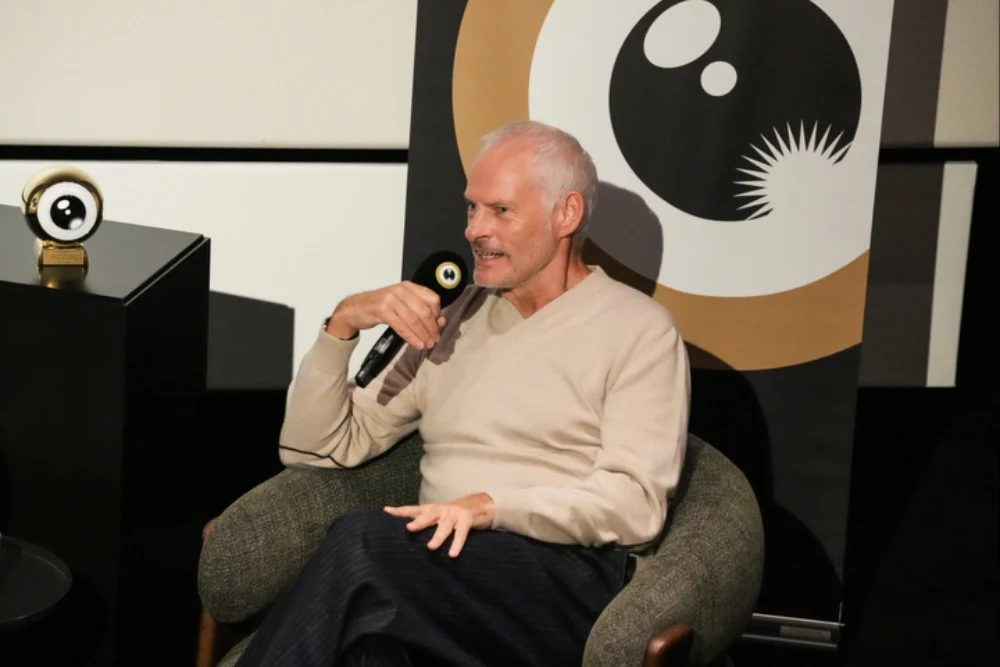
At the recent Zurich Film Festival, where he was honored with a prestigious Tribute Award, acclaimed writer-director Martin McDonagh signaled a pivot in his cinematic trajectory. Known for his darkly comedic sensibilities and penchant for subverting narrative expectations, McDonagh is entering a more overtly political phase of his career with his latest feature, Wild Horse Nine.
For a filmmaker who has spent decades crafting intricate, character-driven tapestries—from the isolated violence of The Lieutenant of Inishmore to the moral ambiguity of In Bruges—this latest project represents a departure from the "artistic neutrality" he perceives in contemporary culture. In a sprawling masterclass at the festival, McDonagh dissected his evolution from an unemployed dropout to a singular voice in global cinema, all while doubling down on his commitment to creative autonomy.
The Political Resurgence: Decoding "Wild Horse Nine"
Wild Horse Nine serves as the centerpiece of this new, provocative chapter. Set against the volatile backdrop of the 1973 Chilean coup, the film follows two CIA agents, portrayed by the formidable duo of John Malkovich and Sam Rockwell, as they navigate the geopolitical minefield of Easter Island.
While the setting is historical, McDonagh is quick to note that the film’s resonance is distinctly modern. "This is probably my most political film," McDonagh stated at the festival. "That’s why I find it very exciting to be releasing this monster into the world. I feel like, in the modern day, there’s perhaps a little too much artistic neutrality—or too much saying nothing, not having an opinion, or being apathetic. I’m excited to be doing the opposite with this one."
The director noted with fascination that the dialogue, penned with the 1973 intervention in mind, has taken on a contemporary weight during early screenings. Audiences are projecting modern geopolitical tensions—such as the crisis in Venezuela or the ongoing war in Ukraine—onto the film’s cold-war era exchanges. For McDonagh, this accidental prescience is a testament to the cyclical nature of power and interventionism.
"The Russia jokes in the film are about their interventions in Finland 100 years ago, but we connect them to Ukraine now," he explained. "I love that it has a resonance I wasn’t necessarily aware of in the writing of it."
A Chronology of Artistic Defiance
To understand McDonagh’s current stance, one must look back at his unconventional path. Leaving school at 16, he spent years in a state of professional limbo. "I was unemployed for a long time," he recounted. "But with the hopes of being a writer. Part of that was not wanting to have a real job or a boss. That has remained with me until now."
His early career was defined by rejection, primarily from the BBC, which repeatedly turned down his radio plays. Rather than deterring him, these rebuffs became a source of fuel. "Maybe I thrive not on encouragement, but anger," he mused. This temperament eventually led him to the stage, where he broke conventions by injecting cinematic energy and visceral, shocking imagery—most famously the exploding cats in The Lieutenant of Inishmore—into the theatrical medium.
His transition to film in 2004 with the Academy Award-winning short Six Shooter was, by his own admission, a terrifying trial by fire. He credits Brendan Gleeson with guiding him through the process and acting as a bulwark against studio interference. This partnership blossomed into the cult classic In Bruges, a film born from a blend of genuine traveler’s boredom and the search for a cinematic setting. "I was supposed to meet a girl on the second night, and she didn’t turn up," he recalled. "It was this combination of thinking it was the most cinematic, undiscovered town I’d ever seen, and being bored as hell."
The "Hollywood" Dichotomy and Actor-Director Synergy
McDonagh’s disdain for the "Hollywood machine" is palpable and well-documented. He describes studio executives as "children with a lot of money," and views his primary duty as a director to be the shield that protects his cast from their interference. This dynamic has allowed him to attract the highest tier of talent, from Frances McDormand to John Malkovich.
In Wild Horse Nine, McDonagh is pushing his actors into a more contemplative, tragic space. He is moving away from the "cool" factor that often permeates genre films, opting instead for silence and internal reflection.
"When they’re great actors like Frances or John, you see the sadness in their eyes, and you fill in what they’re thinking about," he noted. "One of the ideas for John’s character was to give him the entire palette of emotions. You know that John can do comedy, he can do rage, and he can do contemplative, quiet stuff. But I’m making sure all those things are together in one package."
This collaborative environment is why actors who have spent careers in bloated, hollow blockbusters gravitate toward him. "When actors of that magnitude… know they’re in a film that’s a little empty, they get to work on something different [with me], and it frees them up to show their brilliance."
Implications: The Price of Independence
The central theme of McDonagh’s career is the preservation of creative agency. While many filmmakers seek to scale up their budgets and influence, McDonagh is firmly opposed to the "bigger is better" ethos.
"I’m really happy with the trajectory or the level of films that I’ve made," he maintained. "I don’t want a bigger budget. I don’t even want more success. I just want to continue making films completely free from any interference from anyone. That’s a perfect position to be in."
This stance has significant implications for the industry. In an era where streaming platforms and major studios are increasingly risk-averse, favoring franchise IP over singular, political, or challenging voices, McDonagh stands as an outlier. His success proves that there is a viable, albeit narrow, path for the uncompromising auteur.
However, his shift toward overt political commentary marks a new threshold. By choosing to engage directly with historical interventions that mirror modern crises, he is inviting the kind of critical scrutiny that many directors avoid. Whether Wild Horse Nine will be viewed as a masterpiece of political satire or a lightning rod for controversy remains to be seen.
For now, McDonagh remains characteristically irreverent. Reflecting on his penchant for biting the hand that feeds him, he joked, "I’m going to get in so much trouble. It’s good that it’s not being filmed, right?"
As he continues to balance his "theater brain" with his cinematic output, McDonagh’s commitment to his own artistic standards remains his most defining trait. He has successfully navigated the shift from the playwright who wanted to avoid a boss to the director who refuses to become one, all while ensuring that his films remain, above all else, deeply and unapologetically human.
 Laily UPN
  Ali Ikhwan