
 By Lina Irawan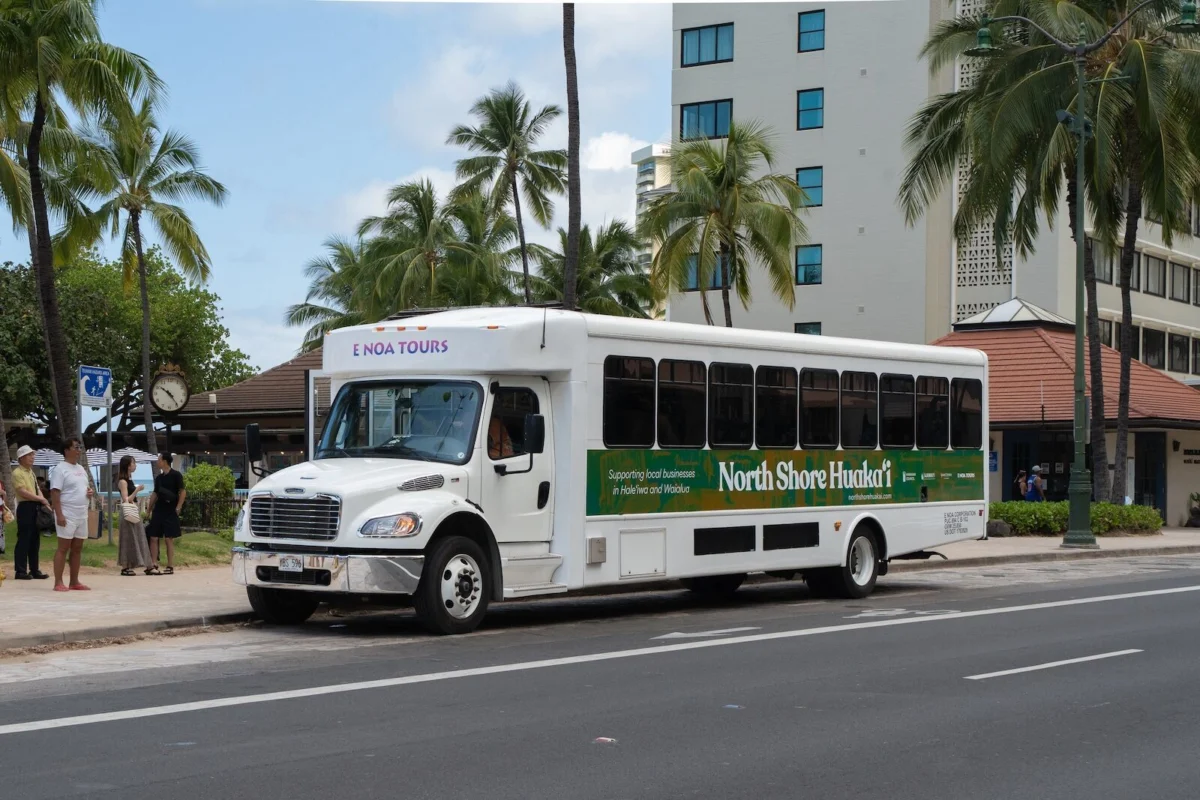
In an innovative effort to stimulate economic recovery following the catastrophic Kona Low storms of March 2026, a consortium of tourism and community leaders has launched the "North Shore Huaka‘i." This daily shuttle service, which began operations on June 29, provides a direct, culturally immersive transit link between the popular hubs of Waikīkī and Ko Olina and the historic, storm-impacted communities of Waialua and Hale‘iwa.
Designed as a 90-day pilot program scheduled to run through September 26, the initiative is a collaborative venture between the Hawaiian Council, the Hawai‘i Visitors and Convention Bureau, E Noa Tours, and the Hawai‘i Tourism Authority. Far from being a standard tourist transit line, the Huaka‘i is a targeted economic intervention, strategically engineered to channel visitor spending back into local businesses that were devastated by the unprecedented flooding that paralyzed the North Shore earlier this year.
The Genesis of the North Shore Huaka‘i
The impetus for the shuttle service stems from the severe weather events of March 2026, when two consecutive Kona Low storms battered the island. While Hawai‘i’s climate is typically characterized by reliable trade winds, these low-pressure systems stalled over the archipelago, dumping record-breaking rainfall on already saturated terrain.
The resulting floods left at least 264 homes uninhabitable and completely destroyed 23 others. The damage was not limited to residential areas; the North Shore’s commercial infrastructure, which relies heavily on a steady stream of seasonal tourism, was decimated. With roads impassable and local businesses shuttered, the economic toll was staggering. The Hawai‘i Department of Business, Economic Development, and Tourism (DBEDT) estimated a $300 million loss in state tourism revenue, with direct economic damage to North Shore businesses calculated at approximately $100 million.
Kūhiō Lewis, president and CEO of the Hawaiian Council, notes that the shuttle program was a direct outcome of the council’s recovery efforts. "The North Shore Huaka‘i grew out of our work alongside families, businesses, and community leaders," Lewis said. "The community expressed a clear need for help bringing customers back in a thoughtful, sustainable way."
Chronology of the Recovery Effort
The timeline leading to the launch of the shuttle reflects the urgency of the situation on the ground:
- March 2026: Two major Kona Low storms strike within one week. Flash flood emergencies are declared across the North Shore, causing widespread destruction of farmland and small businesses.
- April 2026: A formal major disaster declaration is issued by the government, signaling the beginning of long-term recovery efforts.
- May 2026: Discussions between the Hawaiian Council and tourism stakeholders intensify, focusing on how to restore foot traffic to North Shore merchants without overwhelming local infrastructure.
- June 28, 2026: The official announcement of the North Shore Huaka‘i pilot program is made, detailing the partnership between local government, private tour operators, and the Hawaiian Council.
- June 29, 2026: The inaugural shuttle routes commence, signaling the start of the 90-day window to evaluate the program’s viability.
- September 26, 2026: The scheduled conclusion of the pilot program, at which point the stakeholders will evaluate rider feedback, economic impact on local businesses, and future funding possibilities.
How the Shuttle Experience Operates
The North Shore Huaka‘i is designed to offer a seamless, six-to-seven-hour excursion that prioritizes quality over quantity. The program features two distinct routes, each tailored to reach major concentrations of visitors.
The Waikīkī Route
The primary shuttle, a 40-seat coach, departs from the Prince Waikiki at 8:30 AM. It makes a series of strategic stops along Kalākaua Avenue, the central artery of Waikīkī, before departing for the North Shore at 9:15 AM. Guests are treated to approximately one hour in Waialua, focusing on the historic sugar mill district, followed by two to two-and-a-half hours in Hale‘iwa. This window allows ample time for visitors to browse boutiques, eat at local food trucks, and engage with the community.
The Ko Olina Route
Recognizing the high concentration of visitors in West O‘ahu, a secondary 26-seat shuttle serves guests at luxury resorts, including Disney’s Aulani, the Four Seasons Resort O‘ahu, Marriott’s Ko Olina Beach Club, and the Beach Villas. This route provides a direct connection for families who might otherwise be isolated within the resort bubble.
Cultural Integration
Central to the program is the role of the "cultural practitioners" on board. Unlike standard sightseeing buses, the Huaka‘i includes onboard experts—specifically Kumu Hula Mehanaokalā Hind and storyteller Kamaka Pili. Their presence is intentional, aimed at moving beyond superficial tourism.
"They were selected for their deep knowledge and their ability to help participants develop a meaningful connection to the communities they visit," Lewis explained. By providing context on the history, culture, and resilience of the North Shore, these practitioners help foster a sense of stewardship among visitors, encouraging them to treat the area with respect during their stay.
Supporting Local Commerce: The "North Shore Passport"
To ensure that the shuttle translates directly into revenue for the community, the program utilizes a "North Shore Passport." This gamified loyalty system encourages visitors to patronize specific local establishments.
Participants receive a physical passport listing galleries, coffee shops, and restaurants. Upon making a purchase at a participating business—such as the iconic Giovanni’s Shrimp Truck, Hale‘iwa Bowls, Poke for the People, or The Ukulele Site—visitors receive a stamp. Collecting five stamps qualifies the traveler for a free gift, incentivizing multiple transactions throughout the day.
Furthermore, the program includes a soft requirement for riders to provide proof of purchase from a local business before boarding the return shuttle, reinforcing the philosophy that this service is intended for economic benefit rather than mere sightseeing.
Official Responses and Economic Implications
The launch of the Huaka‘i has been met with cautious optimism by local stakeholders. For residents of Hale‘iwa and Waialua, the return of visitor dollars is not merely a bonus—it is a lifeline for small business owners who spent the spring cleaning up mud and debris rather than serving customers.
Economists and tourism analysts suggest that the success of the 90-day pilot will hinge on several key metrics:
- Direct Expenditure: The total volume of sales generated by passport participants.
- Community Sentiment: Whether residents feel the increased foot traffic is manageable and respectful of the neighborhood’s unique character.
- Rider Retention: Whether the "cultural connection" aspect leads to positive reviews and sustainable interest in the North Shore.
"We will evaluate its impact on local businesses, rider and community feedback, and available funding support at the end of the 90-day pilot," Lewis noted. If successful, the model could serve as a template for future disaster recovery in other regions of the state, demonstrating how tourism can be pivoted to serve as a tool for community resilience rather than just an industry of extraction.
Looking Toward the Future
As the pilot program continues through September, the North Shore Huaka‘i stands as a testament to the power of public-private partnerships. By bridging the geographical and psychological distance between the resort centers and the small towns of the North Shore, the initiative seeks to prove that tourism, when managed with cultural sensitivity and economic foresight, can be a vital partner in the recovery of local communities.
For the traveler, it offers a hassle-free, educational, and purposeful day trip. For the residents of the North Shore, it represents a slow, deliberate return to stability. Whether or not the program becomes a permanent fixture will depend on the visitors who board the bus, the merchants who welcome them, and the ability of the partnership to translate a shared crisis into a long-term, sustainable solution.
As of now, reservations remain available online, and the success of the remaining weeks of the pilot will determine the future of this unique, community-centric model of tourism.
 Nana Wu
  Jia Lissa
  Evan Lee Salim