Introduction: The Danger and Dedication Beyond the Lens
When the world’s most elite freeride mountain bikers drop off the sheer, crumbling sandstone cliffs of southwest Utah, they enter a gladiatorial arena known simply as the Red BullRampage. For a quarter of a century, this high-stakes competition has tested the physical and psychological limits of human capability, transforming gravity-defying stunts into legendary sporting moments.
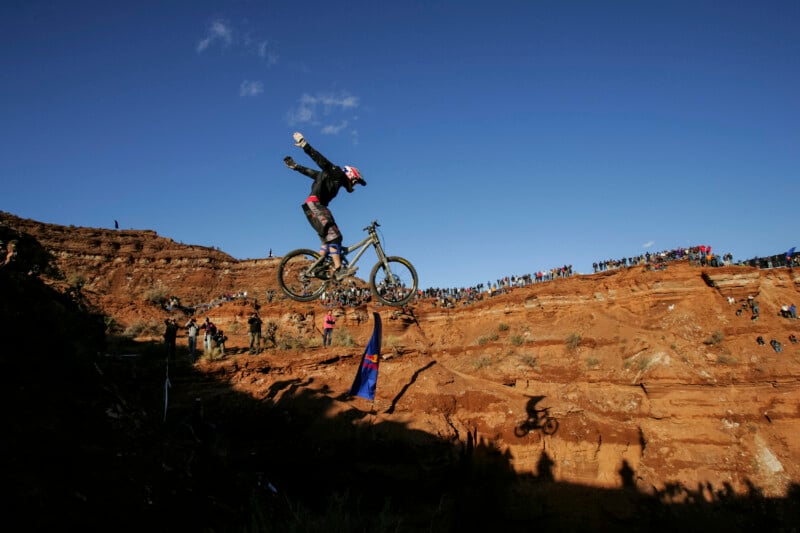
Yet, as viewers sit safely at home watching riders launch over cavernous gaps and execute precise backflips, they often overlook a parallel group of risk-takers. Navigating the exact same razor-thin ridges and loose, vertical drop-offs are the action sports photographers. Armed with heavy, expensive gear instead of bikes, these visual chroniclers hang off cliff edges to capture split-second moments of athletic triumph.
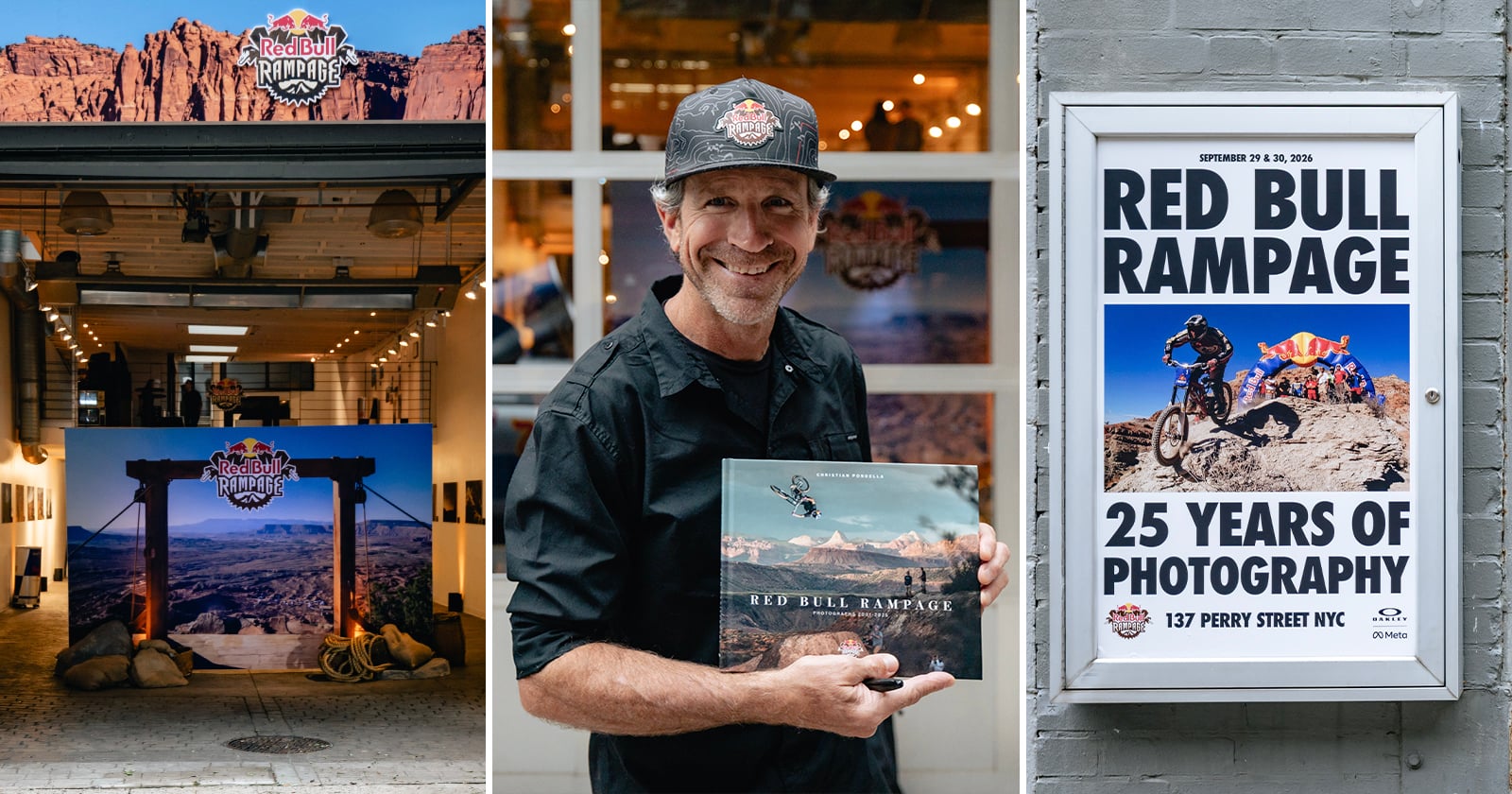
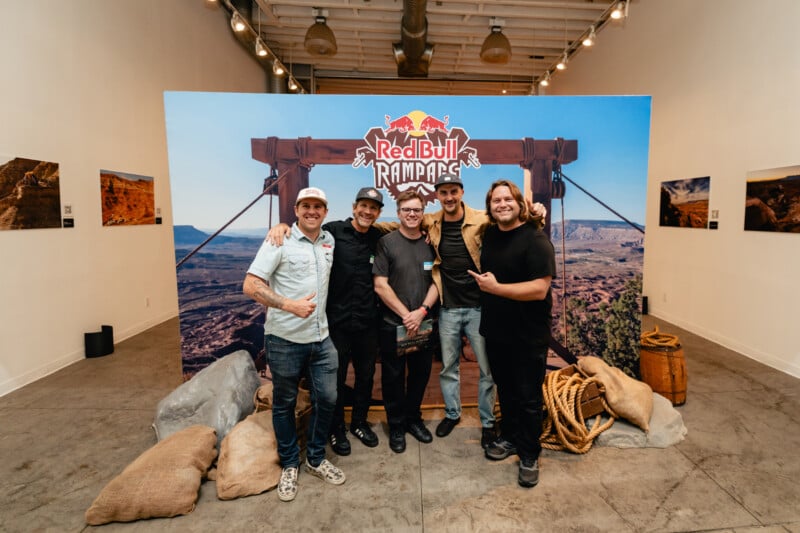
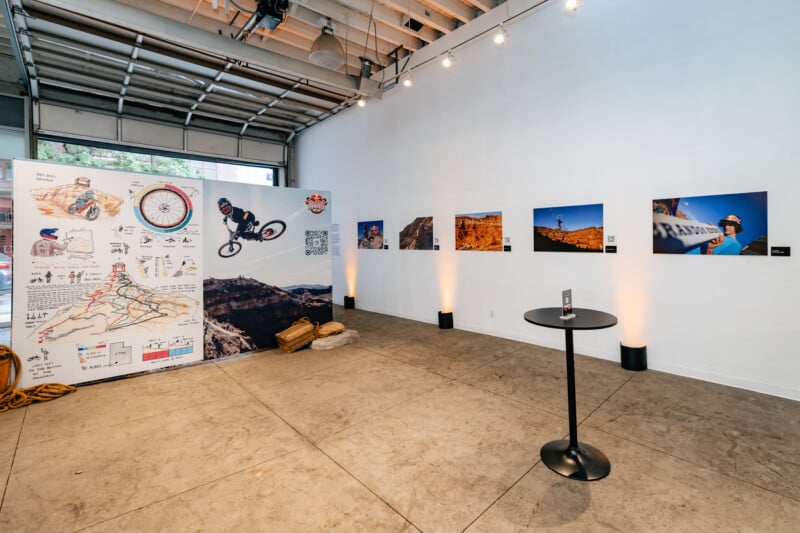
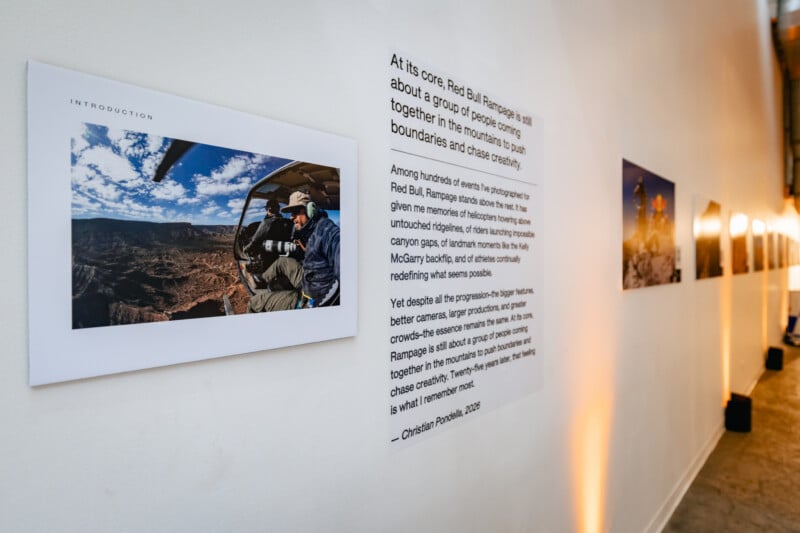
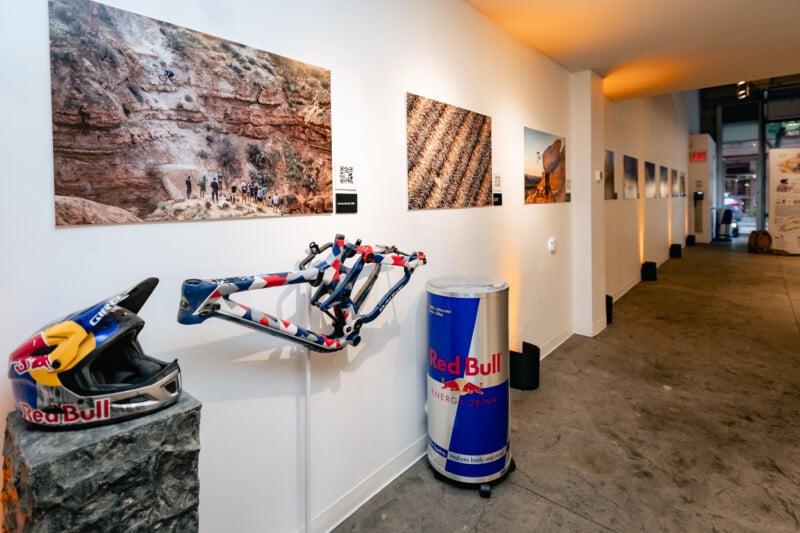
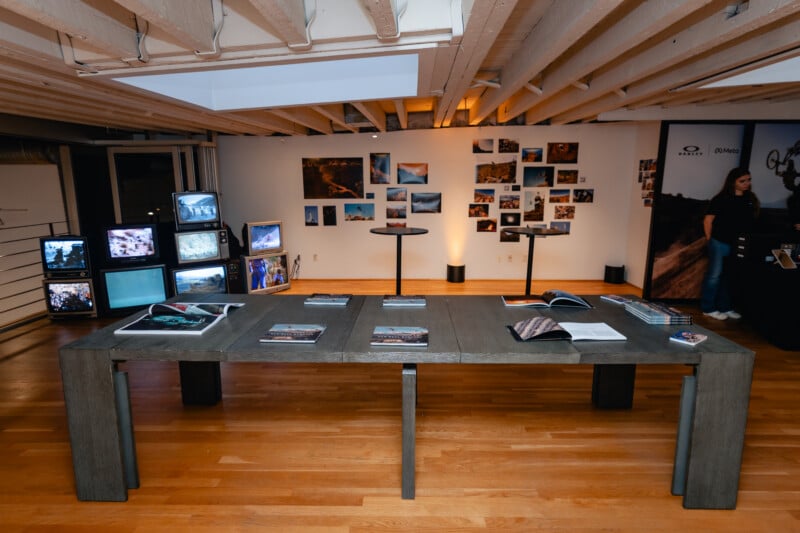
To celebrate a quarter-century of this harrowing sport, a special 25th Anniversary Photo Gallery in New York City has turned the lens back onto the documentarians. Highlighting iconic imagery from Red Bull’s photography roster alongside the decades-long archive of legendary adventure photographer Christian Pondella, the exhibition reveals the immense physical, technical, and collaborative efforts required to translate the terror and beauty of the Rampage onto a printed page.
Main Facts: A Landmark Anniversary and Exhibition
The Red Bull Rampage 25th Anniversary exhibition serves as a tribute to both the athletes who invent gravity-defying lines and the visual artists who preserve them.
The Milestone: 2026 marks the 25th anniversary of the Red Bull Rampage, tracing its evolution from an underground, raw desert gathering in 2001 to a globally broadcast, highly produced extreme sports spectacle.
The Exhibition: Hosted in New York City, the one-day gallery showcases a curated collection of archival and contemporary work. It features pieces from Red Bull’s elite photography team, Paris Gore, Faith Nguyen, Kate Garibaldi, and foundational work by Christian Pondella.
The 2026 Competition Schedule: Returning to southwest Utah this October, the milestone event features an expanded two-day format. The women’s competition takes place on Thursday, October 8, at 10 a.m. MT, followed by the men’s competition on Saturday, October 10, at 10 a.m. MT. Both events will be broadcast live via Red Bull TV and the Red Bull Bike YouTube channel.
When the Red Bull Rampage was first established in Virgin, Utah, in 2001, it was an entirely different landscape—both literally and figuratively. Mountain biking technology was in a vastly different era; full-suspension bikes were heavier, less forgiving, and lacked the travel required to safely absorb massive cliff drops.
Christian Pondella, who has photographed every single iteration of the Rampage since its inception, remembers the early years as a wild, unstructured experiment. Back then, riders shaped their own lines with rudimentary hand tools, and photographers scrambled across unmarked desert terrain with heavy film and early digital setups.
Over the decade, pioneers like Kyle Strait pushed the envelope, performing no-handed drops and setting the tone for future generations. Throughout this period, Pondella’s camera documented the rapid evolution of the sport, charting how riders began treating the desert canvas not just as a mountain to descend, but as a skatepark of natural features.
The Engineering Era and Global Stage (2011–2020)
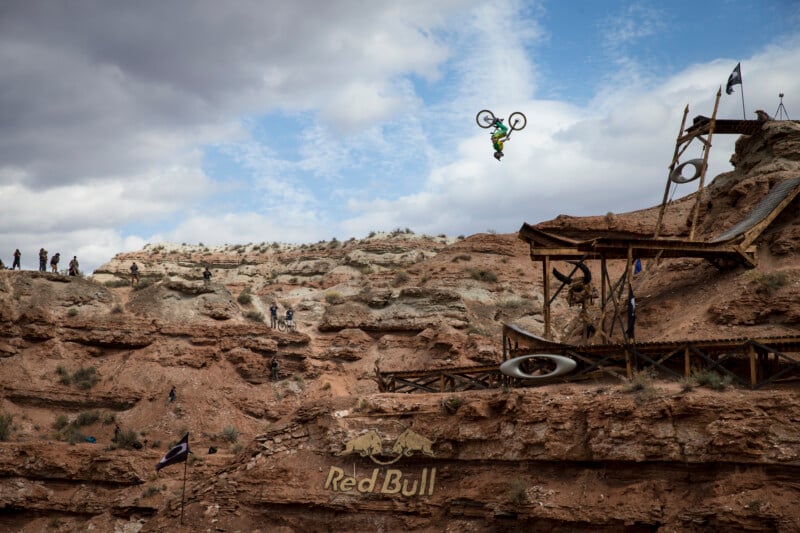
As the event matured into the 2010s, the scale of the riding escalated dramatically. Riders began utilizing heavy machinery and dedicated digging crews to sculpt massive wooden take-offs, huge step-downs, and dizzying ridge-line gaps. Iconic moments defined this era, such as Cam Zink’s legendary 2013 backflip over the massive Oakley Sender feature.
Simultaneously, camera technology experienced a revolution. Autofocus tracking, higher burst rates, and lightweight carbon-fiber tripods allowed photographers to push into more daring locations. Sequences, wide-angle remote cameras, and high-resolution digital sensors began capturing the microscopic details of dirt flying off a tire tread against the colossal backdrop of the Utah canyons.
Modern Excellence and Inclusion (2021–Present)
Entering the 2020s, the Red Bull Rampage solidified its status as the pinnacle of freeride mountain biking. The inclusion of the women’s competition starting in 2024—featuring athletes like Chelsea Kimball—marked a historic milestone for gender equity in the sport, expanding the breadth of talent tackling the brutal Utah terrain.
The photography evolved to match this modern era. Today’s visual capture relies on an intricate choreography between safety crews, drone operators, and static photographers. The 25th-anniversary milestone reflects a sport—and an artistic medium—that has scaled unprecedented heights.
Supporting Data: The Logistics of Cliffside Photography
Photographing the Red Bull Rampage is an extreme athletic endeavor in its own right. Understanding the data behind the production highlights the immense scale of the operation:
Archive Size: Christian Pondella alone maintains an archive of more than 50,000 Rampage images accumulated over 25 years.
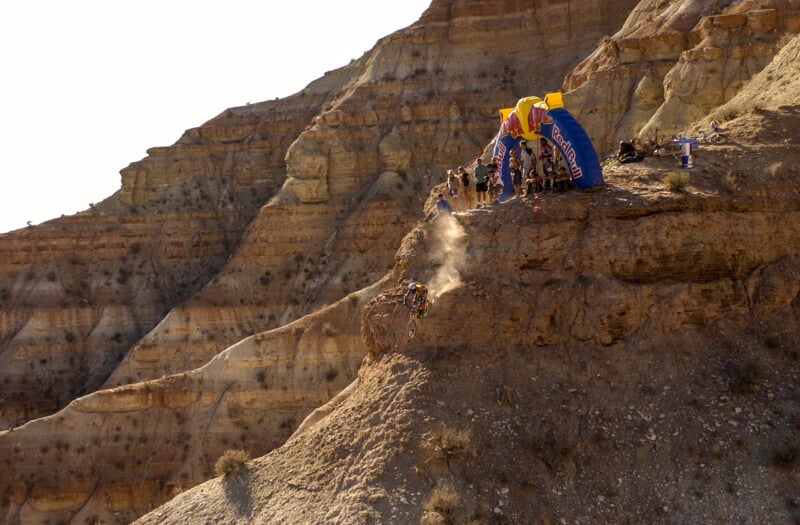
Equipment Weight: Photographers routinely scale steep, exposed, 40-degree sandstone slopes while carrying backpacks weighing 30 to 50 pounds, packed with camera bodies, multiple telephoto and wide-angle lenses, flashes, extra batteries, and survival gear.
Environmental Hazards: Working temperatures in Virgin and St. George, Utah, during October can swing wildly from freezing desert mornings to scorching midday sun, compounded by high winds that threaten balance on narrow cliff ledges.
Broadcast Reach: Millions of viewers globally tune in via Red Bull TV and YouTube to watch the live streams, relying entirely on the camera operators and photographers stationed across the mountain to convey the true 3D perspective of a vertical drop.
Official Responses and Perspectives
Christian Pondella: On Community and Family
Despite chronicling two and a half decades of extreme danger, bone-breaking crashes, and technological leaps, Christian Pondella’s reflections ground the sport in human connection. When asked about his favorite aspect of the Rampage, Pondella looks past the gear and the breathtaking scenery.
"Yes, it’s definitely a team, from the amazing athletes to the crew and then photographers working together to put it all together. Every year that I go back it’s like I’m seeing family again."
Pondella, whose extensive portfolio includes work for National Geographic, Sports Illustrated, Outside, and Men’s Journal, emphasizes that the mutual trust between athlete and lensman is paramount. A photographer cannot position themselves near a high-consequence landing zone without complete trust in the rider’s skill—and vice versa.
Paris Gore: The Power of Collaboration
Fellow featured photographer Paris Gore echoes this sentiment, pointing out that the community is the true heartbeat of an event defined by terrifying physical feats.
"When I think about Red Bull Rampage it’s definitely the people that bring it all together for me. I look forward to it every year."
Gore’s perspective highlights the paradox of extreme sports media: while the final image is often viewed as a solitary act of heroism by a lone rider, it is actually the culmination of a deeply collaborative effort involving diggers, safety coordinators, media teams, and fellow shooters working in unison.
Implications: The Art of Translating the Impossible
The Red Bull Rampage 25th Anniversary Photo Gallery does more than simply commemorate a mountain biking competition; it redefines how audiences consume extreme sports.
1. Elevating the Art of Action Photography
For aspiring photographers, the exhibition serves as a masterclass in visual storytelling. A successful Rampage photograph must solve a complex visual riddle: how to communicate scale, speed, danger, and athleticism within a flat two-dimensional frame. If a photographer stands too far back, the massive cliffs look like mere hills, robbing the jump of its terrifying context. If they stand too close, they risk missing the scope of the landscape. Master photographers like Pondella and Gore bridge this gap, allowing viewers to feel the vertigo of the canyon from the comfort of an urban art gallery or a living room screen.
2. Shifting Perspectives on Risk and Labor
As sports entertainment moves toward hyper-polished digital consumption, exhibitions like this remind the public of the human cost behind the content. Just as the athletes put their bodies on the line to invent new tricks, media crews expose themselves to extreme physical exhaustion, navigational hazards, and environmental elements. The recognition of photographers as active participants in the spectacle rather than passive observers elevates the standard for industry appreciation.
3. Preserving Mountain Biking History
With 25 years of history preserved in print and digital archives, events like the NYC exhibition ensure that the ephemeral nature of extreme sports is permanently anchored in cultural history. As the sport continues to progress—introducing new generations of riders, more technical course designs, and expanded opportunities for women—these photographs act as historical waypoints, documenting how far human courage and artistic vision have traveled together down the cliffs of Utah.

 By Iffa Jayyana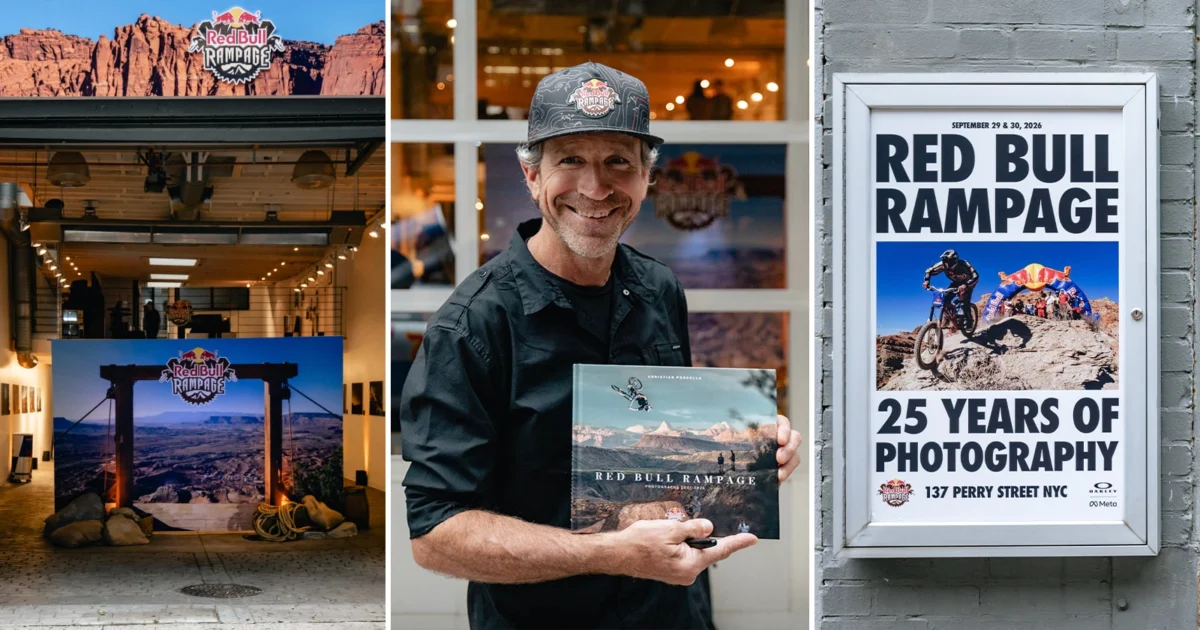
 Ali Ikhwan
  Nila Kartika Wati
  Ammar Sabilarrohman