
 By Azzam Bilal Chamdy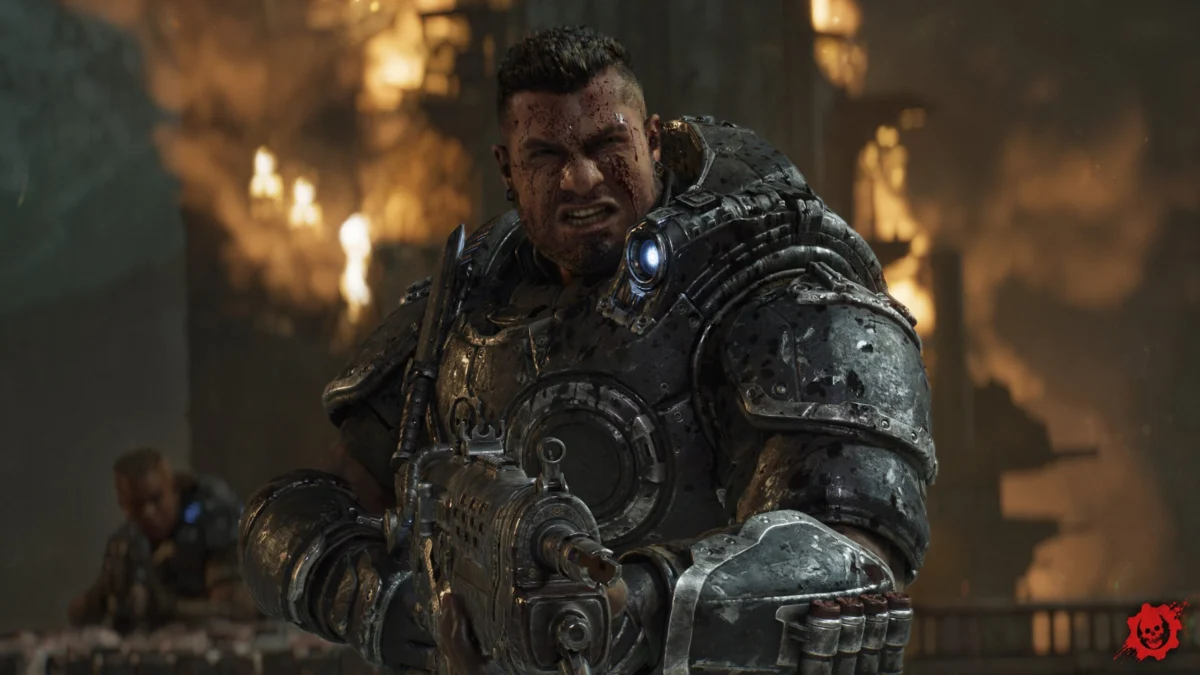
As the gaming industry pushes toward increasingly photorealistic, dense, and expansive open-world experiences, the constraints of console hardware have become a focal point of technical debate. For the Xbox Series S—Microsoft’s entry-level, budget-friendly console—the challenge of keeping pace with high-end, demanding titles has long been a point of contention. However, recent insights into the development of Gears of War: E-Day reveal a breakthrough that may redefine how developers manage limited hardware resources. By effectively treating the console’s high-speed NVMe SSD as a secondary tier of system memory, developer The Coalition is proving that software ingenuity can bridge the gap between mid-range hardware and high-end ambition.
The Memory Bottleneck: The Challenge of the Series S
At the heart of the Xbox Series S is a technical compromise. While it shares the same high-speed architecture as the flagship Series X, it operates with a reduced memory pool: 10GB of GDDR6 RAM, compared to the Series X’s 16GB. For modern game engines, which rely on streaming massive textures, complex geometry, and high-fidelity assets, this 10GB limit is a severe bottleneck.
As Gears of War: E-Day targets a high-fidelity visual standard consistent with the franchise’s legacy, the development team faced a daunting reality: the environments were simply too dense to fit entirely within the available RAM. For years, the industry standard for handling memory overflow has been to reduce texture quality or cull geometry—sacrificing the player’s visual experience to ensure the game remains stable. The Coalition, however, opted for a more sophisticated, engineering-led approach, co-developed with the Xbox Advanced Technology Group (ATG).
A Chronology of the Innovation
The journey toward this breakthrough began as the team at The Coalition grappled with the specific environmental fidelity requirements of E-Day.
- Phase One: Identifying the Wall. During the early stages of engine development, the team recognized that the memory footprint for their next-gen assets exceeded the available headroom on the Series S. Standard optimization techniques were insufficient to maintain the desired visual density.
- Phase Two: The Collaboration. Realizing the hardware ceiling was fixed, The Coalition engaged the Xbox Advanced Technology Group to explore unconventional memory management. The goal was not to make the hardware faster, but to make the existing hardware "smarter" about how it handles data.
- Phase Three: The SSD Swap Protocol. Through iterative testing, the engineers developed a heuristic-driven system that allowed the game engine to treat the console’s NVMe storage as an extension of the system memory.
- Phase Four: Validation and Integration. By the time the E-Day reveal was prepared, the system had been refined to a point where the game could dynamically swap "cold" (idle) data to the SSD, leaving the "hot" (active) data in the precious GDDR6 RAM.
The Tech Under the Hood: SSD as RAM
To understand why this is a revolutionary step for console development, one must look at how data is typically processed. RAM is designed for near-instantaneous access, whereas storage—even the lightning-fast NVMe drives found in the Xbox Series consoles—is significantly slower by comparison.
However, modern NVMe SSDs are not merely static storage; they contain their own controllers and internal buffers. By utilizing these as a "second tier" of memory, The Coalition has implemented a sophisticated paging system. The engine continuously analyzes data access patterns. Using advanced heuristics, the software determines which assets are currently critical for the rendering pipeline and which can be safely moved to the SSD without causing stuttering or "pop-in."
"The benefit is that, in exchange for a couple of gigabytes of storage on the SSD, you can gain about a gigabyte of usable system memory," according to analysis by Digital Foundry. While a single gigabyte might sound modest to a PC gamer with 32GB of RAM, in the restricted ecosystem of the Series S, it represents a nearly 10% increase in usable memory—a margin that often makes the difference between a game that hits its target resolution and one that must be heavily compromised.
Supporting Data and Industry Context
The technique of swapping data between tiers of memory is not entirely new to computing. Modern operating systems, including macOS and Windows, have long utilized "virtual memory" or swap files to manage high-demand applications. What makes Gears of War: E-Day notable is the implementation of this logic within the real-time, low-latency environment of a AAA console game.
.jpg?width=570&quality=85&format=jpg&dpr=3)
In the console space, this development is a response to a looming hardware crisis. With the global semiconductor market still struggling with memory shortages—partially driven by the explosion of AI-related hardware demand—the current console generation is expected to last longer than the traditional five-to-seven-year cycle. As the hardware ages, the software must become more efficient. The Coalition’s work provides a template for other developers to extend the viability of the Series S, ensuring that blockbuster titles like the upcoming Fable or the highly anticipated GTA 6 have a roadmap for optimization on Microsoft’s entry-level hardware.
Beyond the RAM: Aesthetic and Narrative Upgrades
While the technical engineering behind E-Day is the headline, the developer has not neglected the core "Gears" experience. One of the primary pillars of the Gears franchise has always been its visceral, high-impact violence. However, as the series matured, the developers noted a potential "desensitization" among the fanbase.
To counter this, The Coalition invested heavily in a revamped gore and dismemberment engine. By prioritizing the physics and visual fidelity of combat, they have sought to re-establish the weight and consequence of the game’s signature weaponry. This investment is not just aesthetic; it reflects a broader design philosophy of ensuring that every element of the game—from the memory management to the particle effects—is optimized to provide the most immersive experience possible.
Implications and Internal Challenges
Despite the technical triumph, the atmosphere at The Coalition is complex. The studio is currently operating within a broader, often turbulent, restructuring of Microsoft’s gaming division. While the innovation showcased in Gears of War: E-Day proves the studio’s technical prowess, it is occurring against a backdrop of industry-wide anxiety. Reports have surfaced that staff at The Coalition are concerned about the long-term stability of the studio, with fears of layoffs looming as the project nears completion.
This juxtaposition—the creation of cutting-edge technology that effectively solves a major hardware constraint, paired with the instability of the workforce creating it—highlights the current state of the gaming industry. Developers are expected to push the boundaries of what is possible, yet the human cost of these technical feats is increasingly visible.
Conclusion: The Legacy of E-Day
Gears of War: E-Day is shaping up to be a technical landmark. By breaking the memory barrier of the Xbox Series S, The Coalition has provided a vital lesson in engine optimization that will likely influence Xbox development for years to come.
As we look toward the future of the current console generation, the importance of "smart" software—code that maximizes hardware rather than merely demanding more of it—cannot be overstated. The ability to trade storage for memory, to utilize advanced heuristics to manage real-time assets, and to push visual fidelity despite restrictive hardware is the hallmark of a world-class studio. Whether this innovation serves as a blueprint for the next generation of games or as a final, brilliant swan song for the current hardware limitations, it is a testament to the ingenuity that continues to define the medium of interactive entertainment.
For the players, the result is clear: high-fidelity experiences that punch above their weight, ensuring that the Gears franchise remains at the cutting edge, regardless of the hardware it calls home.
 rifanmuazin
  Ali Ikhwan
  Reynand Wu