
 By Pevita Pearce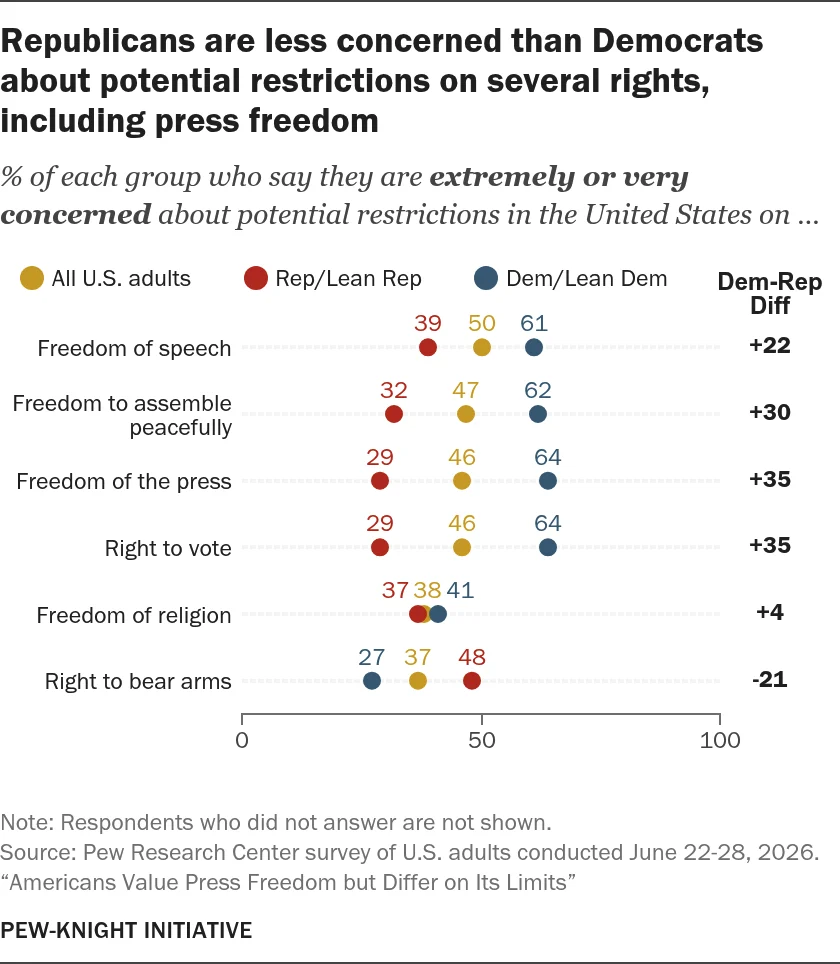
WASHINGTON — In a high-stakes legal clash between the executive branch and the American media, a federal judge ordered the Trump administration on Thursday to temporarily restore White House press credentials to reporters from CNN, MS NOW, and Politico. The outlets had rushed to file a joint federal lawsuit following a sudden administrative decision last week that barred their correspondents from entering White House grounds.
The emergency injunction has instantly escalated ongoing national debates over the boundaries of the First Amendment, the role of journalism in contemporary politics, and the widening partisan chasm regarding public trust in major media institutions. As the legal battle unfolds, it intersects with sweeping changes in the corporate media landscape—including a major antitrust settlement involving Paramount and Warner Bros. Discovery—and highlights stark ideological divisions among Americans over the security of their fundamental democratic rights.
Main Facts
The core of the legal controversy stems from a sweeping administrative directive issued by the Trump administration last week, which revoked the White House press credentials of journalists representing CNN, MS NOW, and Politico. In response, the three news organizations swiftly initiated joint legal action, arguing that the blanket ban represented an unconstitutional retaliation against protected newsgathering activities and violated their First Amendment rights.
On Thursday, a federal judge granted the plaintiffs’ request for temporary relief, issuing an order requiring the administration to reinstate access while the broader lawsuit proceeds through the court system.
The ban has catalyzed a fierce national dialogue about the health of press freedom in the United States. Recent empirical data underscores the deep political polarization surrounding the issue. According to a June 2026 survey conducted by the Pew-Knight Initiative, 44% of U.S. adults believe that the press has grown less free under the second Trump administration. Conversely, 12% contend that media freedom has increased, 26% perceive no discernible change, and 17% remain undecided.
These national figures mask a profound partisan divide. An overwhelming 72% of Democrats and Democratic-leaning independents assert that the press has lost ground since Trump returned to office. By contrast, only 15% of Republicans and Republican leaners share that view, reflecting fundamentally divergent baseline assumptions about media integrity and political accountability.
Chronology
To understand how the current standoff developed, it is necessary to trace the sequence of events leading up to Thursday’s judicial intervention and the concurrent corporate realignments shaping the American news industry:
- March 2025: Pew Research Center publishes polling data highlighting deep-seated partisan distrust of major news organizations, revealing that majorities of Republicans distrust outlets like CNN.
- June 2026: The Pew-Knight Initiative conducts a comprehensive survey examining American attitudes toward press freedom, freedom of speech, assembly, voting rights, and the right to bear arms. The findings reveal that 46% of U.S. adults are extremely or very concerned about potential restrictions on press freedom.
- Mid-September 2026: Paramount reaches a significant settlement in an antitrust lawsuit brought by a coalition of states, clearing the path for its acquisition of Warner Bros. Discovery. The agreement mandates the creation of an independent editorial board to oversee two of the nation’s premier news networks, CNN and CBS News.
- Week of September 20, 2026: The Trump administration officially bans reporters from CNN, MS NOW, and Politico from White House grounds, citing what the administration terms "two years of unfair and negative coverage."
- September 24, 2026: Following a rapid legal filing by the targeted news organizations, a federal judge issues an emergency order requiring the Trump administration to temporarily restore White House access to CNN, MS NOW, and Politico pending further litigation.
Supporting Data
The legal and political controversy does not occur in a vacuum; it is supported by extensive empirical research compiled by the Pew Research Center and the Pew-Knight Initiative, shedding light on how citizens view institutional trust, media consolidation, and constitutional protections.
Partisan Trust and Media Sources
The justification offered by the White House for revoking press credentials finds strong resonance among the administration’s political base. Public opinion data demonstrates that conservative distrust of the banned outlets is deeply entrenched.
In a March 2025 Pew Research Center survey tracking political gaps in news consumption, Republicans were vastly more likely to express distrust than trust in CNN, MS NOW, and Politico. Most notably, 58% of Republicans explicitly stated that they distrusted CNN as a news source. This structural distrust provides the backdrop for the administration’s punitive actions, which resonate with constituents who view mainstream media coverage as inherently biased.
Corporate Consolidation: Paramount and Warner Bros. Discovery
Adding another layer of complexity to the media ecosystem, Paramount recently finalized a settlement in a multi-state antitrust lawsuit, allowing its acquisition of Warner Bros. Discovery to move forward. As a condition of the settlement, Paramount agreed to establish an independent editorial board designed to oversee two journalistic giants: CNN and CBS News.
This corporate restructuring carries significant weight given the massive reach of these networks. According to a 2025 Pew Research Center media tracker survey:

- Roughly one-third of U.S. adults (33%) reported regularly getting their news from CNN.
- Three-in-ten adults (30%) stated they regularly relied on CBS News.
- In total, nearly half of all Americans (46%) consume news regularly from at least one of these two major outlets.
The creation of an independent editorial board is intended to safeguard journalistic integrity across these sprawling networks, even as questions of corporate influence, editorial independence, and government scrutiny remain at the forefront of public debate.
Public Concern Over Constitutional Rights
The broader climate of civic anxiety is captured in the Pew-Knight Initiative’s June 2026 survey, which mapped American concerns regarding potential restrictions on core democratic rights:
- Freedom of Speech: 50% of U.S. adults are extremely or very concerned about potential restrictions (61% of Democrats vs. 39% of Republicans; a 22-point gap).
- Freedom to Assemble Peacefully: 47% are extremely or very concerned (62% of Democrats vs. 32% of Republicans; a 30-point gap).
- Freedom of the Press: 46% are extremely or very concerned (64% of Democrats vs. 29% of Republicans; a 35-point gap).
- Right to Vote: 46% are extremely or very concerned (64% of Democrats vs. 29% of Republicans; a 35-point gap).
- Freedom of Religion: 38% are extremely or very concerned (41% of Democrats vs. 37% of Republicans; a 4-point gap).
- Right to Bear Arms: 37% are extremely or very concerned (27% of Democrats vs. 48% of Republicans; a -21-point gap).
These figures illustrate that while anxiety over press freedom is shared by nearly half the country, views on which constitutional rights are most vulnerable remain starkly polarized along party lines.
Official Responses
The immediate fallout from the White House ban and the subsequent judicial ruling has drawn sharp commentary from the administration, media advocates, and legal scholars alike.
When defending the decision to bar reporters from CNN, MS NOW, and Politico last week, President Trump pointed directly to what he characterized as sustained, hostile reporting. In remarks to reporters, Trump justified the exclusion by citing "two years of unfair and negative coverage," framing the measure as a legitimate response to what he views as partisan attacks disguised as journalism rather than objective newsgathering.
Legal representatives for the media outlets, however, framed the federal judge’s temporary injunction as a vital victory for the rule of law and the constitutional framework governing executive transparency. In joint statements following the ruling, representatives for CNN, MS NOW, and Politico emphasized that the executive branch cannot lawfully weaponize physical access to the White House to punish news organizations for editorial stances or investigative reporting that displeases the administration.
Press freedom watchdogs have similarly hailed the injunction as an essential check on executive power, warning that tolerating the exclusion of specific journalistic outlets sets a dangerous precedent for future administrations of any political persuasion.
Implications
As the legal proceedings continue to unfold in federal court, the ramifications of this case extend far beyond the daily logistics of White House press briefings.
First, the litigation is poised to test the legal boundaries of executive discretion regarding press credentials. While the White House historically maintains wide latitude in managing its physical workspace and briefing room capacity, courts must balance those administrative privileges against the First Amendment rights of journalists to gather news free from viewpoint-based government discrimination.
Second, the episode highlights the deepening crisis of institutional legitimacy in the United States. With public trust in journalism deeply fractured along partisan lines—where nearly three-quarters of Democrats view press freedom as actively diminishing while a substantial bloc of Republicans views major networks as fundamentally untrustworthy—the media functions less as a shared source of civic reality and more as an ideological battleground.
Finally, the concurrent consolidation of media giants like Paramount and Warner Bros. Discovery, paired with the implementation of independent editorial boards, signals an evolving corporate and regulatory environment for American newsrooms. As economic pressures force further industry consolidation, the dual pressures of corporate oversight and direct political hostility suggest that independent journalism will continue to navigate a turbulent and highly polarized landscape for the foreseeable future.
 Nila Kartika Wati
  Nana Wu