
 By Reynand Wu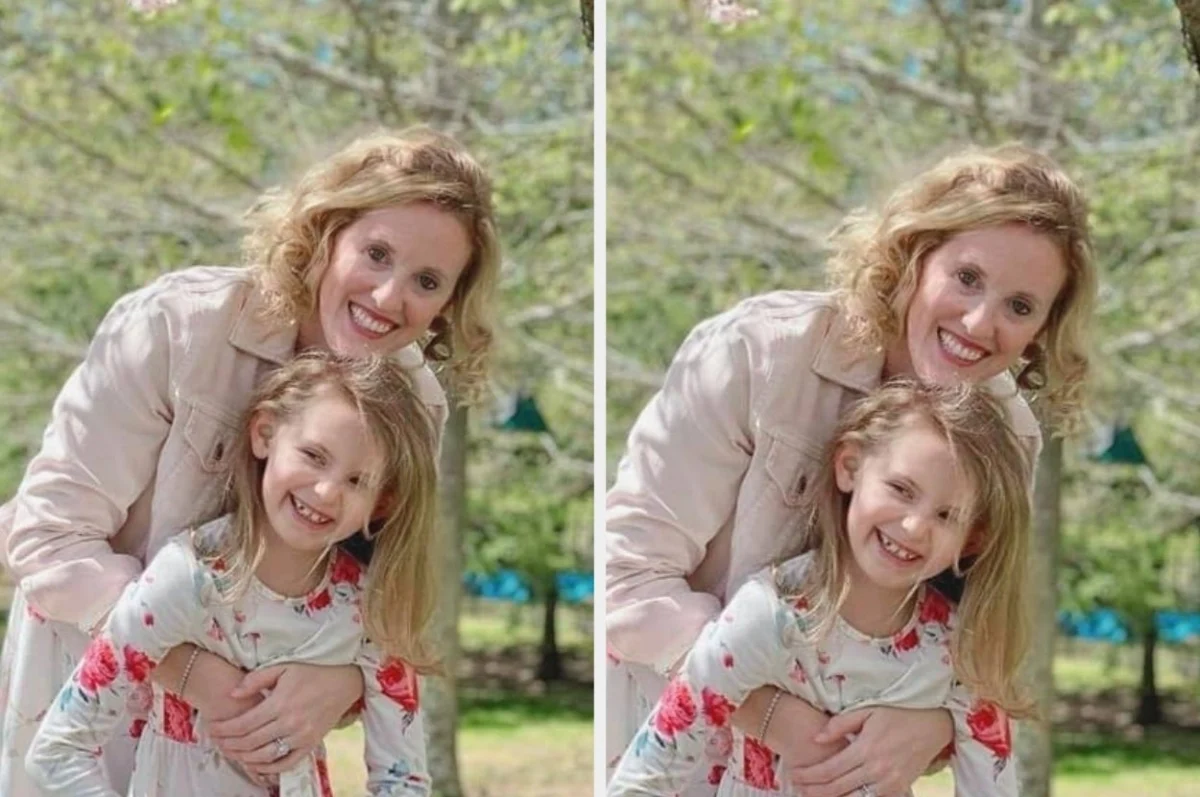
The labels we place on children—"difficult," "defiant," or "stubborn"—often serve as a psychological buffer for parents navigating the chaotic waters of child-rearing. However, for author and advocate Amanda Bacon-Davis, these labels were not just inadequate; they were a dangerous misunderstanding of a child’s cry for help.
Bacon-Davis, who spent years locked in a grueling, daily battle with her daughter’s escalating behavioral outbursts, has emerged from the experience with a sobering message for caregivers: what many interpret as "acting out" is frequently an unfiltered manifestation of severe anxiety. Her journey, which began in the aftermath of a traumatic divorce and culminated in a harrowing mental health crisis, offers a critical re-examination of how we approach childhood emotional regulation.
The Genesis of Trauma: A Foundation of Instability
The roots of the crisis were sown early. Just four months into her pregnancy, Bacon-Davis’s marriage ended, forcing her to reconstruct her life while navigating a high-conflict custody battle. The subsequent years were defined by the deep, systemic trauma of legal proceedings designed to protect her daughter from an unstable paternal environment.
While the primary caregiver was acutely aware of her own stress, she, like many parents in similar circumstances, operated under the assumption that her daughter—being only a toddler—was too young to internalize the trauma. This is a common cognitive trap: the belief that "little ones" are resilient enough to bypass the psychological fallout of household instability.
By age two, however, the symptoms were undeniable. The child began to exhibit profound separation anxiety, manifested in physical resistance to the court-ordered custody schedule. What began as weeping and protest eventually evolved into deep-seated anger and exhaustion. It took five years of persistent, unsustainable stress before the custody schedule was modified to a more stable, bi-weekly arrangement, but the neurological pathways of anxiety had already been deeply ingrained.
Chronology of a Crisis: The Escalation of School Refusal
As the child reached kindergarten, the anxiety shifted its focus from custody transitions to the classroom. "School refusal," a phenomenon often misunderstood by educators and parents alike, began to take hold.
For four years, the school parking lot became a daily theater of war. Bacon-Davis was repeatedly advised by professionals to force the child into the building, a tactic rooted in the traditional "tough love" philosophy: if you don’t make them go now, they will never go.
"For four years, every day was a do-or-die battle," Bacon-Davis reflects. The arrival of the COVID-19 pandemic only exacerbated the situation, as the classroom moved to a digital interface that the child would habitually slam shut in frustration. The behavioral repertoire began to expand from mere refusal to physical violence: hitting, biting, head-slamming, and even running away from home. These were not the actions of a "naughty" child; they were the desperate, somatic responses of an eight-year-old girl whose nervous system was perpetually in a state of fight-or-flight.
The Breaking Point: "I Just Want to Die"
The turning point occurred in January 2022. During a particularly violent struggle in the school parking lot, the child slammed her head against the seat and uttered the words no parent should ever hear: "I just want to die."
The impact of that statement was seismic. It stripped away the last of the mother’s illusions that this was a behavioral issue that could be corrected with discipline. It was, instead, a profound medical and psychological emergency.
Following the incident, the family engaged a mobile crisis unit. Unlike previous professional interventions that prioritized attendance over emotional safety, the crisis team met the child exactly where she was. They spent two hours in the freezing cold simply talking to her, validating her experience, and allowing her nervous system to return to a baseline of safety. This encounter shifted the paradigm: the child was not "misbehaving"—she was communicating.
Clinical Perspectives on Childhood Anxiety
The medical community is increasingly moving toward a "neurobiological" view of childhood defiance. According to experts in pediatric mental health, anxiety in children often presents as externalizing behaviors rather than the quiet, internal worry seen in adults.
The Physiology of the Outburst
When a child is in a state of high anxiety, the prefrontal cortex—the area of the brain responsible for rational thought, impulse control, and emotional regulation—effectively goes "offline." In this state, the amygdala, or the brain’s "alarm system," takes full control.
Threats, bribes, or logical arguments are ineffective during this time because the child is biologically incapable of processing them. Bacon-Davis’s experience confirms this: "My daughter simply cannot hear us when she’s experiencing anxiety. What she needs is compassion and calming reassurance."
The "Broken Arm" Analogy
To help her daughter understand her own condition, Bacon-Davis utilized a metaphor: the "internal boo-boo." By framing anxiety as a physical injury—something that causes real pain even if it isn’t visible—she helped strip away the shame associated with the outbursts. This allowed the child to view the psychiatrist and the medication (a mood stabilizer) not as punishments, but as the "cast" for her internal injury.
Implications for Modern Parenting and Education
The lessons gleaned from this ordeal have far-reaching implications for parents, teachers, and school administrators.
- Redefining "Misbehavior": Parents must learn to distinguish between intentional defiance and a nervous system in distress. If an outburst is recurring and resistant to standard discipline, it is likely a symptom of an underlying emotional or physiological struggle.
- The Failure of "Tough Love": The traditional insistence on forcing children into "scary" environments (like the classroom) without first addressing the underlying anxiety can lead to secondary trauma and increased resentment.
- Collaborative Care: The most successful outcomes were achieved when school staff, mental health professionals, and parents aligned to support the child’s emotional regulation rather than merely enforcing school attendance policies.
Moving Toward Compassionate Intervention
Today, the daughter of Amanda Bacon-Davis is managing her anxiety with significantly greater success. The transition from "fighting with" to "fighting for" her daughter has not only improved the child’s quality of life but has restored the bond between them.
For other families currently standing in that dark, cold parking lot, the message is clear: You are not alone. When a child’s behavior feels impossible, the solution is often not more discipline, but more profound empathy. By shifting the lens through which we view childhood outbursts—from one of judgment to one of medical curiosity—we can move away from the cycle of battle and toward a path of healing.
Bacon-Davis, now a vocal advocate for the mental health community and author of This Thing Has A Name, continues to urge parents to trust their intuition. If a child’s behavior is baffling, it is a signal. And in the language of the child, that signal is asking for the safety to be understood.
 Ammar Sabilarrohman
  rifanmuazin
  Suro Senen