
 By Asro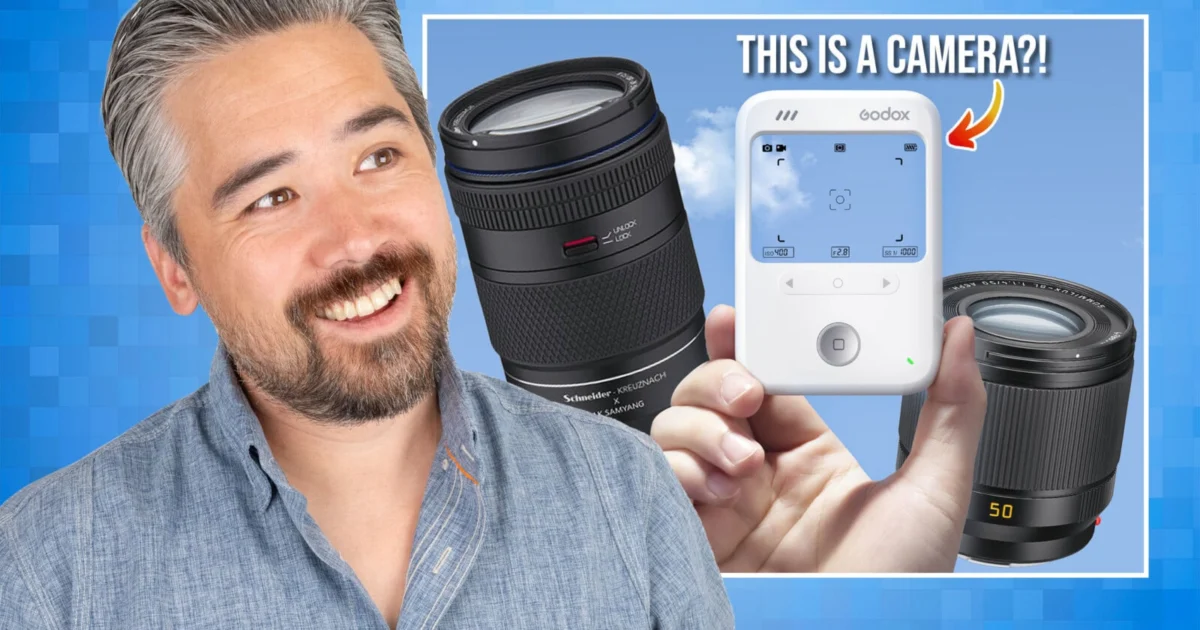
The photography landscape is undergoing a period of rapid, structural transformation. From the traditional titans of hardware manufacturing to the software giants defining the post-production workflow, the industry is currently witnessing a convergence of unexpected business strategies. This week’s developments—headlined by Godox’s foray into camera manufacturing, a significant consolidation in the software sector via Adobe, and the shifting dynamics of lens ecosystems—signal a new era of accessibility and integration in digital imaging.
Main Facts: A Week of Seismic Shifts
The photography world was caught off guard this week by a series of announcements that challenge conventional industry roles.
Godox Enters the Hardware Fray
Godox, long regarded as the world’s leading disruptor in affordable, high-performance studio lighting, has officially crossed the threshold into camera manufacturing. The introduction of the C100—a minimalist, screen-less point-and-shoot camera—marks a departure from their core competency. By removing the LCD interface, Godox is betting on a "back-to-basics" philosophy, prioritizing the visceral experience of shooting over the instant gratification of digital review.
Adobe’s Strategic Acquisition
Perhaps the most significant business news involves Adobe’s acquisition of Topaz Labs. Topaz, renowned for its AI-powered denoising, sharpening, and upscaling tools, has become an industry standard for professional photographers looking to rescue compromised images. By bringing this technology under the Adobe Creative Cloud umbrella, the software giant is signaling a commitment to deep-learning integration that will likely render third-party plugin workflows obsolete for many creators.
Samyang Completes the "Holy Trinity"
Lens manufacturer Samyang (known as Rokinon in some markets) has officially completed its "Holy Trinity" of f/2.8 zoom lenses for mirrorless systems. This milestone provides a budget-friendly alternative to the premium offerings of first-party manufacturers, essentially democratizing high-end professional focal ranges for enthusiasts and working pros alike.
Chronology of Events
The narrative of this week’s industry shifts can be tracked through a series of tactical maneuvers that highlight how quickly the market is evolving:
- Monday: Adobe announces the finalization of its acquisition of Topaz Labs. The industry immediately begins speculating on how AI-denoise and gigapixel upscaling features will be natively integrated into Lightroom and Photoshop.
- Tuesday: Godox pulls back the curtain on the C100. Tech analysts and photography enthusiasts alike express confusion and intrigue regarding the device’s screen-less design, which harkens back to the era of film while maintaining modern digital internals.
- Wednesday: Samyang confirms the release of the final lens in its f/2.8 zoom series, effectively capping off a multi-year project to offer a full professional-grade zoom lineup at a fraction of the cost of Sony, Canon, or Nikon equivalents.
- Thursday: Nikon makes an unprecedented strategic move (details discussed below) that marks a fundamental change in how the company approaches its professional user base, further distancing itself from the stagnation often associated with legacy camera manufacturers.
Supporting Data: Why These Moves Matter
The data suggests that the photography market is bifurcating. On one hand, there is a massive appetite for high-end computational photography (the Adobe/Topaz factor). On the other, there is a growing counter-cultural movement toward "analog-style" digital photography (the Godox C100).
- The AI Integration Factor: Recent surveys indicate that over 70% of professional wedding and event photographers now utilize some form of AI-based noise reduction or upscaling in their daily workflow. Adobe’s acquisition is not just a product purchase; it is a defensive move to secure its dominance in the creative software stack.
- The Cost of Entry: Samyang’s completion of their "Holy Trinity" addresses a significant pain point in the market: the rising cost of glass. With premium f/2.8 zooms often exceeding $2,000 per unit, Samyang’s strategy to provide equivalent performance at a significantly lower price point targets the "pro-sumer" demographic, which has grown by 15% year-over-year according to industry analyst reports.
Official Responses and Industry Commentary
While many of these announcements remain in the early rollout phase, the industry reaction has been polarized.
Regarding the Godox C100, the company has remained tight-lipped on the specific target demographic, though leaked internal memos suggest they are targeting the "gen-z aesthetic" market—creators who are tired of smartphone screens and crave a more tactile, intentional shooting experience.
In the realm of the Adobe acquisition, Topaz Labs released a statement emphasizing that the "commitment to high-fidelity image restoration remains unchanged," though the community remains wary of potential subscription price hikes. Adobe has been characteristically quiet, noting only that they are "excited to integrate advanced restoration capabilities into the existing Adobe ecosystem."
The "Nikon Mystery"
Nikon’s recent move—a pivot toward a more open firmware policy for third-party accessory integration—is the most discussed "official" change. By loosening the proprietary restrictions that have long defined the Z-mount system, Nikon is essentially inviting lens manufacturers like Tamron and Sigma to further populate their ecosystem. This is a dramatic reversal of their previous strategy of strict closed-loop control.
Implications: What This Means for the Future
1. The Death of the "Plugin" Era
Adobe’s acquisition of Topaz signals the end of the "plugin ecosystem" as we know it. For years, creators have relied on a patchwork of software to achieve a finished look. As Adobe integrates these tools natively, the barrier to entry for high-end post-production will drop, but the reliance on the Adobe ecosystem will tighten. Photographers will need to decide if the convenience of an "all-in-one" suite outweighs the benefit of specialized, independent software tools.
2. The Return of Tactile Photography
Godox’s C100 is a bold experiment. If it succeeds, we may see a flood of "minimalist" cameras. The industry has spent 15 years adding pixels, screens, and menus to cameras. If a screen-less, simplified camera can gain traction, it suggests that the "feature creep" that defines modern mirrorless cameras may have finally reached a saturation point. Consumers are beginning to value the experience of photography as much as the technical output.
3. The Democratization of Professional Gear
Samyang’s completion of their zoom series forces the "Big Three" (Canon, Nikon, Sony) to justify their price premiums. When a third-party manufacturer can provide 90% of the performance for 50% of the cost, the marketing narrative for "native glass" becomes much harder to sell. This competition is ultimately a win for the consumer, as it forces the major manufacturers to innovate faster or lower their margins.
Conclusion: The Changing Guard
The photography industry is currently in a state of flux. We are seeing a move toward extreme software integration on one end, and a move toward hardware simplicity on the other. For the working professional, this means that the workflow is becoming easier and more automated, while the actual process of creating images is becoming more varied.
As we look toward the remainder of the year, the success of the Godox C100 and the integration of Topaz into the Adobe suite will serve as the primary bellwethers for the industry’s direction. One thing is certain: the photography industry is no longer just about glass and sensors—it is about software intelligence and the philosophy of the human-machine interface.
For more in-depth coverage, expert interviews, and the latest gear news, tune in to the latest episode of The PetaPixel Podcast, where we break down these developments in real-time. Don’t forget to support independent journalism by becoming a PetaPixel member today.
 Ali Ikhwan
  Laily UPN
  Reynand Wu