
 By Iffa Jayyana
The landscape of 3D artistry and visual effects has shifted significantly this week as Maxon, the industry-leading developer of professional-grade creative software, announced the global rollout of its 2027.0 release cycle. This comprehensive update spans the entire Maxon ecosystem—Cinema 4D, ZBrush, Redshift, Red Giant, and Autograph—representing a concerted effort by the company to streamline the complex pipelines that define modern high-end production.
For professionals operating in the realms of motion graphics, visual effects (VFX), and character sculpting, the 2027.0 release is more than a standard version bump; it is a structural evolution designed to eliminate technical bottlenecks. By prioritizing simulation speed, environment density, and workflow integration, Maxon is signaling a transition toward a more "artist-first" architecture, where the software handles the computational heavy lifting, leaving creators free to focus on aesthetic decision-making.
The Core Pillars of the 2027.0 Release
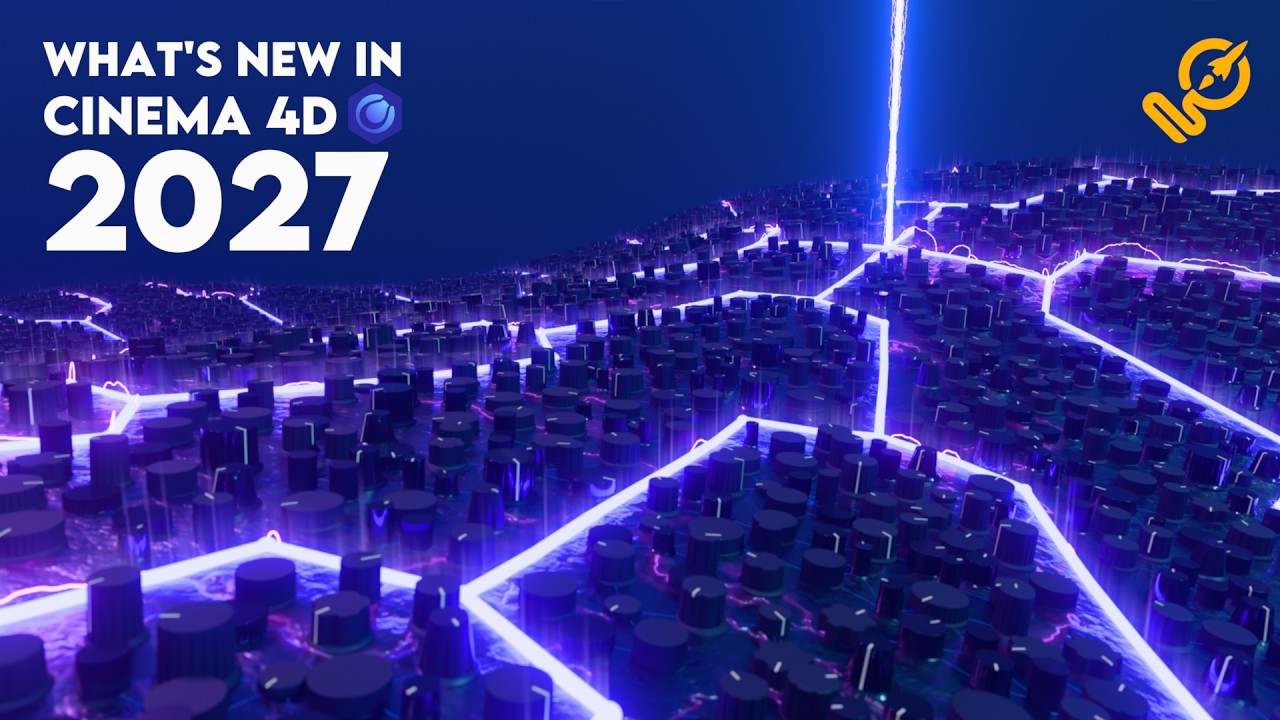
At the heart of the 2027.0 update is the long-awaited arrival of a native, robust Scatter System within Cinema 4D. For years, 3D artists have relied on third-party plugins or complex, custom-built node networks to achieve what is now a native, intuitive feature. The ability to populate massive, detailed landscapes with vegetation, debris, or intricate crowds is no longer a "pro-only" challenge but a core component of the C4D workflow.
Beyond the scattering tools, the introduction of "Liquid FX" marks a turning point for the simulation engine. By automating the generation of secondary fluid elements—such as bubbles, foam, and spray—Maxon is addressing a major pain point in simulation workflows. Previously, these realistic details required separate, computationally expensive simulation passes; now, they are generated in tandem with the primary fluid body, providing a massive boost to efficiency for technical directors and motion designers alike.
A Chronology of Innovation: From C4D to the 2027 Ecosystem
To understand the weight of these updates, one must look at the recent trajectory of Maxon’s development cycle.

- Early 2024: Maxon begins aggressively integrating generative AI capabilities into its software, specifically enabling third-party chatbot support (ChatGPT/Claude) to assist with scripting and technical troubleshooting within Cinema 4D.
- Late 2024: The company doubles down on its mobile initiative, pushing the Cinema 4D for iPad beta into the hands of a select group of industry professionals to test the feasibility of high-end modeling on a portable tablet interface.
- Early 2025: Beta testing of the new simulation core begins, with a focus on fluid dynamics and particle interaction.
- Current Date (2027.0 Release): The culmination of these efforts hits the market. The Scatter System and Liquid FX emerge from months of internal testing, while ZBrush and Redshift receive targeted optimizations to keep pace with the increasing demands of real-time rendering and high-poly sculpting.
The progression shows a clear roadmap: Maxon is attempting to consolidate the "third-party ecosystem" into the software itself, aiming to make Cinema 4D a "one-stop-shop" that reduces the need for external tools and middleware.
Supporting Data: Why Efficiency Matters
The professional 3D market is currently defined by the need for speed. In an era where streaming services and social media demand high-quality content at an unprecedented pace, the time an artist spends "waiting" for a simulation to bake or a frame to render is direct capital loss.
According to industry feedback, the new Scatter Generator drastically reduces the time required to build dense scenes. By utilizing the existing MoGraph toolset—the "secret sauce" of Cinema 4D—artists can now use familiar Fields and Effectors to manipulate thousands of objects simultaneously. This leverage of existing, optimized toolsets means that users do not need to undergo a massive learning curve to implement these new features.
Furthermore, the improvements in Redshift, Maxon’s primary rendering engine, are specifically tuned to provide faster feedback loops. In high-stakes production, the ability to see a near-final render in seconds rather than minutes is the difference between meeting a deadline and missing it. The 2027.0 update refines the GPU-accelerated ray tracing paths, ensuring that as scene complexity increases—due to the new scatter and fluid tools—the rendering speed remains stable.
Official Perspectives: The Vision Behind the Code
Maxon’s leadership has consistently framed these updates as an attempt to democratize complex visual storytelling. In official communications accompanying the release, the company highlighted that the 2027.0 suite was developed based heavily on community feedback.

"We are listening to the artists who build the worlds we see on screen," stated a representative during the rollout. The decision to integrate the Scatter System natively was driven by data showing that a significant percentage of C4D users were routinely switching to competitors or expensive plugin suites for landscape generation. By bringing this functionality in-house, Maxon is attempting to retain its user base by proving that Cinema 4D can be as versatile as any specialized environment-building tool.
Regarding the iPad release, the official stance remains one of cautious optimism. While the mobile version of Cinema 4D is still in beta, the company has confirmed that it is not merely a "companion app" but a fully-fledged extension of the desktop experience, utilizing the same underlying engine. They anticipate a full, stable launch by the end of the year, which could shift the industry standard for on-the-go creative work.
Implications for the Creative Industry
The release of the 2027.0 suite has profound implications for studios and freelancers alike.
1. Lowering the Barrier to Entry
By integrating scattering and fluid simulation into the core software, Maxon is lowering the barrier for entry-level artists to achieve "Hollywood-level" visuals. Small, independent studios can now compete with larger houses because the specialized tools previously reserved for high-budget productions are now standard features in their software package.
2. The End of the "Plugin-Heavy" Pipeline
For years, the professional 3D pipeline has been characterized by a fragile web of plugins. If a new version of Cinema 4D was released, artists often had to wait weeks or months for third-party developers to update their tools. By bringing these features in-house, Maxon is creating a more stable, reliable, and "update-proof" environment.
3. The Future of Mobile Production
The continued development of the iPad version of Cinema 4D suggests that the future of 3D modeling is moving away from the tethered workstation. As mobile processors become increasingly powerful, the ability to sculpt, animate, and scatter assets on a tablet while traveling will likely become a requirement for the modern freelancer.
4. Integration with AI
The recent support for chatbots within the software is a precursor to a larger shift. As generative AI continues to evolve, we can expect Maxon to integrate these tools further into the interface—perhaps moving from simple script-writing assistance to AI-assisted scene generation. The 2027.0 suite is a foundation upon which these future AI integrations will be built.
Conclusion: A New Standard
Maxon’s 2027.0 release cycle is a testament to the company’s ability to evolve in a hyper-competitive market. By focusing on the "big three" needs—environment population, fluid realism, and render speed—Maxon has managed to address the most pressing concerns of its global user base.
As we look toward the remainder of 2027, the focus will undoubtedly shift toward the full release of the iPad application and the potential for even deeper AI integration. However, for now, the 2027.0 suite stands as a formidable update. It provides the tools necessary to build more complex, more realistic, and more efficient worlds than ever before. For the professional artist, the message is clear: the software is no longer just a tool; it is becoming a partner in the creative process, capable of handling the technical drudgery so that the artist can remain focused on the vision.
Whether you are a seasoned veteran of the 3D industry or a designer looking to expand your toolkit into the third dimension, this release offers a compelling reason to revisit the Maxon ecosystem. The 2027.0 update is not just an iteration; it is an invitation to redefine what is possible in digital artistry.
 Jia Lissa
  Nana
Nana  Nana Muazin