
 By Lina Hope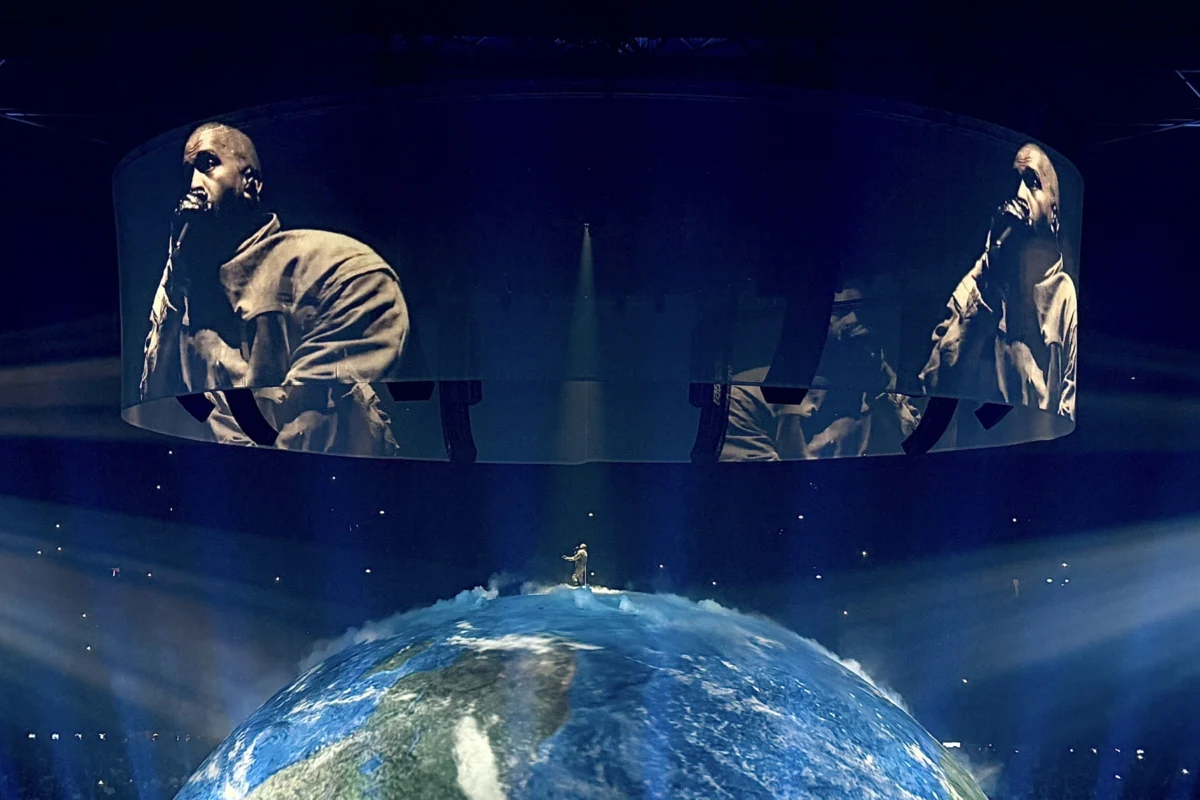
By Industry News Desk
The upcoming Independence Day celebration at San Antonio’s Alamodome has become the epicenter of a heated national debate. Ye, the artist formerly known as Kanye West, is slated to perform at the city-owned venue on July 4, 2026. However, the announcement of the show has been met with immediate and fierce pushback from local leadership, with San Antonio Mayor Gina Ortiz Jones leading a growing chorus of voices demanding that the city rescind its agreement to host the controversial musician.
The Core Conflict: A City Divided
At the heart of the controversy is the intersection of public funding, civic values, and the platforming of artists who have been widely condemned for hate speech. Mayor Gina Ortiz Jones, a Democrat and U.S. Air Force veteran, took to social media on June 20 to declare her firm opposition to the concert.
"I support canceling the @kanyewest concert," the Mayor wrote on X. "Military City USA should not host someone with a record of hate speech and antisemitic comments in a city-funded facility like our Alamodome—not ever, and certainly not on July 4th, our Nation’s 250th birthday."
The sentiment reflects a broader discomfort among local officials regarding the use of taxpayer-supported venues to generate revenue for an artist whose recent history includes praise for Nazi figures and a series of inflammatory, widely denounced antisemitic statements. For the Mayor, the timing is particularly poignant, as she views the hosting of such a figure on the nation’s 250th anniversary as a direct affront to the democratic values that the holiday is intended to honor.
Chronology of the Controversy
The current standoff is the latest chapter in a long-standing pattern of friction between Ye’s touring ambitions and local government resistance.
- June 2025: Ye funds a controversial Super Bowl advertisement that directs viewers to merchandise featuring swastikas, triggering a massive public backlash and sparking calls for a boycott of his commercial endeavors.
- Early June 2026: Ye announces a summer mini-tour, including stops in the United States and abroad. The tour is intended to be his first full-scale concert series of the decade.
- June 4, 2026: Florida Senator Rick Scott issues a formal statement condemning the planned Tampa, Florida, performance. Scott cites the artist’s "vile" remarks and the impact on the state’s large Jewish community as reasons for a necessary cancellation.
- June 6, 2026: Ye performs at the GelreDome in Arnhem, Netherlands, marking one of the few successful dates in his current tour.
- June 20, 2026: San Antonio Mayor Gina Ortiz Jones publicly calls for the cancellation of the July 4th show, setting off a local firestorm regarding the city’s contractual obligations.
Supporting Data and Tour Logistics
The concert, currently scheduled for July 4, has generated significant ticket interest despite the controversy. Tickets remain available via Ticketmaster, with a tiered pricing structure that highlights the high demand for the artist’s rare live appearances. Standard admission tickets start at $127.50, while the "YE – Front Row Experience"—offering seats in the immediate vicinity of the floor-level, globe-shaped stage—is priced at $1,461.25.
The Alamodome, a multi-purpose facility, is capable of accommodating over 70,000 fans for in-the-round configurations, which Ye’s current tour production utilizes. This scale, combined with the taxpayer-funded nature of the facility, is a primary driver of the controversy.
The tour itself is ambitious, spanning multiple continents. The San Antonio date sits between shows in Tampa, Florida (June 26 and 28), and a concert in Tirana, Albania (July 11). Following the European leg of the tour, which includes stops in Madrid and the Algarve, Ye is scheduled to return to the U.S. for a homecoming pair of shows in Chicago on September 3 and 4. However, the track record of this tour has been inconsistent; while he has performed in Mexico City, Los Angeles, Turkey, and Georgia, he has faced outright cancellations in major European markets, including France, Poland, and England.

Official Responses and Political Implications
The backlash against Ye is not confined to San Antonio. The involvement of high-ranking officials like Senator Rick Scott underscores the national political stakes of this issue. Scott’s critique was pointed, characterizing West’s rhetoric as a "slap in the face" to the Jewish community and arguing that taxpayer-funded venues should not be in the business of "subsidizing" hate.
"It is troubling that a stadium supported by taxpayer dollars would openly subsidize an event led by an artist known for pushing this dangerous, hateful rhetoric," Scott stated.
In San Antonio, the Mayor’s stance is framed as a matter of moral leadership. "Standing up to antisemitism is exactly what it takes to achieve a more perfect Union," Ortiz Jones added in her statement. The Mayor’s office has not yet provided details on the legal feasibility of canceling a contract that has already been executed, but the pressure on the Alamodome’s management to reconsider the booking is reaching a fever pitch.
Artistic Output vs. Personal Conduct
The controversy arrives at a time when Ye is attempting to refocus attention on his musical output. On Friday, June 19, he released a deluxe edition of his latest studio album, Bully. The update includes revised mixes of original tracks alongside two new songs: "OK," featuring Don Toliver, and "Mission Control."
For many in the industry, the dichotomy between the artistic success of the album and the artist’s personal conduct presents a difficult dilemma for venue operators and promoters. While the music remains commercially viable and draws large, dedicated crowds, the reputational risk associated with the artist’s public persona has become a significant liability.
Future Implications: Where Do Venues Draw the Line?
The situation in San Antonio serves as a case study for the evolving relationship between stadiums and controversial performers. Historically, venues operated under a "neutral" booking policy, focusing primarily on logistical viability and profitability. However, the rise of heightened civic activism and the influence of social media have empowered public officials to enforce a "values-based" approach to public space usage.
If the San Antonio show is canceled, it would represent a significant escalation in the trend of holding artists accountable for their public behavior through their access to performance spaces. Conversely, if the show proceeds, it will likely be interpreted as an endorsement by the city of the artist’s presence, potentially triggering protests and further political fallout.
As of this writing, there has been no official response from the concert promoters or the Alamodome management team regarding the Mayor’s request. With the July 4th date rapidly approaching, the city remains in a state of uncertainty, weighing the financial benefits of a sold-out stadium event against the social and political cost of hosting a figure who has become a lightning rod for national division.
The outcome of this standoff will likely set a precedent for how American cities navigate the tension between free expression and the standards of conduct expected of those who utilize taxpayer-funded platforms. Whether the concert proceeds as a celebration of Independence Day or is shuttered in the name of civic values remains to be seen.
 Ali Ikhwan
  Suro Senen
  Reynand Wu