
 By Sagoh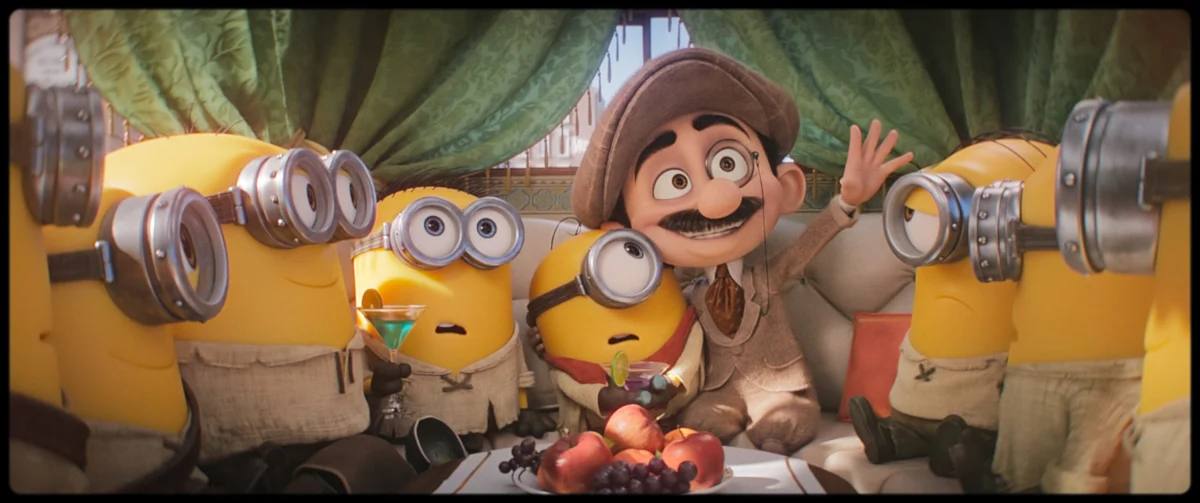
After nearly two decades at the epicenter of the most successful animated franchise in cinematic history, French animator Pierre Coffin found himself at a crossroads. Having co-directed four films within the $5.5 billion-grossing Despicable Me universe—and serving as the unmistakable, manic voice for every single Minion—the creative engine was running on fumes. Following the release of Despicable Me 3, Coffin made an executive decision: he was finished with the franchise. He pivoted toward the Olympics, short-form filmmaking, and high-end advertising, seeking the creative liberation that only smaller, independent projects could provide.
However, the allure of the yellow icons proved difficult to shake. Today, Coffin returns to the director’s chair with Minions & Monsters, a bold, meta-fictional departure for Illumination that explores the dawn of cinema through the eyes of its most chaotic characters.
A Chronology of Creative Exhaustion and Resurgence
The path to Minions & Monsters was anything but linear. Coffin’s career has been defined by a grueling, iterative process. "Each film takes three years, sometimes four when things don’t go as planned," Coffin explained in a candid interview with Variety. "It’s exhausting."
The burnout was compounded by his unique role in the studio. Unlike directors who delegate, Coffin performs every Minion vocal track himself. When scripts evolve during production, he must re-record every line, creating a bottleneck of labor that spans years. By 2017, the exhaustion was absolute.
The turning point occurred three years ago, when Illumination founder Chris Meledandri reached out with a provocative premise: a Minion who decides to produce a monster movie. While Meledandri was focused on the creature-feature angle, Coffin was struck by the simplicity of the word "movie." This single prompt unlocked a narrative floodgate. Coffin, for the first time in the franchise’s history, was granted the creative autonomy to write the film himself—alongside collaborator Bryan Lynch—and steer the project as a solo director. The result is a film that reflects the 1920s transition from silent cinema to the "talkies," providing a backdrop that feels both historic and deeply personal.
The Architecture of Irreverence: A New Era for Illumination
Minions & Monsters follows James, an aspiring auteur, and his sidekicks Henry and Ed, as they attempt to navigate the cutthroat world of 1920s Hollywood. The film functions as a love letter to the industry, drawing inspiration from European émigrés like Fritz Lang and Ernst Lubitsch, who fled to the U.S. to build the foundations of the Golden Age.
The Influence of Silent Pioneers
The 1920s setting was not merely an aesthetic choice but a structural necessity. Coffin notes that the Minions’ physical comedy—the slapstick, the timing, and the expressive physicality—is a direct lineage of silent film giants like Charlie Chaplin, Buster Keaton, and Harold Lloyd. "The period allowed me to do two things," Coffin reflects. "I could introduce new Minions in a new context, and I could pay homage to the people who invented a certain kind of visual comedy."
The "Star Wars" Connection and Personal History
Coffin’s journey into the craft of filmmaking began as a child in Detroit. At age 10, he witnessed Star Wars in a theater, an experience that fundamentally altered his perception of what cinema could achieve. This fascination with the mechanics of blockbusters eventually brought him full circle; Minions & Monsters features a cameo from George Lucas himself. After learning that Meledandri was acquainted with Lucas’s wife, the team secured the legendary director’s involvement within a week, adding a layer of meta-referential depth to the film’s narrative.
Supporting Data: The Franchise at a Glance
The Despicable Me and Minions franchise is an anomaly in modern box office history. With six films released to date, the brand has grossed over $5.5 billion worldwide.

| Metric | Details |
|---|---|
| Total Franchise Gross | > $5.5 Billion |
| Primary Director (Minions) | Pierre Coffin |
| Production Cycle | 3–4 years per film |
| Core Vocal Talent | Pierre Coffin (all Minions) |
| New Release Format | Solo-directed by Coffin |
The success of the franchise relies on a carefully calibrated balance between child-friendly gags and sophisticated, adult-oriented references. Coffin employs a "Where’s Waldo?" approach to animation, layering the background of every frame with visual jokes. "The first level of reading has to be clear for children," Coffin says. "But there can be a second or third level for adults. That balance is hard."
Official Perspectives: The Language of the Minions
One of the most frequent questions surrounding the franchise is how a non-verbal, gibberish-based language maintains global appeal. Coffin is adamant that translation is the enemy of the "Minion magic."
"I called a meeting with Universal teams from different countries and told them: you can’t [translate the dialogue]," Coffin stated. He maintains a specific glossary of sounds that mix various languages—Japanese, Spanish, Italian, and French—but emphasizes that context and intonation dictate the meaning. He spends roughly three weeks post-production refining the "lyrics" of the Minions to ensure they fit local sensibilities without losing their universal, chaotic essence.
Implications: AI and the Future of Animation
As the industry grapples with the integration of Artificial Intelligence, Coffin remains a cautious skeptic. While he acknowledges the efficiency of AI—noting that filmmakers like Jesse Eisenberg and Mathieu Kassovitz have found success using it for rapid storyboarding—he feels it lacks the "embodied" quality of traditional animation.
"I work through iteration with animators: maybe the character should raise his arm, maybe he should settle back, maybe the gesture should be softer," Coffin explains. For him, the human touch—the constant back-and-forth between director and artist—is what gives the characters their life. He finds the idea of AI generating Minion voices "a bad fit" for the current process, noting that his vocal performances are tied to specific, human-directed intentions that a machine cannot yet replicate.
Conclusion: A Legacy Refined
The reception of Minions & Monsters at the Annecy Animation Festival signals a potential evolution for Illumination. By stepping back from the pressure of "franchise management" and leaning into a personal vision, Coffin has produced a film that he finally views with a sense of pride.
"Every time [a film] came out, I thought, ‘You can tell only 20 people worked on it, that it was pulled in every direction,’" he admits. "This one feels different. Now, when I watch it, I think, ‘Actually, it’s pretty good.’"
Whether this film marks a permanent shift toward auteur-driven projects within the Minions universe remains to be seen. For now, Pierre Coffin is taking a moment to breathe, observing the audience’s reaction to his most personal work yet. The yellow creatures have survived the transition from sidekicks to leads, and in doing so, they have finally allowed their creator to capture the magic of the movies that first inspired him as a child in a crowded Detroit theater. As the industry moves toward an automated future, Coffin’s dedication to the "embodied" craft of animation serves as a crucial reminder that the heart of cinema remains, above all else, a human endeavor.
 Asep Darmawan
  Azzam Bilal Chamdy