
 By Layla Zulfa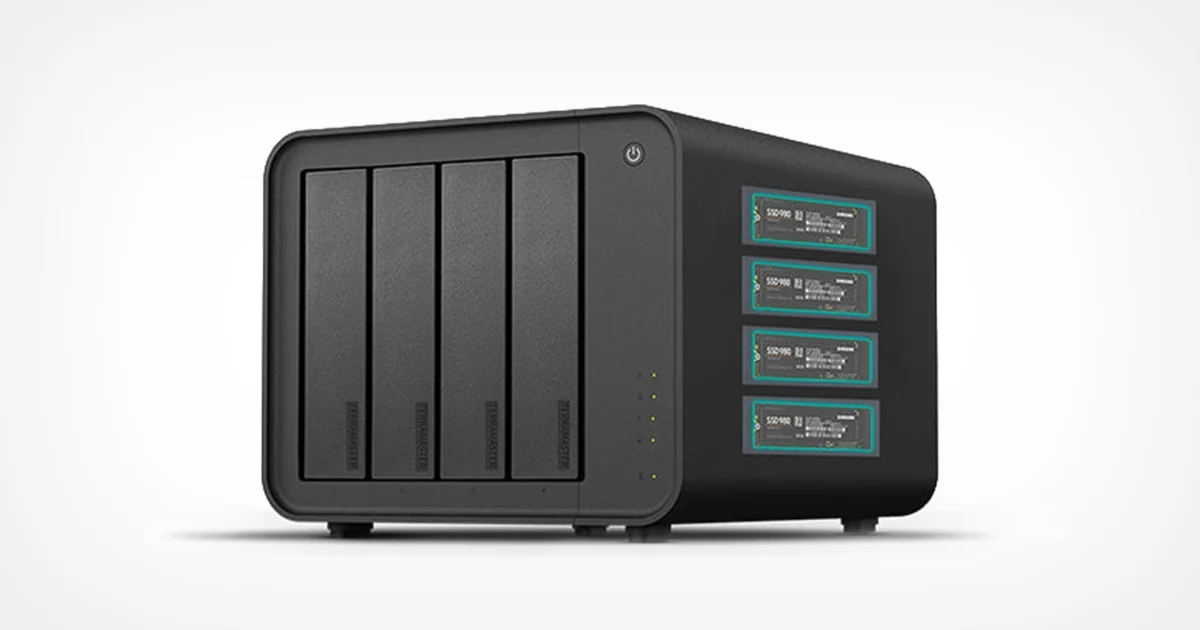
In the rapidly evolving landscape of digital content creation, the demand for storage solutions that can keep pace with 8K video, high-resolution RAW photography, and massive multi-track audio projects has never been higher. Today, TerraMaster has officially addressed this industry bottleneck with the launch of the D8 Hybrid 2, a sophisticated eight-bay direct-attached storage (DAS) enclosure that seeks to bridge the gap between high-capacity archival storage and high-speed active project workspace.
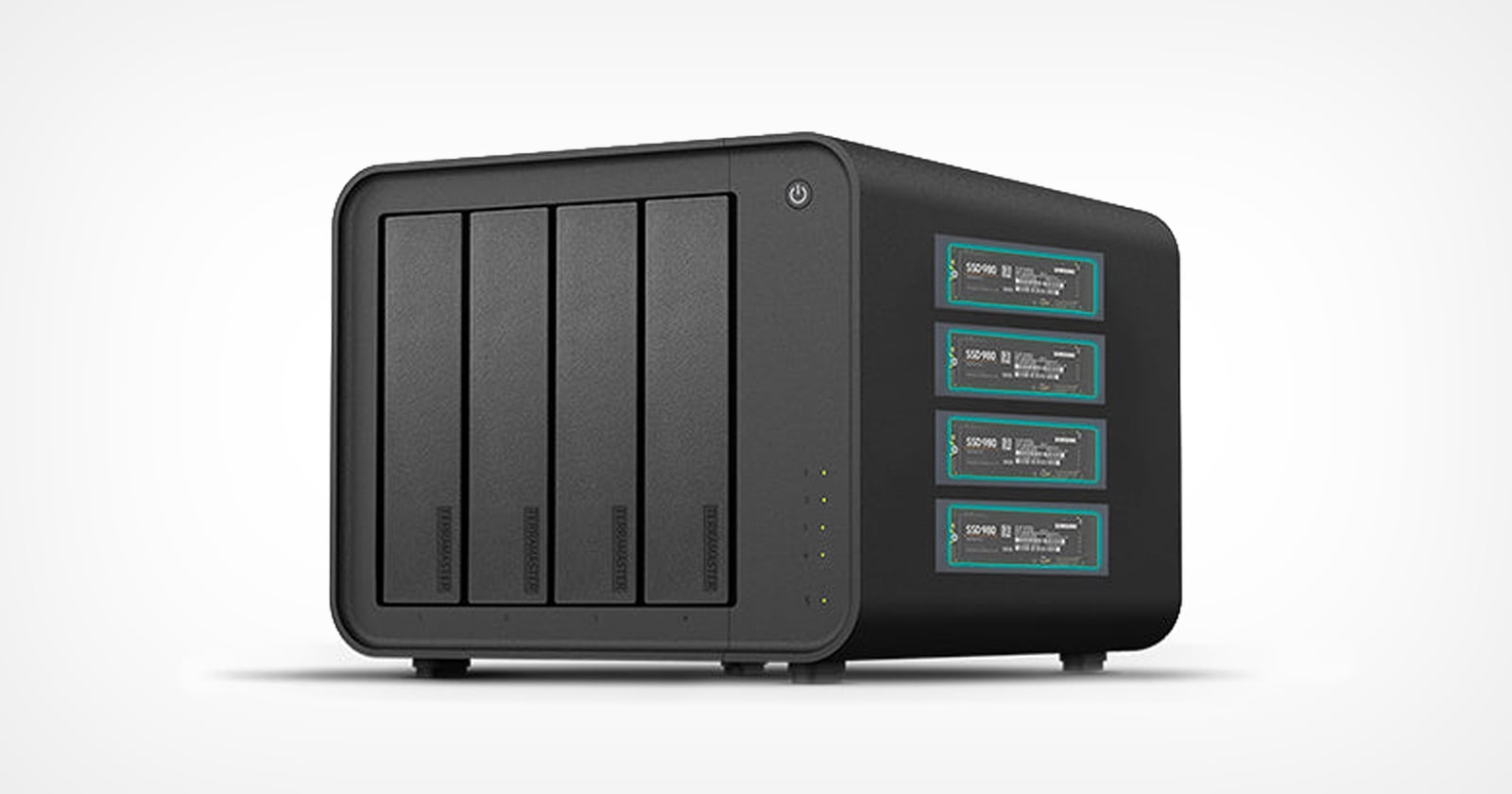
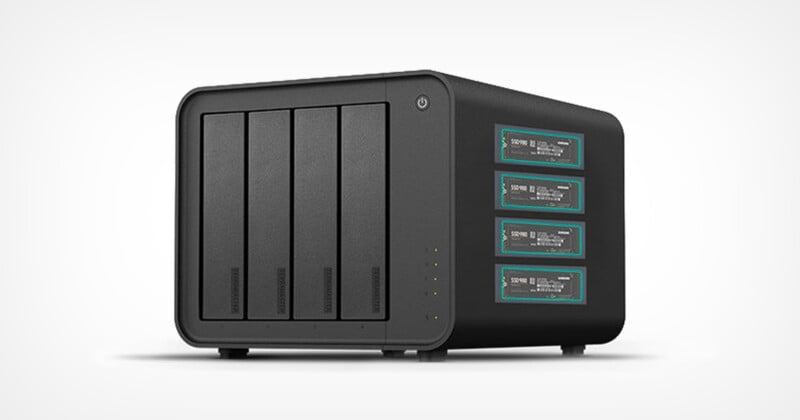
By integrating four traditional SATA HDD/SSD bays with four dedicated M.2 NVMe SSD slots, the D8 Hybrid 2 offers a unified architecture that allows creative professionals to streamline their hardware requirements. This device marks a significant shift in how studios can manage "hot" and "cold" data without the need for multiple, disparate external devices.
Main Facts: A Technical Overview
The TerraMaster D8 Hybrid 2 is a powerhouse of flexibility, designed to cater to the specific needs of videographers, photographers, and creative directors.
- Hybrid Architecture: The unit houses four 3.5-inch/2.5-inch SATA drive bays and four M.2 NVMe SSD slots.
- Total Capacity: With support for up to 30TB hard drives and 8TB NVMe SSDs, the system can reach a staggering total capacity of 152TB.
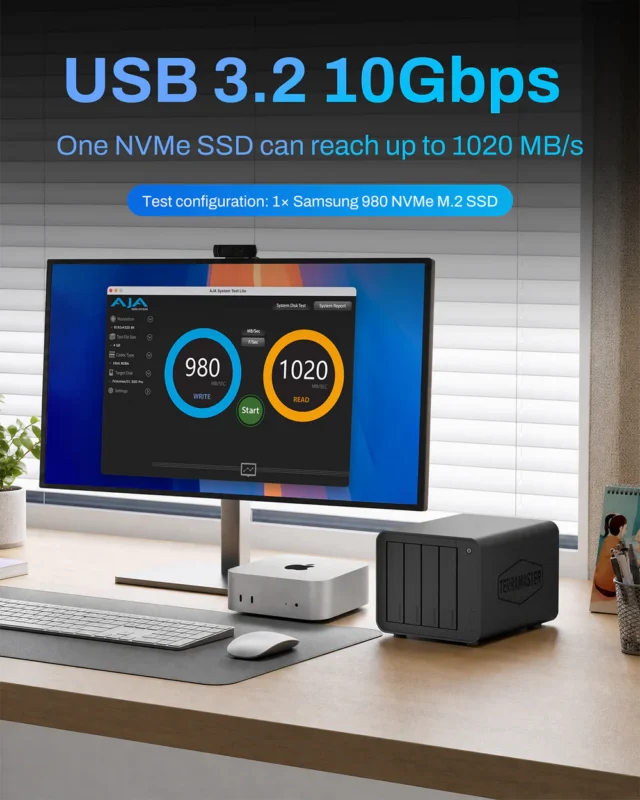
- Connectivity: It utilizes USB 3.2 Gen 2 connectivity, offering 10Gbps bandwidth.
- Performance: The unit is capable of reaching read speeds of up to 1,020MB/s on a single NVMe SSD, while RAID configurations using the four SATA bays can achieve sustained speeds of 980MB/s.
- Compatibility: The device is plug-and-play across Windows, macOS, Linux, and even serves as an expansion module for existing TerraMaster NAS systems.
Chronology: The Evolution of TerraMaster’s Storage Philosophy
To understand the significance of the D8 Hybrid 2, one must look at the recent trajectory of TerraMaster’s product design.
Early Development Phase: Over the past three years, TerraMaster observed a trend where creative professionals were struggling with "desk clutter"—a phenomenon characterized by users juggling separate SSD enclosures for active editing and massive HDD enclosures for archival backups.
2025 – The Prototype Stage: TerraMaster began experimenting with "unified enclosures" that could house mixed media. The goal was to reduce the number of power cables, USB ports, and drive housings on a user’s desk.
Mid-2026 – The Launch: Following months of rigorous stress testing in real-world studio environments, the D8 Hybrid 2 was unveiled in July 2026. The release marks the company’s most ambitious attempt to target the professional video market, specifically those working in high-bitrate 4K and 8K environments.
Supporting Data: Why Hybrid Storage Matters
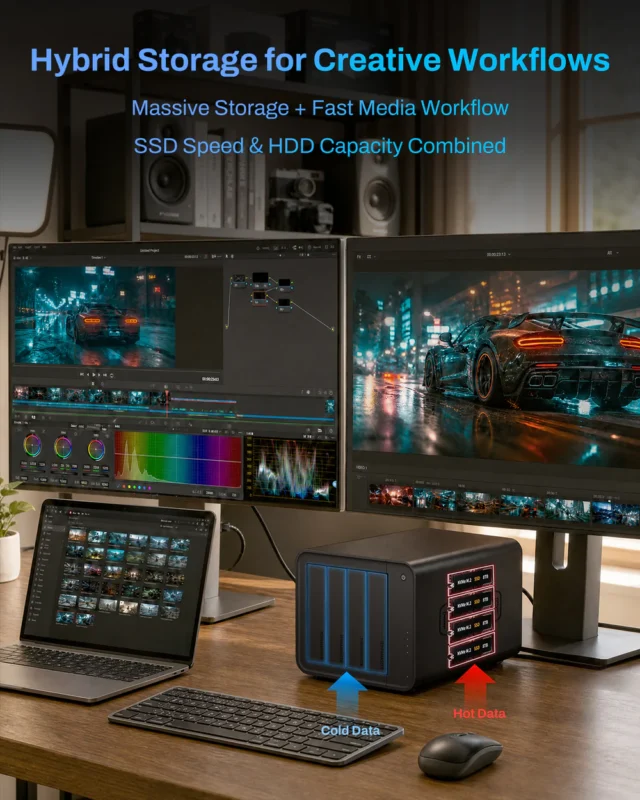
The core philosophy behind the D8 Hybrid 2 is the intelligent management of data tiers. In a typical professional workflow, data is categorized as either "hot" (frequently accessed) or "cold" (rarely accessed).
The "Hot" Data Advantage
By utilizing the four M.2 NVMe slots for active projects, editors can achieve the low-latency performance required for fluid scrubbing on 8K timelines. The 1,020MB/s throughput provided by the D8 Hybrid 2 ensures that bottlenecks are removed from the storage side, allowing the CPU and GPU of the workstation to operate at their full potential.
The "Cold" Data Economics
Conversely, storing hundreds of terabytes of finished projects on expensive SSDs is economically inefficient. By keeping finished projects on high-capacity SATA HDDs, users can maintain a massive library of historical footage at a fraction of the cost, while still having it "online" and accessible within seconds—a far cry from the days of swapping external hard drives from a physical shelf.
Thermal and Power Efficiency
TerraMaster has introduced its proprietary TPM (TerraMaster Power Management) technology in this unit. This system manages the power state of individual drives, ensuring that only the disks currently in use draw maximum power. This not only reduces the carbon footprint of the workstation but also significantly extends the lifespan of the HDDs by reducing mechanical wear during idle periods. The inclusion of an FDB (Fluid Dynamic Bearing) fan—rated for 50,000 hours—further ensures that the unit remains cool even during long-term rendering tasks.
Official Responses and Engineering Philosophy
In a statement regarding the release, TerraMaster engineers emphasized that the D8 Hybrid 2 was built as a direct response to the "Creative Professional’s Dilemma."
"We didn’t just want to build another enclosure," said a representative from the product development team. "We wanted to build a centralized command station for digital assets. The tool-free design—using push-lock trays for the SATA bays and hand-tightened screws for the M.2 slots—reflects our desire to keep the hardware as agile as the software our users rely on."
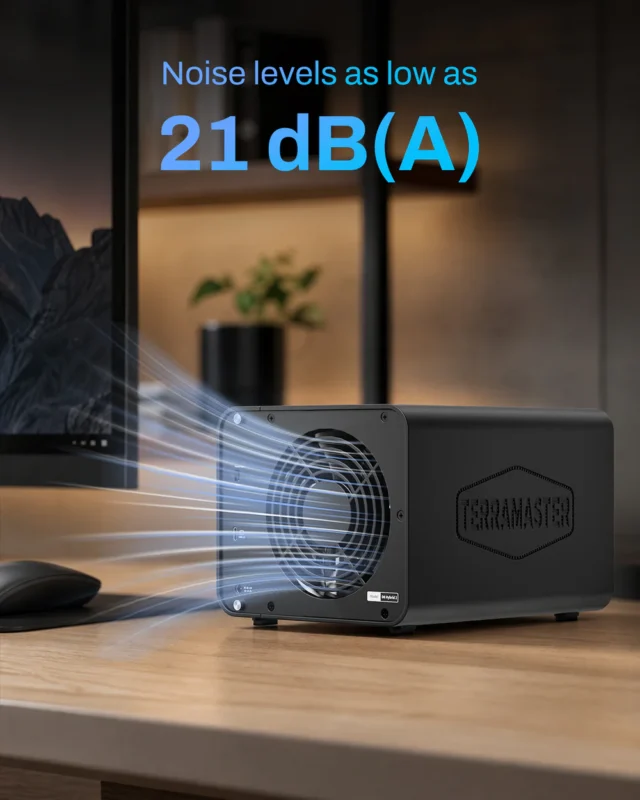
The company also addressed the noise concerns common in desktop storage. By re-engineering the chassis for better airflow, the unit operates at a whisper-quiet 21 dB(A), making it suitable for professional sound-editing suites where silence is paramount.
Implications: The Impact on Professional Workflows
The introduction of the D8 Hybrid 2 has profound implications for small-to-medium-sized production houses.
1. Reduced Infrastructure Complexity
Production studios often suffer from "cable spaghetti." By consolidating eight total drive slots into one enclosure, studios can reclaim desk space and simplify their USB-C daisy chains. This is particularly beneficial for users of Mac Studios or high-end laptops with limited ports.
2. Scalability for NAS Users
The device is not just for direct attachment; it is a modular expansion tool. For users already invested in the TerraMaster TOS 5 or TOS 6 ecosystem, the D8 Hybrid 2 can act as an expansion unit, effectively offloading storage-intensive tasks from the main NAS and allowing for specialized RAID configurations that weren’t previously possible in a single-chassis footprint.
3. Backup Reliability
For the security-conscious, the integration with TPC Backupper (for Windows) and native Time Machine support (for macOS) makes the D8 Hybrid 2 a formidable backup engine. The ability to perform incremental and differential backups means that even if a primary project drive fails, the version history remains intact on the secondary storage tier within the same enclosure.
Market Positioning and Future Outlook
With a standard retail price of $300, the D8 Hybrid 2 is aggressively positioned to disrupt the market for multi-bay enclosures. The current 20% Amazon discount, bringing the cost down to $240, places the unit in a competitive bracket that usually only offers standard, non-hybrid enclosures.
Summary of Value
- Cost-per-Gigabyte: Highly competitive, especially when factoring in the mixed-media support.
- Versatility: The ability to move the unit between different operating systems (Windows, macOS, Linux) without formatting or reconfiguring makes it an ideal solution for freelancers who work in cross-platform environments.
- Future-Proofing: With the inclusion of modern NVMe slots, the unit will remain relevant as flash storage prices continue to drop, allowing users to upgrade their "hot" storage over time without needing to replace the entire enclosure.
As we look toward the remainder of 2026, the D8 Hybrid 2 stands as a testament to the industry’s shift toward hybridity. By refusing to choose between the sheer capacity of mechanical drives and the blistering speed of NVMe, TerraMaster has provided a blueprint for what the modern "Prosumer" desktop setup should look like. Whether you are a solo YouTuber cutting 4K footage on a laptop or a professional colorist working with RAW RED files, the D8 Hybrid 2 provides a robust, scalable, and remarkably quiet answer to the ever-present problem of data management.
For those looking to secure their storage future, the current promotional period represents a unique opportunity to upgrade their infrastructure at a price point that is unlikely to be repeated once the Summer Sale concludes on July 31.
 Raul Delapena Setiawan
  rifanmuazin
  Ammar Sabilarrohman