
 By Lina Hope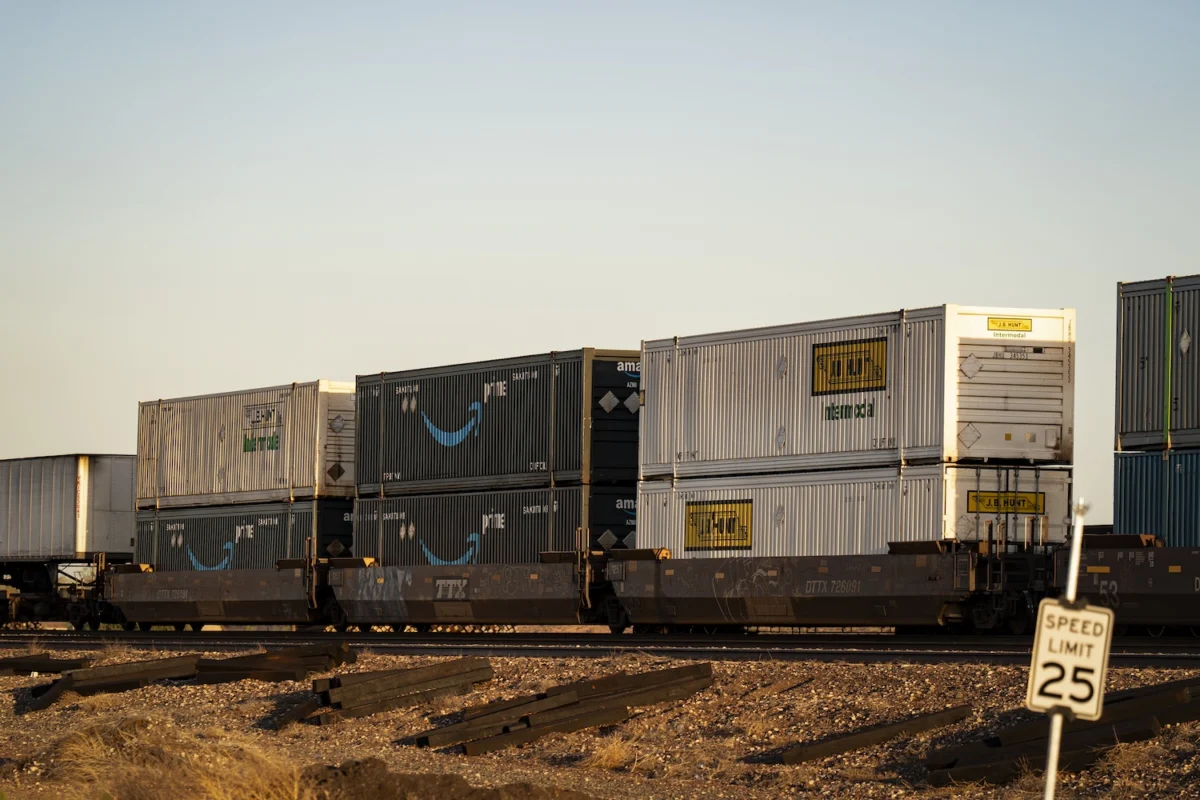
The American logistics landscape is undergoing a profound, forced transformation as record-high diesel fuel prices create a "double-edged sword" for the nation’s supply chain. As diesel costs breach historic thresholds, the traditional dominance of over-the-road trucking is being challenged, prompting a significant shift in freight volume toward the rail sector. This structural realignment is not merely a reaction to market volatility but a fundamental change in how goods move across the country, with major carriers and railroads alike navigating a new era of unprecedented operational headwinds.
The Breaking Point: Record Diesel Prices
The catalyst for this shift is the relentless escalation of U.S. on-highway diesel prices. According to the U.S. Energy Information Administration (EIA), national diesel averages recently hit $6.285 per gallon—a grim milestone that marks the first time prices have surged past the $6 barrier.
This meteoric rise represents a 65 percent increase since late February, when the national average hovered near $3.809. The primary driver behind this volatility is the escalating geopolitical instability stemming from the conflict in Iran. As military activities disrupt shipping through the Strait of Hormuz—a maritime chokepoint that accounts for roughly 20 percent of the world’s daily oil and natural gas supply—the global energy market has been thrown into disarray. With fuel prices rising by over 5 percent on a weekly basis at various points throughout the summer, the logistics industry has found its thin profit margins under siege.
Chronology of a Crisis
The current logistical crisis did not manifest overnight. Its roots can be traced back to the onset of geopolitical tensions in the Middle East in February.
- Late February: Diesel prices began their upward trajectory, averaging $3.809 per gallon. The initial disruption to the Strait of Hormuz signaled the start of a supply chain anxiety that would soon permeate the freight market.
- Spring and Summer: As conflict persisted, fuel costs saw "radical and abnormal swings," in the words of industry executives. The volatility made long-term budgeting for transportation companies nearly impossible.
- Late August/Early September: Diesel prices officially broke the $6-per-gallon ceiling. The impact became immediately visible in the financial guidance provided by industry giants like J.B. Hunt and Norfolk Southern during investor conferences.
- Mid-September: The industry saw a wave of "mini-bids," as shippers scrambled to renegotiate contracts, moving away from high-cost highway lanes toward more cost-efficient intermodal rail solutions.
The Financial Fallout: J.B. Hunt and the "Mini-Bid"
The strain on the trucking industry was laid bare at Morgan Stanley’s annual Laguna Conference. J.B. Hunt, a bellwether for the logistics sector, announced that it expects its third-quarter earnings to decline sequentially by 5 percent to 10 percent. CFO Brad Delco described the current market as witnessing some of the most “radical and abnormal” price swings in company history, noting that the firm faces $10 million in additional fuel-related headwinds for the quarter. Following these remarks, J.B. Hunt’s stock tumbled more than 13 percent, reflecting investor anxiety regarding the sustainability of trucking profit margins.
The response from shippers has been swift and tactical. To mitigate costs, many are engaging in "mini-bids"—an unconventional process where shippers move outside their standard annual contract cycles to renegotiate rates or shift freight volume. Darren Field, president of intermodal at J.B. Hunt, noted that shippers are actively recalibrating their logistics mix. "There’s a lot of shippers out there that may use intermodal for 75 percent of the lane and highway for 25 percent, and maybe they tweak that to 90/10 or even 100 percent intermodal," Field explained. This pivot is designed to insulate corporate budgets from the volatility of fuel-sensitive highway trucking.
Supporting Data: The Rise of Intermodal
The shift from road to rail is not just anecdotal; the data confirms a broad structural movement. According to the Association of American Railroads, intermodal units—which involve the transfer of containers between trucks and trains—increased by 4 percent in the first 36 weeks of the year. In contrast, standard rail carload units grew by only 2.7 percent, underscoring that the growth is specifically concentrated in the freight categories typically contested between trucks and trains.
Norfolk Southern has been a primary beneficiary of this trend. Chief Commercial Officer Ed Elkins confirmed that the railroad is seeing significant "share gain" across consumer products, steel, and lumber markets. In the week leading up to September 5 alone, Norfolk Southern saw its intermodal volumes jump 13.7 percent compared to the same period last year, with intermodal traffic now accounting for 57.8 percent of its total volume.
Regulatory Pressure and Capacity Constraints
The impact of fuel prices is compounded by systemic capacity issues. Anne Reinke, president and CEO of the Intermodal Association of North America (IANA), highlighted that the current crisis is particularly devastating for small, independent owner-operators. Unlike large firms that can utilize sophisticated fuel surcharge programs, smaller carriers operating in the spot market often lack the leverage to pass those costs on to customers, leading many to exit the industry entirely.
Adding to the capacity strain are recent U.S. regulatory policies, including stricter enforcement of English-language proficiency for drivers and a crackdown on substandard driver training schools. Reinke noted that these factors have effectively removed capacity from the trucking market, which naturally drives up rates. "If you have low capacity in the trucking space, that means prices are going up," she explained. "So people say, ‘Well, I want another option.’ So they’re turning to intermodal."
The Railroad’s Burden
While railroads are gaining market share, they are not immune to the economic fallout. Despite the surge in volume, Norfolk Southern’s CFO Jason Zampi noted that fuel price spikes remain a substantial headwind for the rail sector. The company expects its third-quarter operating ratio to take a 250-basis-point hit, leading to worse-than-seasonal financial performance.
"We were calling for a maybe better-than-seasonal sequential improvement," Zampi stated. "Now we actually think we’re going to be a little bit worse-than-seasonal performance, really due to what’s happening with fuel." Even for the rail industry, the benefits of increased volume are being offset by the massive, unavoidable increase in the cost of the energy required to pull those trains across the continent.
Implications for the Future
The current logistical climate suggests a long-term recalibration of the U.S. freight system. Several key implications emerge from this transition:
- The End of the "All-Truck" Era: The reliance on long-haul trucking is diminishing as companies prioritize cost-stability over the speed of point-to-point highway transit.
- Increased Sophistication of Procurement: The "mini-bid" may become a standard fixture in logistics procurement, as companies adopt more agile, reactive strategies to manage fuel price volatility.
- Consolidation of the Trucking Market: The inability of smaller, independent operators to survive these fuel spikes will likely lead to further industry consolidation, as larger carriers with robust surcharge mechanisms gain more market dominance.
- Resilience through Diversification: The success of intermodal shipping suggests that supply chain resilience will increasingly depend on a company’s ability to move freight across multiple modes of transport, rather than relying on a single, fuel-vulnerable method.
As the nation waits to see if energy markets will stabilize, the message from the freight sector is clear: the era of cheap, predictable, and road-dependent logistics has come to a definitive close. The "double-edged sword" of high fuel costs is forcing a modernization of the American supply chain, one that favors the efficiency of the rails and the necessity of strategic flexibility.
 Asep Darmawan
  Jia Lissa
  Siti Muinah