
 By Layla Zulfa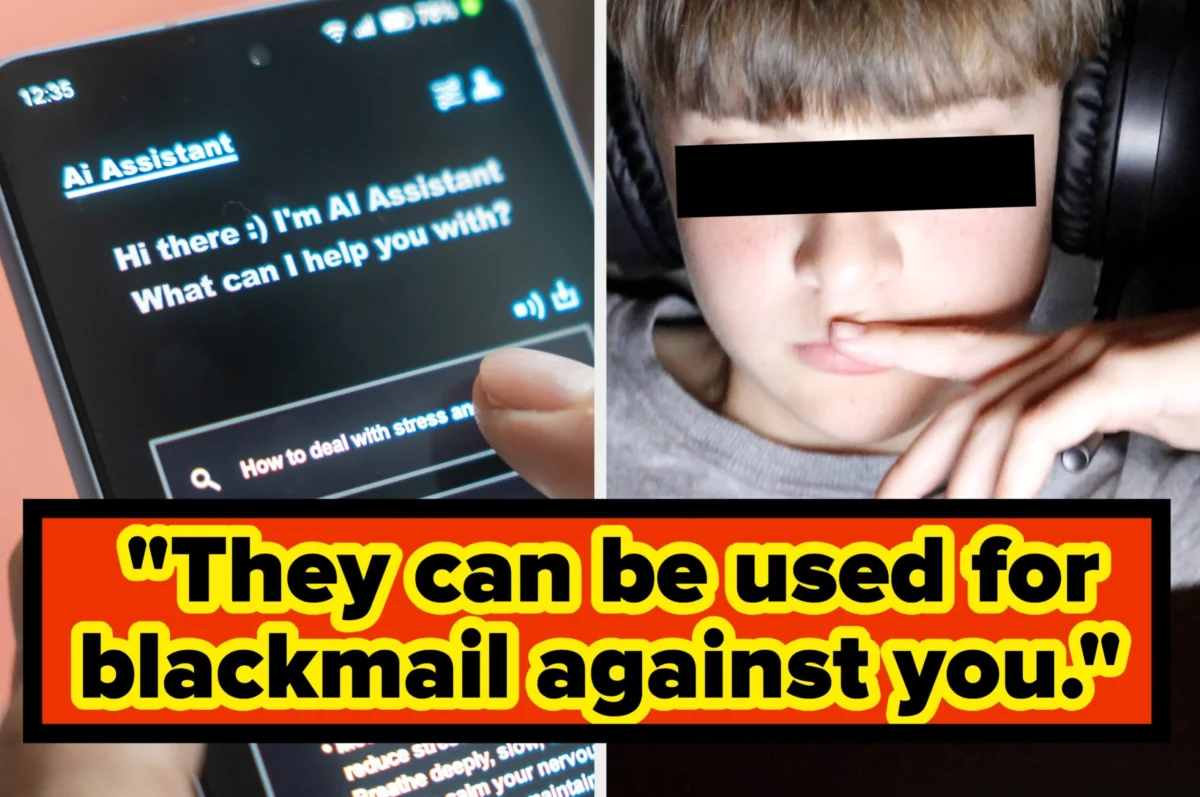
By Global Tech & Privacy Desk
Published: March 2025
As artificial intelligence rapidly transitions from a novelty into an indispensable utility, millions of people around the globe are seamlessly weaving tools like ChatGPT, Gemini, Copilot, and Claude into the fabric of their daily routines. Whether drafting an email, summarizing dense articles, brainstorming meal plans, or debugging code, large language models (LLMs) have become ubiquitous digital assistants.
Yet, beneath the veneer of convenience lies a growing concern among cybersecurity experts, legal scholars, and privacy advocates: the ease with which users surrender deeply personal, financial, and professional data to systems designed to consume, process, and learn from it.
According to a recent benchmark survey conducted by Elon University’s Imagining the Digital Future Center, an astounding 52% of U.S. adults now actively utilize AI large language models. While the adoption rate highlights a profound cultural and technological shift, it also underscores an urgent need for digital literacy regarding data privacy and the hidden risks of human-AI interaction.
The Main Facts: The AI Adoption Boom and Its Hidden Perils
The integration of generative AI into society is happening at an unprecedented velocity.
"By any measure, the adoption and use of LLMs is astounding," said Lee Rainie, director of Elon’s Imagining the Digital Future Center, in a university news release. "I am especially struck by the ways these tools are being woven into people’s social lives."
While these platforms are undeniably powerful, users often fail to realize how they function under the hood. Most commercial LLMs are continuously trained or fine-tuned using user inputs. This means that every prompt, uploaded document, and conversational thread can directly or indirectly contribute to shaping the model’s future behavior.
When interactions contain personal identifiers, confidential business records, or sensitive psychological disclosures, they risk becoming permanent fixtures in vast training datasets that exist entirely outside the user’s control. As cybersecurity experts emphasize, data is the single greatest currency that AI companies extract from the public.
Chronology of the AI Privacy Reckoning
To understand how we arrived at the current privacy crossroads, it is necessary to trace the rapid evolution of generative AI and the corresponding regulatory panic:
- Late 2022 to 2023 (The Explosion): OpenAI launches ChatGPT, triggering a global gold rush. Millions flood the platforms, treating them like novel search engines. Early on, users input sensitive corporate source code and personal diaries without realizing that conversations are saved and reviewed by human annotators by default.
- Mid-2023 (The First Corporate Backlash): Major global corporations—including banks, tech giants, and defense contractors—issue sweeping bans or strict internal policies prohibiting employees from pasting proprietary code or client data into consumer-grade AI tools over fears of data leakage.
- 2024 (The Rise of the "AI Companion"): LLMs become remarkably empathetic and conversational. Users increasingly turn to chatbots for emotional support, blurring the lines between tool and confidant. Concurrently, privacy watchdogs begin warning about the legal vulnerabilities of confiding in non-protected digital entities.
- Early 2025 (Mainstream Saturation & New Warnings): Elon University data reveals that over half of Americans now use LLMs. Cybersecurity professionals, legal experts, and academic institutions publish coordinated warnings detailing the exact categories of data that should never be shared with an AI chatbot.
Supporting Data and Vulnerability Categories
Security professionals have identified five critical categories of information that users must never input into an AI chatbot.
1. Personally Identifiable Information (PII)
Personally identifiable information includes any data that can be used to isolate an individual, such as full legal names, home addresses, phone numbers, and government-issued identification numbers (Social Security numbers, passport details, and driver’s licenses).
Information security expert George Al-Koura, co-host of the podcast Bare Knuckles and Brass Tacks, warns that sharing these details "introduces the risk that this data could be logged or processed in ways that expose you to identity theft, phishing, or data brokerage activities."
Furthermore, users frequently upload files—such as resumes, cover letters, or legal contracts—to help fine-tune documents. If these files contain unredacted PII, that data is ingested directly into the model’s pipeline.
2. Intimate Details About Personal Life and Mental Health
Because conversational AIs use natural language processing to mimic empathetic dialogue, users often feel a false sense of security. They divulge intimate thoughts, relationship struggles, and mental health crises.
"This can give a false sense of security leading to a greater willingness to provide personal information via a chatbot than to a static search engine," explains Ashley Casovan, managing director of the International Association of Privacy Professionals (IAPP) AI Governance Center.
Unlike conversations with licensed therapists, clergy, or attorneys, chats with AI models carry no legal privilege. Sensitive confessions regarding thoughts, behaviors, or personal disputes are stored on corporate servers and could theoretically be subpoenaed or used as evidence in legal proceedings.
3. Medical and Healthcare Information
While people frequently turn to AI to decode complex medical jargon, symptoms, or prescription side effects, inputting specific medical histories, diagnoses, or treatment plans circumvents standard healthcare privacy protections (such as HIPAA in the United States). Medical data shared with a chatbot becomes fair game for model training unless strict enterprise privacy settings are enabled.
4. Confidential or Proprietary Work Information
Using AI to enhance workplace productivity is standard practice, but doing so recklessly can lead to catastrophic career consequences. Experts advise against inputting internal business metrics, client databases, proprietary source code, or material protected by non-disclosure agreements (NDAs).
"Many AI chat platforms operate on shared infrastructure, and despite strong security postures, your input may still be logged for ‘model improvement,’" Al-Koura notes. "A single prompt containing sensitive data could constitute a regulatory or contractual breach."
5. Financial Information and Tax Documents
Paystubs, banking details, investment portfolios, credit card numbers, and tax returns should never be processed through standard AI interfaces.
Financial writer Adam Hayes warns in an Investopedia analysis that if such documents are exposed through data breaches or adversarial exploits, "they can be used for blackmail, fraud, or tailored social engineering attacks against you or your family."
Official Responses and Expert Guidance
As the risks become clear, regulatory bodies, academic institutions, and cybersecurity professionals are offering actionable advice on damage control and preventive hygiene.
What to Do If You’ve Already Shared Sensitive Data
Once data is fed into an LLM’s training dataset, reversing the process is notoriously difficult. As one expert bluntly stated, "You can’t really put the toothpaste back in the tube." However, users can take immediate mitigation steps:
- Purge Chat Histories: Delete old chat logs to prevent data exfiltration in the event of an account compromise.
- Adjust Privacy Configurations: Disable chat history saving or opt out of model training settings across your AI accounts. While not foolproof, these settings significantly reduce exposure risks.
- Adopt Pseudonyms and Generalizations: When prompting AI for help with real-world scenarios, substitute identifying details. For example, write "a client in healthcare" rather than mentioning a specific patient at a named hospital.
The Push for Systemic Reform
Experts agree that the burden of privacy protection should not rest solely on individual consumers. Researchers from The Stanford Institute for Human-Centered AI argue that developers and lawmakers must implement comprehensive federal privacy regulations, require affirmative opt-ins for model training, and filter out personal information from chat inputs by default.
Implications: A Defining Moment for Digital Ethics
The widespread adoption of generative AI represents a profound turning point in human-computer interaction. As these models become increasingly sophisticated at mimicking human empathy and conversational cadence, users easily forget that they are interacting with sophisticated data processors rather than confidential friends or licensed professionals.
Safeguarding personal trust and digital security requires a cultural shift toward curiosity, caution, and privacy awareness, paired with responsible and transparent engineering from tech giants.
Ultimately, society must establish robust guardrails. Only by balancing innovation with uncompromising privacy protections can humanity harness the full potential of artificial intelligence without sacrificing personal security, legal confidentiality, or human trust.
 Basiran
  Nana Muazin
  Neng Nana