
 By Ammar Sabilarrohman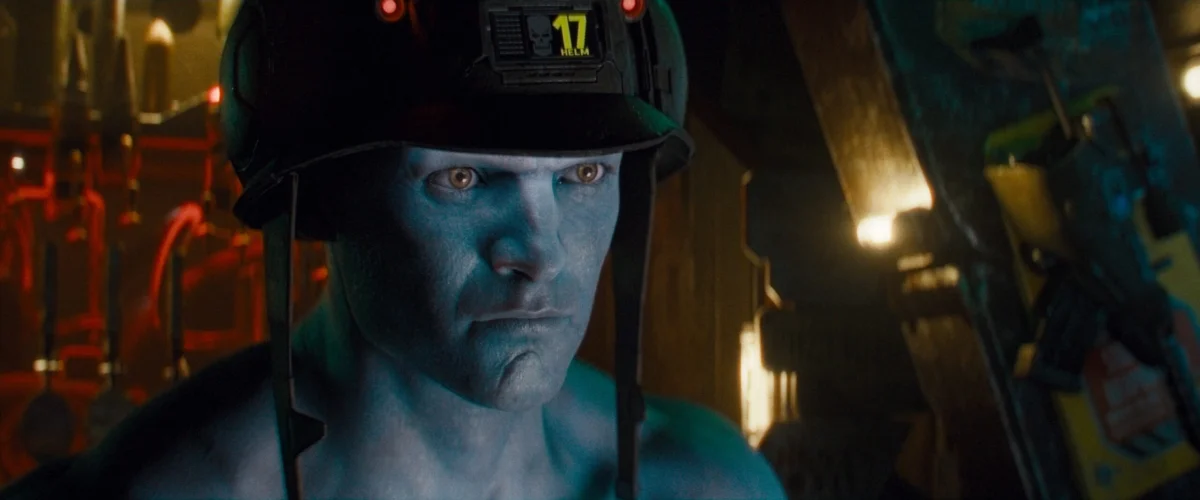
In an era defined by the rapid encroachment of generative artificial intelligence into the creative arts, director Duncan Jones has drawn a firm line in the sand. His latest feature, Rogue Trooper—a gritty, highly anticipated adaptation of the iconic 2000 AD comic book series—stands as a defiant, human-made manifesto. “There’s AI—the film has no AI,” Jones states emphatically, framing his project as a bastion of authentic creative labor in a landscape increasingly dominated by algorithmic shortcuts.
Set to make its world premiere at the Annecy International Animation Film Festival on June 22, Rogue Trooper is not merely an adaptation; it is a masterclass in independent filmmaking, achieving a studio-level aesthetic on an indie budget through sheer creative ingenuity and a refusal to compromise on the human element.
The Genesis of an Adaptation: From Comics to Screen
The source material, created by Gerry Finley-Day and Dave Gibbons, holds a hallowed place in the pantheon of British sci-fi. Rogue Trooper chronicles the desperate journey of 19, a genetically engineered "Genetic Infantryman" and the sole survivor of an ill-fated invasion force on a hostile, war-torn planet. As he hunts for the traitor who betrayed his squad, 19 is haunted by the personalities of his fallen comrades, which have been digitally uploaded into his gun, helmet, and backpack.
For Jones, a self-confessed superfan of the source material, the project was a labor of love that required navigating the complexities of high-concept science fiction while maintaining the "soul" of the original comics. He compares the depth of the 2000 AD universe to the narrative richness of Marvel and DC, noting that the comic’s willingness to experiment with visual styles and bold storytelling provided the perfect blueprint for his film.
A Chronology of Creation: Four Years of Iteration
The journey to the screen was a four-year odyssey that began with a commitment to efficiency and creative control. Jones and producer Stuart Fenegan, building on lessons learned from their experience with the 2016 blockbuster Warcraft, set out to create a CGI animated film that would rival $60 million studio productions while operating on a fraction of that budget.
The production process was uniquely "bespoke." Jones wrote the script and recorded every line of dialogue for every character himself, creating an extensive animatic that served as the project’s backbone. This allowed the team to iterate, refine, and troubleshoot in real-time, effectively building the film as they went.

However, the path was not without its hurdles. Two years into production, the team hit a wall regarding their technological pipeline. Having initially committed to creating the entire film within Unreal Engine 5.3, they realized the software lacked the specific tools required to achieve the high-end, cinematic look they envisioned. In a bold mid-production pivot, the team migrated to traditional animation software like Maya, only returning to Unreal Engine for final rendering. This willingness to adapt—to prioritize the final visual quality over a rigid adherence to a specific tech stack—was the catalyst that enabled them to bridge the gap between indie resources and theatrical grandeur.
The Human Factor: A SAG-AFTRA Strike Contingency
The production’s stance on artificial intelligence became particularly relevant during the 2023 SAG-AFTRA strikes. As actors across the industry voiced existential concerns regarding the use of AI to replicate their likenesses and performances, Rogue Trooper stood in stark contrast.
"We were actually really fortunate, for want of a better word, that when we were shooting, it was at the time when the SAG strike was happening," explains producer Stuart Fenegan. Because the project was a British production operating under Equity contracts, the team was able to guarantee, both contractually and ethically, that no AI-generated performances would be used.
This environment proved to be a boon for casting. With many major productions halted and top-tier talent looking for meaningful projects, Jones and Fenegan were able to assemble a stellar voice cast, including Aneurin Barnard, Jack Lowden, Hayley Atwell, Daryl McCormack, Reece Shearsmith, Sean Bean, Matt Berry, and Jemaine Clement. "It was like, ‘Hey, have a look at this animatic. Do you want to come and play in this crazy different way of doing an animated movie with Duncan Jones?’" Fenegan recalls. "And pretty much everyone was like, ‘Hell yes.’"
Technical Innovation: Efficiency Without Automation
The film’s aesthetic is photorealistic, yet Jones emphasizes that the methodology was far more "hand-crafted" than audiences might expect. Instead of traditional full-body motion capture—which carries significant costs in terms of data processing and studio time—Jones utilized a more surgical approach.
"We weren’t recording mo-cap of their bodies, we were only recording their faces and their voices," Jones explains. The actors worked in a minimalist "black box" studio for two weeks, rotating through scenes with high efficiency. By stripping away the bloat of full-body capture and focusing exclusively on human vocal and facial nuance, the team bypassed the most expensive elements of the standard animation pipeline.

"The sheer cost of processing all of that [mo-cap] data is prohibitive," Fenegan notes. By focusing solely on the core performance and handling the rest through traditional hand-animation, the production achieved a level of visual fidelity that belies its indie status. This hybrid approach allowed for the "triangle of speed, quality, and cost" to be balanced: the team sacrificed speed—taking four years to refine the craft—to ensure that the quality remained high and the budget remained controlled.
Industry Implications: The Indie Blueprint
The success of Rogue Trooper serves as a potential blueprint for future independent animated features. By empowering artists who have a genuine connection to the material—such as production designer Steve Trumble and various comic book veterans brought in for conceptual work—the production ensured a level of fidelity that often eludes mass-market, corporate-driven adaptations.
The film is currently seeking distribution, with CAA representing the project. While the lack of a major studio backer adds a layer of "scariness" to the process, Jones remains focused on the singular goal of getting the film in front of audiences. "We’ve put so much effort into this and spent so much time on it, we really just want to make sure that we get this film in front of an audience," says Jones.
Conclusion: A Stand for Creative Integrity
As the entertainment industry grapples with the transformative—and often controversial—role of AI, Rogue Trooper offers a compelling counter-narrative. It proves that technological tools like Unreal Engine and Maya are at their best when they serve, rather than replace, human artistic intent.
By prioritizing the "old-school" values of meticulous preparation, collaborative artistry, and a deep respect for the source material, Duncan Jones and his team have created a work that feels both modern and deeply human. As the film makes its debut at Annecy, it will likely be viewed not just as a sci-fi action flick, but as a proof-of-concept for a new way to build worlds in the age of digital transformation—a testament to what can be achieved when a team of passionate professionals decides to hold hands and "figure it out" together.
For the fans of the original 2000 AD stories, the wait has been long. But as the final product suggests, the time spent in the dark, in the black box, and in the editing room has been a necessary investment in preserving the soul of a classic. Whether this marks the beginning of a larger Rogue Trooper franchise remains to be seen, but for now, the mission is clear: ensure the work is seen, and ensure the human contribution behind it is recognized.
 Asep Darmawan
  Azzam Bilal Chamdy