
 By Raul Delapena Setiawan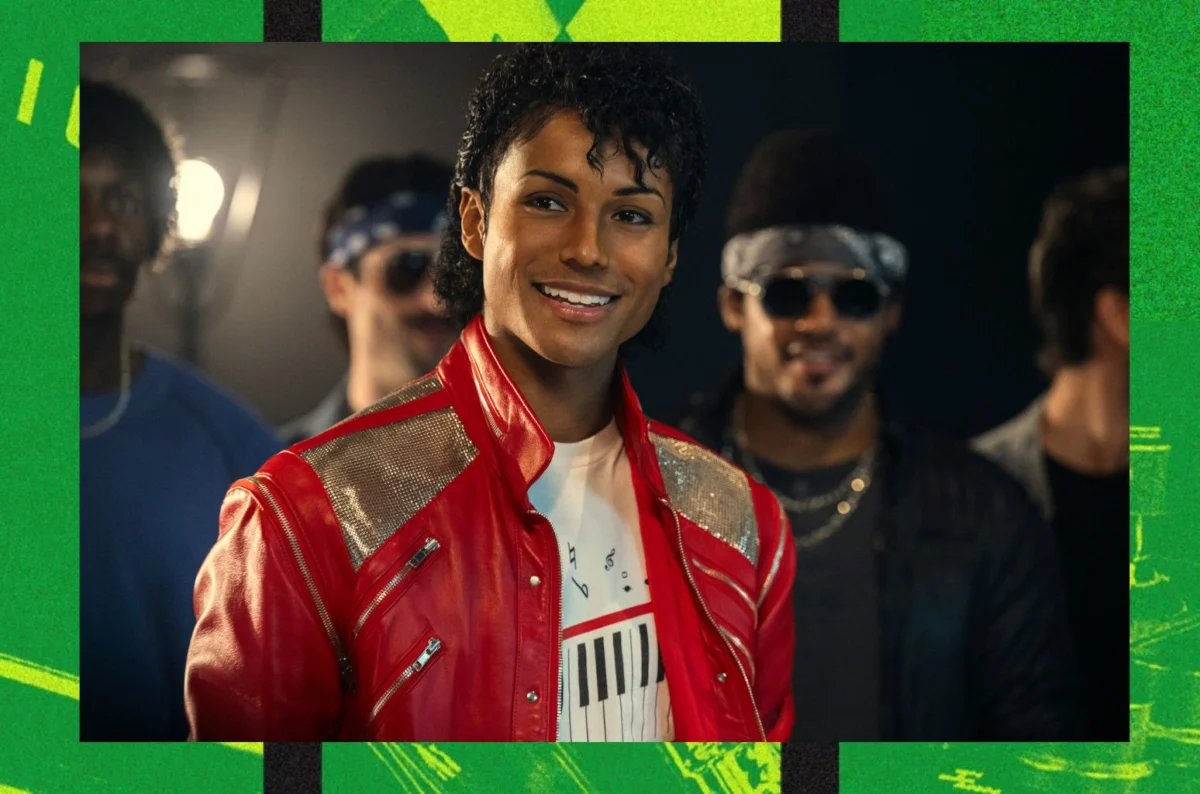
In a cinematic achievement that mirrors the unparalleled commercial dominance of its subject, the 2026 biographical film Michael has officially ascended to the throne as the highest-grossing music biopic in history. Surpassing the monumental performance of 2018’s Bohemian Rhapsody, the film has captivated global audiences, pulling in a staggering $911.9 million worldwide and standing on the precipice of the coveted $1 billion mark.
Directed by Antoine Fuqua and penned by the acclaimed screenwriter John Logan, the Lionsgate and Universal co-production serves as both a cultural phenomenon and a masterclass in biographical filmmaking. With Jaafar Jackson—the late icon’s nephew—delivering a transformative performance in the title role, the film has bridged the gap between historical reverence and modern blockbuster spectacle.
The Financial Trajectory: A Global Powerhouse
The numbers behind Michael are nothing short of historic. As of the latest reporting, the film has secured $358.6 million at the domestic box office, while international territories have contributed a massive $553.3 million. Universal Pictures, which handled the international theatrical and ancillary rights, has seen $540.5 million of that overseas total attributed to its distribution efforts.
The film’s global rollout continues to expand, with a high-profile release in Japan serving as the latest catalyst for growth. Industry analysts suggest that the Japanese market could be the final push required to propel Michael past $1 billion in total global gross. Should it achieve this milestone, it would join the ranks of elite 2026 cinema, standing alongside Universal’s Super Mario Galaxy Movie as one of the only films to reach this prestigious threshold in the current calendar year.
Chronology: From Concept to Cultural Milestone
The journey of Michael was defined by ambition, high stakes, and significant creative pivots. Producer Graham King, the industry heavyweight who also steered Bohemian Rhapsody to its $910.9 million global total, has effectively broken his own record. By producing both films, King has cemented his reputation as the premier architect of the music biopic genre.
However, the road to the silver screen was marked by notable turbulence. During the pre-production and filming phases, Lionsgate faced significant pressure to ensure the film’s narrative integrity aligned with the complexities of Michael Jackson’s life and public legacy. Reports indicate that the studio authorized $50 million in late-stage reshoots after the Jackson estate flagged a specific narrative arc regarding one of Jackson’s accusers. The decision to excise this dramatization was viewed by the production team as a necessary step to focus the narrative, though it underscored the inherent difficulties in translating a life as controversial and scrutinized as Jackson’s into a mainstream Hollywood product.
The film’s release strategy mirrored the calculated precision of a major franchise launch, utilizing a staggered global rollout that allowed for sustained momentum and a record-breaking opening weekend—the largest in the history of the music biopic genre.
Supporting Data: Records and Comparisons
To understand the magnitude of Michael’s success, one must look at the benchmarks it has systematically dismantled:

- Domestic Dominance: Michael is now officially the highest-grossing music biopic of all time in the United States, easily eclipsing the $216.6 million domestic haul of Bohemian Rhapsody.
- International Reach: The film has outperformed the Freddie Mercury biopic in over 40 international markets, including powerhouses like France, Brazil, and Mexico.
- Genre Milestones: It has set a new standard for the genre in France, where it has officially surpassed the lifetime gross of the celebrated Edith Piaf biopic, La Vie en Rose.
- Studio Record: For Lionsgate, Michael is a historic achievement, marking the studio’s highest-grossing theatrical release in its history.
When compared to Bohemian Rhapsody, which claimed four Academy Awards—including a Best Actor win for Rami Malek—Michael has opted for a wider, more populist appeal. While Bohemian Rhapsody was characterized by its tight focus on the band Queen’s internal dynamics and the Live Aid climax, Michael attempts to encapsulate the totality of an artist who fundamentally altered the landscape of popular music.
The Jackson Legacy: An Unrivaled Catalog
The success of the film is intrinsically tied to the enduring popularity of Michael Jackson himself. As one of the most commercially successful recording artists in history, Jackson’s influence remains a constant in the music industry.
- Record Sales: With an estimated 350 million records sold worldwide, Jackson remains an outlier in the history of recorded music.
- Chart Dominance: Jackson achieved 13 No. 1 singles on the Billboard Hot 100 as a solo artist, with iconic tracks like "Billie Jean," "Beat It," and "Black or White" remaining staples of modern radio and streaming playlists.
- The Thriller Phenomenon: The film highlights the creation and impact of Thriller, the best-selling album of all time, which has moved over 70 million copies globally. Thriller famously spent 37 weeks at No. 1 on the Billboard 200, a feat that solidified Jackson’s status as a generational talent.
- Hall of Fame Status: Jackson’s dual induction into the Rock and Roll Hall of Fame—once as a member of the Jackson 5 in 1997 and again as a solo artist in 2001—speaks to his evolution from a child prodigy to a global architect of pop culture.
Implications for the Industry
The massive success of Michael has sent a clear signal to Hollywood studios: the appetite for high-budget music biopics is far from sated. The film’s performance suggests that when a project combines massive production value, a recognizable musical catalog, and a compelling lead performance, the box office potential can rival traditional superhero or action-adventure franchises.
However, the "Jackson Effect" also highlights the complexities of modern filmmaking. The $50 million investment in reshoots serves as a case study in the necessity of navigating the relationship between the subject’s estate and the creative vision of the filmmakers. The film has managed to satisfy fans and general audiences alike, effectively sanitizing certain aspects of the star’s life while leaning heavily into the technical brilliance of his stagecraft.
Furthermore, the film’s success is a victory for the theatrical experience. In an era where audiences are increasingly prone to waiting for streaming releases, Michael has driven millions of moviegoers to cinemas worldwide. The music-driven narrative creates a "concert-like" atmosphere, encouraging repeat viewings and word-of-mouth marketing that has sustained the film’s run across several months.
As Michael closes in on the $1 billion mark, its legacy is already assured. It is not merely a biography; it is a financial juggernaut that has redefined what is possible for a music-centric drama. Whether or not it reaches the $1 billion threshold in Japan, the film has already achieved the ultimate goal of its creators: to place the music, the moves, and the myth of Michael Jackson back at the center of the global conversation.
For Lionsgate, Universal, and the Jackson estate, the film represents a profound alignment of commercial ambition and cultural nostalgia. As the industry looks toward the next wave of music biopics, they will undoubtedly be measured against the standard set by the record-breaking, record-selling phenomenon that is Michael.
 Ali Ikhwan
  Asro
Asro 