
 By Nila Kartika Wati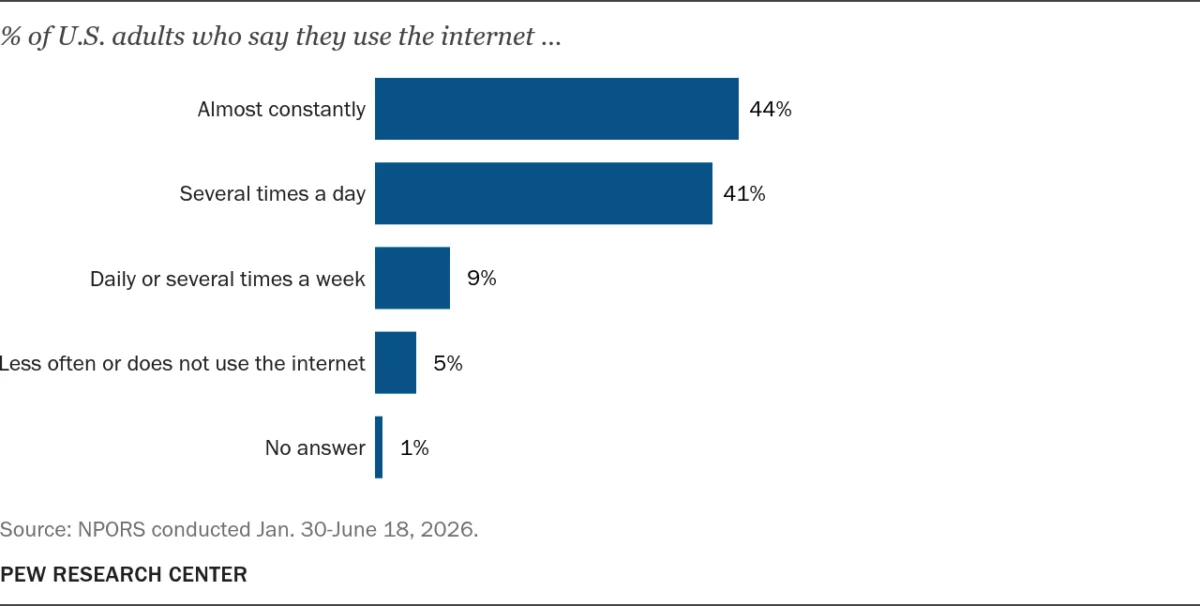
In an era defined by rapid societal shifts and polarized discourse, the ability to accurately gauge the collective consciousness of the United States has never been more vital. The Pew Research Center’s annual National Public Opinion Reference Survey (NPORS) serves as a cornerstone in this endeavor. By synthesizing responses from across the country via paper, online, and telephone channels, the NPORS provides a robust, multi-modal snapshot of the American public.
The 2026 iteration, conducted from January 30 to June 18, 2026, continues this tradition, offering granular insights into the political, religious, and technological habits of U.S. adults. As researchers navigate the complexities of modern polling—where the medium of inquiry can subtly influence the data—the NPORS stands as a benchmark, bridging the gap between traditional methodologies and the digital-first future of social science.
Main Facts: Understanding the NPORS Framework
The NPORS is not merely a poll; it is a comprehensive methodological undertaking designed to capture a representative cross-section of the American population. Unlike many commercial polling efforts that rely on pre-existing panels, the NPORS utilizes address-based sampling derived directly from the U.S. Postal Service’s Computerized Delivery Sequence File. This ensures that every household, regardless of its digital footprint, has a theoretical opportunity to be represented.
The Multi-Modal Approach
The survey’s primary strength lies in its flexibility. Respondents can participate through paper questionnaires, online interfaces, or telephone interviews. This tri-modal strategy is essential for mitigating coverage bias, ensuring that the survey reaches both the tech-savvy and those who remain disconnected from the digital sphere. However, the Pew Research Center acknowledges that this diversity of input brings challenges. Differences in survey mode—whether a respondent is typing their answer or speaking to an interviewer—can lead to subtle variations in how questions are interpreted or reported.
The Goal of Benchmarking
The Center leverages the NPORS to produce authoritative estimates on core societal pillars: political affiliation, religious identity, and technological adoption. Because these metrics serve as a "north star" for other researchers, the methodology behind the NPORS is subject to intense scrutiny and transparency. By providing access to the raw datasets and full methodology reports, the Center allows the broader scientific community to audit the findings, ensuring the longevity and reliability of the data.
Chronology: A History of Methodological Evolution
Since its inception, the NPORS has evolved alongside the technological and social changes that define the U.S. landscape.

- 2020–2022: The early years of the survey focused on refining the balance between paper and digital outreach. As the pandemic shifted social interactions online, the 2020 and 2021 datasets became essential for understanding how the digital divide influenced public opinion during a national crisis.
- 2023–2024: During this period, the Center deepened its focus on integration, ensuring that the transition from traditional mail-in methods to online participation was seamless and that the weighting techniques properly accounted for demographic shifts.
- 2025–2026: The current era of NPORS emphasizes high-fidelity data. The 2026 survey, in particular, reflects a decade of learning, utilizing refined questionnaires that account for modern nuances in political and religious identity. The consistency in the "paper versus digital" questionnaire design allows researchers to compare trends across years without the noise often introduced by changing question wording.
Supporting Data: The 2026 Findings
The latest data from the 2026 NPORS reveals a nation that is deeply categorized by its affiliations and highly tethered to the internet.
Political Landscape
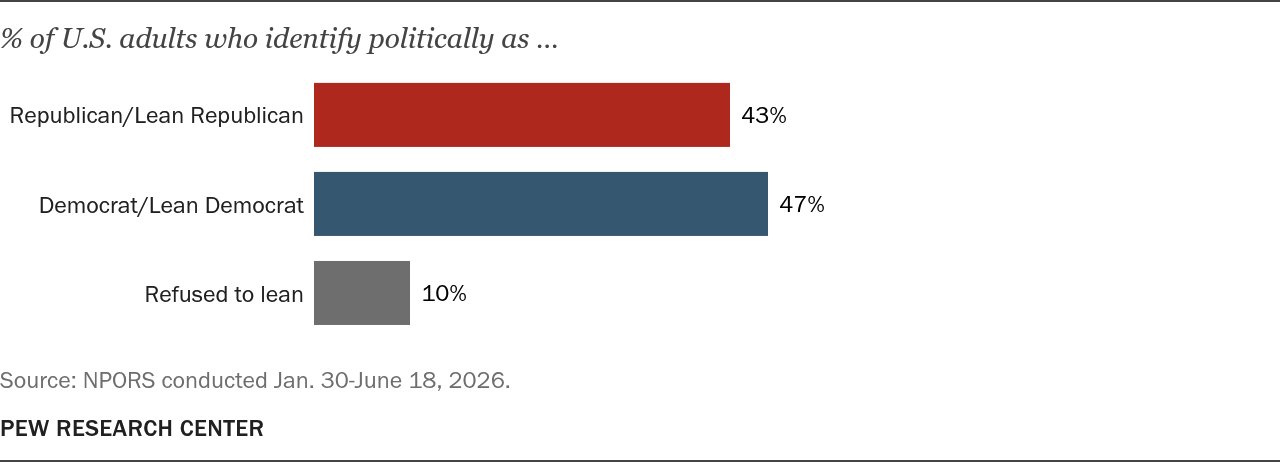
The 2026 findings indicate a nearly balanced, albeit slightly tilted, political field. Among U.S. adults, 47% identify as or lean toward the Democratic Party, while 43% align with the Republican Party. Notably, 10% of respondents explicitly refused to align with either major political leaning, a segment that remains a critical focus for those studying political polarization.
Religious Identity
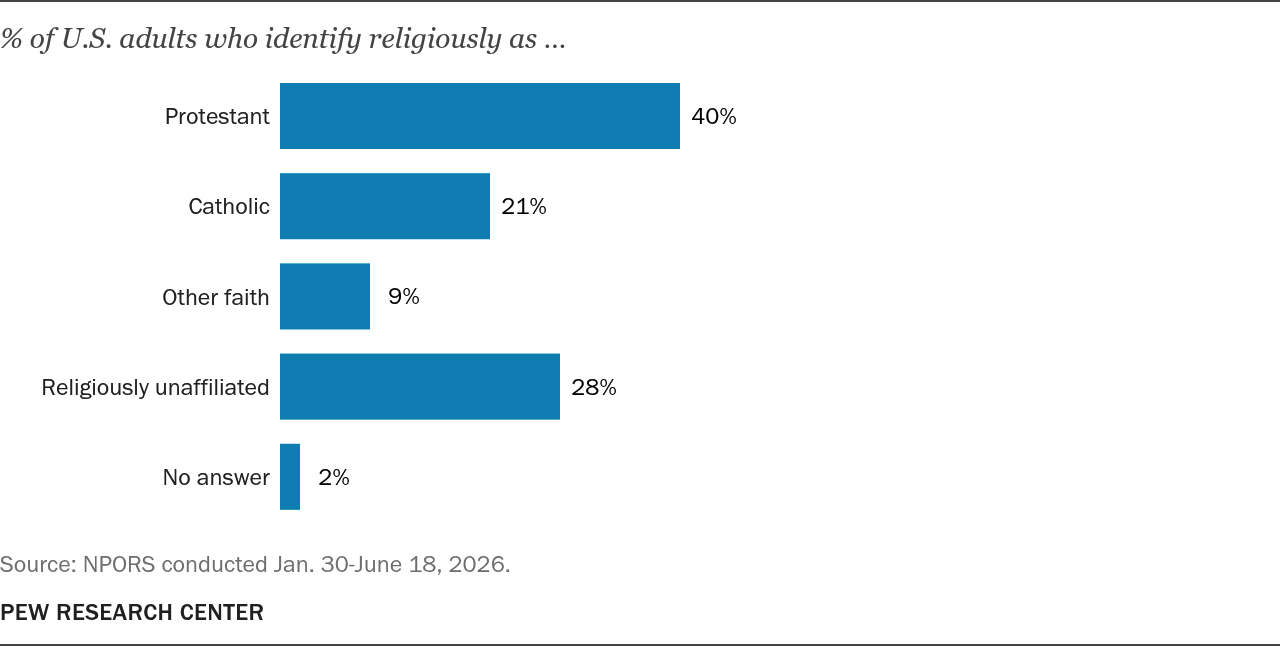
The landscape of American faith continues to shift. According to the 2026 data:
- Protestant: 40%
- Catholic: 21%
- Other Faiths: 9%
- Religiously Unaffiliated: 28%
- No Answer: 2%
The high percentage of the "religiously unaffiliated" remains one of the most significant trends of the 21st century, continuing the slow but steady erosion of traditional religious affiliation in the U.S.
Technological Habits
The digital saturation of the American public is nearly absolute. When asked about their internet usage, 44% of U.S. adults reported being online "almost constantly," while 41% reported being online "several times a day." Combined, this means 85% of the adult population is functionally tethered to the internet throughout the day. Only 5% of the population reported using the internet "less often" or not at all, a figure that continues to shrink as essential services migrate to digital platforms.
Official Responses and Methodological Rigor
The Pew Research Center has been proactive in addressing the complexities inherent in public opinion research. The Center’s internal analysis of how survey modes—phone vs. online—influence results is a testament to their commitment to transparency.
In various reports, the Center has noted that political opinions can sometimes be subject to "social desirability bias," where respondents might be more candid in an anonymous paper survey than in a telephone conversation with a human interviewer. By maintaining parallel tracks for these methods, the Center provides a roadmap for other researchers to adjust their findings.

Furthermore, the publication of both "Paper" and "Online" versions of the 2026 questionnaire is a deliberate choice to facilitate replication. By allowing researchers to see exactly what the respondent saw, the Center eliminates the "black box" that often plagues survey data, ensuring that the 2026 findings can be contextualized against historical trends without confusion.
Implications: What the 2026 Data Means for the Future
The implications of the 2026 NPORS extend far beyond simple statistics.
Understanding Polarization
The close split between Democratic and Republican leaners (47% to 43%) suggests that the American electorate remains in a state of high tension. The 10% of voters who refuse to lean, however, represent a volatile "swing" segment that, while small, can often determine the outcome of national elections. Understanding the demographics of this 10% is a priority for political strategists and sociologists alike.
The "Always-On" Society
The fact that 85% of Americans are online at least several times a day has profound implications for how public information is consumed. If the vast majority of the population is "constantly" online, the impact of misinformation, digital echo chambers, and algorithmic bias becomes a primary concern for the health of the republic. The NPORS data confirms that the internet is no longer a tool; it is the primary environment in which the American public lives.
Future-Proofing Research
As we look toward 2027 and beyond, the NPORS serves as a baseline. The methodology is designed to be resilient. Whether the future brings new advancements in Artificial Intelligence that change how respondents answer questions or further declines in traditional religious institutional membership, the NPORS framework is built to capture these changes in real-time.
For researchers, policymakers, and the public, the 2026 NPORS is more than a list of numbers—it is a mirror. It reflects a nation that is technologically integrated, religiously diverse, and politically divided, yet committed to the ongoing project of measuring its own heartbeat. By maintaining such high standards of rigor and transparency, the Pew Research Center ensures that this mirror remains clear, even as the landscape it reflects continues to evolve.

References and Resources:
For those interested in the raw data or the technical specifics of the 2026 methodology, the Pew Research Center provides extensive documentation, including:
- 2026 NPORS Methodology Statement
- Comparative analyses of political and religious polling trends
- Full datasets for the 2020–2026 period
These resources are publicly available through the Pew Research Center’s website, providing a wealth of information for scholars and citizens interested in the state of the American public.
 Pevita Pearce
  Neng Nana