
 By Layla Zulfa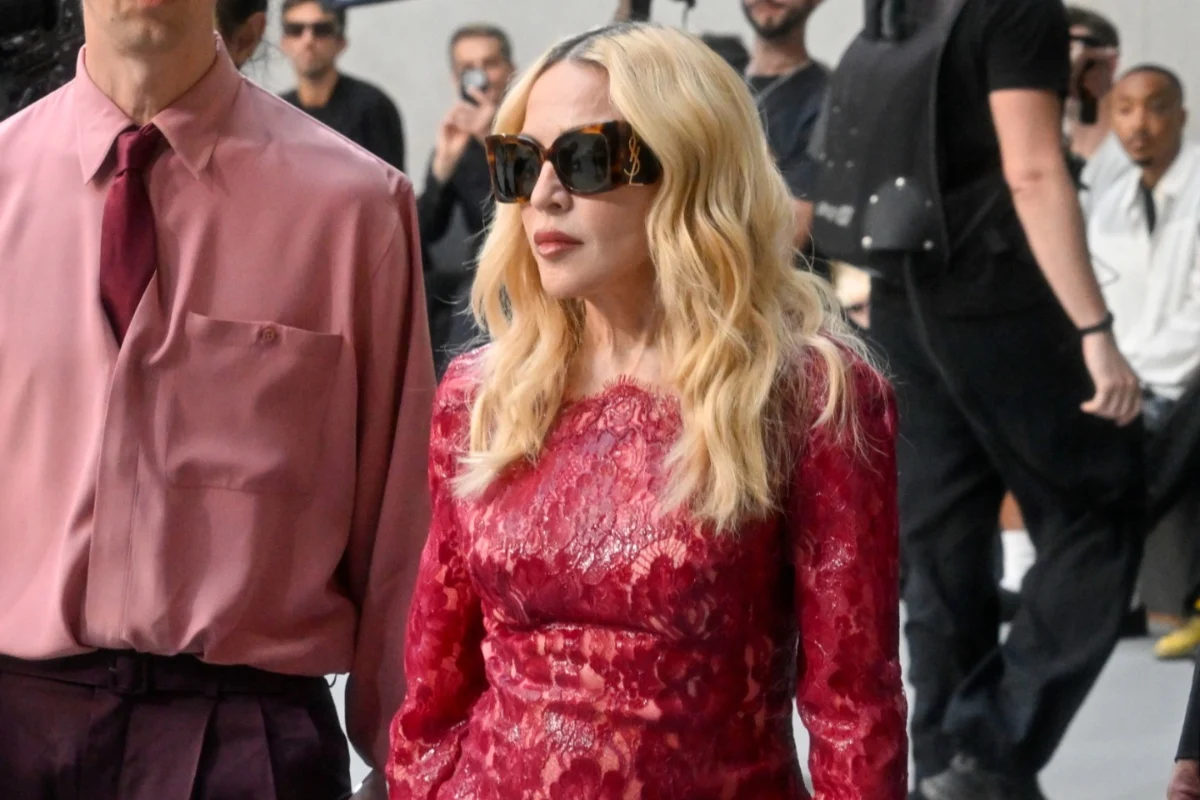
In an era defined by rapid technological acceleration and the ubiquitous presence of algorithmic curation, the music industry finds itself at a crossroads. At the center of this cultural debate is none other than Madonna, the undisputed Queen of Pop, who has recently issued a stinging indictment of the influence of artificial intelligence on the creative process. In a wide-ranging, exclusive interview with Vogue Italia, the legendary artist didn’t just critique the technology; she framed it as an existential threat to the very soul of artistic expression.
For an icon whose career has been defined by reinvention and the subversion of norms, this latest stance is perhaps her most traditional. Madonna argues that the "pure place" from which art once emerged—a collaborative, human-centric environment—is being systematically dismantled by the cold, predictive nature of machine learning and social media metrics.
The Core Argument: Why AI and Art Are Incompatible
The crux of Madonna’s critique lies in the dichotomy between risk-taking and algorithmic efficiency. Speaking to Vogue Italia, the singer emphasized that the essence of art is the willingness to fail, to experiment, and to operate outside of established patterns.
"Algorithms and artificial intelligence are the opposite of taking risks," Madonna asserted. "And to me, that is the opposite of making art."
Her perspective is rooted in a nostalgia for the pre-digital era of music production, where artists were physically gathered in studios, exchanging ideas in real-time. She describes these environments as spaces of organic discovery, where a "painter, a musician, a dancer, and an artist" could work in concert, unburdened by the pressure to cater to data-driven expectations.
Today, she argues, the landscape has shifted toward a metrics-obsessed industry. "Nowadays you don’t do that anymore," she lamented. "Now to have a record deal, you think about how many followers you have."
Chronology of a Counter-Cultural Stance
Madonna’s recent comments are not an isolated outburst but rather the latest installment in a long-standing pattern of skepticism regarding modern technology’s impact on human connection. To understand the gravity of her recent statements, one must look at the trajectory of her recent public appearances.
The "Confessions" Pivot
The seeds of this latest critique were clearly visible during the promotion of her recent project, Confessions II – The Film. During a Q&A session at the Tribeca Festival, Madonna took a firm stance against the culture of constant documentation. Observing an audience glued to their screens, she delivered a blunt directive to her fans: "Put your f***ing phones down and connect."
The "Bring Your Love" Manifesto
In her music, these sentiments have begun to manifest as lyrical themes. In her track "Bring Your Love," she directly addresses the noise of the modern digital landscape. "Don’t try to distract me with numbers," she sings, a direct jab at the industry’s obsession with streaming counts, chart positions, and social media engagement. This song acts as a sonic manifesto for the artist’s current creative philosophy: a rejection of the "distraction" that prevents an artist from finding their internal rhythm.
Supporting Data: The Shrinking Space for Human Creativity
Madonna’s concerns are echoed by a growing chorus of industry veterans and musicologists who worry that AI is creating a "homogenization" effect in global music.
The Algorithmic Feedback Loop
The music industry currently relies heavily on recommendation engines—platforms like Spotify, Apple Music, and TikTok utilize algorithms to determine what a listener hears next. These systems are designed to maximize "time on device" and user retention. However, critics argue that this creates a feedback loop: if a user likes a specific tempo or chord progression, the algorithm feeds them more of the same, discouraging the exploration of experimental or genre-defying music.
The "Follower" Economy
Data from recent industry reports suggests that record labels now routinely require artists to demonstrate a "social presence" before signing them. This has led to a paradigm shift where the ability to create viral content on platforms like TikTok is often prioritized over the ability to craft a cohesive, artistic musical body of work. For an artist like Madonna, who rose to prominence through music videos, tour spectacles, and studio albums, this shift represents a devaluation of the "craft" in favor of the "campaign."
Official Responses and Industry Perspectives
While Madonna has been one of the most vocal opponents of the current technological trend, the broader music industry remains deeply divided.
The Pro-AI Faction
Representatives from tech-forward labels and AI startup developers argue that tools like Generative AI are merely the latest evolution of the synthesizer or the digital audio workstation (DAW). They argue that these tools can democratize production, allowing artists without the resources of a major label to create high-quality, complex compositions.
The Artist Advocacy Groups
Conversely, organizations such as the Artist Rights Alliance have begun to echo Madonna’s sentiments, albeit through a more legalistic lens. They argue that the ingestion of copyrighted music to train AI models constitutes a theft of intellectual property. While Madonna’s argument is more philosophical—focusing on the "spirit" of the art—it aligns with a larger movement seeking to protect human creators from being replaced by synthetic alternatives.
The Implications: A Return to Stillness
Perhaps the most practical aspect of Madonna’s philosophy is her prescription for artistic recovery: the necessity of disappearance. In a world where the pressure to be "always on" is overwhelming, she argues that creativity requires silence.
"I do like to take breaks… and disappear," Madonna explained to Vogue Italia. "Because that’s how you fuel your imagination. You have to have stillness and you have to have days where you’re just connecting to nature, my children, my horses."
The implications of this stance are profound. If one of the world’s most successful performers is finding it difficult to maintain a creative core amidst the "persistent need" to document and stream, the average artist faces an even steeper challenge. Madonna’s call for a return to nature and silence is an implicit rejection of the "Creator Economy." She is suggesting that true art cannot be produced on a content-production cycle; it requires the human capacity for reflection, which is the one thing AI cannot simulate.
Conclusion: The Future of the Human Artist
As we move further into the 2020s, the tension between the "algorithmic" and the "authentic" will likely define the next generation of musical output. Madonna’s critique serves as a timely reminder that technology should be a tool in the hands of the creator, not a master that dictates the creative output.
By choosing to step away from the noise, the Queen of Pop is not merely indulging in a private whim; she is asserting a vital boundary. In a world that is rapidly being digitized, the most radical act an artist can perform may be to remain stubbornly, defiantly human.
Whether her message will penetrate the boardrooms of the major record labels remains to be seen. However, by leveraging her platform to highlight the dangers of AI and the suffocating nature of "follower" culture, Madonna has set the terms for the next great debate in the arts. For those who value the human spirit in music, the path forward is clear: it involves less time on the screen, more time in the studio, and a conscious rejection of the numbers that seek to quantify the unquantifiable.
 Asep Darmawan
  Azzam Bilal Chamdy