
 By Azzam Bilal Chamdy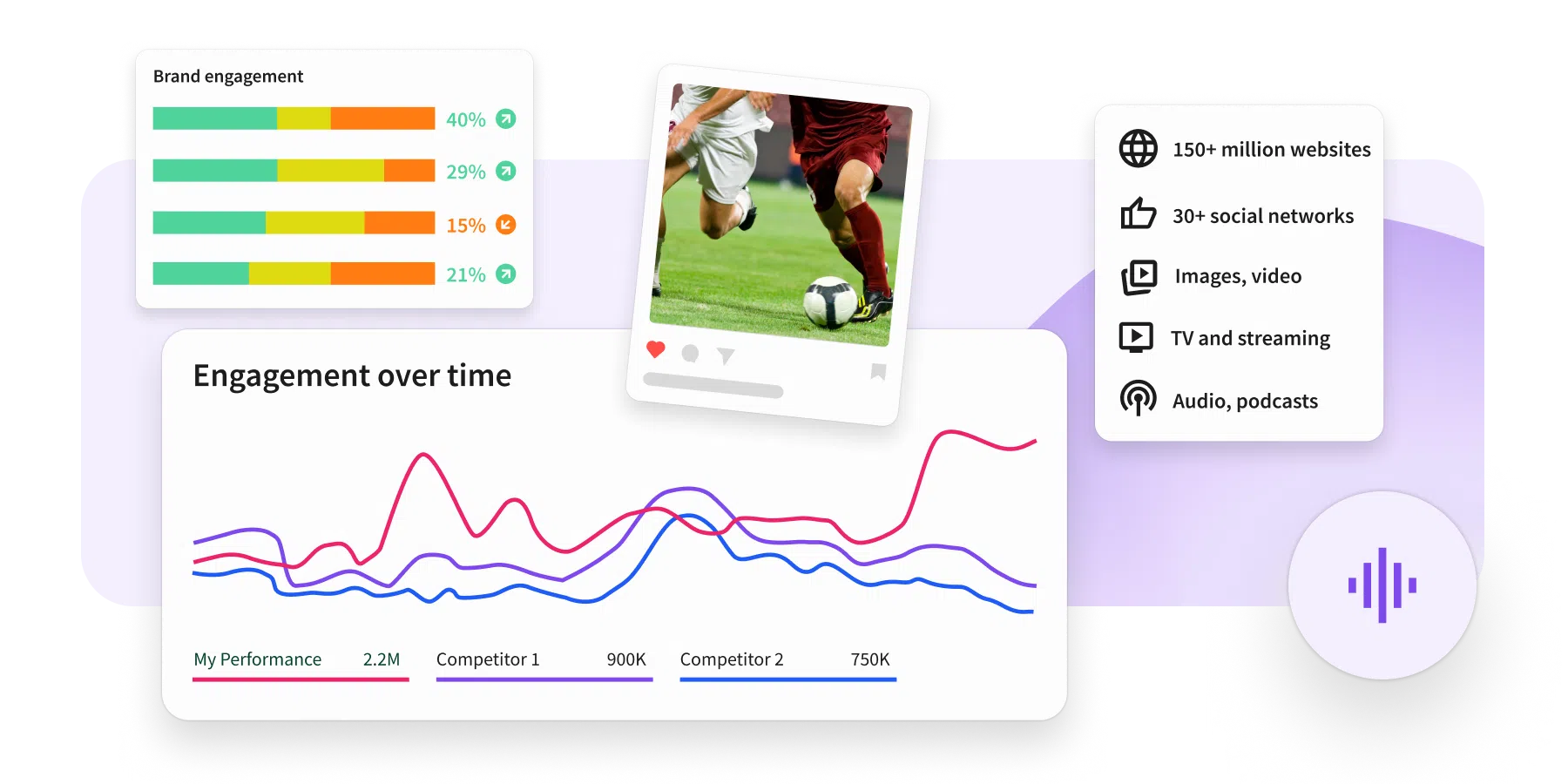
In a move that signals a definitive shift in the digital marketing landscape, Hootsuite has announced a complete architectural overhaul of its platform, transitioning from a traditional social media management tool to what it calls an "AI-native Social Operating System." Marketed as Social OS, the new suite represents a fundamental rebuild designed to address the hyper-accelerated pace of social media in 2026, where human-only teams are increasingly unable to keep pace with the real-time demands of global culture.
The release marks the end of the "bolt-on AI" era, where legacy platforms simply integrated third-party chatbots into existing dashboards. Instead, Hootsuite’s Social OS integrates artificial intelligence into the core DNA of its workflow, connecting social intelligence, content creation, customer care, and employee advocacy through a unified intelligence layer.

Main Facts: A Four-Pillar Ecosystem Unified by Wisdom
Hootsuite Social OS is structured as a connected product suite rather than a single dashboard. The "Operating System" terminology is intentional; just as a computer OS manages hardware and software, Social OS manages the various "organs" of a brand’s social presence.
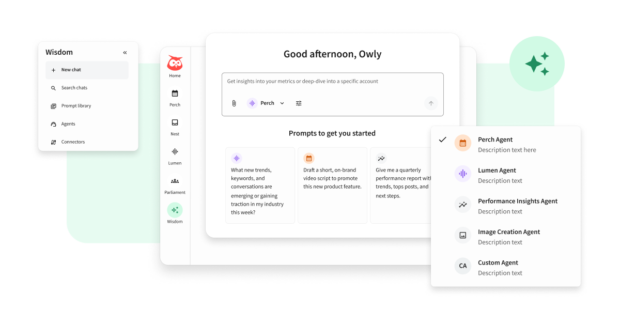
The ecosystem is comprised of four primary applications and one central AI agent:

- Wisdom: The "brain" of the system. A social-first conversational AI agent that orchestrates tasks across all apps.
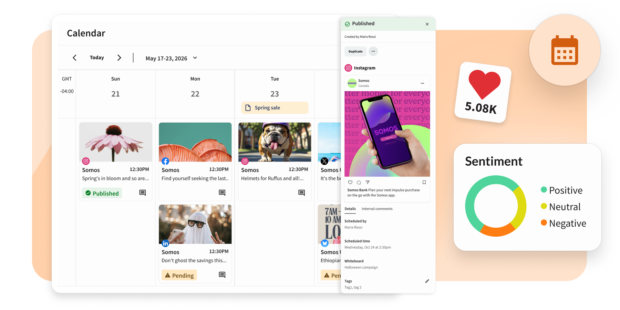
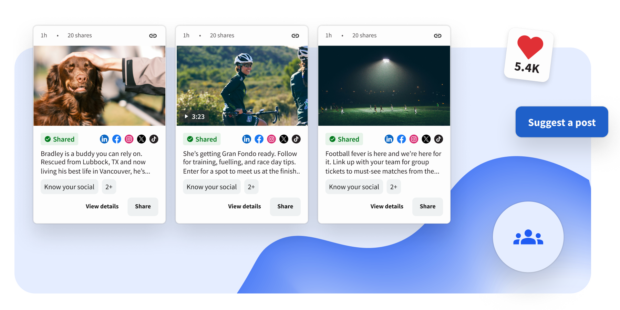
- Perch: The content creation, planning, and publishing hub.
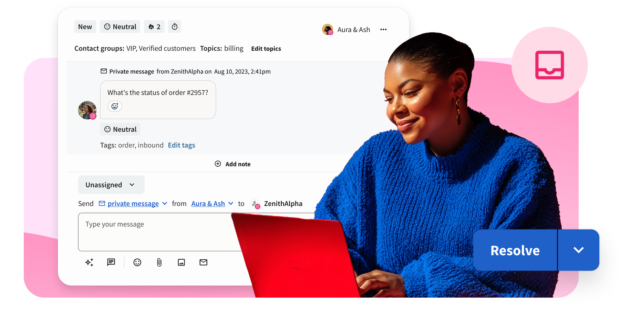
- Nest: The social inbox and AI-powered customer care center.
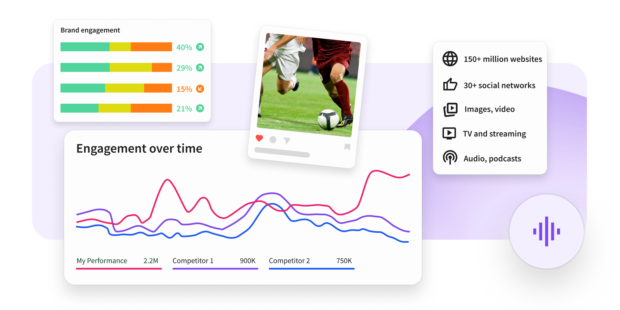
- Lumen: The social intelligence and listening engine (incorporating the technology of the enterprise platform Talkwalker).
- Parliament: The employee advocacy and brand amplification wing.
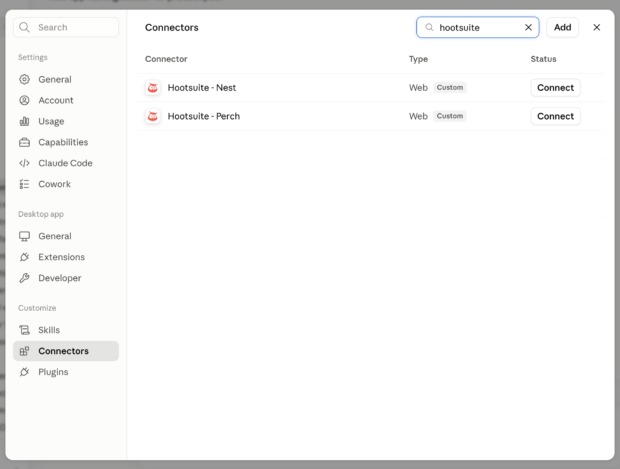
A key technical differentiator in this release is the introduction of Model Context Protocol (MCP) connectors. These allow external AI tools—such as OpenAI’s ChatGPT or Anthropic’s Claude—to communicate directly with Hootsuite’s data. This allows marketing teams to pull social analytics or schedule posts from within the AI interfaces they already use for other business tasks.
Chronology: From Scheduling Tool to Intelligence Engine
The journey to Social OS reflects the evolution of the social media industry itself.
- The Legacy Era (2008–2022): Hootsuite operated primarily as a scheduling and monitoring dashboard. The goal was efficiency—helping humans post to multiple networks from one place.
- The Integration Phase (2023–2025): Hootsuite acquired Talkwalker to bolster its enterprise listening capabilities and introduced OwlyGPT and Yeti Agent as standalone AI assistants. While powerful, these tools remained fragmented across different areas of the user interface.
- The 2026 Rebuild: Recognizing that "social moves faster than any human team can track," Hootsuite initiated a ground-up rebuild. The company retired its old dashboard architecture in favor of the app-based "Social OS." This transition involved unifying Talkwalker’s 150 million data sources with Hootsuite’s publishing workflows and merging its disparate AI experiments into a single agent, Wisdom.
The renaming of the suite—moving away from "Hootsuite Inbox" or "Amplify" toward avian-themed names like Nest and Parliament—symbolizes a move toward a more cohesive, integrated brand identity that houses all previous acquisitions under one roof.
Supporting Data: Intelligence Built-In vs. Bolted-On
The central thesis of Social OS is the distinction between "AI added on" and "AI built in." According to Hootsuite’s product team, traditional AI tools in the social space are often limited to summarizing past performance or drafting captions based on historical patterns.
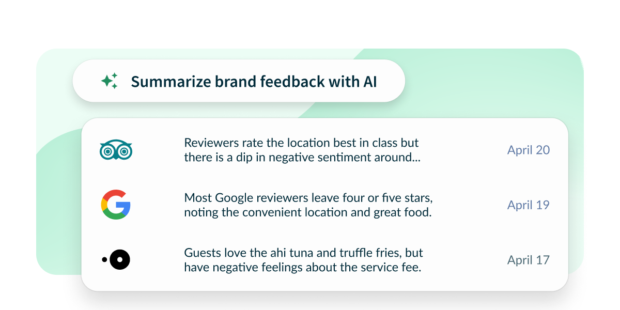
In contrast, Social OS is built on a live social signal layer. By processing 150 million sources across 187 languages in real-time, the system aims to close the loop between "signal" and "action."
The Workflow Loop in Numbers:
- Lumen detects a trend among 150M sources.
- Wisdom interprets the sentiment and suggests a strategic response.
- Perch generates the content with AI-assisted creative tools.
- Nest triages the resulting customer engagement using AI sentiment analysis.
- Parliament pushes the high-performing content to employee networks for a potential 500% increase in organic reach compared to brand-only channels.
For enterprise users, the data depth is a significant selling point. Lumen provides access to 10+ years of historical data and competitive benchmarking across 30+ social and digital channels, ensuring that the AI’s recommendations are grounded in deep market context rather than just general linguistic patterns.
Official Responses: Reimagining the Role of the Social Manager
Madelaine Jack, Product Marketing Manager at Hootsuite, emphasizes that the rebuild was a response to the "window of opportunity" problem. "The world where social moved at a pace a human team could keep up with no longer exists," Jack noted during the product announcement. "Social OS is built for a world where brands that win are the ones that detect what’s shaping culture, understand what it means, and act—all before the window closes."
The company’s leadership suggests that the role of the Social Media Manager is shifting from "content creator" to "AI orchestrator." By offloading the triage of thousands of messages to Nest and the initial trend research to Lumen, human teams are freed to focus on high-level strategy and creative direction.
Regarding the technical openness of the platform, Hootsuite’s developers highlighted that the MCP connectors represent a "headless" approach to social media. By allowing Claude or ChatGPT to "call" Hootsuite functions, the company is acknowledging that the future of work is decentralized. Teams no longer want to open a separate tab for every task; they want their social intelligence to travel to where they are already working, whether that is a Slack channel, a Jira ticket, or a strategy deck.
Implications: A New Standard for Digital Governance
The launch of Social OS has several long-term implications for the industry:
1. The Death of Standalone Listening
By merging Talkwalker into Lumen, Hootsuite is signaling that social listening is no longer a niche enterprise activity. It is now a prerequisite for basic publishing. The implication is clear: if you aren’t listening to the 150 million signals Lumen tracks, your content is effectively "posting into a vacuum."
2. Scalable Advocacy as a Budget Alternative
With organic reach on brand pages continuing to decline, the Parliament app suggests that employee advocacy is no longer optional. For organizations in highly regulated sectors like finance or healthcare, where trust in "logos" is at an all-time low, the ability to scale human-to-human communication through AI-approved advocacy tools is becoming a primary growth lever.
3. Democratization of Enterprise Intelligence
Historically, deep social intelligence (like that provided by Talkwalker) was priced out of reach for Small and Medium Businesses (SMBs). By offering Social OS as a modular suite where SMBs can start with Perch and Nest and scale into Lumen, Hootsuite is bringing enterprise-grade AI to a broader market.
4. Interoperability as a Competitive Advantage
The decision to support MCP connectors is a strategic gamble. By making it easy for users to interact with Hootsuite data via external AI agents (like ChatGPT), Hootsuite risks decreasing the "time on site" for its own dashboard. However, the company is betting that becoming the "social data source of record" for all a company’s AI tools will make their subscription more "sticky" and indispensable to the broader tech stack.
Conclusion: The Future of Social is Autonomous
Hootsuite’s Social OS represents a bet on a future where social media management is a collaborative effort between human intuition and autonomous AI agents. The transition from a dashboard to an "operating system" acknowledges that social media is no longer just a marketing channel—it is a real-time data stream of human intent.
As brands move into 2026, the question is no longer whether to use AI, but how deeply that AI is integrated into the brand’s response mechanism. With a 14-day free trial now available for the core apps, the industry will soon see if this "ground-up rebuild" can deliver on its promise of making brands as fast as the culture they inhabit.

The shift to an AI-native architecture may well be the blueprint for the next decade of digital engagement, where the "perch" of a brand is determined not by how much it shouts, but by how well it listens and how quickly it acts on the "wisdom" of the crowd.
 Raul Delapena Setiawan
  Basiran
  Asro
Asro 