
 By Layla Zulfa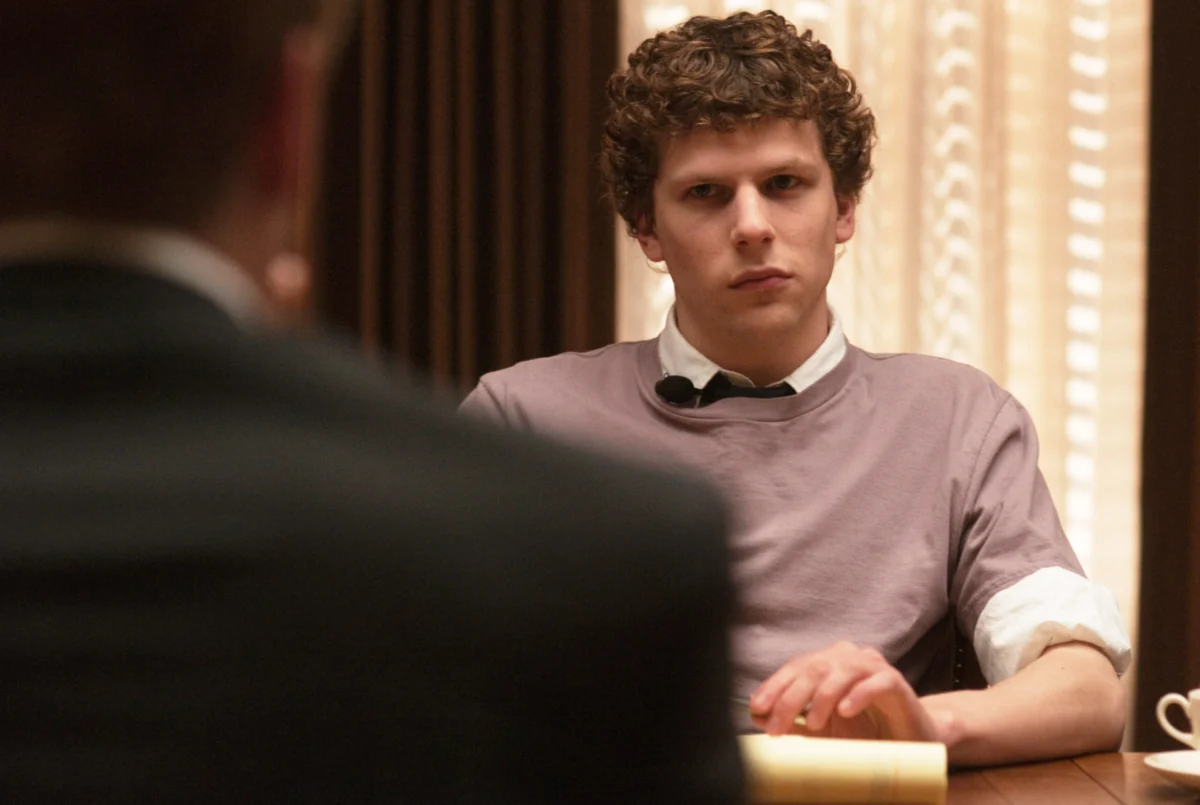
In the annals of modern cinema, few performances have been as transformative—or as indelible—as Jesse Eisenberg’s portrayal of Mark Zuckerberg in David Fincher’s 2010 masterpiece, The Social Network. For over a decade, Eisenberg’s rapid-fire delivery and cynical vulnerability defined the public’s perception of the Silicon Valley archetype. However, as screenwriter Aaron Sorkin prepares to expand the saga with his long-awaited sequel, The Social Reckoning, the narrative has shifted from the rise of a platform to the refusal of its primary vessel to return.
In a candid series of revelations, Eisenberg has confirmed that he will not be reprising his Oscar-nominated role. The decision, which followed days of intense deliberation with Sorkin, marks a definitive break between the actor and the digital titan who reshaped the 21st century.
The Anatomy of a Refusal: Main Facts and Context
The decision to step away from the Zuckerberg mantle was not one made lightly. Speaking to Variety at the Los Angeles premiere of Minions & Monsters, Eisenberg articulated a complex mix of professional admiration and personal boundaries.
"It’s an honor to speak to Aaron in any capacity, because he’s so articulate and charming and so bright," Eisenberg noted, reflecting on the high-stakes conversations he had with the Academy Award-winning writer. "We talked about doing the movie for several days. The way Aaron speaks, he speaks so wonderfully, as he writes that, in a way, if you’re not going to do something with him, it feels almost like you’re letting down America."
Despite this deep mutual respect, Eisenberg remained firm. His reasoning hinges on a desire to reclaim his own artistic identity, separate from the tech mogul he portrayed fourteen years ago. "I just told him I’m moving in different directions in my life," Eisenberg explained. "I don’t want to be associated with that character, but all of my reasons for not wanting to do the movie have nothing to do with how wonderful the movie is, and will be, and I’m sure is already."
A Chronology of the Split
The behind-the-scenes effort to reunite the duo was as intense as the dialogue in a Sorkin script. The timeline of this creative impasse reveals a persistent, albeit ultimately unsuccessful, campaign to bring the original cast back into the fold:
- Early 2024: Rumors of a Social Network sequel gain momentum as Aaron Sorkin confirms he is actively working on a follow-up, The Social Reckoning, focusing on the moral and societal consequences of the platform’s growth.
- June 2026: Sorkin reveals to Vanity Fair that he spent three days in direct, persuasive dialogue with Eisenberg. Sorkin noted that he felt the role "belonged" to Eisenberg, citing his "battle-tested" history with the character.
- Late June 2026: During the Minions & Monsters premiere, Eisenberg goes on the record to publicly affirm his departure from the project, citing a desire to avoid being "conflated" with the real-world Mark Zuckerberg.
- Current Status: Production moves forward with Jeremy Strong cast as the older, more embattled Zuckerberg, while the project shifts its focus to the whistleblowers and journalists who challenged the company’s internal hegemony.
The "CEO, Bitch" Phenomenon: Why the Association Became Toxic
The reluctance to revisit the character goes beyond mere artistic choice; it stems from the peculiar, often uncomfortable reality of being a celebrity who has become inextricably linked with a polarizing public figure.
Sorkin’s comments to Vanity Fair provided a window into the surreal nature of Eisenberg’s post-Social Network life. The screenwriter revealed that Eisenberg’s hesitation was fueled by the bizarre fan encounters he endured long after the cameras stopped rolling.
"He simply did not want to be conflated with Mark Zuckerberg anymore," Sorkin said. "He has his problems with the guy. He doesn’t like kids coming up to him in airports with business cards that say ‘I’m CEO, bitch’ for him to sign."
This line, a direct reference to the iconic business card handed to Zuckerberg by Eduardo Saverin in the original film, underscores a blurring of lines between reality and fiction. For Eisenberg, the role became a cage of sorts—a cultural shorthand that defined his public persona in the eyes of fans who struggle to separate the man from the meme. By refusing to play the character again, Eisenberg is asserting his agency, signaling that he is no longer willing to be the face of an entity he did not create.
Implications for ‘The Social Reckoning’
The transition from Eisenberg to Jeremy Strong signifies a tonal shift for the franchise. The Social Reckoning is not merely a "sequel" in the traditional sense; it is a clinical examination of the damage wrought by the algorithmic age.
With Jeremy Strong—known for his method-heavy, intensity-laden performances in Succession—stepping into the role, the audience can expect a more harrowing, perhaps more cynical, iteration of Zuckerberg. The film centers on:
- Frances Haugen (played by Mikey Madison): The Facebook engineer who blew the whistle on the company’s internal awareness of its negative impact on teenage mental health.
- Jeff Horwitz (played by Jeremy Allen White): The Wall Street Journal reporter whose investigative work exposed the internal mechanisms of Facebook’s misinformation apparatus.
The focus on these figures suggests that The Social Reckoning will function less as a character study of a singular genius and more as a procedural thriller about the downfall of a digital empire. The film promises to cover the 2021 investigations into how Facebook’s platforms facilitated political violence, misinformation, and societal polarization.
The Broader Cultural Impact of the Casting Choice
The choice of Jeremy Strong is a strategic pivot. While Eisenberg’s portrayal was rooted in the frenetic energy of a young man discovering his power, Strong’s casting suggests a narrative focused on the crushing weight of legacy and accountability.
Critics have noted that this change in casting allows the film to stand on its own, avoiding the "nostalgia trap" that often plagues sequels. By separating the actor from the icon, Sorkin is forced to lean into the gravity of the source material rather than relying on the familiarity of the previous iteration.
Moreover, the decision highlights a growing trend in Hollywood: actors increasingly demanding distance from the characters that threaten to define their entire careers. In an era of digital persistence, where roles are endlessly looped on social media and streaming platforms, the "conflation" of actor and role is a modern occupational hazard. Eisenberg’s refusal to participate is not just a personal boundary; it is a professional reclamation.
Conclusion: A New Chapter
As production on The Social Reckoning continues, the absence of Jesse Eisenberg will undoubtedly be felt by fans of the 2010 original. However, his departure may be the best thing for the new film. By stepping aside, Eisenberg has allowed the narrative to evolve, clearing the way for a more mature, perhaps more somber exploration of the company that changed how we communicate.
The story of Mark Zuckerberg, once a tale of youthful hubris and triumph, has become a complex, multifaceted issue of global accountability. As Sorkin, Strong, and the rest of the cast look toward the future of the project, they do so without the shadow of the past, marking a turning point in both the film’s development and the actors’ careers. The "CEO, Bitch" era has officially come to an end; in its place, a new, more serious, and perhaps more necessary reckoning begins.
 Asep Darmawan
  Azzam Bilal Chamdy